










Charming Tree-Centric Garden Landscaping: A Complete Guide to Creating Your Dream Outdoor Sanctuary
The Art of Tree-Centric Garden Design
Tree-centric garden landscaping is one of the most rewarding and visually striking approaches to outdoor design available to homeowners today. Rather than treating trees as afterthoughts or simple shade providers, this philosophy places them at the very heart of the garden’s identity, allowing their natural form, seasonal changes, and organic character to dictate the surrounding landscape. When you commit to a tree-centric approach, you are essentially building your entire outdoor sanctuary around living sculptures that will grow and evolve alongside your home for decades to come.
The beauty of designing around trees lies in the layered complexity it naturally creates. A single mature oak, maple, or cherry tree becomes an anchor point from which everything else radiates outward — flowering perennials that thrive in dappled shade, winding pathways that curve around exposed roots, seating areas positioned to capture the best views of seasonal blooms or autumn color. This organic approach feels far more natural and less contrived than rigidly geometric garden plans, because you are working with nature rather than imposing structure upon it.
Even gardens without existing mature trees can embrace this design philosophy by selecting and planting specimen trees as the first and most deliberate act of landscaping. Choosing trees with intention — considering their mature height, canopy spread, root behavior, and seasonal interest — allows gardeners to plan every subsequent element of the landscape around the tree’s anticipated future form. This forward-thinking approach produces gardens that improve dramatically with age, gaining character and depth that no amount of annual planting can replicate.
Selecting the Perfect Specimen Trees for Your Landscape
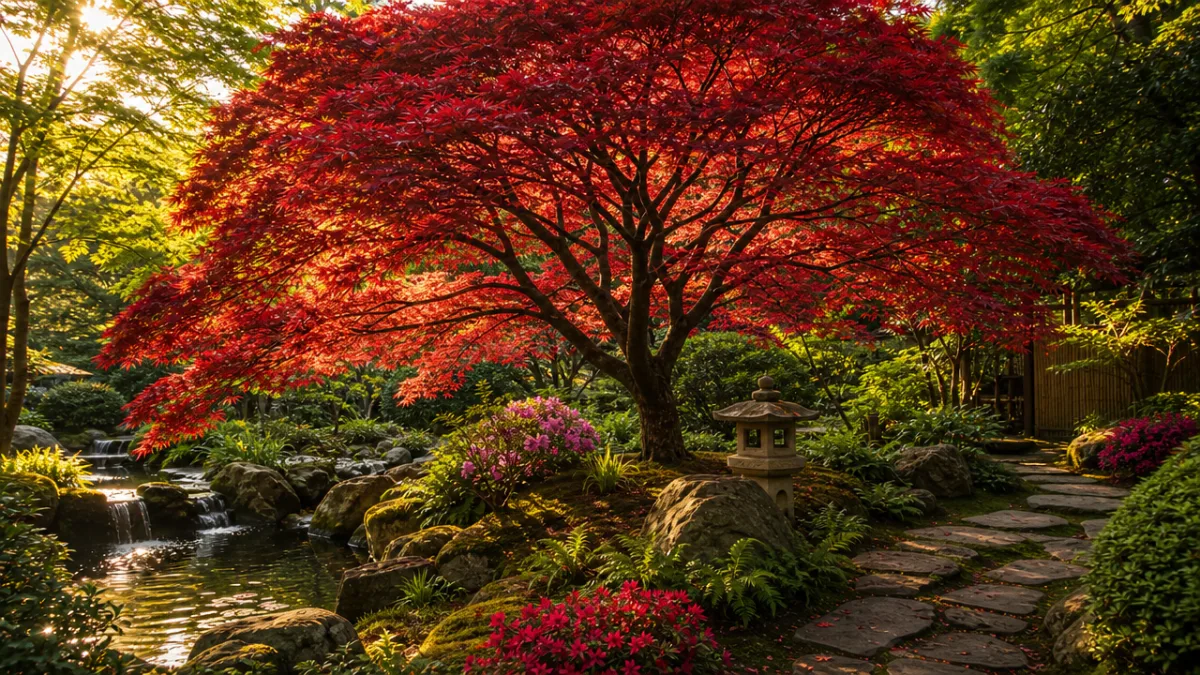
Choosing the right trees is the single most critical decision in any tree-centric garden design, and it deserves considerable time, research, and reflection. The ideal specimen tree should offer more than one season of interest, providing something beautiful or compelling throughout the year. Flowering trees like dogwoods and crabapples deliver spectacular spring blossoms, followed by attractive summer foliage and colorful autumn fruit. Japanese maples are prized for their delicate leaf structure, which shifts through shades of green, orange, and crimson depending on the variety and season.
Beyond aesthetics, practical considerations must guide your selection process. Understanding your local climate zone, soil type, and drainage conditions will dramatically narrow your choices and help you avoid costly mistakes. A tree that struggles in poorly draining clay soil will never achieve the lush, healthy presence that makes tree-centric gardens so impressive. It is equally important to research the mature size of any tree you are considering — a charming sapling planted near a foundation or driveway can become a serious structural problem within fifteen to twenty years if its full-grown scale was never properly accounted for.
Native trees deserve serious consideration in any thoughtful landscaping plan, both for their ecological value and their proven adaptability to local conditions. Native species support local bird populations, pollinators, and beneficial insects in ways that ornamental imports simply cannot match. A native serviceberry, redbud, or hawthorn can be every bit as beautiful as an exotic specimen while simultaneously functioning as a critical habitat resource. Many experienced garden designers now actively prioritize natives, recognizing that a garden which supports biodiversity is more resilient, more sustainable, and ultimately more deeply satisfying than one that merely looks beautiful.
- Japanese Maple (Acer palmatum): Exceptional year-round structure with stunning autumn color; ideal for smaller gardens and focal points.
- Flowering Dogwood (Cornus florida): Spectacular spring blooms, attractive summer foliage, and vivid red berries through autumn and winter.
- Eastern Redbud (Cercis canadensis): Native tree producing brilliant magenta flowers directly on bare branches before leaves emerge in early spring.
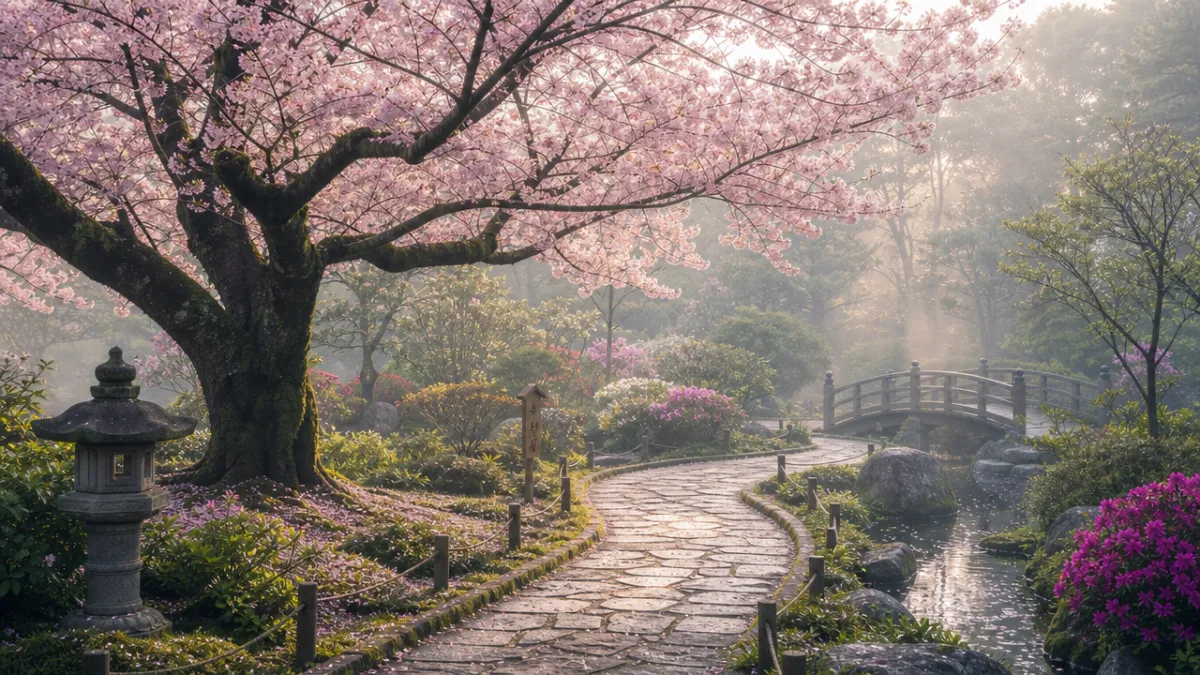
- Weeping Cherry (Prunus subhirtella): Romantic cascading form covered in pink blossoms, creating an unforgettable focal point in any garden setting.
- River Birch (Betula nigra): Multi-stemmed native with exfoliating coppery bark that provides winter interest and supports abundant wildlife.
Designing the Layers Beneath and Around Your Trees
The area beneath a tree’s canopy is often the most underutilized space in a garden, yet it holds extraordinary potential for creating lush, layered planting schemes that transform a simple tree into a complete garden ecosystem. The key is to understand and work with the unique conditions that exist under a tree’s canopy — reduced rainfall due to leaf interception, competing root systems near the surface, and shifting levels of light and shade throughout the day. Rather than fighting these conditions, skilled garden designers embrace them as creative constraints that lead to more interesting and appropriate plant choices.
Shade-loving ground covers are among the most effective tools for completing a tree-centric composition. Hostas with their bold, architectural foliage are perennial favorites, available in an enormous range of sizes, colors, and textures that can be combined to create genuinely sophisticated tapestries beneath a tree canopy. Ferns bring an elegant, timeless quality that pairs beautifully with woodland trees, their delicate fronds creating soft contrast against rougher bark textures. Ajuga, sweet woodruff, and pachysandra offer lower-growing alternatives that spread to form dense, weed-suppressing carpets with minimal maintenance once established.
Spring-flowering bulbs planted beneath deciduous trees represent one of the most magical combinations available to the garden designer. Snowdrops, daffodils, scilla, and wood anemones all complete their growth cycle before the tree’s canopy leafs out and reduces light levels, making them perfect companions for the space beneath the branches. A sea of daffodils or bluebells blooming under a canopy of unfolding apple blossom is one of those garden moments that stops visitors in their tracks and stays in the memory long after the season has passed. Layering early, mid, and late-season bulbs ensures a succession of color that extends from late winter well into early summer.
The transition zone between the tree’s drip line and the surrounding garden is another design opportunity that rewards careful thought. Rather than an abrupt edge, consider a gradual, naturalistic progression from the densely planted shade garden at the trunk, through a ring of taller shade-tolerant perennials, and finally out into the sunnier borders beyond. This approach mimics the natural structure of a woodland edge and creates a sense of seamless flow that makes the whole garden feel cohesive and intentional rather than assembled from unrelated parts.
Hardscaping Elements That Complement Tree-Centric Gardens
Hardscaping — the non-plant elements of a garden such as paths, patios, walls, and structures — plays an essential supporting role in any tree-centric landscape. When chosen and positioned thoughtfully, these elements enhance the natural character of the trees and create comfortable spaces for people to inhabit and enjoy the garden throughout the seasons. The key is to select materials that feel organically connected to their natural setting, avoiding anything that competes visually with the trees or imposes an overly rigid geometry on what should feel like a flowing, living space.
Natural stone is perhaps the most sympathetic hardscaping material for tree-centric gardens, offering a range of textures, tones, and forms that complement organic shapes beautifully. Flagstone paths that wind through plantings and curve around tree trunks feel genuinely appropriate in this setting, their irregular edges and subtle color variations echoing the organic quality of the surrounding plant life. Dry-stacked stone walls create naturalistic terracing on sloped sites while simultaneously providing habitat for small wildlife, moss, and creeping plants that soften the boundary between built and natural elements. Over time, stone weathers and develops its own character, becoming more beautiful as the garden matures around it.
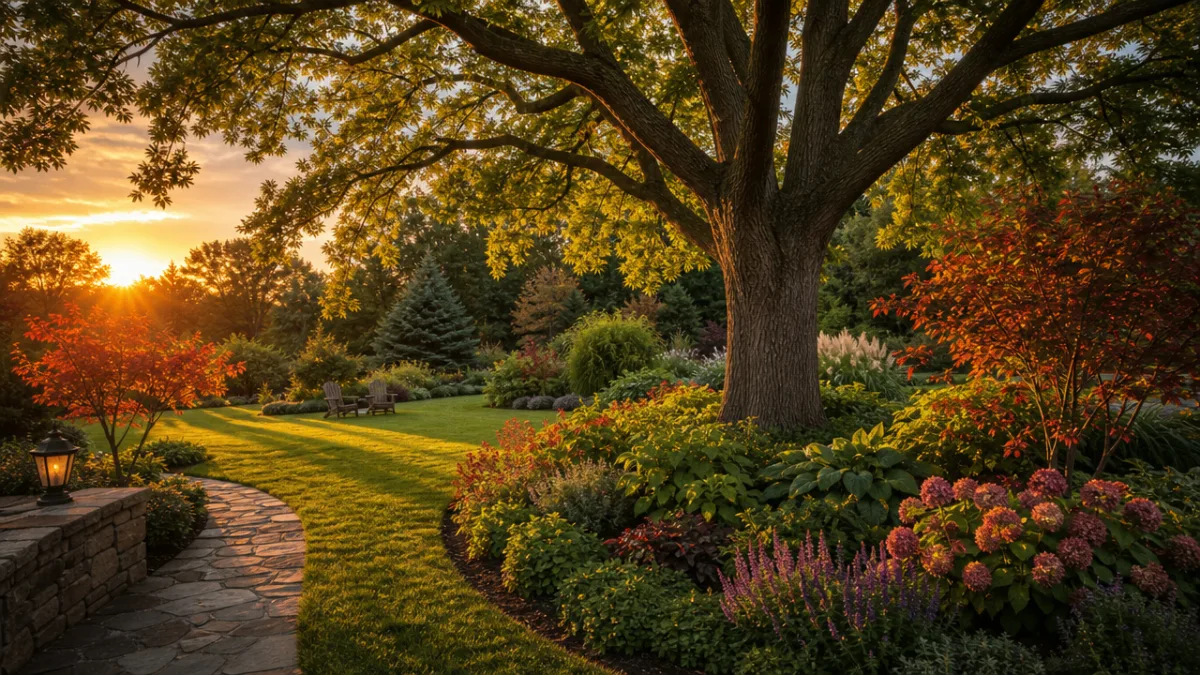
Seating areas positioned near or beneath specimen trees deserve particularly careful consideration, as they create destinations within the garden that encourage people to linger and truly experience the space. A simple bench encircling a large trunk, a pair of Adirondack chairs placed to face a weeping cherry’s dramatic form, or a hammock strung between two sturdy trees all create inviting moments that make the garden feel genuinely lived in. Overhead structures like pergolas or timber arches positioned near trees can be used to frame views of the canopy, or to support climbing plants that echo the vertical quality of the trees themselves.
- Choose natural materials like stone, timber, and gravel that visually complement organic tree forms rather than competing with them.
- Design paths to curve and meander around trees naturally, rather than cutting straight lines that ignore existing root zones.
- Create seating destinations that position people to appreciate the tree’s most beautiful angles, seasonal displays, or wildlife activity.
- Use raised beds or retaining walls to manage grade changes around tree roots without compromising the tree’s health and stability.
- Incorporate water features such as naturalistic ponds or simple stone birdbaths that attract wildlife and add sensory dimension to the space.
Seasonal Interest and Year-Round Garden Drama
One of the greatest strengths of tree-centric garden design is its inherent capacity to deliver visual drama and interest through every season of the year. Unlike garden styles that depend heavily on annual bedding plants or summer perennials for their appeal, a well-designed tree-centric landscape has structural bones that remain compelling even in the depths of winter. The tracery of bare branches against a grey sky, the warm tones of exfoliating bark catching low winter light, and the persistence of seedpods and berries well into the cold months all contribute to a garden that feels worth visiting regardless of the season.
Spring in a tree-centric garden is often its most theatrical moment, when the landscape surges back to life with an exuberance that feels almost impossible to believe after months of dormancy. Cherry, plum, and pear trees erupt in clouds of blossom that last only a week or two but leave an indelible impression. Beneath them, bulbs push through the soil and the first unfurling leaves of hostas and ferns begin to appear. This fleeting, almost feverish beauty is one of the great pleasures of gardening, and tree-centric designs make it particularly vivid by concentrating so much seasonal interest into a single composed space.
Autumn rivals spring for sheer visual intensity in the tree-centric garden, as deciduous trees begin their annual transformation into their most spectacular selves. The particular quality of autumn light — lower, warmer, more golden than summer sun — seems specifically designed to illuminate fiery foliage at its most brilliant. Japanese maples turn shades of crimson and orange that seem almost artificially vivid, while the larger canopy trees transform entire views with masses of yellow, bronze, and copper. Planning your tree selection to include species that peak at different points in the autumn season can extend this period of drama significantly, keeping the garden intensely colorful from early September well into November in many climates.
Winter need not be a season of absence in a thoughtfully designed tree-centric garden. Trees with ornamental bark — birches, stewartias, paperbark maples — become unexpected stars when their exfoliating, peeling, or colored stems are revealed by fallen leaves. Evergreen trees and large shrubs incorporated as supporting elements provide consistent color and structure that prevent the winter garden from feeling bare or abandoned. Persistent berries on hollies, crabapples, and hawthorns not only extend visual interest but attract birds throughout the colder months, adding movement and sound that transforms the garden into a genuinely dynamic, living space even when temperatures are at their most unforgiving.
Sustainable Practices and Long-Term Tree Care
A tree-centric garden is, by its very nature, an investment in the long term — and sustaining that investment requires an ongoing commitment to thoughtful, informed tree care practices. Unlike most garden plants, trees develop slowly and the consequences of poor care or ill-considered decisions can take years or even decades to fully manifest. Conversely, trees that are well-sited, properly established, and intelligently maintained will reward gardeners with generations of beauty, shade, and ecological value that far exceeds any other single investment made in the landscape.
Mulching is one of the simplest and most beneficial practices available to any tree-centric gardener, and it is consistently underused or incorrectly applied. A generous ring of organic mulch — wood chips, shredded bark, or composted leaves — applied around each tree’s base retains soil moisture, moderates soil temperature, suppresses weeds, and gradually breaks down to feed the soil ecosystem. The critical rule that many gardeners overlook is to keep mulch several inches away from the tree’s actual trunk, as piling material against the bark creates conditions for rot, disease, and pest infestation that can severely compromise the tree’s long-term health and longevity.
Pruning, when it is necessary, should always be approached with restraint and a clear understanding of the tree’s natural growth habit. The goal of pruning in an ornamental context is almost never to dramatically alter a tree’s form, but rather to remove dead, damaged, or crossing branches; to improve air circulation through the canopy; and occasionally to lift the lower canopy to allow more light to reach underplanted areas. Hiring a certified arborist for any significant pruning work on mature trees is money extremely well spent, as improper cuts can introduce disease, compromise structural integrity, and permanently disfigure specimens that took decades to develop their current character.
Water management deserves sustained attention, particularly in the critical first three to five years after a new tree is planted. Newly established trees require consistent, deep watering to encourage root systems to develop widely and deeply into the surrounding soil, building the resilience they will need to survive drought stress in later years. Installing simple drip irrigation systems or deep-watering stakes around newly planted specimens takes the guesswork out of this process and dramatically improves establishment success rates. As trees mature and their root systems extend well beyond the planting hole, most species become significantly more drought-tolerant, requiring supplemental irrigation only during prolonged dry spells.
- Annual mulching: Replenish organic mulch each spring, maintaining a depth of two to four inches within the drip zone while keeping it clear of the trunk.
- Soil health monitoring: Periodically test soil pH and nutrient levels to ensure conditions remain optimal for your specific tree species.
- Seasonal inspections: Walk your garden regularly through the year, watching for signs of pest activity, fungal disease, or structural concerns in tree canopies.
- Professional assessments: Schedule periodic reviews with a certified arborist, particularly for mature or large specimens, to catch developing issues before they become serious problems.
Personalizing Your Tree-Centric Garden to Reflect Your Lifestyle
Ultimately, the most successful tree-centric garden is one that genuinely reflects the personality, habits, and aspirations of the people who inhabit it. While design principles, plant selection guidelines, and horticultural best practices provide an essential framework, they should always function as a scaffold for personal expression rather than a rigid prescription to follow without deviation. The garden that gives you the deepest satisfaction will be one that you have shaped with your own preferences and needs in mind, whether that means prioritizing a productive kitchen garden beneath a mature apple tree or creating a meditative zen-inspired space centered on a carefully trained pine.
Families with children can design tree-centric gardens that encourage outdoor play and connection with nature in ways that will shape positive attitudes toward the natural world for a lifetime. A climbing tree with a sturdy branch at the right height becomes a destination that draws children outside regardless of the season. A treehouse nestled within a mature canopy creates a space that children genuinely claim as their own, developing imagination and independence in ways that indoor environments simply cannot replicate. Even younger children benefit from having a special spot in the garden — a circular clearing beneath a weeping tree, perhaps, where they can play in the filtered light and begin to develop an intuitive understanding of how natural spaces feel and function.
Gardeners interested in wildlife and ecology can use tree-centric design as the foundation for a genuinely habitat-rich outdoor space that functions as much more than a decorative landscape. By selecting trees and companion plantings that provide food, shelter, and nesting opportunities for birds, insects, and small mammals, it is possible to create a private nature reserve that brings extraordinary levels of wildlife activity to even a modest suburban plot. The ripple effects of this approach extend well beyond the garden boundary, as thriving populations of pollinators and beneficial insects supported by your planting contribute to the health of the wider local ecosystem.
Whether your vision for a tree-centric garden is formal or naturalistic, minimalist or abundantly planted, focused on floral spectacle or quiet structural elegance, the underlying principle remains constant: let the trees lead, and let everything else follow their example. When you design with that kind of respect for the living, growing nature of trees — their scale, their patience, their seasonal rhythms — you create a garden that has genuine depth and meaning, a space that rewards attention and grows more beautiful with every passing year. That is the true promise of tree-centric garden design, and it is a promise that, with care and commitment, every garden can fulfill.








What do you think?
It is nice to know your opinion. Leave a comment.