










DIY Naturally Scented Air Freshener With Baking Soda And Essential Oils
Why Choose a Natural Air Freshener Over Commercial Products
You know that moment when you walk down the cleaning aisle at the grocery store and the smell practically hits you like a wall? That’s no accident — commercial air fresheners are packed with synthetic fragrances and a long list of chemical compounds, many of which fall into the category of volatile organic compounds, or VOCs. These things evaporate at room temperature and just hang in the air you’re breathing every day, especially in smaller, less-ventilated spaces like bedrooms and bathrooms where fresh air doesn’t always circulate the way it should.
And the health side of things is honestly more concerning than most people realize. Research has connected long-term exposure to synthetic fragrances with headaches, respiratory irritation, hormonal disruption, and even some neurological effects. If you have kids, elderly family members, or anyone in your household dealing with asthma or allergies, those plug-in fresheners and aerosol sprays can make things noticeably worse. That nice smell you’re paying for often comes with a hidden cost to your indoor air quality.
Making your own air freshener at home is a wellness choice, sure — but it’s also just a really practical and satisfying one. You get to decide exactly what goes into your home environment, working with pure, plant-based essential oils and simple pantry staples that people have trusted for generations. No mystery ingredients, no recurring trips to the store for refills, and no guessing what’s actually in the bottle. Just something genuinely effective that you made yourself, tailored exactly to your taste.
Understanding the Science Behind Baking Soda as an Odor Neutralizer
Baking soda — sodium bicarbonate if you want to get technical — is one of those humble pantry staples that does a lot more than most people give it credit for. What makes it so good at tackling odors isn’t that it covers them up with something else. It actually neutralizes them through a chemical process called acid-base neutralization. Most of the smells we find unpleasant at home — pet odors, food smells, that musty dampness — are caused by acidic or basic compounds floating in the air. Baking soda is amphoteric, which means it can react with both types, essentially disarming the odor at a molecular level.
That’s a pretty important distinction from how commercial air fresheners work. A plug-in or aerosol spray just dumps more chemicals into the air to overwhelm your nose, creating the impression of freshness without actually doing anything about the source of the smell. Baking soda genuinely removes the problem. When you leave an open container of it in a room, it’s continuously pulling in air and interacting with those odor-causing particles, rendering them harmless. The air actually smells better — not just perfumed over.
When you add essential oils into the mix, you get a two-pronged approach: the baking soda neutralizes what’s already in the air while the oils introduce a clean, naturally derived scent of your choosing. It works so well because baking soda’s porous crystalline structure acts like a little slow-release system for the essential oil molecules, letting them disperse gradually over time rather than all at once. That’s why a single jar can keep a room smelling fresh for days or even weeks on end.
Choosing the Right Essential Oils for Your DIY Freshener
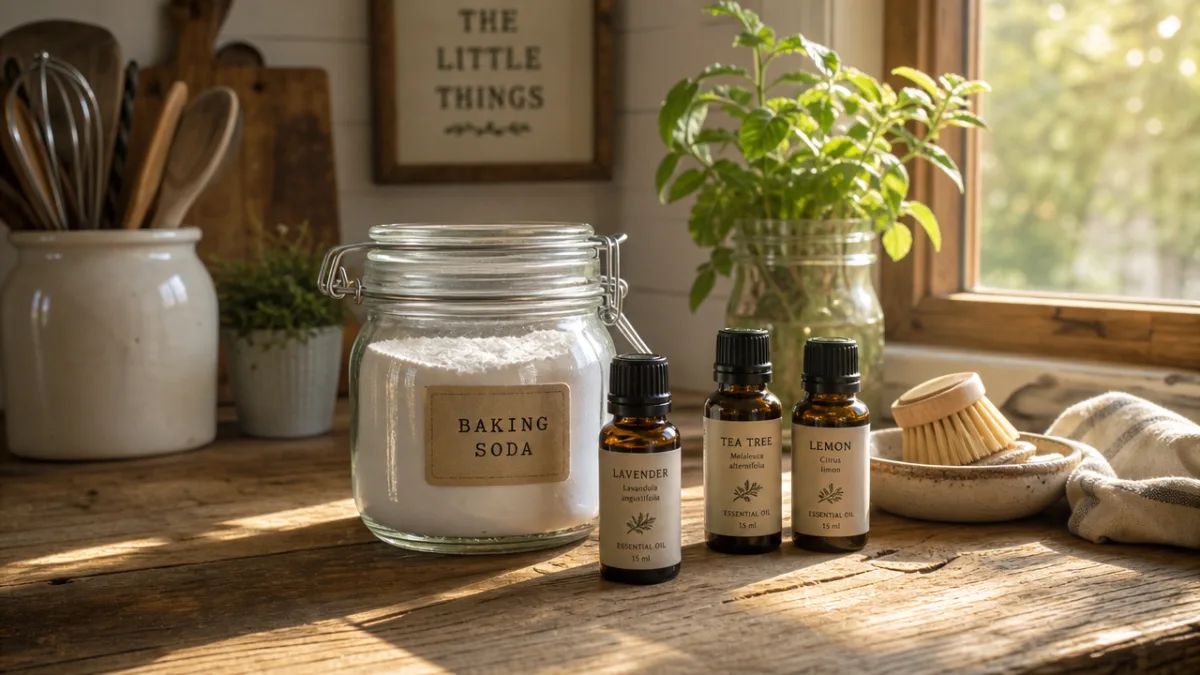
The essential oil you pick is really what gives your air freshener its character, and you have a lot of great options to work with. Lavender is a classic for good reason — research has shown it can genuinely help ease anxiety and encourage relaxation, which makes it a natural fit for bedrooms and bathrooms. Tea tree brings a crisp, clean, almost medicinal quality along with real antimicrobial properties, so it’s great for kitchens, bathrooms, or anywhere that tends to develop bacterial odors. Eucalyptus gives you that cool, invigorating spa-like atmosphere that feels instantly refreshing.
If you’d rather go bright and energizing, citrus oils are worth exploring. Sweet orange, lemon, grapefruit, and bergamot all have that uplifting quality that can shift the entire mood of a room within minutes. They work beautifully in home offices, kitchens, and entryways — anywhere you want people to feel alert and welcome. Citrus oils also play really well with warmer base notes like sandalwood, cedarwood, or vanilla, which round out the scent and keep it from feeling one-dimensional.
Don’t overlook blending — some of the most interesting and enjoyable scents come from combining two or three oils in a single batch. A few combinations worth trying: lavender and lemon for a clean floral brightness, peppermint and eucalyptus for a stimulating spa vibe, cinnamon and clove with orange for a cozy seasonal warmth, or frankincense and cedarwood for something more grounding and meditative. Whatever you choose, make sure you’re buying 100 percent pure, therapeutic-grade essential oils. There are a lot of synthetic imitations in similar packaging out there, and they won’t give you the same results.
Step-by-Step Recipe for Your DIY Baking Soda Air Freshener
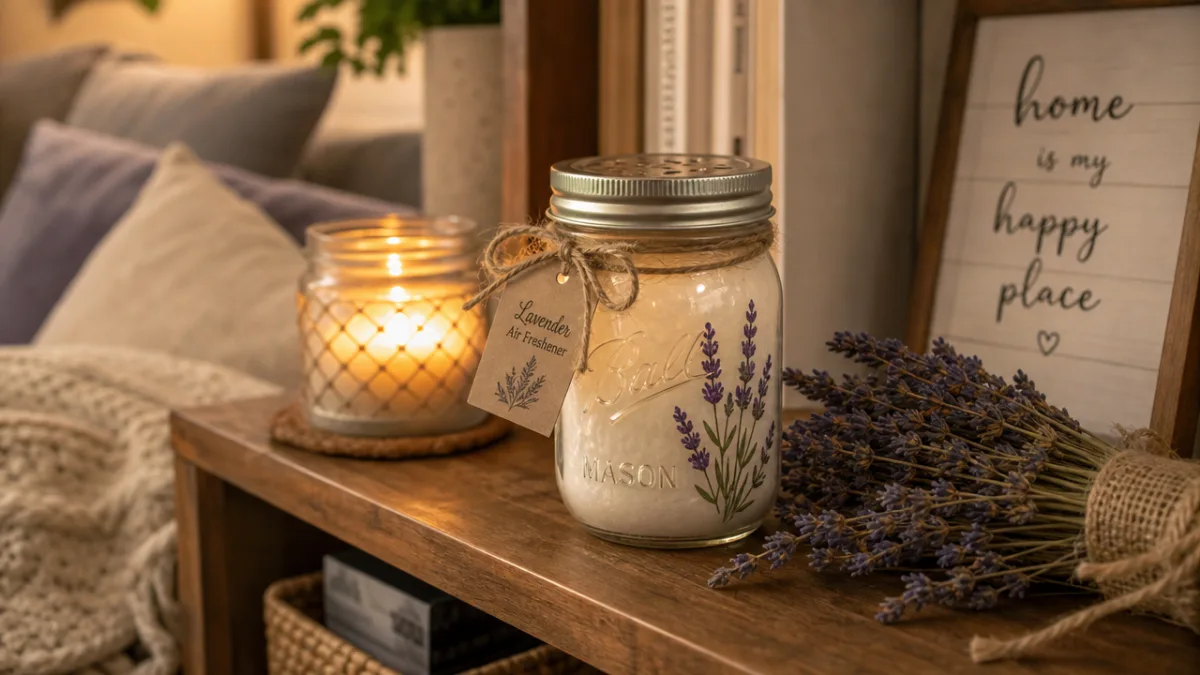
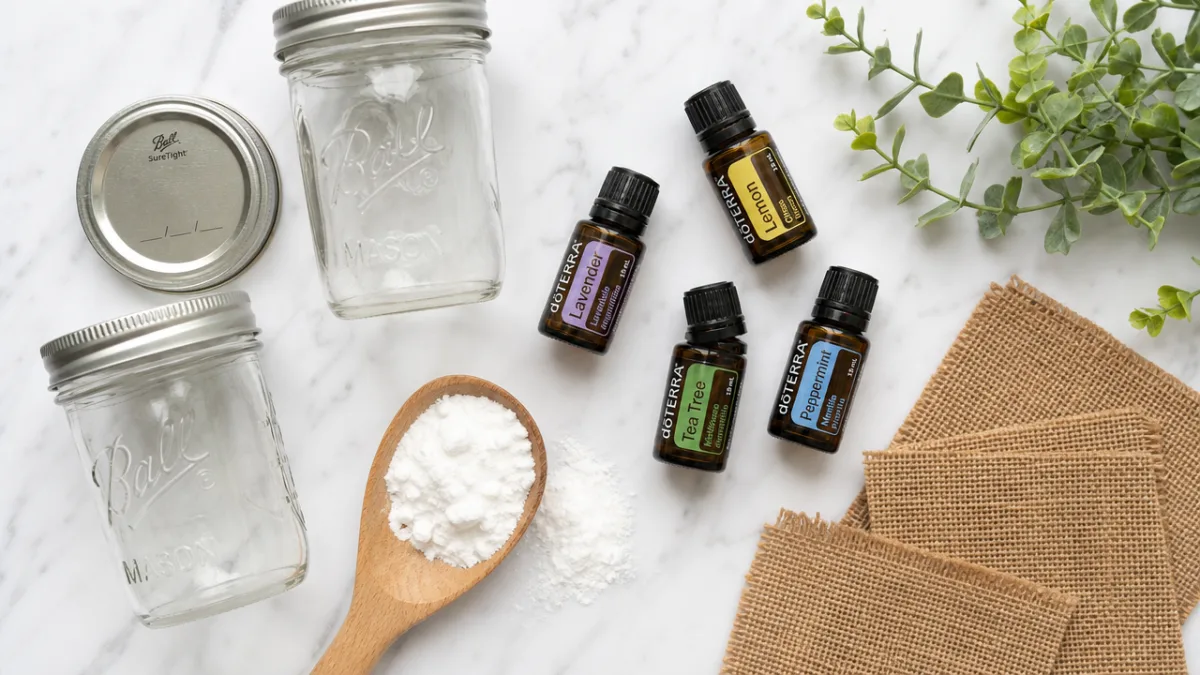
Getting your materials together first makes the whole process go smoothly. You’ll need a small glass jar — a mason jar is perfect — along with baking soda, your chosen essential oils, and something breathable to cover the top. A lot of people use a small square of fabric like burlap or cotton muslin held in place with a rubber band or piece of twine, which gives it that charming handmade look. Others punch holes in a repurposed metal lid using a nail and hammer, which is a bit more sturdy and still lets the air flow through. Either way works great.
The recipe itself is wonderfully simple. For a standard half-pint mason jar, pour in half a cup of baking soda, then add fifteen to twenty-five drops of your chosen essential oil or blend right on top. Give it a good stir with a fork or small whisk to distribute the oil evenly through the baking soda crystals — you don’t want any one spot oversaturated. Then cover it up, set it in your chosen spot, and you’re done.
Here’s a quick-reference list of everything you’ll need to keep on hand:
- Half-pint or pint-sized wide-mouth glass mason jar — the wider the opening, the more air exposure you get
- Half a cup of plain baking soda, not baking powder, which has additional ingredients you don’t want
- Fifteen to twenty-five drops of pure essential oil, or a combination of oils adding up to that amount
- A roughly six-by-six-inch square of breathable fabric, or a perforated lid if you prefer a more finished look
- A rubber band, piece of twine, or the metal ring from the mason jar lid to keep the covering in place
- A small fork or cocktail whisk for blending the oil into the baking soda
Where you put it in the room matters more than you might think. For the best results, find a spot with some natural air movement — near a doorway, on a shelf in the path of a ceiling fan, or close to a window you open regularly. Try to keep it out of direct sunlight, since the heat will cause the essential oils to evaporate much faster than you’d like, cutting the life of your freshener short. A cool, shaded spot with decent airflow will get you the most consistent and long-lasting results from this little project.
Customizing Your Freshener for Different Rooms and Purposes
One of the best things about making your own air freshener is being able to match the scent to the room it’s actually going in. The bedroom is all about rest and winding down, so calming oils are your best bet here. Lavender is the go-to, but Roman chamomile, clary sage, and cedarwood are equally good at creating that settled, peaceful feeling that helps you sleep. A small jar on the bedside table or tucked on the dresser can subtly change the whole atmosphere of the room in a way you’ll notice every night.
The kitchen is a different challenge entirely. Cooking smells — especially fish, garlic, onion, or heavy spices — have a way of hanging around long after dinner is done and drifting into other rooms besides. In the kitchen, you want oils with strong deodorizing and antibacterial properties. Lemon, peppermint, and tea tree are solid choices, and a lemon-rosemary blend in particular creates a really fresh, clean kitchen environment. You can even tuck a few dried rosemary sprigs or some dried lemon peel on top of the baking soda for a nice decorative touch that adds a little extra scent too.
Bathrooms need something that specifically tackles ammonia-based odors, and eucalyptus, peppermint, and tea tree all do this really well. For a guest bathroom where you want to make a good impression, something like jasmine and sandalwood creates an atmosphere that genuinely feels luxurious — almost like a high-end spa. In a home office, rosemary is a great pick since it’s associated with mental clarity and focus in aromatherapy research, and any of the citrus oils will help you stay sharp during long working sessions. Honestly, every room is its own opportunity to create something a little different.
Caring for Your Air Freshener and Maximizing Its Lifespan
A well-made DIY baking soda air freshener can last anywhere from four to eight weeks, depending on the size of your jar, how much baking soda you used, which essential oils you chose, and the conditions of the room it’s sitting in. Over time you’ll notice the scent starts to fade — and that’s completely normal. It just means the essential oil has done its job and gradually dispersed into the air the way it was supposed to. It’s not broken; it’s finished.
Refreshing it is easy. When the scent starts to feel faint, just remove the cover, add another ten to fifteen drops of essential oil, give it a gentle stir, and put the cover back on. It’ll smell just as good as the day you made it. This is also a great moment to try a different oil blend if you’re in the mood for a change — you can completely shift the mood of the room without any real effort or expense. No commercial product gives you that kind of flexibility.
After about eight weeks, even with regular refreshing, the baking soda itself will have absorbed about as much as it can and its effectiveness will start to drop off. But don’t just toss it — used baking soda still has plenty of life left in it as a gentle abrasive cleaner for your sink or bathtub, or you can pour it down the drain with some hot water to help clear minor buildup. Then start fresh with new baking soda and begin the cycle again. It’s a genuinely zero-waste approach, which fits nicely with the whole spirit of making this thing yourself in the first place.
The Broader Benefits of Embracing Natural Home Fragrance
Switching from commercial air fresheners to natural alternatives isn’t just about better air quality, though that’s a great reason on its own. It’s really a shift in how you relate to your home. Our sense of smell is uniquely wired — it has a direct pathway to the limbic system, the part of the brain that handles emotion, memory, and mood. The scents around us every day quietly shape how we feel, how well we sleep, how easily we focus, and how safe and comfortable we feel in our own space. Being intentional about those scents, and choosing ones that are genuinely natural, is a real form of self-care — not the performative kind, but the kind that actually affects how you feel day to day.
There’s also a solid environmental case for making the switch. The plastic packaging from commercial air fresheners adds up quickly, and aerosol propellants in spray products contribute to atmospheric pollution in ways that are easy to overlook. The DIY approach produces almost no waste — the glass jar gets reused indefinitely, the baking soda is completely biodegradable, and essential oil bottles, though small, are so concentrated that you’re getting far more fragrance per unit of packaging than you would from any equivalent commercial product. If you’re working toward a lower-waste household, this is one of the easiest and most tangible changes you can make.
And maybe most importantly, there’s something genuinely satisfying about making something for your home with your own hands. Knowing exactly what’s in that jar on your shelf, knowing you put it together yourself, knowing it’s working quietly in the background to make your home a nicer place to be — that sense of ownership means something. It has a way of encouraging a more thoughtful approach to everything else you bring into your home too. A small jar of baking soda and essential oil is a humble thing. But what it represents is really something much bigger than that.








What do you think?
It is nice to know your opinion. Leave a comment.