










16+ DIY Cottagecore Craft Ideas for Whimsical Weekend Making
What Is Cottagecore and Why Is Everyone Crafting It?
Cottagecore is so much more than just a look — it’s a whole-hearted lean into slow living, natural beauty, and the joy of making things with your own hands. It pulls from romanticized ideas of rural life: wildflower meadows, mossy stone walls, candlelit kitchens, the satisfying rhythm of a craft coming together. And honestly? It makes total sense that making things sits right at the center of it. There’s something genuinely grounding about stepping away from the noise and speed of everyday life to just… create.
One of the things people love most about cottagecore crafts is how approachable they are. You don’t need an art degree or a fancy studio. A lot of the most beloved projects use foraged finds, thrifted supplies, or simple basics like cotton twine, beeswax, dried herbs, and watercolor paints. The whole philosophy is really about the act of making as much as the finished result — pressing flowers, tying knots, stitching linen. The process itself is the point.
Over the past few years, cottagecore crafting has taken off on Pinterest, Instagram, and YouTube, with makers sharing beautifully imperfect projects that feel personal and rooted in something real. Whether you’ve been crafting for years or you’re just getting started, there’s always a weekend project within reach. The ideas in this article cover a wide range of skill levels and materials, so you’re bound to find something that sparks a little inspiration — and fits your Saturday afternoon.
Pressed Flower and Botanical Crafts
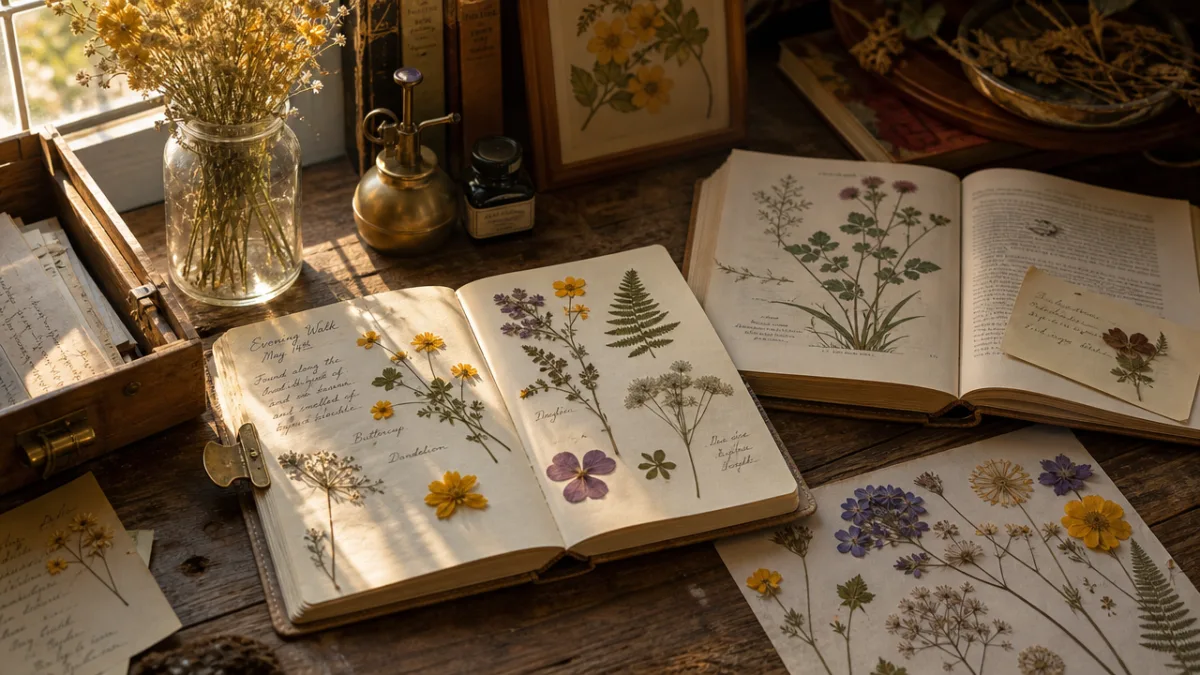
If there’s one craft that feels almost synonymous with cottagecore, it’s pressing flowers. The practice goes back centuries — Victorian botanists and country housewives both loved it as a way to hold onto the fleeting beauty of seasonal blooms. And the technique really hasn’t changed much at all: tuck your flowers between sheets of absorbent paper, weigh them down with a stack of heavy books, and wait one to three weeks. What you get are these delicate, paper-thin petals in the softest, most painterly shades imaginable.
Once you’ve built up a little collection, the possibilities are genuinely endless. Some of the most popular cottagecore projects include framed botanical displays layered behind glass, greeting cards tucked with tiny violas and clover, bookmarks sealed under contact paper or resin, and candles with blooms pressed right into the wax. Even a simple glass jar decorated with pressed flowers and a coat of Mod Podge can turn into a stunning little lantern once you drop a tealight inside.
For anyone who loves foraging or has a garden to wander through, pressed flower work is also a lovely way to document the seasons. Try keeping a pressed flower journal — a blank watercolor sketchbook where you mount specimens alongside handwritten notes about where and when you found them. Over time it becomes this wonderful living archive of your wanderings, something that feels equal parts scientific and deeply personal. Larkspur, Queen Anne’s lace, pansies, chamomile, and ferns are all great choices — they press beautifully and hold their color well.
- Best flowers for pressing: pansies, violas, Queen Anne’s lace, chamomile, lavender, ferns, and forget-me-nots
- Essential tools: heavy books or a flower press, parchment paper, tweezers, and Mod Podge or UV resin for sealing
- Project ideas: framed art, resin jewelry, candles, bookmarks, greeting cards, and botanical journals
Natural Dyeing and Fabric Crafts
Natural dyeing is one of the oldest crafts in human history, and it fits so perfectly into the cottagecore world that its revival there feels almost inevitable. Using plant materials like onion skins, avocado pits, walnut hulls, and indigo leaves, you can take plain white fabric and transform it into something with real depth and warmth — something that feels genuinely connected to the living world. The colors natural dyeing produces are inherently harmonious: earthy blushes, smoky blues, soft yellows, warm tans. They go together effortlessly because they all came from the same place.
Getting started doesn’t take a lot. You really just need a large stainless steel or enamel pot set aside for dyeing, a mordant like alum to help the color bond to the fabric, and whatever plant material you’re working with. Natural fibers — cotton, linen, silk, wool — absorb the dye most readily, so stick to white or cream if you can. Avocado pits and skins are a favorite starting point for beginners because they give you these gorgeous dusty pinks with no harsh chemicals involved, while yellow onion skins produce a rich golden amber that feels made for autumn.
Beyond dyeing fabric by the yard, cottagecore crafters love pairing natural dyeing with other textile arts. A piece of naturally dyed linen can become the base for hand embroidery, a gathered tote, a set of cloth napkins, or a patchwork pillow. Some makers use rubber bands or string to create resist patterns in the style of traditional shibori dyeing; others dip fabric flowers for botanical hat-making projects. Part of what makes natural dye so satisfying is its unpredictability — no two batches ever come out quite the same, and that feels right at home in a cottagecore craft practice.
Beeswax Candle Making and Herbal Crafts
Handmade candles have become a real staple of the cottagecore aesthetic, and it’s easy to understand why. Beeswax especially has this warm, honeyed scent that fills a room with something ancient and comforting. Unlike paraffin, it’s a completely natural material that burns slowly and cleanly — the extra cost is genuinely worth it. And the easiest way to start? Rolling beeswax sheets around a cotton wick. No melting, no thermometer, no special setup. Just warm hands, a beeswax sheet, and a few minutes of careful rolling.
Once you’re ready to go a step further, melting beeswax — or a blend of beeswax and soy wax — opens things up considerably. While the wax is still slightly tacky, you can press dried herb sprigs, pressed flowers, or citrus slices right into the surface of container or pillar candles. The result is breathtaking: lavender, rosemary, or chamomile blooms preserved in translucent golden wax, catching the candlelight in a way that feels genuinely magical. Dried orange slices and cinnamon sticks bring a warm, spiced scent that’s especially good in autumn and winter.
Herbal crafts extend well beyond candles, though — there’s a whole world of fragrant, functional making to explore. Lavender sachets stitched from scrap linen are about as simple as it gets: a needle, some thread, dried lavender, and a small square of fabric. Beeswax wraps — cotton fabric infused with beeswax, jojoba oil, and pine resin — are both practical and beautiful, a sustainable swap for plastic wrap that looks lovely in any kitchen. Herb bundles, smudge sticks, and dried flower wreaths round out the herbal crafter’s repertoire, bringing the scent of the garden indoors all year long.
- Rolled beeswax candles — beginner-friendly, no melting required, infinite color combinations
- Pressed flower pillar candles — melt wax, embed botanicals, seal with an outer layer of clear wax
- Lavender sachets — hand-stitch linen squares, fill with dried lavender, tie with twine
- Beeswax food wraps — infuse cotton muslin with melted beeswax, jojoba oil, and pine resin in the oven
- Herb wreaths — wire small bundles of dried rosemary, sage, and lavender onto a wire base
Embroidery, Needlework, and Fiber Arts
Hand embroidery is having a real moment right now, and the cottagecore community has taken to it wholeheartedly. There’s something deeply satisfying about watching a plain piece of linen slowly fill with tiny stitched wildflowers, trailing vines, or a little cluster of mushrooms. Unlike machine embroidery, hand stitching carries an inherent imperfection and intimacy — each piece holds the particular rhythm and tension of whoever made it, and no two are ever exactly alike. That quality of loving imperfection is very much in the spirit of cottagecore.
The learning curve is gentler than most beginners expect. A small hoop, a handful of embroidery floss in soft botanical colors, and a few basic stitches — satin stitch, backstitch, French knot, lazy daisy — are honestly all you need to get going. Mushrooms, botanicals, and celestial motifs are especially popular in the cottagecore embroidery world, and free patterns are everywhere across Pinterest and embroidery blogs. Iron-on transfer pencils and water-soluble fabric pens make getting a pattern onto fabric simple even for complete newcomers.
The broader world of fiber arts has plenty more to offer, too. Macramé wall hangings woven from unbleached cotton rope bring a tactile, earthy texture to any room. Punch needle — where a special needle loops yarn through stretched fabric — creates wonderfully textured pieces that look almost like small rugs or tapestries. Weaving on a simple frame loom with handspun or naturally dyed wool is another lovely weekend activity, producing little wall hangings in muted, natural palettes that look like they belong in a fairy tale. And of course, crochet and knitting round out the picture beautifully — especially when worked in linen, cotton, or undyed wool.
Nature-Inspired Decor and Seasonal Crafts
Cottagecore home decor is all about natural materials, layered textures, and objects that carry a sense of time passing. Making your own is not only more affordable than buying it — the pieces end up meaning more. You remember the afternoon you spent foraging pinecones, or the rainy Saturday you spent weaving a wreath. That personal history is something a mass-produced object simply can’t replicate, and it’s a big part of why handmade cottagecore decor has such a distinctive warmth to it.
Some of the most achievable projects include twig picture frames built from foraged branches and bound with twine, dried flower arrangements in vintage bottles and ceramic jugs, mushroom sculptures made from air-dry clay, and leaf-printed linen using real leaves and fabric paint to stamp intricate patterns onto cloth. Fairy light jar lanterns — old jam jars filled with warm LED string lights and decorated with moss, pressed flowers, or dried citrus — create an atmosphere of real enchantment on any mantlepiece or windowsill.
Seasonal crafting is one of the most meaningful parts of the cottagecore practice, because it keeps your making aligned with the rhythms of the natural world. In spring, try making flower crowns from fresh blooms and trailing ivy. In summer, press and preserve the abundance of the garden. In autumn, gather acorns, seed pods, dried corn, and brilliant leaves for wreaths and table arrangements. In winter, make beeswax ornaments, foraged pinecone garlands, and simple orange pomanders studded with cloves. Cycling through the seasons this way keeps the practice feeling fresh and grounded, and each project feels both timely and meaningful.
- Spring: flower crowns, seed paper, nature journaling, fresh herb wreaths
- Summer: pressed flower art, natural dye projects, foraged botanical bundles
- Autumn: pinecone garlands, twig frames, dried leaf prints, harvest wreaths
- Winter: beeswax ornaments, pomanders, evergreen swags, hand-poured candles
Getting Started: Building Your Cottagecore Craft Space
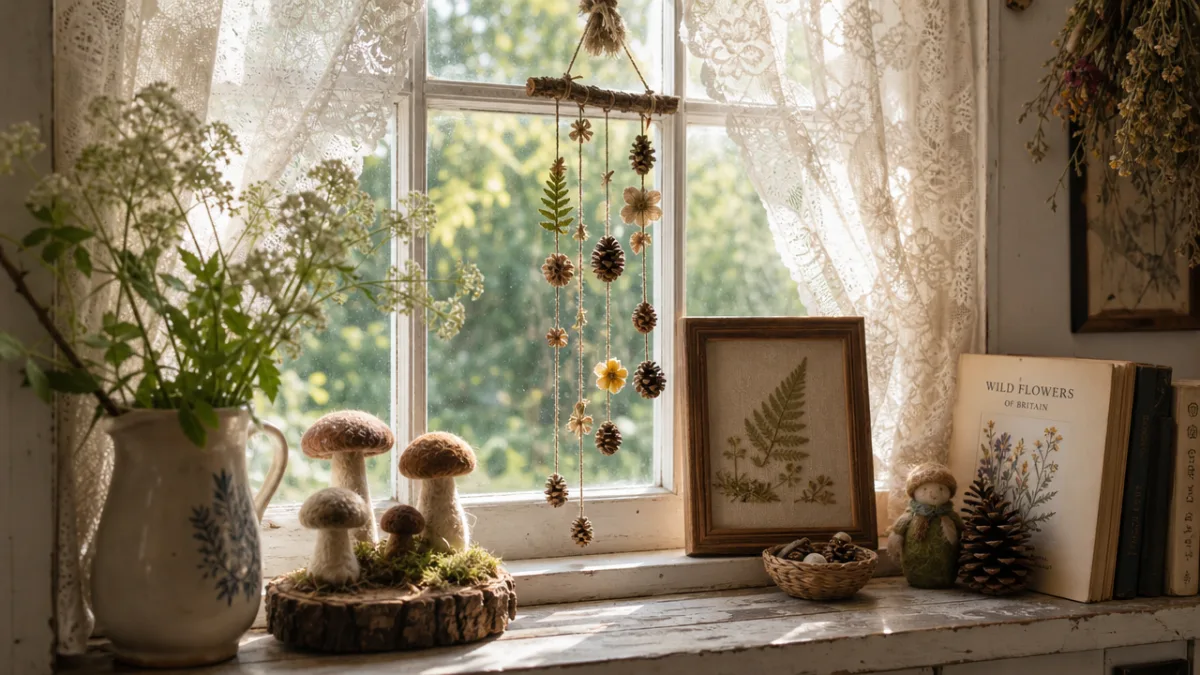
You don’t need a big room or a big budget to create a dedicated crafting space. The cottagecore spirit actually lends itself beautifully to improvised, imperfect setups — a cleared corner of the kitchen table covered with a linen cloth, a basket overflowing with embroidery floss, a collection of jars holding paintbrushes and dried flowers. The main thing is having your materials organized and close at hand, so that when inspiration strikes you can just sit down and start, without a lengthy setup process eating into your enthusiasm.
Sourcing materials can become its own meaningful ritual. Thrift stores and estate sales are goldmines for embroidery hoops, vintage fabric, ceramic vessels, and wooden frames. Farmers markets often carry dried botanicals, beeswax blocks, and handspun wool. And foraging walks in local parks and hedgerows are free — feathers, seedpods, interesting twigs, fallen leaves, wildflowers. Building a material library slowly and mindfully, through these kinds of intentional sourcing practices, fits right in with cottagecore’s ethos of slowness and care.
Finally, it’s worth thinking about cottagecore crafting as a social practice as much as a solitary one. The tradition of gathering to make things together — quilting bees, knitting circles, communal bread baking — runs deep in the rural history that cottagecore draws from. Hosting a small craft afternoon with friends, sharing materials and techniques over cups of tea, turns the individual act of making into something richer and more connected. Whether you’re pressing flowers alone on a quiet afternoon or weaving alongside people you love, cottagecore crafting offers a real antidote to the relentless busyness of modern life — one slow, beautiful stitch at a time.








What do you think?
It is nice to know your opinion. Leave a comment.