










Transform Your Old Jeans Into a Stylish DIY Jean Bag
There is something deeply satisfying about giving a second life to a pair of worn-out jeans that might otherwise end up in a landfill. The DIY jean bag trend has been capturing the hearts of crafters and sustainability enthusiasts alike, combining practicality with personal style in a way that few other upcycling projects can match. Whether you have a pair of old denim sitting in the back of your closet or you stumbled upon a great find at your local thrift store, this project is the perfect way to channel your creativity into something both beautiful and functional.
What makes this project so appealing is its accessibility. You do not need to be an experienced seamstress to pull off a gorgeous denim bag. The structured nature of denim means it holds its shape beautifully, and the existing seams and pockets of the jeans give your finished bag a built-in aesthetic that would take hours to replicate from scratch. The result is a bag that looks intentional, stylish, and thoughtfully crafted — something people will genuinely ask you about when you carry it around town.
Beyond the aesthetic appeal, making your own jean bag is an incredibly budget-friendly endeavor. A pair of thrifted jeans can cost as little as two or three dollars, and most of the other materials you will need — thread, a zipper or button closure, perhaps some fabric for a lining — are either inexpensive or already in your sewing kit. This is a project where the investment is mostly your time and creativity, and the payoff far exceeds what you put in.
Why Upcycled Denim Is the Ultimate Craft Material
Denim is one of the most forgiving and durable fabrics you can work with, which is part of why it has remained a staple in fashion and crafting for over a century. Its tight weave makes it resistant to fraying (at least compared to lighter fabrics), and its weight gives handmade bags a sense of structure and quality that is hard to achieve with cotton or canvas alone. When you work with jeans specifically, you are also benefiting from material that has already been pre-washed and pre-shrunk, meaning you do not have to worry about your finished project changing shape over time.
The sustainability angle of denim upcycling cannot be overstated. The fashion industry is one of the largest contributors to global waste, and denim production in particular is resource-intensive, requiring enormous amounts of water and chemical processing. By repurposing a pair of jeans that would otherwise be discarded, you are directly reducing your environmental footprint in a meaningful and tangible way. Every bag you create is a small but real act of resistance against the culture of disposable fashion.
There is also a deeply personal quality to working with denim that has already been lived in. The fading along the thighs, the slight wear at the knees, the softness that only comes from years of washing and wearing — these characteristics tell a story, and incorporating them into a new creation gives your bag a character and authenticity that brand-new fabric simply cannot provide. Upcycled denim bags carry history within their fibers, and that is something genuinely special.
Materials and Tools You Will Need
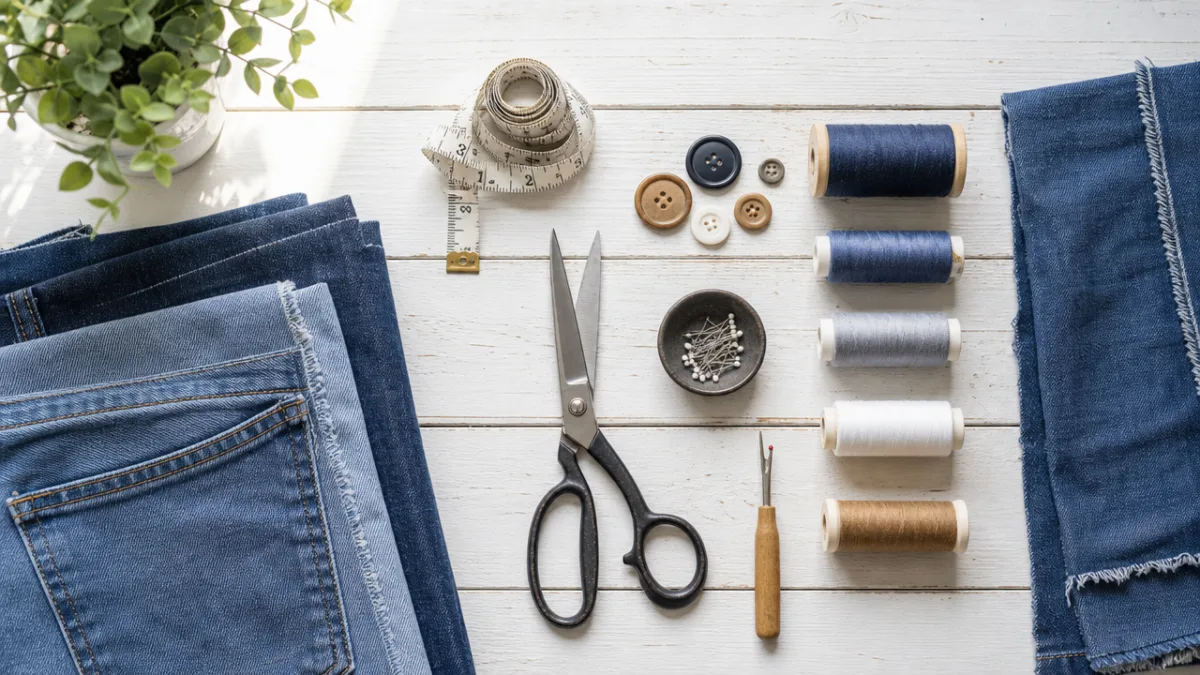
Before you begin cutting and sewing, it is important to gather all your materials so the process flows smoothly from start to finish. The most important item is, of course, a pair of jeans. Look for a pair with fabric that is still in good condition — free of major holes or tears in the areas you plan to use. Thicker denim from jeans in larger sizes tends to yield more usable material, which gives you more flexibility in your design choices. Darker washes tend to give a more polished, finished look, while lighter or distressed denim creates a more casual, boho aesthetic.
In terms of sewing supplies, you will want a sewing machine capable of handling thick fabric, denim needles (these are specifically designed to push through multiple layers without breaking), and strong polyester thread in a color that complements your denim. A rotary cutter and self-healing mat will make your cutting much cleaner and more precise than scissors alone, though sharp fabric scissors will certainly work if that is what you have available. You will also want fabric pins or clips to hold your pieces together before sewing.
Depending on the style of bag you want to create, you may also need some additional materials. Consider the following options based on your design vision:
- A zipper or magnetic snap closure for the top of the bag
- Cotton or canvas fabric for an interior lining
- Leather or faux leather straps for handles
- Interfacing to add extra structure if your denim is on the thinner side
- Decorative elements like embroidery floss, patches, studs, or iron-on designs
- A seam ripper for carefully dismantling parts of the jeans you want to repurpose intact
Having everything laid out before you start will save you from the frustration of stopping mid-project to hunt for a tool or run to the craft store. Take a few minutes to organize your workspace as well — a clean, well-lit surface makes a genuine difference in the quality and enjoyment of your work. Good preparation is half the battle in any sewing project, and this one is no exception.
Choosing the Right Pair of Jeans for Your Bag
Not every pair of jeans is equally suited to becoming a bag, and taking a little time to choose the right starting material will make your project significantly easier and more successful. Straight-leg and wide-leg jeans tend to yield the most usable flat panels of fabric, while skinny jeans, though perfectly workable, give you narrower pieces that may require more creative cutting and piecing. Boot-cut jeans offer a nice middle ground, and their slight flare at the hem can actually be used to create interesting structural details at the base of a bag.
Pay special attention to the existing features of the jeans and think about how they might serve your design. The back pockets, for instance, can become exterior pockets on your finished bag with almost no additional work — simply position them intentionally as you plan your cuts. The waistband, with its button or zipper closure, can be repurposed as the top opening of a bag, creating a charming and functional detail that looks deliberate and clever. Even belt loops can be repurposed as attachment points for straps or decorative keychains.
If you are purchasing jeans specifically for this project rather than repurposing ones you already own, thrift stores are absolutely your best friend. Many thrift shops have dedicated denim sections, and you can often find high-quality jeans for a fraction of their original retail price. Do not be afraid to buy jeans in larger sizes than you would normally wear — more fabric means more options, and the fit is entirely irrelevant when your final product is a bag rather than a garment.
Step-by-Step Instructions for Making Your Jean Bag
Once you have your materials assembled and your jeans selected, it is time to start the actual construction process. Begin by washing and drying your jeans if they have not been recently laundered — you want to be working with clean fabric, and this also ensures any residual shrinkage happens before you cut. Once dry, lay the jeans flat on your cutting surface and take a moment to visualize your finished bag, mentally mapping which sections of the jeans will become which parts of your design.
The most common and beginner-friendly approach is to cut the jeans across the thighs, just below the crotch seam, turning the lower portion of each leg into flat panels of fabric and using the upper portion — with its existing waistband, pockets, and zipper — as the body of the bag. To do this, use your rotary cutter or sharp scissors to cut straight across both legs at the same height. This gives you the upper section of the jeans as your main bag body and leaves you with two leg tubes you can use for the bag’s base, sides, or straps.
Follow these steps to assemble your bag:
- Cut across both legs of the jeans at the same height, just below the crotch seam, to separate the upper and lower portions.
- Turn the upper portion inside out and use a sewing machine to stitch the bottom opening closed, creating the base of your bag. Sew two parallel rows of stitching for extra durability.
- From one of the leg tubes, cut two long strips of equal width and length to serve as your handles. Fold each strip lengthwise, press, and sew along the open edge to create sturdy straps.
- Attach the straps to the inside of the bag’s top opening, positioning them evenly on the front and back, and sew them down securely with reinforcing box stitches.
- If you are adding a lining, cut your lining fabric to match the dimensions of the bag interior, sew it into a matching bag shape, and slip it inside before turning and finishing the top edge.
- If desired, add a zipper or magnetic snap closure to the top opening to keep your belongings secure.
- Turn the finished bag right-side out, press with an iron if needed, and add any decorative embellishments you have planned.
As you work through these steps, remember that precision in your cutting and stitching will directly affect how polished your finished bag looks. Take your time with each seam, use pins or clips to hold everything in place before sewing, and do not be afraid to use a seam ripper if something does not come out the way you intended. Sewing is a forgiving craft precisely because mistakes can almost always be undone and redone.
Tips for a Professional-Looking Finish
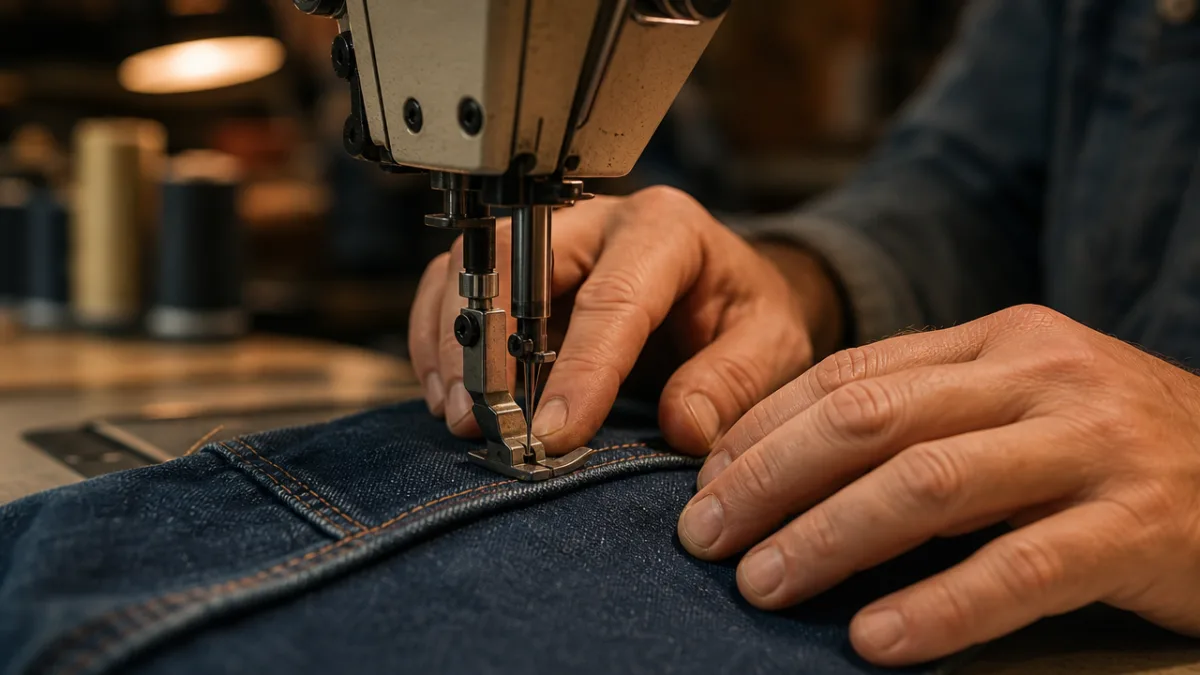
The difference between a bag that looks homemade and one that looks handcrafted and intentional often comes down to a handful of finishing details that are easy to overlook when you are focused on the main construction. One of the most impactful things you can do is press your seams open or to one side with a hot iron before and after sewing. This flattens the fabric, reduces bulk, and gives your seams a clean, sharp appearance. Denim responds very well to heat pressing, and taking this extra step will elevate the quality of your finished piece noticeably.
Topstitching is another technique that transforms the look of a denim bag from rough draft to finished product. Using a slightly longer stitch length and a contrasting or matching thread color, sew a visible line of stitching along the top edges, seams, and strap attachments of your bag. This not only reinforces the structural integrity of these high-stress areas but also gives the bag a deliberate, tailored aesthetic that mimics the look of commercially produced denim goods. Many crafters use yellow or gold thread to echo the classic topstitching found on authentic denim jeans.
Pay careful attention to the corners and curves of your bag. When sewing a curved seam, clip small notches into the seam allowance before turning the bag right-side out — this allows the fabric to spread without bunching and creates smooth, clean curves. For squared corners at the base of the bag, fold the corner so the bottom seam aligns with the side seam, then sew across the triangle this creates at a measured distance from the point. This technique, called boxing the corners, gives your bag a three-dimensional, structured base that allows it to stand upright and hold more volume.
Creative Ways to Personalize Your Jean Bag
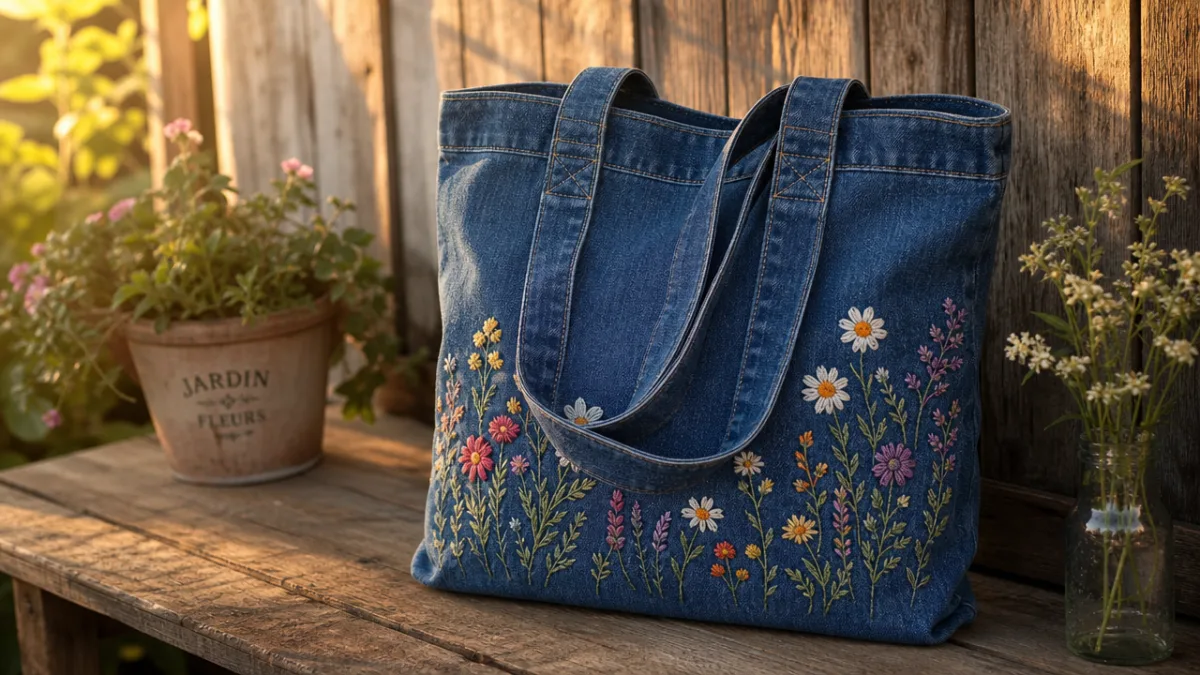
Once the basic structure of your bag is complete, the real fun begins — personalizing it to reflect your unique aesthetic and making it something that is unmistakably, joyfully yours. One of the most popular ways to customize a denim bag is with embroidery. Whether you are drawn to delicate floral motifs, bold graphic designs, or meaningful words and phrases, embroidery on denim creates a striking visual effect that is both artsy and durable. You can embroider directly onto the bag using a hoop and embroidery floss, or create embroidered patches on a separate piece of fabric and then appliqué them onto the bag.
Patches and pins are another wonderful way to add personality to your jean bag with minimal effort. Iron-on or sew-on patches come in virtually every style imaginable — vintage band logos, botanical illustrations, quirky slogans, retro cartoons — and they can be layered and arranged in endlessly creative ways. Enamel pins and badges can be added and rearranged as your tastes change, making them a particularly flexible form of personalization. The beauty of a jean bag is that it has the cultural connotation of denim as a canvas for self-expression built right in — people expect denim to be decorated and personalized, so there is no design choice that feels out of place.
For those who want to go further with customization, consider incorporating other materials into your design. A strip of printed cotton fabric sewn along the bottom edge of the bag creates a colorful contrast panel that is both decorative and structurally interesting. Fringe cut from the raw edges of denim scraps adds a boho, festival-ready vibe. Leather accents — whether in the form of straps, zipper pulls, or small tabs at the corners — add a touch of sophistication that elevates the overall look considerably. The only real limit is your imagination and the contents of your craft supplies.
Caring for Your Finished Jean Bag
A well-made denim bag is built to last, but a little thoughtful care will keep it looking great for years to come. Because denim is a sturdy fabric, most jean bags can be machine washed on a gentle cycle with cold water, though it is always worth checking whether any embellishments — embroidery, patches, leather accents, metal hardware — require special treatment. Turning the bag inside out before washing will help protect any decorative elements on the exterior and reduce friction that might cause fading or wear over time.
For bags with leather straps or accents, it is best to spot-clean the leather portions separately rather than submerging them in water, which can cause leather to stiffen, crack, or lose its suppleness over time. A small amount of leather conditioner applied occasionally will keep leather details looking rich and soft. If your bag has metal hardware like rings, zippers, or studs, dry it promptly after washing to prevent any rust or oxidation, especially if the hardware is not rated as rust-proof.
When it comes to storage, hanging your jean bag or laying it flat in a way that preserves its shape is always preferable to cramming it into a drawer or compressing it under other items. If you want to maintain the structure of a bag you are not using regularly, stuffing it loosely with tissue paper or a small pillow insert will help it hold its form. Treat your handmade bag with the same care you would give a quality purchase, because that is exactly what it is — and the fact that you made it yourself makes it worth even more.
Inspiring Variations and Advanced Techniques
Once you have mastered the basic jean bag construction, a whole world of design variations opens up to explore. The bucket bag silhouette, characterized by a cylindrical shape with a drawstring or gathered top, can be achieved by cutting the legs of the jeans into panels and piecing them together around a circular base. The result is a chic, on-trend bag style that looks remarkably professional and works beautifully in denim. Adding a contrasting interior lining in a bold print fabric makes the inside of the bag as interesting as the outside.
Patchwork is another advanced technique that takes the jean bag concept to an artistic level. Rather than using fabric from a single pair of jeans, collect denim from multiple pairs in different washes, weights, and textures, then cut them into geometric shapes — squares, hexagons, triangles — and piece them together into a patchwork panel that becomes the body of your bag. The variation in color and texture across different denim sources creates a richly layered, textile-art quality that makes each bag a truly one-of-a-kind object. This is a project that rewards patience and planning, but the results are consistently stunning.
For crafters who are comfortable with more advanced sewing techniques, adding interior organization to your jean bag — zippered inner pockets, card slots, a key clip — transforms it from a stylish accessory into a genuinely practical everyday carry. These details require careful measuring and precise sewing, but they are absolutely achievable for an intermediate-level sewist and make an enormous difference in the functionality of the finished bag. A beautifully organized interior also speaks to the quality and thoughtfulness of your craftsmanship in a way that is deeply satisfying every time you reach inside the bag.
Sharing Your Creation and Finding Community
One of the most rewarding parts of making something by hand is sharing it with others who appreciate the skill, creativity, and intention that went into the work. Platforms like Pinterest, Instagram, and TikTok have thriving communities of makers and upcyclers who celebrate exactly this kind of project, and sharing your finished jean bag — along with the process photos that show how it came together — is a wonderful way to connect with like-minded creative people from around the world. Your photos might inspire someone else to try their first sewing project, and that ripple effect of creative encouragement is a beautiful thing.
Beyond social media, consider looking for local sewing circles, maker spaces, or craft workshops in your community. These spaces offer not only access to equipment and materials but also the company of people who understand the particular satisfaction of making something with their own hands. Many communities have swap events where makers trade their handmade goods, and a beautifully crafted jean bag makes an exceptional trade item or handmade gift. The handmade economy is real, and there is a genuine appetite among conscious consumers for unique, sustainable, thoughtfully crafted accessories.
If you find that you love this project and want to keep making bags, do not underestimate the possibility of turning your hobby into a small creative business. Handmade denim bags have a strong and consistent market, especially as more consumers actively seek out sustainable, upcycled goods as an alternative to fast fashion. Platforms like Etsy make it easier than ever to list and sell handmade items, and a well-photographed collection of upcycled jean bags with a consistent aesthetic and clear sustainability message has the potential to find a real and appreciative audience. What begins as a single creative afternoon project might just become the foundation of something much bigger.








What do you think?
It is nice to know your opinion. Leave a comment.