










Introduction to the Monstera: Nature’s Living Masterpiece
Few houseplants command a room quite like the Monstera deliciosa, a tropical native whose dramatic, fenestrated leaves have made it one of the most iconic and beloved indoor plants of the modern era. Originally hailing from the rainforests of Central and South America, this leafy giant has found its way into homes, offices, and interiors across the globe, appearing in everything from wallpaper prints to fine art. Understanding where it comes from is the first step to understanding what it truly needs to flourish indoors.
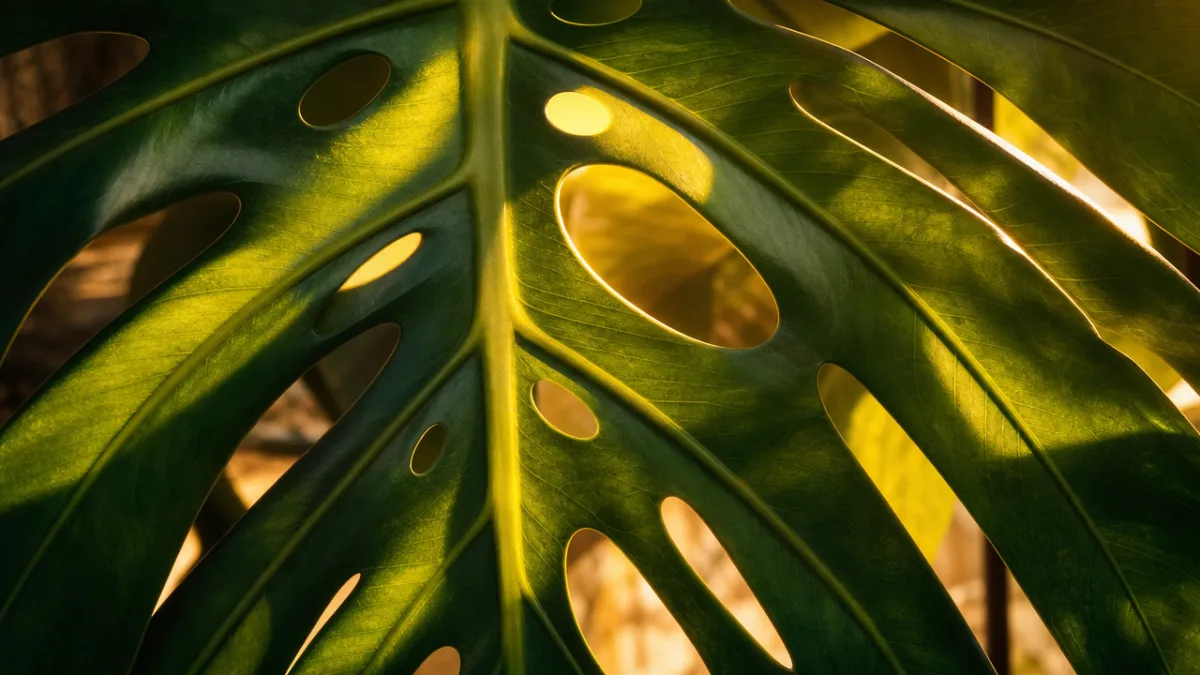
The word “Monstera” derives from the Latin for “monstrous” or “abnormal,” a nod to the plant’s enormous, deeply cut leaves that seem almost too fantastical to be real. These leaves develop their characteristic holes and splits — a feature botanists call fenestration — as the plant matures. Scientists believe this adaptation helps the plant withstand heavy tropical rainfall and strong winds without tearing, while also allowing more light to filter through to lower leaves in the dense rainforest canopy. It is a breathtaking example of nature’s elegant engineering.
Despite its exotic origins, the Monstera is a surprisingly adaptable plant that can thrive in typical indoor conditions when given even a modest amount of attention. It is neither demanding nor fragile, which makes it an excellent choice for beginners and experienced plant enthusiasts alike. Whether you are growing a single trailing vine in a small apartment or cultivating a sprawling specimen in a bright sunroom, this guide will walk you through everything you need to know to keep your Monstera not just alive, but genuinely magnificent.
Popular Monstera Varieties Worth Knowing
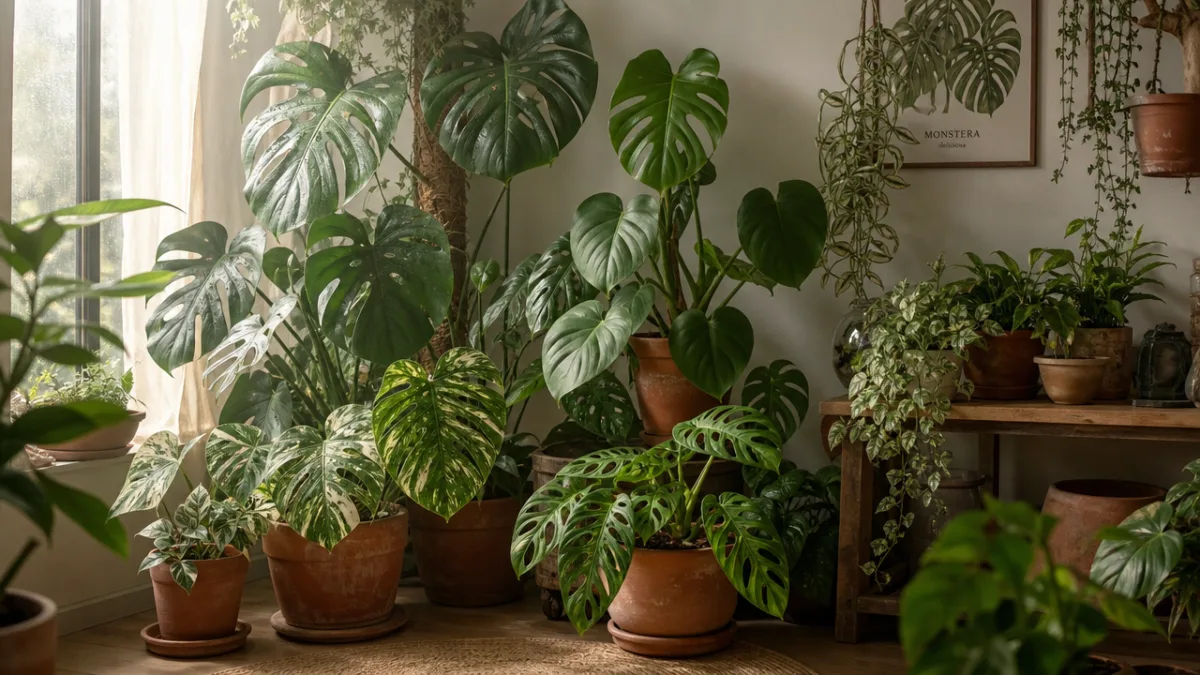
While Monstera deliciosa is the most widely recognized species, the genus contains dozens of fascinating members worth exploring. Monstera adansonii, often called the Swiss cheese vine, has smaller, more heavily perforated leaves and a trailing growth habit that suits hanging baskets beautifully. Monstera thai constellation and Monstera albo variegata feature stunning cream and white marbling across their leaves, making them highly sought after and correspondingly pricier in the collector market. Each variety has its own personality and charm, though most share similar core care requirements.
Monstera deliciosa itself has several distinct forms, including the compact “borsigiana” form that tends to grow more quickly and with smaller leaves, and the true deliciosa form which grows slower but ultimately larger. There is also the deeply lobed Monstera pinnatipartita and the velvety Monstera dubia, which clings flat against surfaces in its juvenile form before maturing into something entirely different. Exploring the genus beyond the classic split-leaf can be a genuinely exciting journey for the devoted plant collector looking to expand a collection.
No matter which Monstera you choose, the foundational principles of care remain largely consistent across the family. Bright, indirect light, well-draining soil, moderate watering, and occasional feeding will serve virtually every Monstera variety well. Variegated forms, which have reduced chlorophyll in their white sections, do generally require somewhat brighter conditions than their fully green counterparts to photosynthesize effectively and maintain their striking appearance over time.
Light Requirements: Finding the Perfect Spot
Light is arguably the single most important factor in Monstera care, and getting it right can mean the difference between a plant that merely survives and one that produces the enormous, deeply fenestrated leaves that make this species so visually spectacular. In its natural rainforest habitat, the Monstera grows beneath a dense canopy, receiving filtered, dappled light rather than direct sun. This is an important clue for indoor placement: bright, indirect light is always the goal, and direct harsh afternoon sun should generally be avoided.
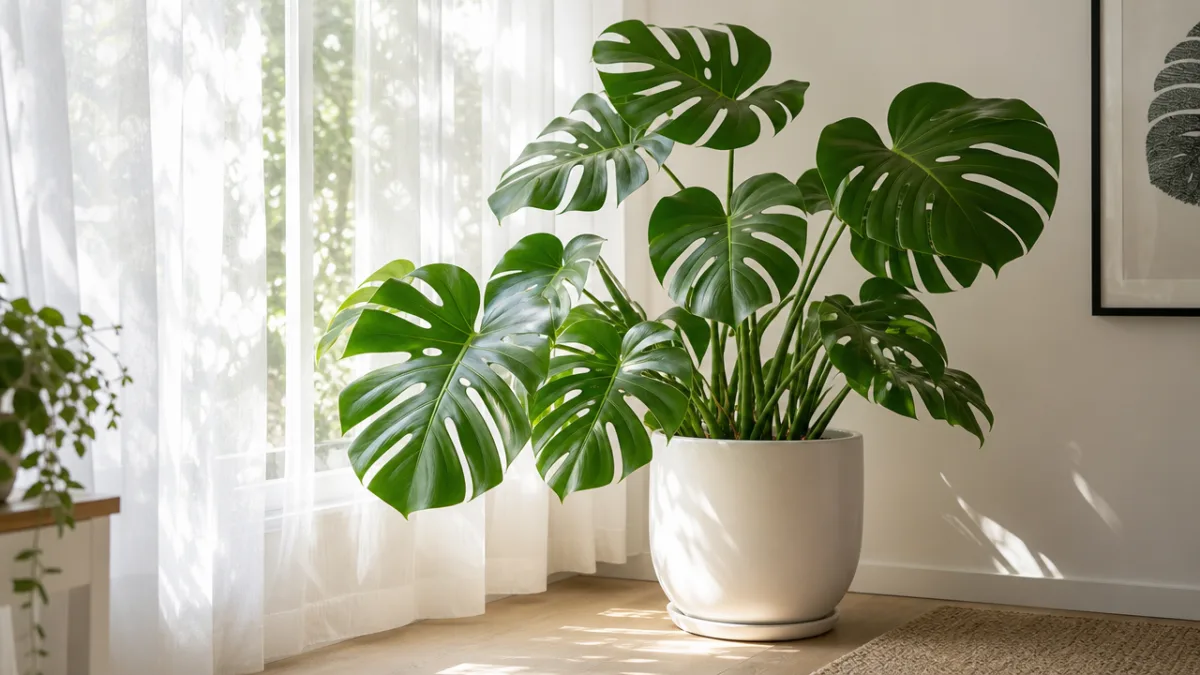
An ideal location for a Monstera is within two to four feet of a large east or north-facing window, or set back from a south or west-facing window where a sheer curtain can soften and filter the incoming light. In these conditions, the plant will receive the luminous but gentle light it craves without the risk of scorched or bleached leaf tissue. Plants placed too far from any window, or in dimly lit corners, will survive but will grow slowly, produce smaller leaves, and often lose the fenestrations that make the species so distinctive and appealing.
One of the clearest signals that your Monstera is not getting enough light is a phenomenon called etiolation, where new growth becomes long, stretched, and pale as the plant reaches desperately toward any available light source. Conversely, yellowing or browning patches on leaf surfaces often indicate too much direct sun exposure. Learning to read these visual cues allows you to fine-tune placement over time. Rotating the plant a quarter turn every few weeks also helps ensure even growth on all sides rather than a lopsided lean toward the light source.
Seasonal Light Adjustments
The angle and intensity of natural light changes significantly throughout the year in most climates, and a placement that works beautifully in summer may leave your Monstera underlit during the short, grey days of winter. In autumn and winter, consider moving the plant closer to its light source or relocating it entirely to a brighter room to compensate for reduced solar intensity. During these months, growth will naturally slow down regardless, but adequate light helps the plant maintain its health through the dormant period without excessive stress.
Supplemental grow lights have become increasingly popular among indoor plant enthusiasts, and for good reason — a quality full-spectrum LED grow light can make a dramatic difference in winter growth rates and overall leaf size. If you live in a northern climate with limited natural winter light, positioning a grow light above or beside your Monstera for twelve to fourteen hours per day can effectively maintain its summer-like vigor year-round. Modern grow lights are far more energy-efficient and aesthetically pleasing than older fluorescent options, making them a worthwhile investment for serious growers.
It is also worth noting that outdoor summer placement can be genuinely transformative for a Monstera, provided certain precautions are taken. A shaded porch, sheltered balcony, or the dappled shadow of a tree canopy can provide the ideal combination of bright filtered light and elevated humidity that produces the most spectacular growth of the plant’s year. Always acclimate the plant gradually to outdoor conditions to prevent shock, and bring it back indoors well before nighttime temperatures drop below 55 degrees Fahrenheit, as Monsteras are sensitive to cold.
Watering: The Art of Knowing When and How Much
Watering is where most Monstera problems originate, and the most common mistake by a wide margin is overwatering. The Monstera is not a succulent, but it does have some drought tolerance, and its thick stems and roots are vulnerable to rot when kept in consistently saturated soil. The golden rule is simple: allow the top two inches of soil to dry out completely before watering again. In practice, this usually means watering every seven to ten days in summer and stretching to every two to three weeks in cooler winter months, though always let the soil rather than the calendar be your guide.
When you do water, the technique matters as much as the frequency. Water thoroughly and deeply, allowing water to flow freely from the drainage holes at the bottom of the pot, ensuring that the entire root system receives moisture. This also helps flush out any accumulated salts from fertilizer that can build up in the soil over time. After thorough watering, allow the pot to drain completely before returning it to its saucer or decorative cachepot — a plant sitting in a puddle of stagnant water is at serious risk of developing root rot within days.
The quality of your water can also influence plant health in ways that are easy to overlook. Tap water in many municipalities contains chlorine, chloramine, and fluoride, which are harmless to humans but can accumulate in plant tissue and soil over time, potentially causing brown leaf tips and edges. Many growers prefer to use filtered water, rainwater, or water that has been left sitting out overnight to allow volatile chlorine to dissipate. If you notice persistent brown tips on otherwise healthy leaves and your watering practices seem correct, water quality is a logical next variable to investigate.
Recognizing the Signs of Overwatering and Underwatering
Both overwatering and underwatering can cause yellow leaves in a Monstera, which can make diagnosis feel frustratingly circular at first. However, there are distinguishing clues if you look carefully. Overwatered plants typically produce yellow leaves that are soft, mushy at the base, or accompanied by a faint musty smell from the soil indicating microbial decomposition. The soil will feel wet and heavy, and you may notice dark, waterlogged patches around the roots. In severe cases, the stem at soil level may become discolored or soft to the touch.
Underwatered Monsteras, by contrast, tend to produce yellowing leaves that are somewhat dry, crispy, or curled at the edges, and the soil will feel light, bone dry, and possibly pulling away from the edges of the pot. The plant may appear slightly droopy or limp overall, with leaves that lack their usual firm, glossy posture. The good news is that a mildly underwatered Monstera recovers quickly once properly watered — the roots are still healthy and the plant bounces back within a day or two with a good thorough drink.
A moisture meter is an inexpensive and genuinely useful tool for newer plant owners who are still developing the intuitive feel for when soil is truly dry versus just dry on the surface. Inserting the probe into the middle of the pot gives a far more accurate reading of overall moisture levels than simply touching the top of the soil. Over time, most growers develop a reliable sense for their plant’s watering needs by simply lifting the pot — a noticeably lighter pot is a reliable indicator that the soil has dried through and watering time has arrived.
Soil, Fertilizing, and Repotting for Maximum Growth
The right soil mix is foundational to Monstera success, as it directly influences both moisture retention and the oxygen availability around the root system. A standard potting mix straight from the bag is often too dense and moisture-retentive for Monsteras, which need good aeration to prevent root rot. The ideal Monstera mix combines a quality potting soil with amendments that improve drainage and airflow, such as perlite, orchid bark, or coarse pumice. A commonly recommended ratio is roughly sixty percent potting soil, twenty percent perlite, and twenty percent orchid bark, though there is room for personal variation.
Fertilizing gives your Monstera the nutritional building blocks it needs to produce those impressively large, deeply fenestrated leaves, and during the active growing season of spring and summer, regular feeding makes a visible and meaningful difference in plant vigor. A balanced liquid fertilizer with an NPK ratio of around 20-20-20 or one specifically formulated for foliage plants works well, applied at half the recommended strength every two to four weeks. Avoid fertilizing in autumn and winter when the plant’s growth has slowed and its nutritional uptake is minimal — excess fertilizer during dormancy can accumulate as harmful salts in the soil rather than being absorbed and used.
Repotting is typically needed every one to two years for a young, actively growing Monstera, and less frequently for mature specimens that have slowed down. The clearest signal that repotting is overdue is roots circling the bottom of the pot, emerging from drainage holes, or pushing up visibly through the soil surface. Choose a new pot only one to two sizes larger than the current one — a pot that is too large holds excess moisture in the unoccupied soil, increasing root rot risk. Spring is the ideal time to repot, giving the plant the entire active growing season to establish in its new home.
Supporting Your Monstera’s Vertical Ambitions
In the wild, Monsteras are hemiepiphytes that use their aerial roots to climb trees, and providing some form of vertical support indoors dramatically improves their form, leaf size, and overall vigor. A moss pole — a tube filled with sphagnum moss that the aerial roots can grip and draw moisture from — is the most popular and effective support option, and plants trained up a moss pole consistently produce larger, more fenestrated leaves than those left to sprawl horizontally. Coir poles and bamboo stakes are simpler alternatives, though they offer fewer benefits for the aerial roots themselves.
Training a Monstera to climb its support requires gentle persistence — use soft ties or Velcro plant tape to guide stems upward without cutting into the tissue, and encourage aerial roots to make contact with the moss pole by keeping the moss moist. Over time, the roots will grip the pole of their own accord and the plant will begin to naturally climb. This upward growth orientation also signals to the plant that it is behaving as it would in its natural environment, which research and grower experience both suggest results in more vigorous and more characteristic growth patterns.
For those who prefer a more horizontal, draping aesthetic, allowing the Monstera to trail from a high shelf or planter is entirely valid and can create a wonderfully lush effect in a living space. However, it is worth knowing that horizontally grown plants tend to produce smaller leaves with fewer fenestrations over time compared to those given vertical support. If leaf size and dramatic fenestration are goals, vertical support is genuinely worth the modest effort of installation and training, particularly as the plant grows larger and its stems become longer and heavier.
Humidity, Temperature, and Common Problems
The Monstera’s tropical origins mean it genuinely appreciates higher humidity levels than most temperate homes naturally provide, particularly during dry winters when indoor heating strips moisture from the air. While the plant is adaptable enough to tolerate typical household humidity levels of thirty to fifty percent, it truly thrives when ambient humidity sits between fifty and sixty percent. Leaves grown in adequate humidity tend to be larger, glossier, and more vibrant than those produced in chronically dry conditions, and the plant overall maintains a more vigorous appearance year-round when its atmospheric moisture needs are met.
There are several practical ways to raise humidity around your Monstera without investing in a large humidifier. Grouping multiple plants together creates a natural microclimate of slightly elevated humidity as each plant transpires moisture from its leaves. Placing the pot on a tray filled with pebbles and water — ensuring the bottom of the pot sits above the waterline — allows gentle evaporation to humidify the immediate air around the plant. A small room humidifier aimed in the plant’s direction during winter months is perhaps the most effective approach and benefits every other plant and even human residents of the space simultaneously.
Temperature is another consideration that aligns closely with the plant’s tropical origins. Monsteras prefer a consistent temperature range of 65 to 85 degrees Fahrenheit (18 to 29 Celsius) and dislike sudden temperature swings, cold drafts, and proximity to air conditioning or heating vents. Extended exposure to temperatures below 55 degrees Fahrenheit can cause visible cold damage — dark, water-soaked patches on leaves that eventually turn brown and papery — and may inhibit root function even before any visible symptoms appear. When positioning your Monstera, take care to keep it away from exterior doors, poorly insulated windows in winter, and any direct streams of conditioned air.
Diagnosing and Treating Common Monstera Issues
Even well-cared-for Monsteras occasionally encounter pest pressure or other problems, and early identification is the key to swift and effective treatment. The most common pest visitors include fungus gnats, which lay eggs in moist topsoil and whose larvae can damage fine roots; spider mites, which thrive in dry conditions and leave telltale fine webbing on leaf undersides; and scale insects, which appear as small brown bumps on stems and leaf veins and excrete a sticky residue called honeydew. Regular inspection of both the upper and lower leaf surfaces during your watering routine makes early detection far more likely.
Treatment approaches vary by pest type. Fungus gnats are best addressed by allowing the soil to dry more thoroughly between waterings, applying a layer of coarse sand or grit to the soil surface to deter egg-laying, or using a biological control such as Bacillus thuringiensis israelensis (Bti) in the soil. Spider mites respond well to regular misting of the foliage, neem oil sprays applied to all leaf surfaces, or insecticidal soap. Scale insects can be removed manually with a cotton swab dipped in rubbing alcohol and then treated with neem oil or horticultural oil to prevent reinfestation. Consistency matters — most treatments require multiple applications over two to three weeks to fully break the pest life cycle.
Yellow leaves remain the most common source of anxiety for Monstera owners, and it is worth approaching the diagnosis methodically rather than reactively. Check soil moisture first, then consider light levels, temperature, humidity, recent repotting stress, or root bound conditions. Occasionally a lower leaf will simply yellow and drop as the plant redirects energy to newer growth — this is entirely natural and not a cause for alarm if limited to one or two leaves at a time. Brown leaf tips are most often caused by low humidity, inconsistent watering, or accumulated fertilizer salts, and trimming the affected area neatly with clean scissors is perfectly acceptable for cosmetic purposes while the underlying cause is addressed.
Propagation: Sharing the Monstera Love
One of the most rewarding aspects of keeping a Monstera is how generously the plant lends itself to propagation, allowing you to multiply your collection, share with friends, or replace an aging or struggling parent plant with vigorous young specimens. The most reliable and widely practiced propagation method is stem cutting, which involves taking a length of stem that includes at least one node — the joint from which leaves, roots, and new growth emerge — and ideally one or two aerial roots. A cutting with a healthy node and an existing aerial root will root significantly faster and more reliably than a cutting with a node alone.
Once you have taken a clean cut with sterilized scissors or a knife, you have several options for rooting the cutting. Water propagation is the most popular approach for beginners because it allows you to watch root development visually — simply submerge the node and any aerial roots in a jar of water, change the water every five to seven days to prevent stagnation, and wait. Roots typically emerge within two to six weeks, and once they reach two to three inches in length, the cutting is ready to pot into a prepared soil mix. Sphagnum moss is another excellent rooting medium that provides high humidity and excellent aeration around the developing root system and tends to produce robust, well-structured roots.
Air layering is a slightly more advanced propagation technique that produces a rooted cutting while it is still attached to the parent plant, resulting in a larger, more established cutting with minimal transplant shock. The process involves wounding the stem just below a node, packing the wound with moist sphagnum moss, and wrapping the entire assembly tightly in plastic wrap to maintain humidity. After four to eight weeks, visible roots will have grown into the moss ball, at which point the stem can be cut below the rooted section and potted directly. This method is particularly useful for propagating very large specimens or for saving a plant that has grown too tall and leggy for its space.
Caring for Monstera Propagations and Young Plants
Young Monstera plants and fresh cuttings require slightly different care than mature specimens, primarily because their root systems are not yet developed enough to support significant moisture uptake or tolerate the same level of soil drying. Keep propagations in bright, indirect light rather than the brightest spot available, as intense light on an unrooted or newly rooted cutting can cause stress before the plant has the vascular infrastructure to support rapid transpiration. A clear plastic bag or humidity dome placed loosely over a new cutting can raise the immediate humidity and reduce the moisture demands on the developing root system during the critical early weeks.
The first true leaves produced by a new Monstera cutting will not have fenestrations — they will be small, heart-shaped, and entirely whole, which can be momentarily disconcerting if you were expecting tiny versions of the parent plant’s dramatic leaves. This is completely normal and reflects the juvenile stage of the plant’s leaf development. Fenestrations begin to appear gradually as the plant matures and its root system becomes more established, typically by the time the plant has produced three to five leaves. Providing a moss pole or other vertical support early in the plant’s development can encourage the production of adult-type leaves to begin somewhat earlier than it might otherwise.
As your propagated Monstera establishes itself and begins to show consistent new growth, you can gradually transition it to the same care routine as a mature plant. Introduce diluted fertilizer only after the first two to three months when the root system is sufficiently developed to utilize the nutrients without risk of fertilizer burn on tender young roots. Patience is the essential virtue at this stage — the first year of a Monstera’s life from cutting may seem slow, but by the second and third year, the growth rate accelerates noticeably and the increasingly large, fenestrated leaves that emerge begin to make all the nurturing investment feel abundantly worthwhile.








What do you think?
It is nice to know your opinion. Leave a comment.