










11+ Creative Upcycled Fence Ideas to Transform Your Outdoor Space
Why Upcycling Old Fences Is a Design Opportunity Worth Embracing
There’s something genuinely satisfying about rescuing a beat-up piece of wood or metal and turning it into something you’re actually proud of. Old fencing is one of those materials people almost always throw away without a second thought — hauled off to the landfill when it could become the backbone of something beautiful, useful, and completely your own. Upcycling your old fence isn’t just the greener choice. It’s a creative project that tends to produce results with far more personality than anything you’d pull off a shelf at the hardware store.
Sustainable home design has picked up a lot of momentum lately, and upcycled garden features sit right at the crossroads of that trend and the thriving DIY culture that’s exploded online. More and more homeowners are realizing that the rough texture of old cedar, the natural patina on rusted iron, or the silvery-grey of weathered pine can actually be more interesting to look at than something fresh and uniform from the store. Those imperfections have a story to tell, and they give outdoor spaces an authenticity that no manufactured product can fake.
The practical argument for fence upcycling is pretty hard to ignore, too. New fencing materials can run into the hundreds or even thousands of dollars depending on the scale of your project, but reclaimed wood and metal are either free or next to nothing. Plenty of people post old fencing on local online marketplaces and neighborhood groups after renovations, just happy to have someone take it off their hands. What you’re really investing is your time, your imagination, and a willingness to see potential where everyone else sees junk.
Planter Boxes and Vertical Gardens Made From Fence Panels
Building planter boxes from old fence boards is one of the most popular ways to put this material to work, and it’s easy to see why. Fence timber — especially cedar and redwood — is naturally resistant to rot and holds up beautifully outdoors, which makes it practically perfect for holding soil and plants. With a few boards cut to size and some basic woodworking, you can put together a gorgeous raised bed or a row of window-box planters for your porch or deck. The worn, lived-in look of the wood gives them an instant charm that a brand-new box just can’t match.
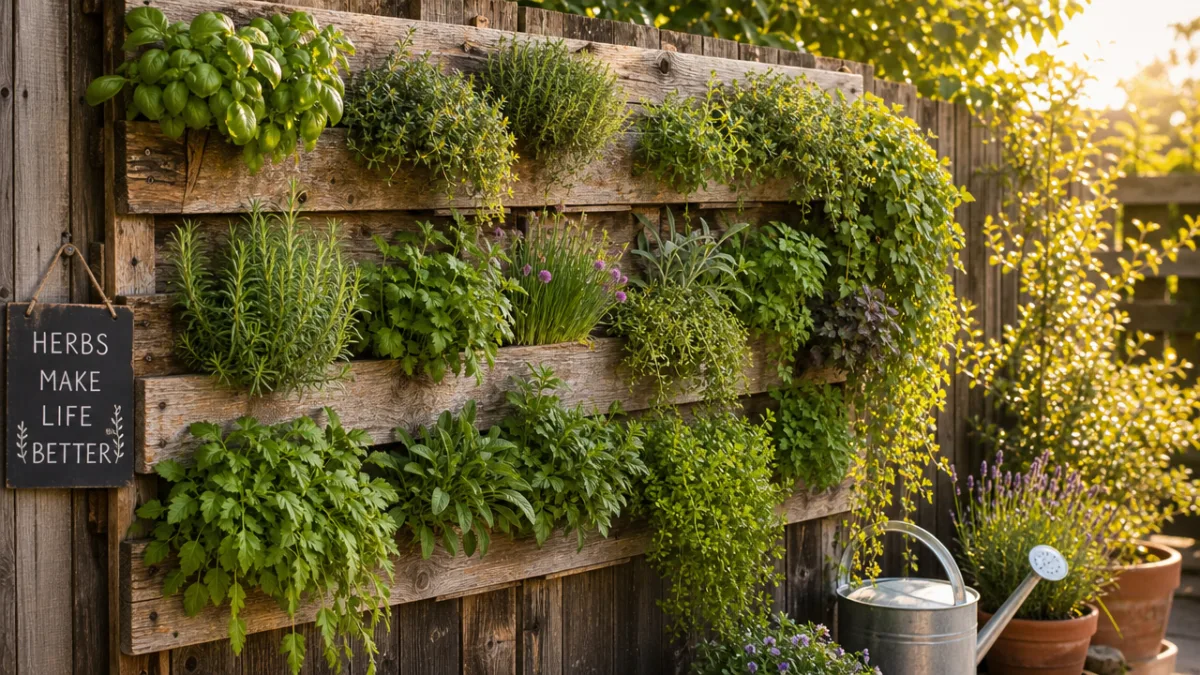
Vertical gardens made from old fence panels are another surprisingly effective option. A single panel mounted on an exterior wall or leaned against a fence line can hold small pots, woven baskets, or even repurposed tin cans full of herbs, succulents, or trailing flowers. If you’re working with a small backyard or an urban outdoor space, this approach is especially handy — the vertical layout draws the eye upward and makes even a tiny area feel full and layered.
When you’re planning a vertical garden from fence materials, think about mixing planting pockets of different sizes so the whole thing has some visual rhythm. Old pickets spaced apart can serve as mounting rails, with little wooden shelves or hooks at different heights. Herbs like thyme, mint, and basil do well in small containers and are wonderfully convenient near a kitchen door, while succulents practically look after themselves and add a sculptural touch year-round. A coat of exterior paint in a bold color can take even the most battered old fence panel and make it the focal point of the whole space.
Headboards, Wall Art, and Decorative Panels for Outdoor Living Areas
The outdoor living room concept — designing garden spaces to feel as cozy and curated as the inside of your home — has made decorative wall panels a genuinely sought-after feature. Old fence boards, with their varied grain, weathering, and shifting tones, can be arranged in herringbone, chevron, or simple horizontal patterns to create striking feature walls on a house exterior, a garden shed, or a freestanding privacy screen. You don’t need specialist skills to pull this off, but the results look like you put real thought into them.
Fence slats work beautifully indoors, too — as decorative headboards, accent walls, or rustic panelling in an entryway. With the farmhouse and industrial interior styles still going strong, weathered wood feels completely at home inside the house, not just out in the yard. A headboard made from old fence pickets lined up side by side and given a light sanding makes a real statement in a bedroom — cozy and distinctive at the same time. You could leave the wood completely natural, give it a diluted white or grey wash for a coastal feel, or use a clear wax finish to bring out the natural color while keeping all that texture visible.
Wall art is another direction worth exploring. Individual fence boards can be painted with murals, stencilled with botanical designs, or used as canvases for hand-lettered quotes and signs. Group a few together in mismatched sizes inside a simple frame and you’ve got a gallery-wall style installation that adds real personality to a garden fence, shed wall, or covered patio. This is a great project for anyone who doesn’t consider themselves particularly crafty, because the rustic base material is naturally forgiving — any imprecision just becomes part of the charm.
Functional Furniture Built From Reclaimed Fence Timber
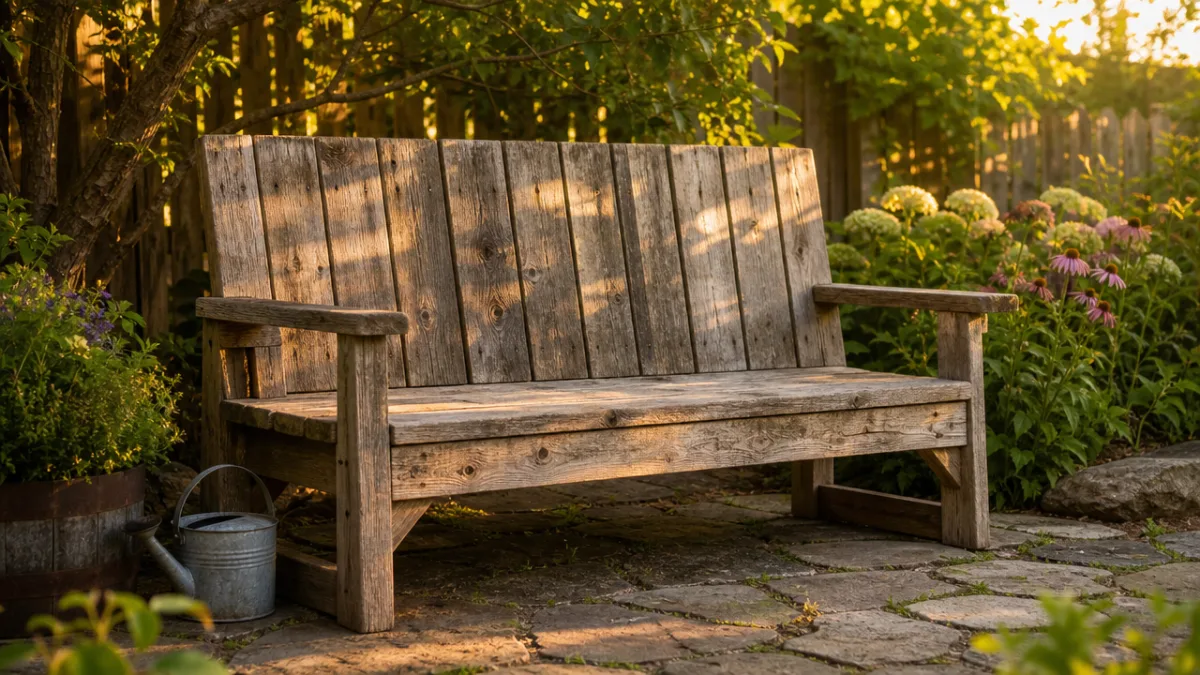
Building furniture from reclaimed fence boards has to be one of the most rewarding upcycling projects you can take on. You end up with something practical, completely one-of-a-kind, and made with your own hands from materials that were heading for the trash. A simple garden bench, for instance, only takes a handful of fence boards, a bit of timber for the frame, and some basic hardware. The finished piece has a solidity and character that flat-pack furniture just doesn’t come close to.
Coffee tables and dining tables are a step up in ambition but totally achievable with basic woodworking tools. Clean up the boards, give them a light plane if needed, then arrange them into a tabletop and fix it to a solid underframe of new or reclaimed timber. A food-safe oil or exterior lacquer on the surface protects it from the elements and brings out the wood’s natural beauty. These tables tend to become talking points — guests always want to know the story behind them.
Smaller projects are just as worthwhile, and often more accessible if you’re just getting started. Consider these popular upcycled fence furniture ideas:
- Floating shelves for an outdoor kitchen or potting shed, made from single wide fence boards with simple bracket supports
- Side tables assembled from two or three boards and short legs cut from fence posts
- Boot racks and mudroom benches for entryways, with a seat board on top and slatted lower sections for shoe storage
- Adirondack-style chairs built from fence pickets, shaped with a jigsaw and put together with weather-resistant screws
- Storage boxes with hinged lids that double as extra seating around a fire pit or on a deck
Gates, Trellises, and Structural Garden Features
Turning old fence panels into a new gate is a wonderfully circular idea — taking one fence element and giving it a second life as another. A section of old picket fencing, for example, can be cleaned up and fitted with new hinges and a latch to make a charming garden gate that looks like it’s always belonged there. The existing wear and weathering of the wood actually works in your favor here, giving the gate the feeling of something with history rather than something just installed last weekend.
Trellises are among the simplest things you can build from leftover fence materials. Cross thin fence laths or pickets at 45-degree angles and you’ve got a classic diamond trellis that climbing plants like roses, clematis, jasmine, and wisteria will happily grip and weave through over time. Freestanding trellises can act as living dividers in a garden, carving out distinct zones — a dining area, a vegetable patch, a space for the kids — without the heaviness of a solid wall. You still get structure and definition, but light and air move freely through.
For those with a bigger appetite for a project, fence materials can go a lot further. Arbours, pergolas, and archways are all within reach using thicker fence posts and heavy-duty boards. These structures create a sense of arrival or transition in a garden, framing a path or a seating area with something architectural that costs a fraction of what you’d pay at a garden centre. Give it a few seasons, let the climbing plants do their thing, and the reclaimed timber practically disappears beneath foliage and flowers — making the whole structure feel like it grew there naturally.
Decorative Accents, Signs, and Small Craft Projects
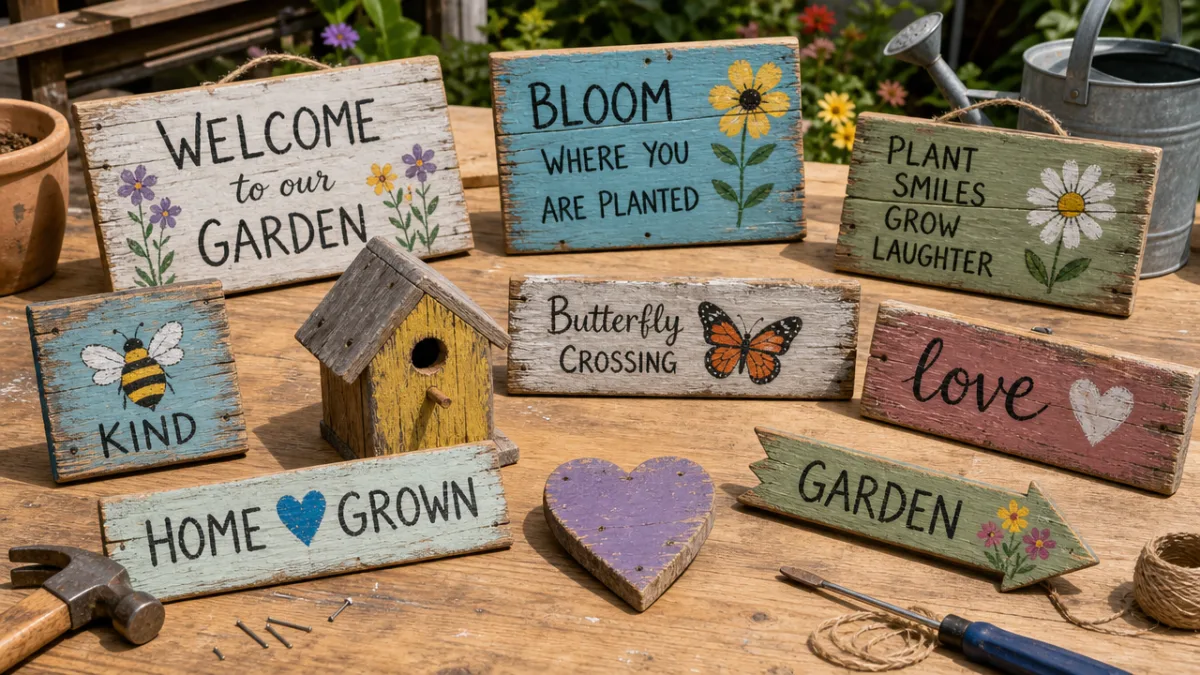
Not every upcycling project has to be a big undertaking. Some of the most enjoyable uses of old fence materials are small-scale crafts that add personal touches around a garden or home. Individual fence pickets, for instance, make great bases for hand-painted garden signs. Whether you want to label your vegetable beds, put up a welcome sign near the front gate, or make some seasonal decorations, the pointed top of a classic picket gives you a built-in stake you can push straight into the ground — no extra hardware needed.
Fence wood can also be cut into shapes and used as bases for wreaths, hanging decorations, and seasonal displays. A round section cut from a wide board and painted with a simple design makes an instant wreath base; cut into stars, hearts, or tree shapes, the same board becomes raw material for holiday décor. These smaller projects are especially satisfying because the tools list is short — usually just a saw, sandpaper, paint, and a drill — and you can finish one in an afternoon. They’re perfect for anyone who wants to dip their toes into upcycling without committing to something major.
Small fence upcycling projects also make genuinely thoughtful gifts, which is worth mentioning. A set of personalized garden markers, a small piece of art painted on weathered wood, or a rustic serving board shaped from a wide cedar plank — these things carry a story with them. The material had a previous life, was saved from being thrown away, and was turned into something new through time and care. That backstory adds a layer of meaning that no store-bought gift can offer, and it has a way of nudging the person who receives it to look at their own overlooked materials a little differently.
Tips for Getting Started With Fence Upcycling
Before you dive in, it’s worth taking a good look at the condition of whatever fence material you’re planning to work with. Not all old fence wood is worth saving. You want boards that are structurally sound — no deep rot, no major splitting, no signs of pest damage like termite tunnelling. Surface weathering, small cracks, and discoloration are all fine and often add character, but if a board crumbles when you press it or has mold running all the way through, it’s better off composted or disposed of than built into a project.
Taking time to prep your materials before you start building will make a real difference to how the finished piece looks and how long it lasts. For most projects that means pulling out old nails and hardware with a claw hammer or pry bar, brushing off loose dirt with a stiff brush, and giving the boards a light sand to knock off any splinters or rough edges. If you’re painting the finished piece, a coat of exterior primer on the wood first will help the paint stick and hold up over time. If you’re leaving the wood natural, a coat of exterior oil or wood preservative will protect it from moisture and UV damage.
Sourcing fence materials is often easier than people expect, and knowing where to look makes it a lot more fun. Here are some reliable places to find free or inexpensive reclaimed fence boards:
- Online community marketplaces like Facebook Marketplace, Nextdoor, and Freecycle, where homeowners regularly give away fence materials after renovations
- Local demolition and construction sites, where contractors may let you take materials that would otherwise go to landfill — always ask permission first
- Architectural salvage yards and reclamation centres, which sell old fencing and timber at a fraction of new material prices
- Neighbours who are replacing their own fencing and would rather not deal with the disposal themselves
- Community tool libraries and maker spaces, which sometimes have surplus materials available for members
And finally — don’t wait until you feel completely ready. The best thing about upcycling is that you learn as you go. Every project teaches you something about the material, the tools, and your own creative instincts, and even the imperfect results have a charm that nothing off a factory line can replicate. Those fence boards in your yard or listed free online aren’t just waste. They’re the starting point for something entirely new — shaped by your hands, your ideas, and the history they already carry. That mix of past and present is exactly what makes upcycled design so hard to get out of your head once you’ve tried it.








What do you think?
It is nice to know your opinion. Leave a comment.