










Wild Wallflower: Celebrating the Beauty of Vintage Botanical Illustration
The Timeless Allure of Vintage Botanical Art
There is something profoundly captivating about vintage botanical illustrations that transcends the centuries separating their creation from our modern admiration. The wild wallflower, known scientifically as Erysimum cheiri, has been a beloved subject for artists, naturalists, and garden enthusiasts alike for hundreds of years. When rendered in the delicate, precise style of classical botanical illustration, this humble flowering plant transforms into something extraordinary — a window into a world where art and science were considered not just compatible but inseparable disciplines worthy of the greatest human attention and skill.
Vintage botanical illustrations like those celebrated by archives such as The Old Design Shop occupy a unique place in the history of visual culture. They were not created merely for decoration, though their decorative power remains undeniable. These works were produced with serious scientific intent, commissioned to document the natural world at a time when photography did not exist and accurate visual records of plant species were essential to medicine, agriculture, horticulture, and natural philosophy. The artists who created them — many of whom remain anonymous today — possessed extraordinary technical skill combined with a genuine passion for the living world they sought to capture on paper.
What makes these illustrations feel so relevant and beloved in the twenty-first century is their remarkable combination of precision and warmth. A skilled botanical illustrator did not simply copy a plant; they interpreted it, selecting the most representative specimen, arranging its parts to show as much as possible at once, and rendering texture, color, and form with a sensitivity that no camera can quite replicate. The result is an image that feels simultaneously documentary and deeply personal, like a letter written by someone who truly loved what they were looking at and wanted you to love it too.
The Wild Wallflower: Portrait of a Beloved Bloom
The wallflower has one of the most charming and evocative names in the entire flowering plant kingdom. It earned this title through its habit of growing in crevices of old stone walls, castle ruins, and rocky cliffsides throughout Europe and western Asia — a plant so determined and resilient that it found beauty and sustenance in the most unlikely of places. This characteristic alone made it a natural subject for romanticization, and by the time botanical illustrators began documenting it in earnest during the sixteenth and seventeenth centuries, it had already accumulated centuries of symbolic meaning in the cultural imagination of the Western world.
In terms of its physical appearance, the wild wallflower is a genuinely striking plant. It typically produces clusters of four-petaled flowers in shades ranging from deep golden yellow through rich orange and amber to warm russet and velvety reddish-brown. The blooms appear in spring and early summer, and they carry a fragrance that has been described variously as honey-sweet, spicy, and warmly vanilla-like. The stems are woody at the base, the leaves narrow and slightly gray-green, and the whole plant has a sturdy, slightly wild quality that distinguishes it from more formally cultivated garden flowers. It is beautiful in the way that self-reliant things are always beautiful — without apparent effort or artifice.
Botanical illustrators were particularly drawn to the wallflower because it offered such a rich range of visual textures and tones. The velvety surface of the petals, the fine hairs on the stems and leaves, the architectural arrangement of the flower clusters — all of these elements gave a skilled artist the opportunity to demonstrate the full range of their technical vocabulary. A truly accomplished illustration of a wild wallflower would convey not just its visual appearance but its tactile character, the sense of what it might feel like to brush your fingertips across its petals or press your nose into a cluster of blooms on a warm April morning.
The Golden Age of Botanical Illustration
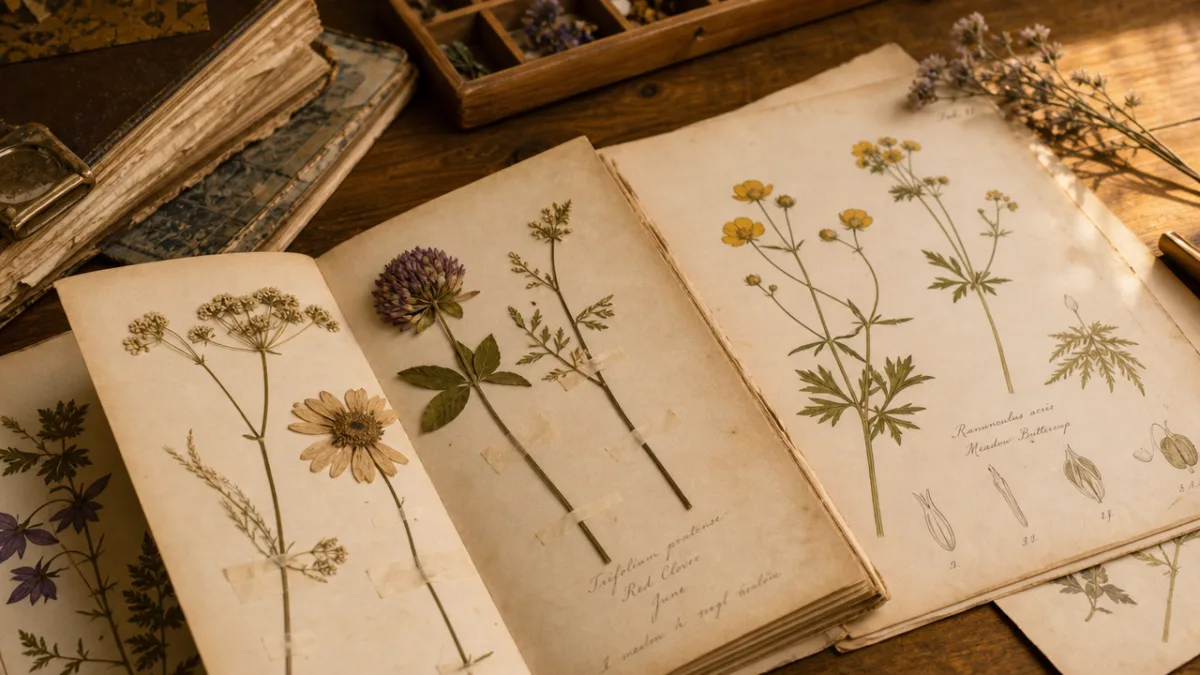
The tradition of botanical illustration as a formal discipline reached its peak during the seventeenth, eighteenth, and early nineteenth centuries, a period sometimes called the golden age of natural history. During this era, European imperial powers were sending expeditions to every corner of the globe, returning with specimens of plants previously unknown to Western science. The need to document, classify, and communicate these discoveries created an unprecedented demand for skilled botanical artists, and the best among them achieved considerable fame and recognition during their lifetimes. Works like those of Maria Sibylla Merian, Georg Dionysius Ehret, and Pierre-Joseph Redouté set standards of beauty and accuracy that remain influential to this day.
The techniques employed during this period were extraordinarily labor-intensive. Most botanical illustrations were originally produced as hand-colored engravings, meaning that a skilled engraver would first translate the artist’s original drawing or watercolor into a copper or steel plate, from which many copies could be printed. Each printed copy would then be hand-colored by teams of colorists, working from a master copy to ensure consistency. The best publications employed colorists of exceptional skill who could match the subtlety and vitality of the original artwork, though cheaper productions often show obvious differences in quality between individual copies, which only adds to their charm today.
Publications that featured these illustrations ranged from expensive folio volumes produced for wealthy aristocratic collectors to more modest handbooks intended for practical gardeners and apothecaries. The wild wallflower appeared in many such volumes across the centuries, recognized not just as an ornamental plant but as a medicinal one. Traditional herbalists attributed a range of properties to the wallflower, using preparations from its flowers and seeds to treat everything from palsy and paralysis to menstrual disorders and liver complaints. Whether or not these remedies were effective, their documentation in illustrated herbals ensured that the wallflower was very thoroughly recorded in the visual history of European botany.
- Woodblock printing — the earliest method, used in herbals from the fifteenth and sixteenth centuries, producing bold, somewhat stylized images with strong outlines and hatched shading.
- Copper engraving — finer and more detailed than woodblock, dominant through the seventeenth and eighteenth centuries, capable of capturing subtle gradations of tone and delicate surface texture.
- Aquatint and mezzotint — tonal techniques that allowed illustrators to achieve soft, painterly effects particularly suited to rendering the velvety quality of flower petals.
- Lithography — introduced in the early nineteenth century, offering greater flexibility and speed while still permitting exceptional detail and tonal subtlety.
- Chromolithography — the first true color printing process, allowing full-color illustrations to be produced without hand-coloring, transforming the economics and accessibility of botanical publishing.
Free Vintage Resources and the Digital Preservation Movement
The landscape of access to vintage botanical illustration has been transformed almost beyond recognition by the digital revolution of the past two decades. What once required a trip to a specialist library, a university archive, or a rare book dealer can now be accomplished in moments from anywhere in the world with an internet connection. Institutions ranging from the Biodiversity Heritage Library to the Wellcome Collection to the New York Public Library have invested enormous resources in digitizing their collections of historical natural history publications and making them freely available for download and reuse. This democratization of access represents one of the most genuinely positive developments in cultural heritage preservation in living memory.
Sites like The Old Design Shop occupy a particularly valuable niche within this ecosystem. While major institutional archives tend to focus on scholarly completeness and often present their digitized materials in relatively utilitarian formats, curated collections like The Old Design Shop select, restore, and present vintage illustrations in ways specifically designed for creative reuse. The images are cleaned up, properly formatted, and made available in resolutions suitable for printing, crafting, and design work. For the enormous community of people who love working with vintage imagery — paper crafters, graphic designers, bloggers, textile artists, and home decorators among them — this kind of thoughtfully curated resource is genuinely invaluable.
The free availability of these resources raises fascinating questions about the nature of cultural ownership and the public domain. Under copyright law in most jurisdictions, works created more than a certain number of years ago — typically between seventy and one hundred and fifty years, depending on the country and the nature of the work — enter the public domain, meaning that anyone may reproduce, adapt, and use them without permission or payment. Vintage botanical illustrations from the seventeenth, eighteenth, and nineteenth centuries are firmly in the public domain, which means that sharing them freely, as resources like The Old Design Shop do, is not just legally permissible but represents a kind of cultural generosity — returning to the public an inheritance that belongs to all of us.
Using Vintage Botanical Illustrations in Creative Projects
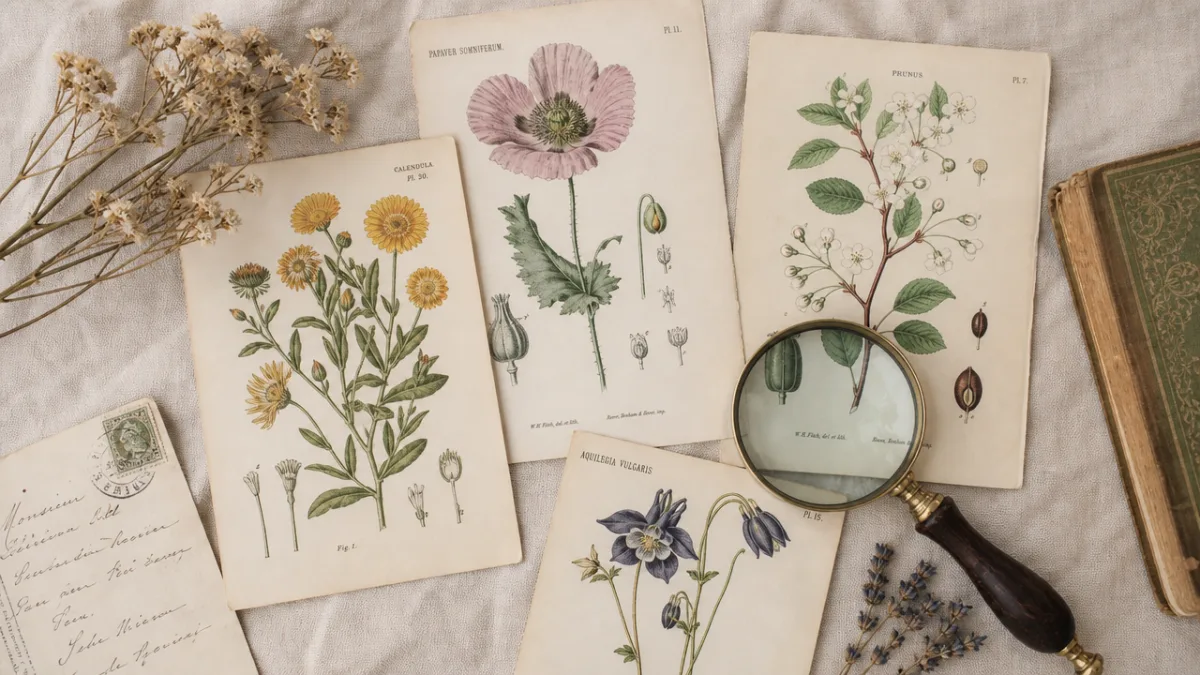
The practical applications for vintage botanical illustrations in contemporary creative work are remarkably diverse, limited essentially only by the imagination of the person using them. Home decorators have long recognized that framed botanical prints make some of the most versatile and universally appealing wall art available — they work equally well in traditional, farmhouse, modern, and eclectic interiors, they come in an essentially infinite variety of subjects and styles, and printing them from free digital resources means they can be obtained for almost nothing beyond the cost of printing. A set of coordinating botanical prints in simple frames can transform a bare wall into a gallery space with a warmth and character that mass-produced art rarely achieves.
Paper crafters and mixed-media artists have embraced vintage botanical imagery with particular enthusiasm. Decoupage, collage, journaling, card-making, scrapbooking, and altered-art projects all benefit enormously from access to high-quality vintage imagery, and botanical illustrations are among the most sought-after sources. Their combination of detailed imagery, decorative borders, aged paper tones, and old-fashioned typography makes them perfect for layering with other vintage and contemporary elements. Many crafters print botanical images onto specialty papers — tissue paper for decoupage, cardstock for card-making, fabric transfer paper for textile projects — expanding the range of creative possibilities even further.
Beyond decoration and paper crafts, vintage botanical illustrations have found their way into surface pattern design, textile printing, ceramics, stationery design, book arts, and even tattoo design. The clean lines and rich detail of traditional botanical illustration translate beautifully to many different media and scales. A wallflower illustration that looked beautiful at the scale of a book page can be equally striking when enlarged to fill a canvas, reduced to stamp-size for a wax seal, or adapted into a repeat pattern for printed fabric. This remarkable versatility is part of what has made vintage botanical art such an enduring and beloved resource for creative people across generations and disciplines.
- Print and frame individual illustrations for gallery walls, mixing subjects and frame styles for an eclectic collected look.
- Use as decoupage elements on furniture, trays, plant pots, and decorative objects.
- Incorporate into handmade cards, gift tags, and stationery for a personal, artisan quality.
- Create custom wrapping paper or tissue paper by tiling a favorite illustration across a page.
- Use as reference for hand-lettering and calligraphy projects, pairing botanical images with quotes or poems.
- Print onto fabric transfer paper to create custom cushion covers, tote bags, or tea towels.
- Layer into art journals and mixed-media projects alongside watercolor, stamps, and handwriting.
The Cultural Symbolism of the Wallflower Through History
Beyond its purely visual appeal, the wild wallflower carries a rich freight of cultural and symbolic meaning that adds another layer of resonance to vintage illustrations featuring it. In the Language of Flowers — the Victorian system of floriography that assigned specific meanings to different blooms, allowing people to communicate sentiments that social convention might otherwise have made difficult to express — the wallflower was associated with fidelity in adversity and faithful love. This meaning derived directly from the plant’s habit of clinging to old walls and ruins, blooming faithfully year after year in places where more delicate plants could not survive, an emblem of persistence and devotion in challenging circumstances.
The wallflower also gave rise to one of the most enduring social metaphors in the English language. A person described as a wallflower is someone who hangs back at social gatherings, observing from the edges rather than participating in the center of the action — someone perhaps shy, perhaps overlooked, perhaps simply more comfortable watching than being watched. This metaphor has been used sympathetically, critically, and self-deprecatingly across centuries of English literature and everyday conversation, and it has given the plant a place in cultural imagination far beyond its botanical significance. There is something touching about the fact that a small, tenacious flower growing in a stone wall became a symbol for a particular kind of human experience — the experience of feeling simultaneously present and invisible.
In medieval and Renaissance Europe, the wallflower was associated with a specific legend involving a Scottish noblewoman who attempted to elope with her forbidden lover by climbing down the castle wall to meet him. According to the story, she fell and was killed, and from that spot the wallflower grew every spring as a testament to her fidelity and her love. This romantic legend, versions of which appear in the folklore of several European countries, helped cement the wallflower’s association with passionate love, loss, and the persistence of feeling beyond death or separation. When botanical illustrators of later centuries depicted the wallflower, they were drawing on this deep well of association whether they knew it or not, adding a layer of poetic meaning to their careful scientific documentation.
Today, the cultural rehabilitation of the wallflower metaphor is well underway. Writers, artists, and commentators have increasingly reclaimed the term to celebrate the particular gifts of observant, reflective, introverted personalities — the sensitivity, the depth of attention, the capacity for rich inner life that characterizes people who prefer watching to performing. This reclamation connects interestingly with the renewed appreciation for vintage botanical illustration, which is itself a deeply observational art form, one that demands the artist slow down, pay close attention, and render what they actually see rather than what they expect to see. Perhaps it is not surprising that people drawn to one are often drawn to the other.
Preserving and Sharing the Botanical Legacy
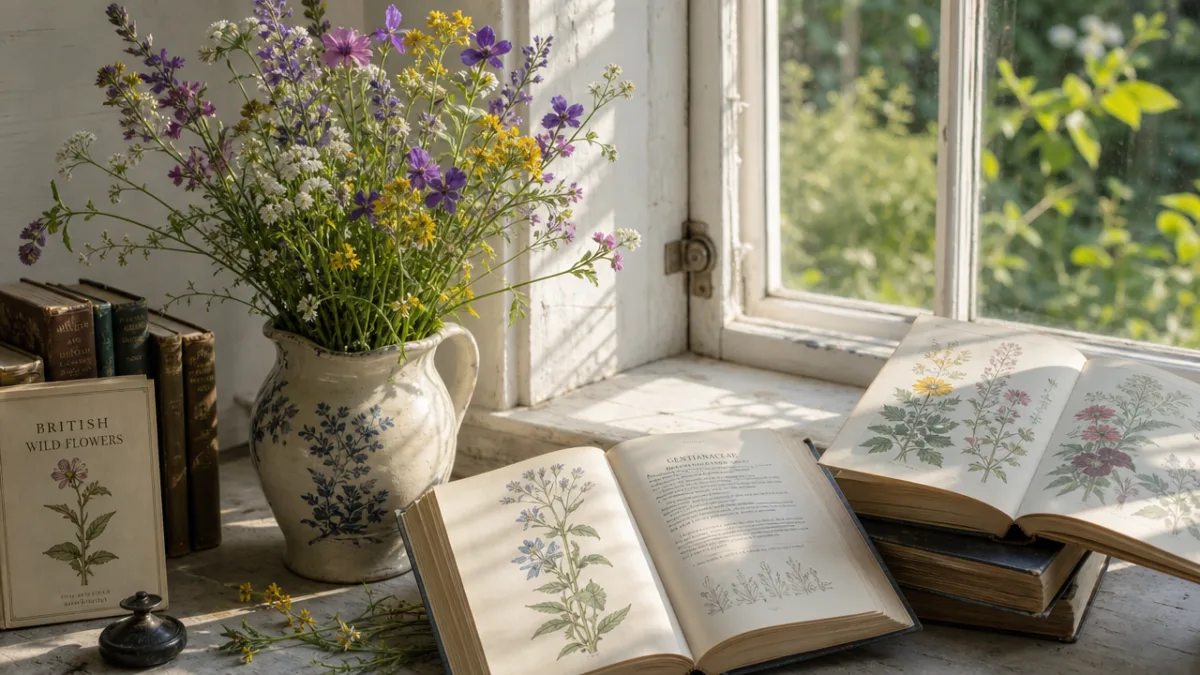
The work of preserving, digitizing, and sharing vintage botanical illustration is more important than it might initially appear. These images represent not just aesthetic achievements but historical documents — records of what plants looked like before industrial agriculture transformed so many landscapes, evidence of which species were considered important at different moments in history, and testimony to the skills and knowledge of generations of artists and naturalists whose names are often lost to us. When institutions and individuals make these records freely available, they are performing an act of cultural stewardship that connects us to a long and rich tradition of human engagement with the natural world.
There are also conservation implications to this work that deserve acknowledgment. Many of the plant species depicted in historical botanical illustrations are now endangered or locally extinct, their populations devastated by habitat loss, agricultural intensification, pollution, and climate change. The wild wallflower itself, while not globally threatened, has declined significantly in many parts of its native range as old stone walls, ruins, and rocky habitats have been cleared or stabilized. In some cases, historical botanical illustrations represent the most detailed visual records available of plants that can no longer be easily found in the wild, making their preservation literally invaluable from a scientific and conservation perspective.
Looking forward, the community of people who love and share vintage botanical illustrations continues to grow, sustained by social media platforms, dedicated websites, and the simple, enduring human pleasure of beautiful things freely shared. Whether you encounter these images in the context of a Pinterest board, a craft project, a framed print on a wall, or a digitized archive, they carry with them the accumulated attention of everyone who has ever looked at them carefully — the original artist, the generations of printers and colorists, the collectors and librarians who preserved them, and the curators who brought them back into circulation for a new audience. In this sense, every vintage botanical illustration is a kind of conversation across time, an invitation to join a community of careful observers who found beauty and meaning in the living world and wanted to share what they saw.
The wild wallflower, humble and persistent, growing in the crevices of old stones, perfuming the spring air with its warm and honey-sweet fragrance, is a fitting emblem for this entire tradition. It asks nothing beyond a little space and light, offers beauty and scent freely to anyone who passes, and returns faithfully year after year to the same forgotten corners where it has always made its home. In this, it resembles the best of vintage botanical art itself — patient, generous, and quietly magnificent.








What do you think?
It is nice to know your opinion. Leave a comment.