










If You’re a Bride in 2026: The Ultimate Wedding Gift List Guide
Why Your 2026 Wedding Gift List Needs a Complete Rethink
If you’re getting married in 2026, the world you’re stepping into looks pretty different from the one that invented the traditional wedding registry. That old model — china sets, crystal glasses, matching towel sets — made perfect sense for couples who were literally starting from scratch. But most couples today already live together, already own a blender, and honestly have zero desire to find storage space for twelve place settings of formal dinnerware they’ll use maybe twice a year. It’s time to rethink the whole thing.
More and more couples are choosing experiences over stuff, sustainability over sheer quantity, and actual usefulness over tradition for tradition’s sake. Your gift list is a real chance to show the people who love you what you’re actually about — and to end up with things that genuinely add something to your life together, rather than filling up a cupboard you never open. When you put some real thought into your registry, it stops feeling like an awkward obligation and starts feeling like an exciting preview of the life you’re building.
There’s also the very real question of your guests’ budgets. Economic life in the mid-2020s has made a lot of people more careful about spending, and a list packed with £300 saucepans or wildly aspirational homeware can feel a bit alienating if someone’s working with a tighter budget. A thoughtful gift list has something for everyone — a range of price points, the option to chip in on bigger items as a group, and a way for every guest to feel like they’ve given something genuinely wanted and appreciated.
The Experience-First Registry: Beyond Physical Gifts
One of the biggest shifts in wedding gift culture recently is the move toward experience-based registries. Instead of asking for things, couples are asking their guests to contribute to memories — cooking classes, spa weekends, theatre tickets, a wine-tasting evening, a hot-air balloon ride. This really resonates with couples who’ve grown up knowing that experiences tend to bring more lasting happiness than possessions. If you and your partner would genuinely rather explore a new city than acquire a new sofa, your registry should say that.
Honeymoon registries have taken off in a big way, and in 2026 they’re more polished and seamless than ever. Dedicated platforms let guests contribute to specific parts of your trip — a candlelit dinner, a snorkelling excursion, an upgrade to a beachfront suite — so each contribution feels personal and romantic rather than like you’re just asking for cash. It also sidesteps that lingering awkwardness around requesting money directly, which plenty of guests and couples still find a bit uncomfortable, even as attitudes shift.
Beyond travel, think about ongoing experiences that’ll weave in and out of your married life over time. A meal kit subscription, a monthly wine or cheese club, a streaming service you actually use, a yearly membership to a local gallery or botanical garden — these are gifts that keep on giving in small, lovely ways throughout the year. They’re also genuinely easy for guests to buy online, which matters more than you might think when your guest list spans multiple generations and varying levels of comfort with technology.

Sustainable and Ethical Choices for the Conscious Bride
Sustainability isn’t a trend anymore in 2026 — for a growing number of couples and their guests, it’s just the baseline. Building an ethical registry means thinking about where things come from, how they’re made, how long they’ll actually last, and what happens to them eventually. That doesn’t mean your list has to feel worthy or joyless, though. There’s a genuinely brilliant range of beautifully designed, responsibly made homeware, clothing, and lifestyle products out there from brands that actually mean what they say about environmental and social responsibility.
Consider anchoring part of your registry around investment pieces — things built to last decades, not just a few seasons. A cast iron skillet from a heritage manufacturer, a hand-thrown ceramic dinner set from an independent potter, organic linen bedding, a solid wood chopping board from a sustainable forestry brand. These are items that get better with age, that can be repaired rather than thrown away, and that come with a story your guests will feel genuinely good about being part of. Quality over quantity is the mantra, and it’s one worth coming back to every time you’re tempted to add something just because it’s cheap.
Charitable donations in lieu of gifts are also gaining real momentum. Lots of couples now include a section inviting guests to donate to a cause close to their hearts — an environmental charity, a local food bank, a medical research fund, an animal welfare organisation. It’s a particularly meaningful option if you genuinely have everything you need materially and you’d love your wedding to make a positive ripple in the world beyond the day itself. It also gives guests who feel a bit awkward about traditional registries a heartfelt alternative they can feel great about.
Home Upgrades That Actually Make Sense in 2026
Even if you’re moving away from the traditional registry model, there’s absolutely still a place for home goods — you just need to be more selective and more honest with yourself about what you actually need. Try walking through your home with fresh eyes and noticing where daily life creates friction. Is your mattress letting you down? Do you own a decent set of knives, or are you still hacking through vegetables with the blunt blades you bought in your early twenties? Is your coffee setup something that genuinely makes your morning, or is it just barely functional? Those real, everyday frustrations are exactly what should be driving your list.
Smart home technology has genuinely matured, and it’s one of the most practically useful categories for a 2026 registry. Think beyond novelty gadgets to things that actually reduce your daily mental load: a quality robot vacuum you’d never splash out on yourself, a smart thermostat that learns your routine and trims your energy bills, or a really good air purifier for the bedroom. These tend to be higher-ticket items, which makes them ideal for group gifting, and they deliver ongoing real value rather than ending up in a drawer after three weeks.
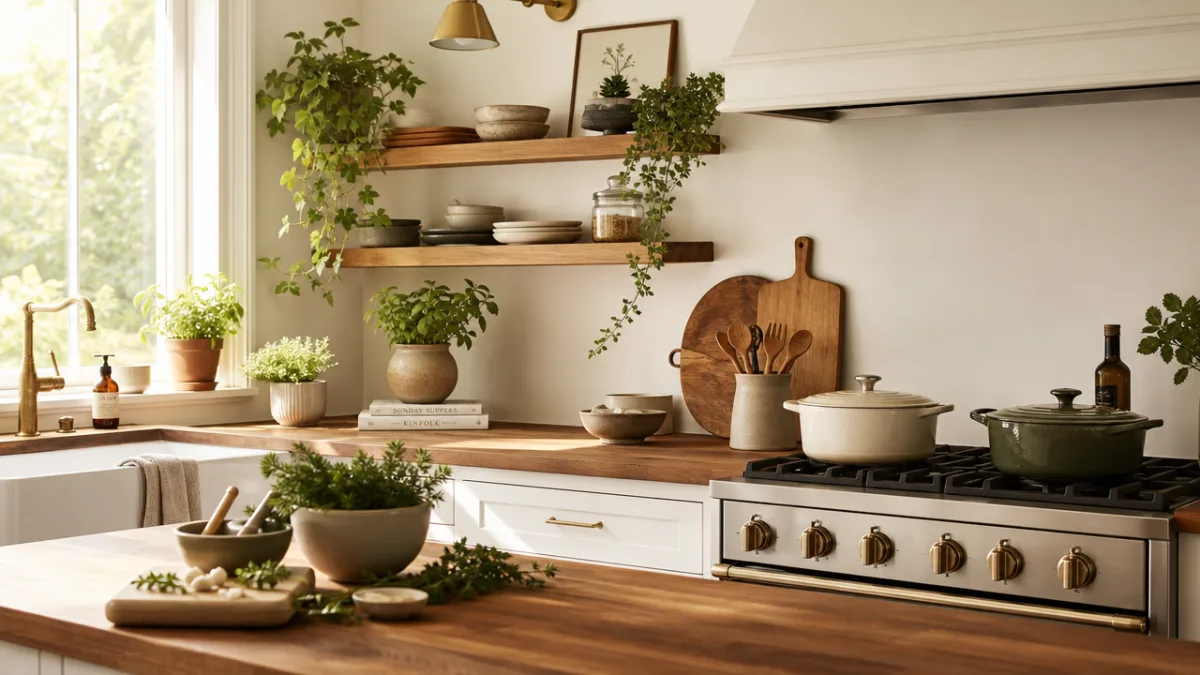
The kitchen is still the heart of most homes, and thoughtful kitchen upgrades are among the most universally appreciated gifts. Rather than requesting an entire matching set of everything, think about the two or three items that would most transform how you actually cook. Some options worth considering include:
- A professional-grade stand mixer if baking is something you genuinely want to explore together
- A high-quality Dutch oven that’ll easily outlast your marriage by several decades
- An espresso machine at a level you’d never quite justify buying yourselves
- A full set of high-carbon steel knives with a proper sharpening system to match
- A well-designed herb garden kit for a kitchen windowsill
Don’t overlook the less glamorous but genuinely practical stuff either. Good storage solutions, a really excellent iron and ironing board, matching coat hangers, a beautiful laundry basket — these are the things that make the everyday rhythm of home life feel either pleasant or slightly miserable. Putting them on your registry isn’t unromantic. It’s just honest about how a home actually works.
Managing Your Registry Logistics Like a Pro
A gift list is only as good as the system behind it, and managing the logistics — especially when your guest list crosses countries, generations, and varying levels of internet comfort — takes some actual forethought. The first question is where to host your list. In 2026 there are some really solid universal registry platforms that let you pull items from multiple retailers into one clean, easy-to-navigate list. These are generally a much better option than being tied to a single store’s registry system, which limits your choices and can feel unnecessarily restrictive.
Group gifting isn’t a nice extra — it’s essential. Whatever platform you choose needs to let multiple guests contribute toward a single higher-value item, with proper tracking so nothing gets duplicated or lost. Test this yourself before you send your registry details out to anyone. There are few things more mortifying than discovering on your wedding day that the group gifting portal glitched and twelve people all independently bought the same stand mixer. It happens, and a bit of due diligence early on saves a lot of awkwardness later.
Think carefully about how and when you share your registry with guests. Including it on your wedding website is completely standard and expected. Having a family member or close friend who’s happy to field registry questions is genuinely invaluable. What you want to avoid is the gift list ever feeling like the main event of any communication — it should always read as a helpful afterthought, clearly secondary to the joy of the occasion. A few useful logistics tips:
- Launch your registry at least three months before the wedding so guests have proper time to choose and buy
- Include a real range of price points — from under £30 to over £200 — so everyone feels included
- Check in on your registry periodically to remove things that have been bought and add fresh options if needed
- Designate someone — ideally not yourself — to track purchases and flag any problems
- Send thank-you notes within six weeks of the wedding, mentioning the specific gift each person gave
The Conversations Nobody Tells You to Have Before You Write Your List
The most overlooked part of building a wedding gift list is the conversation you need to have with your partner before you start clicking “add to registry” on anything that catches your eye. In a funny way, your gift list is a little map of the life you’re planning to build together. It reveals your priorities, your taste, your relationship with money, and your shared vision of what a happy home looks like. These conversations are worth having properly — and they’re a lot more useful than any registry checklist template you’ll find on the internet.
Talk about where you see yourselves in five years. Are you planning to travel a lot, in which case accumulating loads of stuff is genuinely counterproductive? Are you hoping to start a family, in which case practical, durable items for a family home make real sense? Are you both committed to sustainability, or is one of you more pragmatic about it? Do you entertain a lot, or is your home more of a private retreat? Do you cook ambitious meals together, or mostly eat quickly and simply on weeknights? These are the questions that should shape every decision you make on your list.
It’s also worth having an honest chat about cash gifts. In plenty of cultures and communities, giving money directly is completely normal and genuinely appreciated. In others, it still carries a faint whiff of awkwardness. Know your crowd — your particular mix of family backgrounds, cultural traditions, and social circles — and calibrate accordingly. If a cash fund genuinely makes more sense than a traditional registry for your situation, own it confidently and communicate it clearly. Most guests, when given straightforward guidance, are honestly relieved to know exactly what will be most helpful.

Final Thoughts: Making Your Gift List a Reflection of Your Real Life
The best wedding gift list isn’t the most aspirational, or the most minimal, or the most trending on social media. It’s the most honest one — the one that genuinely reflects who you and your partner are, how you actually live, what brings you joy, and what would make your day-to-day life a little richer or easier. It’s built with care and real specificity, shared with guests graciously, and received with genuine gratitude for whatever arrives.
As a bride in 2026, you have more options than any generation before you. You can mix physical gifts with experiences, blend sustainable brands with practical everyday upgrades, include charitable giving alongside honeymoon contributions, and present the whole thing through a beautifully designed platform that makes the process easy and enjoyable for everyone. The toolkit really is remarkable — but the guiding principle is timeless. Ask for what you actually want and need, make it easy for people to give generously at every budget, and say thank you with real warmth and specificity.
Your wedding is a celebration of love, of community, and of the beginning of a shared life. Your gift list, when you approach it thoughtfully, can be a genuine extension of that — an invitation for the people who care about you to play a small part in building your future together. Don’t rush it, don’t just default to convention, and don’t be afraid to be a little unconventional if that’s who you are. The couples who put real thought and authenticity into their registries almost always end up with gifts they truly love — and guests who feel genuinely happy they were asked.








What do you think?
It is nice to know your opinion. Leave a comment.