










33 Stunning Boho Kitchen Cabinet Ideas To Inspire Your Dream Space
What Is Boho Style and Why It Works So Well in the Kitchen
Bohemian design — boho, as most of us call it — is one of the most freeing interior styles out there. It pulls from global influences, leans into natural materials, and mixes textures and colors in ways that feel personal rather than prescribed. There are no rigid rules to follow, which is exactly what makes it so appealing. When you bring that energy into the kitchen, something really special happens: a space that usually feels purely practical suddenly becomes warm, layered, and full of character. Cooking in a boho kitchen just feels different.
The kitchen has become the heart of the home for most families, and boho style really honors that. Where minimalist or ultra-modern kitchens tend to hide everything away behind seamless surfaces, boho kitchens celebrate the beautiful mess of daily life — the vintage finds, the handcrafted details, the little imperfections that give a space soul. Your cabinet choices anchor all of it. They set the tone for the hardware you’ll pick, the open shelving you’ll style, and the overall story the room tells.
What I love most about boho kitchen design is how accessible it is. Whether you’re in a loft apartment, a tiny cottage, or a sprawling farmhouse, you can make it work without gutting the whole kitchen. It plays just as well with brand-new cabinetry as it does with repurposed or inherited pieces, which makes it a genuinely budget-flexible approach. That’s a big part of why boho kitchen inspiration is everywhere on Pinterest — it’s aspirational, but it’s also actually doable.
The Core Principles Behind Boho Kitchen Aesthetics
Before you start shopping for cabinet hardware or reaching for a paintbrush, it’s worth getting a feel for what actually makes something “boho” rather than just eclectic. At its heart, the style is built on a love of natural materials, a deep appreciation for global craftsmanship, and a willingness to mix time periods and cultural references without overthinking it. In the kitchen, that translates to cabinet finishes that feel organic and tactile, hardware that has a story behind it, and an overall look that feels collected rather than cluttered.
Color in boho kitchens tends to stay grounded — terracotta, sage green, warm whites, deep navy, rich ochre. These are shades that feel like they belong in nature, and they create the kind of calm, enveloping warmth that makes you want to pull up a stool and stay a while. The goal with a boho color palette is never perfect coordination. It’s about colors that feel harmonious in a slightly imperfect way, like the tones you’d find together in a desert at sunset or a overgrown herb garden.
Top Cabinet Styles That Define the Boho Kitchen Look
The good news about boho cabinets is that you have real options here. Shaker-style cabinets are a perennial favorite because their simple recessed panel design stays out of the way — they’re a neutral canvas that lets the color, hardware, and open shelving do the talking. Their clean lines don’t fight with the layered textures that define boho spaces, which makes them a reliable starting point if you’re not sure where to begin.
Glass-front cabinets are another go-to in boho kitchens, and for good reason. They give you the chance to display the things you’ve collected — pottery, vintage glassware, woven baskets, mismatched dishware — and turn everyday storage into something worth looking at. A common approach that really works is pairing glass-front uppers with solid lowers. You get the visual interest up top without the whole kitchen feeling like it’s on display.
Open shelving, though, is probably the most quintessentially boho option. Floating wooden shelves — especially reclaimed timber or live-edge slabs — bring a warmth and organic quality that closed cabinets just can’t match. When you style them right, with a mix of trailing herbs, ceramic bowls, and handwoven trivets tucked between the practical stuff, those shelves become the soul of the whole kitchen.
And if you want genuine vintage character, nothing beats repurposed furniture used as cabinetry. An old dresser turned kitchen island, salvaged wooden crates stacked into cabinet banks, or vintage doors rehung on existing frames — these choices bring a history and authenticity that no flat-pack cabinet will ever be able to fake. They’re also a great way to make sustainability a real part of the design, not just a talking point.

Color Palettes and Paint Finishes for Boho Kitchen Cabinets
If there’s one design decision that can completely transform your kitchen, it’s cabinet color. Sage green has become almost synonymous with boho kitchens over the past few years, and it’s easy to see why — it manages to feel earthy and sophisticated at the same time. In a matte or chalky finish especially, sage green cabinets seem to absorb the light around them rather than bounce it back, giving the kitchen a soft, enveloping quality that genuinely makes it feel like a retreat.
Terracotta and warm rust tones are having a real moment right now, and they fit the boho aesthetic like a glove. There’s something almost visceral about the warmth those shades bring in — they feel like sunbaked clay and Mediterranean afternoons. Pair them with brass hardware, natural wood accents, and a cream countertop and you’ve got a color story that feels rich and layered without being heavy or overwhelming.
Don’t overlook the darker end of the spectrum, either. Deep forest green, inky navy, warm charcoal, and even black can absolutely work in a boho kitchen when they’re balanced with the right textures. Dark lower cabinets with a butcher block top and open wooden shelves above can be dramatic without feeling cold — the natural materials and warm light sources do the heavy lifting of keeping it inviting. The depth of the color actually becomes a feature rather than a problem.
Mixing Cabinet Colors for Maximum Boho Impact
One of the most distinctly boho moves you can make is mixing cabinet colors within the same kitchen. Instead of painting everything the same shade, try a different hue on the uppers versus the lowers, or paint the island in a contrasting tone to give it some presence. It feels collected and intentional without being too “matchy-matchy” — which, honestly, is the quality that separates good boho design from a theme park version of it.
Color drenching is another technique worth considering, especially in smaller kitchens. The idea is to paint not just the cabinet doors but the frames, interior surfaces, and even the adjacent walls in the same tone. When sage green or terracotta wraps all the way into the cabinet interiors and recesses of open shelves, it creates this wonderful sense of depth and immersion. A small kitchen treated this way stops feeling cramped and starts feeling cozy and intentional — which is a very different thing.
Hardware, Handles, and Decorative Details That Elevate Boho Cabinets
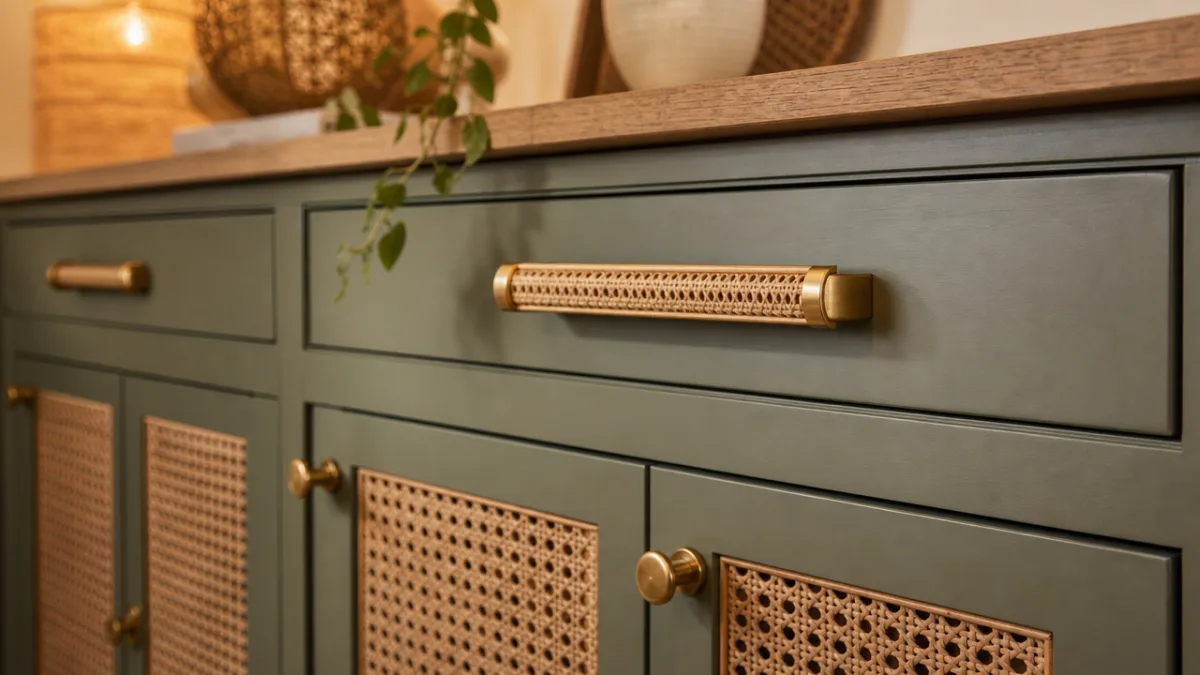
If cabinet colors and styles are the foundation, hardware is the jewelry. The right pulls and knobs can take even the most basic cabinetry and make it feel genuinely special. Brass and unlacquered metals are perennial favorites in boho kitchens because they develop a natural patina over time — they actually get more beautiful the longer you use them, which is very much in line with the whole boho philosophy of embracing things that age well.
Hammered metal hardware is particularly good at adding that handcrafted, artisanal feel. Whether it’s brass, copper, or antique bronze, the irregular surface catches light in this organic, textured way that no smooth, machine-polished pull can replicate. Pairing hammered hardware with painted cabinets creates an interesting tension — refined meets rustic — that sits right at the heart of the boho look. A lot of designers will mix two related metal finishes, like brass and bronze together, to add visual complexity without losing cohesion.
Beyond the hardware itself, there’s a whole world of decorative details that can blur the line between storage and art. Carved wooden cabinet fronts, cane or rattan panel inserts in place of solid doors, painted tiles applied to the back walls inside glass-front cabinets — these kinds of touches introduce pattern, texture, and a sense of global craft that reward a second look. They’re the details that make a kitchen feel alive and interesting rather than just finished.
- Unlacquered brass pulls that develop a warm, living patina with daily use
- Hammered copper knobs that introduce handcrafted texture and warmth
- Cane and rattan cabinet door inserts that reference global woven craft traditions
- Ceramic hand-painted knobs sourced from artisan makers or travel finds
- Leather tab pulls that bring a tactile, natural element to modern cabinet fronts
- Antique iron ring pulls salvaged from furniture or reproduction vintage pieces
Incorporating Natural Materials and Sustainable Choices
Sustainability isn’t a trend in boho design — it’s built into the whole ethos. Nowhere does that show up more meaningfully than in cabinet material choices. Reclaimed wood cabinets, built from salvaged barn timber or old-growth wood recovered from demolished buildings, bring a depth of character that newly milled wood simply can’t replicate. The knots, the grain variations, the old nail holes, the weathered surfaces — each one tells a story. Every cabinet door becomes its own small artifact with its own history, and that’s genuinely irreplaceable.
Bamboo is gaining serious traction in boho kitchens, particularly among homeowners who want their design choices to align with their environmental values. It offers a beautiful, warm alternative to traditional hardwoods with a distinctive grain that feels both exotic and natural. When it’s finished with natural oils instead of synthetic lacquers, bamboo actually deepens and enriches over time with regular use — it’s one of those materials that improves with age rather than just wearing down, which is exactly the kind of thing boho design celebrates.
Then there’s the integration of living materials, which is one of my favorite aspects of a thoughtfully done boho kitchen. Trailing pothos cascading off the tops of upper cabinets, small herb gardens mounted on cabinet sides, woven baskets tucked into open shelving — all of it brings the outside world in. The space stops being static. It changes with the seasons, it grows, it breathes. That’s not just decorating; it’s a different way of thinking about what a kitchen can be.
Mixing New and Vintage Cabinetry for Authentic Character
One of the most satisfying approaches to the boho kitchen — practically and philosophically — is deliberately mixing new and vintage cabinetry elements. Rather than ordering everything from a single manufacturer, boho design actively encourages you to bring in antique finds, salvaged pieces, and inherited furniture alongside purpose-built modern cabinetry. A vintage French armoire repurposed as a pantry, an old apothecary chest for spice storage, a reclaimed wooden dresser turned kitchen island — each of these choices brings genuine history into the space that no showroom piece can match.
Architectural salvage yards, estate sales, antique markets, and online vintage marketplaces are absolute goldmines for this kind of thing. Salvaged kitchen cabinets from mid-century homes, glass-front cupboards from old pharmacies, ornate Victorian built-ins rescued from demolition — all of these can find a new life in a boho kitchen where their age and quirks are treated as assets rather than flaws. The patina, the wear patterns, the old-fashioned construction details: that’s exactly the richness and depth that makes a boho kitchen feel real rather than styled.
Styling Your Boho Kitchen Cabinets for Everyday Beauty
Even beautifully designed cabinets need thoughtful styling to really sing. The art of it in a boho kitchen is finding that sweet spot between abundance and intentionality — layered and expressive, but not chaotic. The best boho stylists think in terms of vignettes: small, self-contained visual stories within each section of shelving or each visible cabinet interior that give the eye somewhere interesting to land.
Color is your organizing principle here, not function. Grouping objects by material, tone, or cultural origin rather than by what they’re used for creates arrangements that feel curated rather than thrown together. A cluster of terracotta ceramics in varying sizes, a collection of woven baskets in complementary earth tones, a grouping of vintage glass bottles in amber and green — when you let beauty drive the organizing logic, it shows, and it feels right in a way that strictly functional arrangements rarely do.
That said, this is a working kitchen, and usability can’t be sacrificed for aesthetics. The trick is making functional storage look beautiful — decanting grains and pulses into handsome ceramic canisters, hanging frequently used pots on decorative hooks, choosing dish towels and pot holders in patterns that contribute to the overall color story. When you choose everyday objects for their beauty as well as their utility, the whole kitchen becomes a curated expression of daily life that feels genuinely lived-in and intentional at the same time.
- Start with a clear color story before adding objects — choose two or three anchor tones and build from there.
- Layer objects at different heights to create visual rhythm and prevent flat, uniform displays.
- Introduce at least one living element — a plant, fresh herbs, or cut flowers — into every open shelf arrangement.
- Mix materials deliberately, pairing smooth ceramics with rough textures, shiny metals with matte finishes.
- Leave breathing room between groupings so each vignette can be seen and appreciated as its own composition.
- Rotate seasonal objects and personal treasures to keep the space feeling alive and evolving through the year.
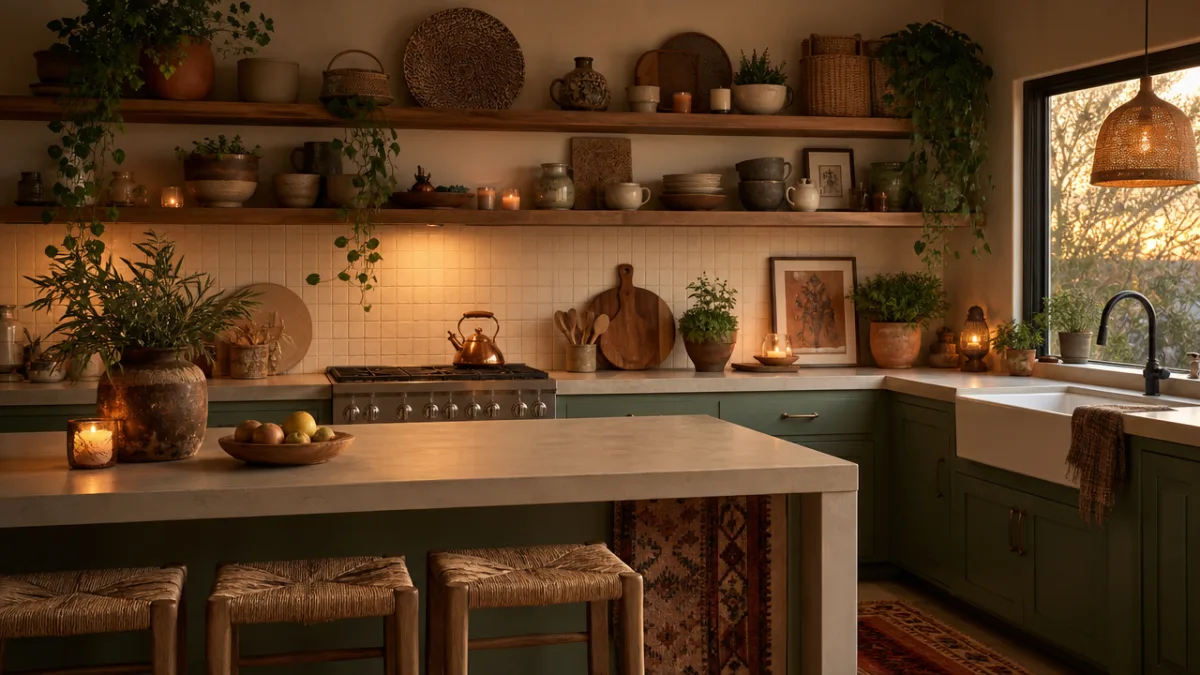
Creating your ideal boho kitchen is ultimately a deeply personal journey — shaped by your travels, your memories, and your own sense of what feels beautiful. Whether you repaint existing cabinets in a warming earthy tone, swap solid doors for cane-insert alternatives, or track down salvaged vintage pieces that bring real history into your home, every choice contributes to a kitchen that tells your story. The best boho kitchens are never truly finished, either. They keep growing and shifting as new objects get discovered, seasons change, and the people who cook and gather in them keep living their beautifully imperfect lives.








What do you think?
It is nice to know your opinion. Leave a comment.