










The Art of Crafty Relaxation: How Junk Journaling and Scrapbooking Bring Peace to Your Creative Life
Life moves fast these days — almost too fast. So it’s no surprise that more and more people are quietly pushing back by carving out time for slow, hands-on creative hobbies. Junk journaling and scrapbooking sit right at the heart of this shift. There’s something genuinely grounding about sitting down with a stack of torn paper, old magazines, and a glue stick and just… making something. No deadlines, no performance reviews. Just you, your materials, and the simple pleasure of creating something beautiful out of scraps and memories.
Here’s the thing about creative hobbies like these: the real magic isn’t in the finished product. It’s in the process. When your hands are busy layering paper and glue and old bits of ephemera, your mind gets a chance to quiet down. That inner voice that rarely gets a word in edgewise? It starts to speak up. This is what experienced junk journalers and scrapbookers have known for years, and what a growing wave of crafters is only just discovering.
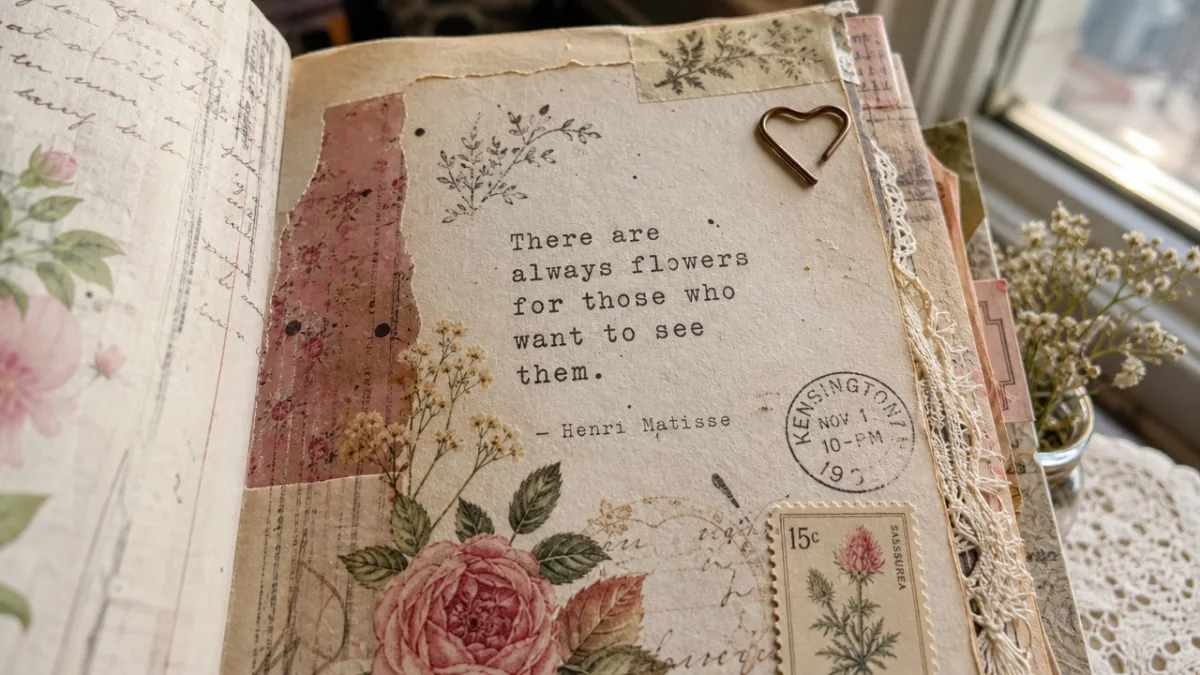
Quotes have always had a special place in this world. A single well-chosen line of text can take a page from “pretty collection of stuff” to something that actually means something — a personal mantra, a daily reminder, a little pocket of wisdom you stumble across when you flip through your handmade book. Whether you’ve stamped it in bold vintage type or written it out in your own imperfect handwriting, a good quote invites you to stop, breathe, and take something with you.
Understanding Junk Journaling: A Creative Practice Built on Beautiful Imperfection
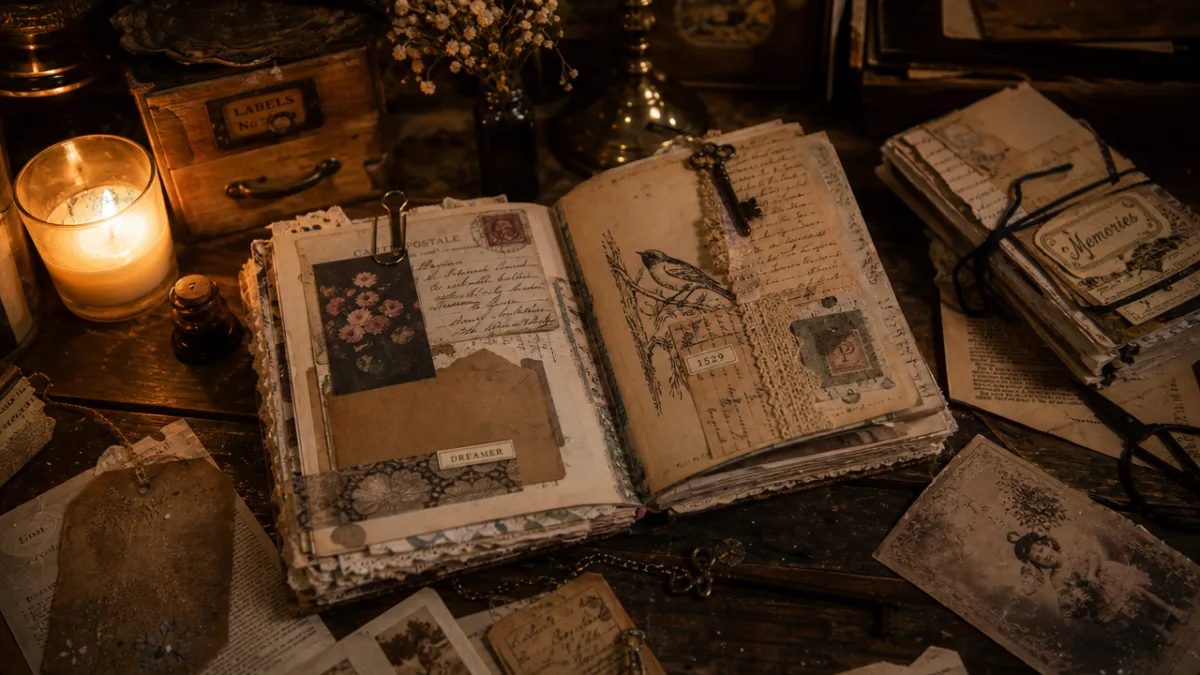
At its heart, junk journaling is about rescuing the overlooked and the thrown-away. Old envelopes, cereal box cardboard, tissue paper, candy wrappers, coffee-stained scraps, torn-out book pages — nothing is too humble. The name itself is kind of a wink: the “junk” is literally the point. This practice celebrates the texture, imperfection, and quiet history embedded in used materials. The result is something no manufactured product can quite replicate — pages that feel genuinely lived-in and warm and completely one-of-a-kind.
Most junk journals start with a repurposed or handmade book — maybe a hardcover novel with its text block removed, a fabric-reinforced composition notebook, or a set of signatures sewn together by hand. From there, you layer in collaged backgrounds, pockets for folded notes, tags hanging from twine, envelopes stitched or glued into the gutter. What you end up with is part art object, part memory keeper, part diary, part treasure chest. Every single element has a story, and together they add up to something far greater than the sum of their beautifully imperfect parts.
What makes junk journaling so perfect for relaxation is that there are essentially no rules. You don’t need expensive supplies. You’re not being graded. You can work for five minutes or lose yourself in it for five hours. You can follow a prompt or just let your hands do whatever they feel like. That freedom — that total lack of pressure — is exactly why so many people walk away from a junk journaling session feeling calmer, more settled, and somehow more like themselves again.
Scrapbooking as Storytelling: Preserving Memories with Heart and Intention
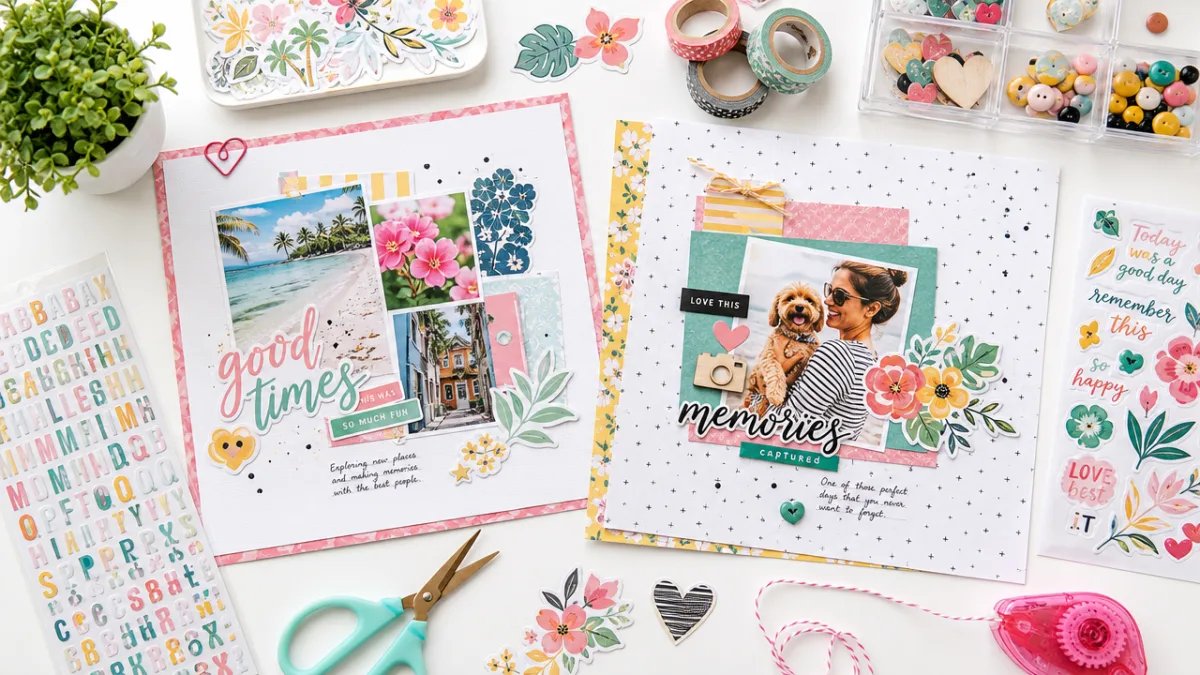
Scrapbooking shares a lot of DNA with junk journaling — the layered paper, the personal meaning, the love of embellishment — but it tends to center more deliberately around specific memories and photographs. A scrapbook page might be about a family holiday, a child’s first wobbly steps, a wedding anniversary, or just a quiet Sunday afternoon that felt worth holding onto. The photo is usually the star of the show, surrounded by papers and embellishments and journaling, and almost always a quote that captures the feeling of the moment in a way the image alone can’t quite manage.
The storytelling side of scrapbooking is one of its most underrated qualities. When you sit down to build a page around a specific memory, you’re not just decorating a photograph — you’re actively working out what that moment meant to you and committing it to a beautiful, lasting record. That kind of intentional reflection is genuinely good for you. It helps you find gratitude in ordinary moments, make sense of harder ones, and build a tangible archive of a life that’s worth celebrating. The finished album becomes a story of who you are and what matters to you most.
Scrapbooking has also expanded enormously in terms of aesthetic range. You’ll find everything from clean, minimalist layouts with lots of white space to wildly maximalist pages overflowing with layers and texture and color. The cottage-core and vintage-inspired styles that have taken off in recent years blur beautifully into junk journaling territory, making the two disciplines feel like close creative cousins. Whatever your style, scrapbooking gives you a framework for the stories you most want to tell.
The Power of Inspirational Quotes in Your Creative Pages
Ask any seasoned junk journaler or scrapbooker what they reach for when a page feels flat or unfinished, and the answer is almost always the same: a great quote. There’s something almost alchemical about the right words on a page — they add depth and resonance and a sense of purpose that transforms a collection of pretty materials into something that genuinely means something. When images and papers alone can’t quite capture a feeling, language gets you the rest of the way there.
The quotes that resonate most in this creative world tend to be about slowing down, finding beauty in small things, valuing the process over the product, and treating your creative time as the restorative, sacred practice it actually is. Words about creativity, rest, imperfection, joy, memory, and the deeply human urge to make things with your hands — these show up again and again in handmade books shared online and in person all over the world, because they speak to something real.
When incorporating quotes into your pages, consider the following approaches to maximize both visual impact and emotional resonance:
- Write the quote by hand in your own handwriting, embracing any imperfections as part of the charm and authenticity of the page.
- Use alphabet stamps and an ink pad to stamp the quote directly onto your background, building in variation and texture through the natural unevenness of stamped letters.
- Print the quote in a chosen font and age it with distress ink, tea staining, or tearing before adhering it to your page.
- Cut individual words from magazines, books, or old packaging to create a collaged ransom-note-style quote that has wonderful visual energy.
- Use pre-made quote stickers, washi tape strips printed with phrases, or journaling cards from a patterned paper pack designed for this purpose.
But quotes aren’t just decorative. They can actually anchor the emotional intention behind a whole page. When you start a creative session by choosing words that capture how you want to feel, or what you’re trying to work through, you give your creative work a direction and a depth that goes well beyond aesthetics. The page becomes a conversation between your inner world and the materials in front of you, with language as the bridge between the two.
Building a Relaxing Creative Ritual Around Your Craft
One of the most transformative shifts you can make in your creative life is moving your craft from “something I squeeze in when I have time” to a deliberate, protected ritual you actually return to. The difference is bigger than it sounds. A hobby is what happens when circumstances allow; a ritual is something you actively make space for, surround with care, and show up to with intention. When junk journaling or scrapbooking becomes a ritual, its power to restore and relax you deepens — and the creative work itself tends to get richer and more satisfying too.
Setting up a dedicated creative space goes a long way toward making that happen. It doesn’t have to be a whole room or a fancy studio — a corner of a table, a rolling cart you pull out when it’s time to create, a pretty basket of supplies on a shelf. Any of these can anchor your practice. The point is that over time, coming to that spot and opening those supplies becomes a signal to your nervous system: this is where we relax, this is where we create. It gets easier to drop into that open, calm state each time you sit down.
It’s also worth thinking about the sensory environment of your crafting ritual and how you might enrich it. Many crafters find that certain elements reliably enhance the experience, including:
- Soft background music — instrumental, ambient, or a familiar playlist that signals to your brain that it is time to relax and create.
- A warm drink at your side — tea, coffee, or hot chocolate — that adds comfort and slows the pace of the session naturally.
- Good lighting — a warm lamp rather than harsh overhead light creates an atmosphere that feels cozy, intimate, and conducive to creative flow.
- A scented candle or diffuser using calming essential oils such as lavender, bergamot, or cedarwood, which can powerfully reinforce a sense of calm.
- A tidy but accessible layout of your supplies, so that you can reach for what you need without disrupting the flow of your session with searching and frustration.
And honestly? The length of your sessions matters less than how regularly you show up. Even fifteen or twenty minutes of focused crafting a few times a week can make a real difference to your stress levels and overall mood. Research into arts-based stress reduction consistently shows that using your hands creatively lowers cortisol, quiets the brain’s default mode network, and produces a state of relaxed focus that’s genuinely restorative. Your junk journal or scrapbook isn’t just a pretty object — it’s evidence of a practice that’s actively taking care of you.
Finding Your Community and Growing as a Creative
One of the most unexpected pleasures of getting into junk journaling and scrapbooking is discovering the community that comes with it. Across Pinterest, Instagram, YouTube, and dedicated crafting forums, there’s an enormous, enthusiastic, genuinely warm global community of makers sharing their pages, techniques, favorite supplies, and stories with real openness. If you’ve ever felt a little alone in your love of paper and ephemera and handmade books, finding this community can feel a lot like coming home.
Pinterest in particular has become an incredible gathering place for these crafts. Its visual format suits them perfectly, and the ability to save, organize, and share pins means it functions simultaneously as a mood board, an inspiration archive, a tutorial library, and a window into the work of makers from all over the world. Spend an afternoon exploring boards dedicated to junk journaling and scrapbooking and you’ll come away with more ideas — color palettes, layout techniques, quote collections, supply recommendations — than you could work through in years.
Growing as a creative in this community isn’t just about consuming inspiration, though. It’s also about contributing — sharing your own work (however imperfect you think it is) and engaging genuinely with the work of others. Articulating what you love about your own pages, and what you’re hoping to develop, builds a kind of creative self-awareness that passive scrolling simply can’t. Think about starting a board to document your own work, saving the quotes and images that genuinely move you, and letting that evolving collection become a visual diary of your creative journey and your growing artistic voice.
Quotes to Live and Create By: Weaving Words into Your Crafting Life
The quotes you work with in your journal or scrapbook don’t stay contained to the page. Over time, the spirit of those words starts to seep into your whole creative practice — and honestly, into your daily life too. When you regularly spend time with words that celebrate slowness, imperfection, and the quiet joy of making things, they start to work on you in subtle ways. You notice beauty more readily. You become more patient with the messy middle of a project. You stop measuring your work against some impossible standard of perfection and start actually enjoying the process.
The themes that show up most in the quote culture of junk journaling and scrapbooking — the sacredness of ordinary moments, the healing power of creativity, the beauty of things that are old and worn and imperfect, the importance of rest, the deep human need to make and record and leave something behind — these aren’t small ideas. They’re reflections of real human wisdom about what makes a life feel rich and full and worth living. They deserve to be written out and decorated and returned to often. Your handmade books are exactly the right home for them.
As your practice grows, let your relationship with words and quotes grow alongside it. You might find yourself writing your own — small poems, fragments of reflection, personal mantras that nobody else would have written quite that way — and weaving them into your pages alongside the words of others. That’s one of the most intimate directions a creative practice can take. The moment you realize that your own voice, your own way of seeing and saying things, is worth preserving — and worth celebrating in the most beautiful, handmade, deeply personal way you know — that’s when something really special happens.








What do you think?
It is nice to know your opinion. Leave a comment.