










Glass Candles with Cinnamon Sticks: A Complete Guide to Crafting Aromatic Home Décor
The Timeless Appeal of Cinnamon Stick Candles
There’s something really special about glass candles dressed up with cinnamon sticks. They hit that sweet spot where something looks genuinely beautiful and smells incredible at the same time — and they feel personal in a way that anything you’d grab off a store shelf just doesn’t. Whether you’re styling a holiday mantle or just want something interesting on your kitchen counter year-round, the combination of warm flickering light through glass and those chunky, rustic cinnamon bundles creates a look that’s completely its own.
People have been adding spices to candles for centuries, long before synthetic fragrances took over everything. Cinnamon has always been a favorite — cultures around the world have prized it for its warm scent, its connection to celebration and abundance, and honestly, just how good it looks. Pair it with a clear glass vessel, whether that’s a mason jar, a hurricane glass, or an apothecary bottle, and suddenly you’ve got something that looks like it belongs in an artisan shop or a beautifully curated home abroad.
What makes these candles so fun to work with is how adaptable they are. Cinnamon sticks wrapped tight around a jar with a bit of raffia reads as cozy and farmhouse-y. Those same sticks inside a sleek cylindrical glass with a clean label? Suddenly it’s modern and minimal. The trick is knowing how to work with that range — picking the right glass, the right wax, the right arrangement — so the end result actually looks intentional rather than just thrown together.
Choosing the Right Materials and Supplies
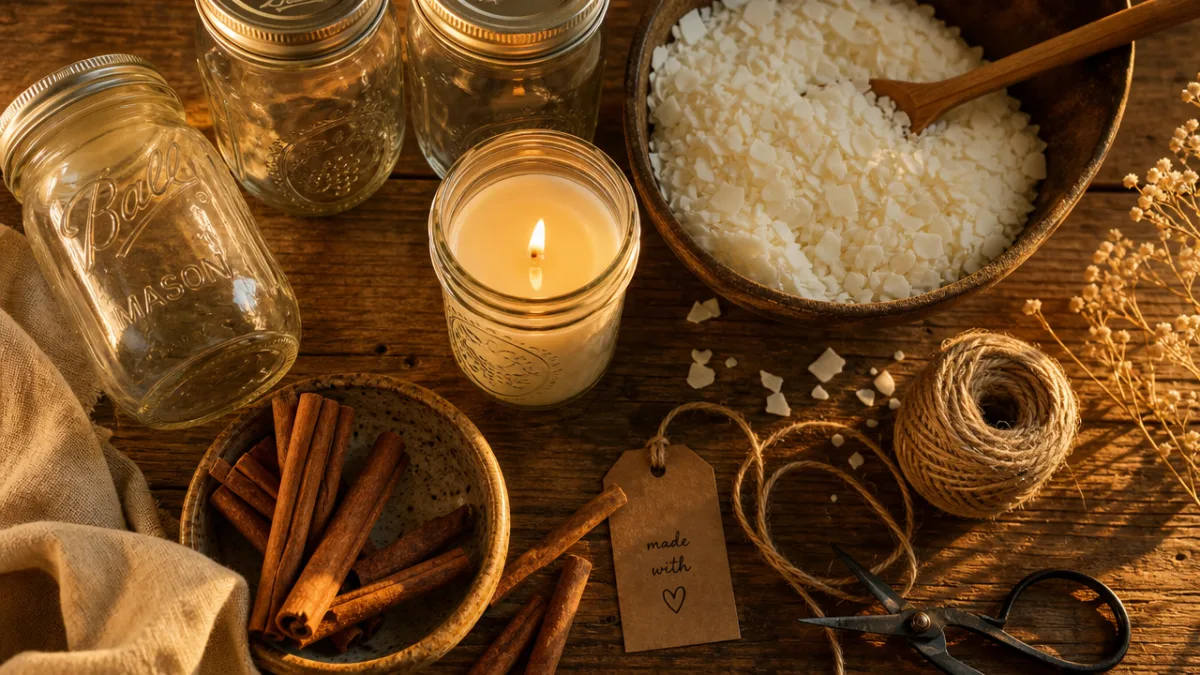
Getting your materials right from the start makes everything else so much easier. When it comes to glass, thicker walls are better — mason jars with walls at least 4mm thick are a safe, reliable choice for holding hot wax. Clear glass is the obvious pick if you want the cinnamon sticks to show through and do their visual thing, but amber or smoky glass gives you a moodier, more diffused glow that’s really lovely in fall and winter.
For wax, most home crafters reach for soy wax, and for good reason. It burns cleaner than paraffin, melts at a lower temperature so there’s less risk of cracking your glass, and it holds fragrance really well. Coconut wax is a step up in quality — it looks creamy and natural and has great scent throw — though it does cost more. Paraffin gives you a glossy, clear finish and is easy to find, but it produces more soot and feels a bit at odds with the natural, organic vibe that cinnamon stick candles tend to have.
Beyond glass and wax, you’ll need a few other things to pull this off well. Wicks matter more than people think — too thin and the candle will tunnel straight down the middle; too thick and you get too much smoke and an uneven burn. Pick a cotton wick sized for your specific vessel. You’ll also want a wick centering tool, a double boiler or wax melting pitcher, a thermometer, and your choice of fragrance oil or essential oil. For the cinnamon sticks themselves, whole dried sticks in consistent lengths look the most polished. How you tie them — natural jute, a leather cord, a velvet ribbon — is where you get to put your own stamp on it.
Step-by-Step: Crafting Your Cinnamon Stick Glass Candle
Start by cleaning and thoroughly drying your glass containers — even a little moisture left inside can cause the wax to bubble or crack as it sets, so don’t rush this step. Rinse with warm soapy water, then either let them air dry completely or pop them in a low oven for a few minutes. While they’re drying, get your wicks set up: thread each wick through a centering bar (or the classic chopstick-and-tape trick) across the jar opening, and stick the base firmly to the center bottom using a wick sticker or a tiny dab of hot glue.
Melt your soy wax slowly in a double boiler, aiming for the manufacturer’s recommended pour temperature — usually somewhere between 120°F and 140°F. Keep an eye on your thermometer, because overheated wax can yellow and lose its fragrance. Once you hit the right temperature, take it off the heat and let it cool down to around 110°F before stirring in your fragrance oil. The standard usage rate is roughly 6 to 10 percent of your total wax weight. Cinnamon blends beautifully with orange peel, clove, vanilla, or cardamom — you want something warm and layered that complements the visual cinnamon without making the whole thing smell like a baked good.
Pour the scented wax into your containers slowly, leaving about half an inch of space at the top. Set them somewhere flat and draft-free and let them cure for at least 24 to 48 hours — though soy wax really rewards patience, and a cure time closer to two weeks gives you noticeably better scent throw. Once fully set, trim the wick to about a quarter inch above the wax. Now comes the fun part: stand cinnamon sticks vertically around the outside of the glass so they frame the candle. Use a rubber band to hold them in place temporarily, tie your cord or ribbon around the bundle with a firm knot, then slip the rubber band off. The cinnamon should sit snug against the glass without squeezing it.
Design Variations and Styling Ideas
One of the best things about this project is how many directions you can take it, even as a beginner. The classic version — natural cinnamon sticks around a clear mason jar, tied with a bit of burlap — never goes out of style, and for good reason. It’s warm, handmade-looking, and approachable, making it a go-to for seasonal gifting or fall and holiday home styling. It plays really nicely alongside pinecones, dried orange slices, or sprigs of eucalyptus in a tablescape.
If you want something with a more contemporary feel, try tall cylindrical glass — thin hurricane glasses or straight-sided pillar containers — with cinnamon sticks all cut to exactly the same height and lined up in a perfect row around the outside, held in place with a wide satin or velvet ribbon in a deep jewel tone like burgundy, forest green, or midnight navy. The contrast between the organic texture of the cinnamon and the clean geometry of the glass is genuinely striking — polished enough for a dinner party centerpiece.
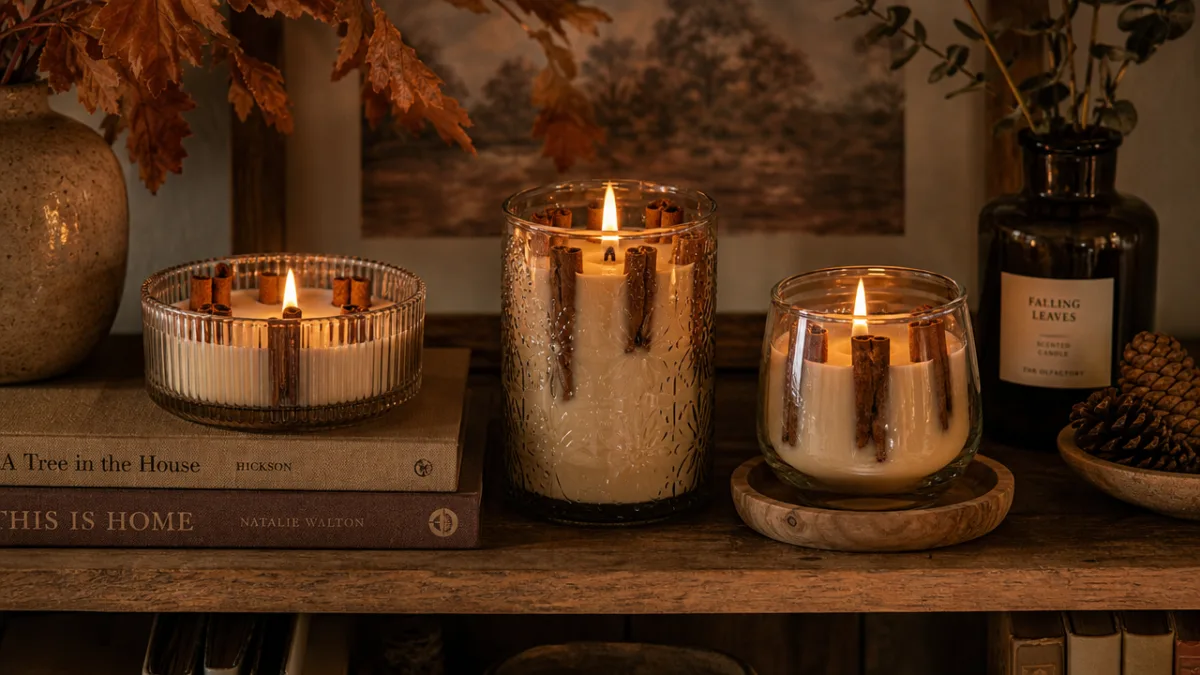
There’s also a really interesting technique where you embed cinnamon sticks inside the wax itself. Press a few sticks against the inner wall of the glass before you pour, and the cinnamon ends up suspended in the wax, visible through the glass and scented by the medium surrounding it. It works especially well with lightly tinted or completely natural wax where the reddish-brown of the cinnamon shows through clearly. Here are a few style directions worth exploring:
- Rustic Farmhouse: Mason jars, unbleached jute twine, dried herb sprigs, and warm vanilla-cinnamon fragrance blends for a cozy, lived-in aesthetic.
- Modern Minimalist: Straight cylindrical glass, monochromatic ribbon, neutral wax tones, and a subtle spice-forward scent profile that doesn’t overwhelm a contemporary space.
- Holiday Festive: Deep red or evergreen-tinted wax, gold ribbon, cinnamon sticks mixed with dried cranberries or star anise, evoking mulled wine and winter celebration.
- Botanical Apothecary: Amber glass with a handwritten kraft label, cinnamon bundled alongside dried lavender or rosemary, evoking an herbalist’s workshop.
- Scandinavian Hygge: White or cream wax in simple clear glass, sparse cinnamon arrangement, and a linen ribbon for a serene, pared-back warmth.
Safety Considerations and Burning Best Practices
These candles are beautiful, but it’s worth being clear-eyed about one thing: the cinnamon sticks on the outside are flammable. The glass provides a real barrier, but any candle with organic decoration on the exterior needs more attention than a plain jar candle. Don’t leave them burning unattended, always set them on a heat-resistant surface well away from anything that could catch fire, and retire a candle once it’s burned down to the last inch of wax so the glass doesn’t overheat.
Wick care is probably the most overlooked part of using candles well. Trim your wick to a quarter inch before every burn — this prevents mushrooming, which is that carbon buildup at the tip that causes extra smoke and leaves dark soot deposits on the inside of your glass. A properly trimmed wick burns steady and even, pulling wax across the full surface rather than tunneling. On the very first burn, let the wax melt all the way to the edges of the container before you blow it out. That first melt sets a “memory” for the candle, and if you don’t let it go all the way across, every subsequent burn will follow that same incomplete pool.
If you’ve embedded cinnamon sticks inside the wax, keep an extra eye on those candles as they burn down. Organic materials can shift as the wax melts and occasionally drift toward the wick. A wick dipper or long-handled tool makes it easy to gently nudge anything back into place. And when it’s time to put the candle out, use a snuffer rather than blowing — blowing can splash hot wax against the warm glass and sends a trail of smoke into the room that a snuffer avoids entirely. With a little attention, these candles are perfectly safe and genuinely enjoyable to burn.
Gifting, Packaging, and Presentation Ideas
Cinnamon stick candles make such good gifts because they feel expensive and thoughtful without actually requiring a ton of time or money to make. The packaging is where a lot of that perceived value comes from. A candle sitting in a kraft paper box with a little shredded tissue, a handwritten card listing the fragrance notes and approximate burn time, and a small box of matches or a personalized matchbook feels like something someone really put thought into — because it is.
For gift sets, grouping three candles of different sizes is a really satisfying approach — maybe a small votive, a medium jar, and a tall pillar — all tied together with the same cinnamon stick decoration and ribbon color, but with slightly different scent variations within the same spice family. Arrange them in a rustic wooden crate or a deep-lidded gift box lined with natural linen. A dried botanical sprig laid across the top, a cinnamon stick placed decoratively in the arrangement, or a wax seal on the card takes it from nice to genuinely impressive.
These candles work for way more occasions than just the obvious holiday window. Housewarming gifts, hostess presents, teacher appreciation, wedding favors, additions to a self-care basket — they fit naturally into all of it. For weddings or corporate gifting where you need multiples, a simple custom label on kraft or cream paper stock with a name, date, or brief sentiment does a lot of heavy lifting. It turns a beautiful handmade object into something people actually keep on display long after the candle itself is gone.

Incorporating Cinnamon Candles into Your Home Décor
Knowing how to actually place these candles in your home is what makes the difference between a craft project and real interior styling. In a living room, try grouping three candles in varying heights on a tray with some river stones, a small plant, and a few loose cinnamon sticks scattered around them. It creates a layered, organic vignette that anchors a coffee table or bookshelf really nicely. And in the evening, when those candles are lit, the quality of light they put out is genuinely different from anything a lamp does — warmer, softer, and with that quiet background scent of cinnamon drifting through the room.
In the kitchen or dining room, cinnamon stick candles are naturals for tablescapes and centerpieces. Flank a low floral arrangement with a matching pair and the whole table feels pulled together and intentional. In autumn, add small pumpkins, gourds, and a few foraged leaves and you have a centerpiece that evolves on its own as the season progresses. In warmer months, swap in fresh herbs, lemon branches, or garden flowers and those same candles carry right through without looking out of place.
The bathroom is worth thinking about too. It’s one of the most intimate spaces in a home, and a single cinnamon stick candle on the edge of a tub or tucked onto a shelf alongside a plant and some neatly folded towels brings real spa-like warmth to an everyday routine. Cinnamon is a grounding, calming scent — it actually works really well in a relaxation context, not just a kitchen one. Whether your home is full of layered textiles and warm wood tones or leans toward clean lines and minimal color, glass and cinnamon are flexible enough to fit right in and make the space feel a little more considered, a little more personal, and a lot more alive.








What do you think?
It is nice to know your opinion. Leave a comment.