










Upcycled Denim Jacket with Lace: The Ultimate Boho Romantic DIY Guide
The Art of Upcycling: Giving Denim a New Story
Upcycling is more than a trend — it is a philosophy that transforms the way we think about clothing and consumption. When you take an old denim jacket sitting forgotten at the back of your wardrobe and weave delicate lace into its sturdy fabric, you are participating in something genuinely meaningful. You are reducing textile waste, expressing your creativity, and producing a wearable piece of art that no fast-fashion brand could ever replicate. This marriage of rugged denim and soft lace is at the very heart of the boho romantic aesthetic.
The beauty of denim as a base material lies in its incredible durability and versatility. Denim has been worn by miners, cowboys, rock musicians, and runway models alike. It absorbs dye beautifully, holds stitches firmly, and ages in a way that only adds to its character. When you pair this workhorse fabric with something as ethereal as lace — whether vintage cotton lace, delicate crochet trim, or intricate floral appliqué — the contrast creates a visual tension that is deeply appealing. The result is something that feels simultaneously tough and tender, modern and nostalgic.
The boho romantic style draws heavily from 1970s free-spirited fashion, Victorian-era textile traditions, and global artisan craft practices. A lace-adorned denim jacket sits perfectly at this crossroads of influences. It says something about the wearer: that they value individuality over conformity, craftsmanship over convenience, and self-expression over trend cycles. Starting your upcycling journey with this project is an excellent decision, whether you are a seasoned sewer or a complete beginner picking up a needle for the first time.
Materials and Tools You Will Need
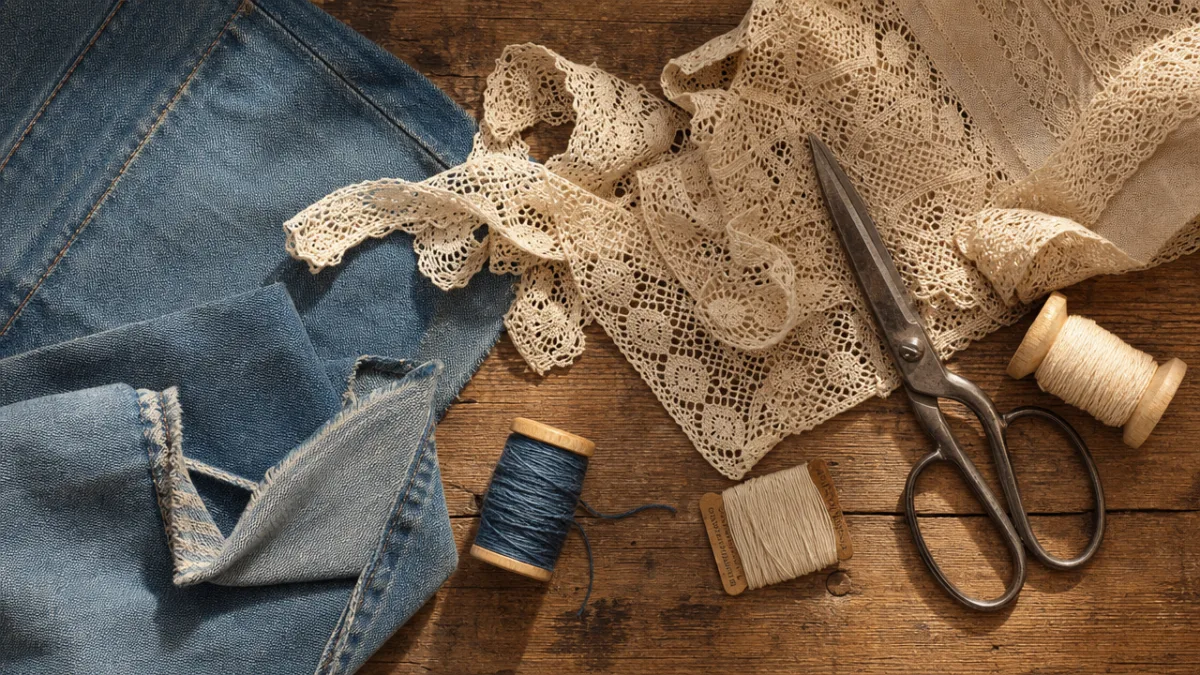
Before you begin transforming your denim jacket, gathering the right materials will make the entire process smoother and more enjoyable. The quality of your lace matters enormously — thin, synthetic lace can look cheap and may not hold up well over time, whereas vintage cotton or polyester lace with detailed floral or scalloped patterns will elevate your jacket significantly. You can source beautiful lace from thrift stores, estate sales, vintage fabric shops, online marketplaces like Etsy, or even by repurposing old lace curtains or tablecloths found at charity shops for next to nothing.
For tools, you will need a sharp pair of fabric scissors, fabric glue as an optional aid, a hand-sewing needle or a sewing machine, thread in colors that complement both your denim and your lace, pins for holding pieces in place, and an iron for pressing seams. Some crafters also use a seam ripper to open existing seams and tuck lace inside the jacket structure, creating a more polished, built-in look rather than an appliquéd surface treatment. A chalk pen or washable fabric marker is useful for planning your design placement before committing.
Consider also any embellishments you might want to incorporate alongside the lace. Boho romantic jackets often feature additional decorative elements that layer beautifully together. Possibilities include pearl or wooden buttons as replacements for the original metal ones, embroidery floss for adding hand-stitched floral motifs in corners or along the yoke, iron-on or sewn patches with botanical or celestial imagery, small mirrors stitched in the style of Indian shisha embroidery, or even strings of tiny beads worked into the lace itself for extra dimension and shimmer in the light.
- Denim jacket (thrifted or from your own wardrobe, pre-washed)
- Lace trim, panels, or vintage lace pieces in coordinating colors
- Sharp fabric scissors and a seam ripper
- Hand-sewing needle and thread, or a sewing machine
- Fabric pins and chalk marking pen
- Iron and ironing board
- Optional: fabric glue, embroidery floss, beads, replacement buttons
Design Planning: Finding Your Boho Romantic Vision
The most successful upcycling projects begin with a clear vision, even if that vision leaves room for happy accidents and improvisation along the way. Before you cut a single piece of lace or thread a single needle, spend time with your jacket and your lace materials, holding them together, draping them, and imagining how the finished piece might look. Take inspiration from Pinterest boards, vintage fashion photography, folk costume traditions from Eastern Europe or Central Asia, and the romantically overgrown beauty of English cottage gardens. Let these references simmer in your imagination before you commit to a plan.
There are several classic approaches to lace placement on a denim jacket, and understanding them will help you decide which direction suits your personal style best. The collar and lapel treatment involves sewing lace around the collar for a soft, face-framing effect that immediately softens the jacket’s silhouette. The cuff and hem treatment creates a delicate border at the jacket’s edges, suggesting that something beautiful is peeking out from underneath. The panel replacement approach involves cutting away sections of the jacket’s back or chest and replacing them entirely with lace fabric, creating dramatic windows of delicate texture within the denim structure.
You might also consider a more asymmetric, artfully haphazard arrangement that scatters lace elements across the jacket in a way that feels organic rather than planned — a style that aligns beautifully with the free-spirited boho ethos. Pin different lace pieces to your jacket and step back to assess the composition from a distance, the way a painter would assess a canvas. Photograph your arrangement before sewing so you have a reference. Think about balance: if one shoulder carries a large lace panel, perhaps the opposite cuff gets an extra flourish of trim to bring the eye around the whole garment.
Step-by-Step Construction: Bringing the Design to Life
Begin by washing and pressing your denim jacket thoroughly, as working on clean, flat fabric is always easier and produces neater results. If your lace is vintage and delicate, give it a gentle hand wash and press it carefully under a cloth to avoid burning or distorting the fibers. Lay your jacket flat on a large work surface — a dining table works well — and have all your materials within easy reach. This first step of preparation might seem mundane, but it genuinely sets the foundation for professional-looking results rather than a project that looks rushed or unfinished.
If you are adding lace trim to the collar, carefully unpick the collar’s topstitching with your seam ripper to create a channel where you can tuck the raw edge of your lace, then restitch the collar closed over it for a clean, integrated finish. Alternatively, fold the raw edge of the lace under by about half a centimeter, press it flat, and pin it along the collar edge before sewing it down by hand with a slip stitch or by machine with a narrow zigzag stitch. The zigzag is particularly forgiving when sewing over lace’s uneven surface. Work slowly, and remove pins as you go rather than sewing over them.
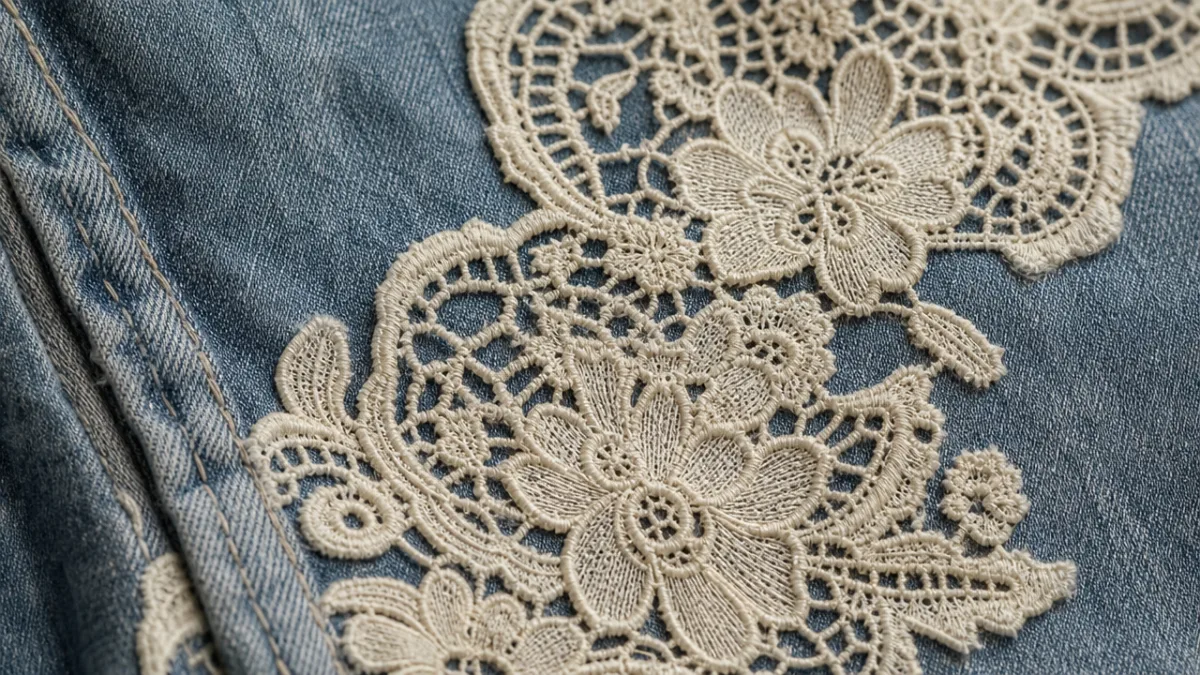
For lace panel inserts in the back or chest pockets, mark your desired cut lines on the denim with chalk, then cut just inside these lines. Turn the raw denim edges under by about one centimeter, press them, and pin your lace panel behind the opening so it shows through like a beautiful window. Stitch all around the folded edge with a topstitch or decorative embroidery stitch, securing the lace and finishing the denim edge simultaneously. This technique requires patience and careful pressing at each stage, but the result — a denim jacket with delicate lace insets — is truly stunning and looks far more complex and skillful than it actually is.
- Wash, dry, and press both the denim jacket and all lace materials before beginning.
- Pin all lace pieces to the jacket in your planned arrangement and photograph the layout.
- Begin with the largest lace elements first, working from the center of the design outward.
- Secure lace to denim using your preferred method: tucked into seams, appliquéd on top, or inset as panels.
- Add any supplementary embellishments such as embroidery, beads, or patches.
- Press the finished jacket carefully and check all edges are securely attached.
- Do a final wearability check: try it on and look for any areas needing reinforcement or adjustment.
Finishing details make an enormous difference to how polished your completed jacket looks and feels. Go over every lace edge and make sure no threads are loose or fraying. If any sections feel insecure, reinforce them with additional hand stitching using a doubled thread. Consider adding a small interior label with your name or a meaningful word — a quiet signature that marks this as a piece of wearable art made by your own hands. The finishing stage is also when you might add any final embellishments: a row of small pearl buttons along the front placket, a hand-embroidered flower at the corner of a lace panel, or a subtle wash of diluted fabric dye to unify the denim and lace tones if they feel mismatched.

Styling Your Upcycled Lace Denim Jacket
Once your jacket is finished, the pleasure of styling it begins. The boho romantic aesthetic is one of the most layerable and flexible in contemporary fashion, meaning your upcycled jacket will work across a surprising range of outfits and occasions. For a classic boho look, pair it over a white broderie anglaise maxi dress with tan leather sandals and a woven straw hat. The lace detailing on the jacket echoes the eyelet work of the dress without matching it exactly, creating a cohesive yet not matchy-matchy effect that feels effortless and curated simultaneously.
The jacket also layers beautifully over simpler foundations for everyday wear. Try it over a plain white or cream fitted t-shirt with high-waisted vintage-wash jeans and ankle boots for a look that is casual enough for a farmers market or coffee shop but interesting enough to attract compliments wherever you go. In cooler weather, wear it over a thermal turtleneck in a warm caramel or dusty rose shade — the lace details will still be visible and striking against the neutral base. Accessorize with layered gold necklaces, a stack of hammered metal bracelets, and a leather or suede crossbody bag for a complete boho romantic ensemble.
For evening events or festival dressing, push the look a little further. Pair the jacket over a silk slip dress in champagne, blush, or sage green, with strappy heeled sandals and dangly earrings featuring feathers, gemstones, or hand-hammered metal. A messy updo or loose waves in the hair will complement the romantic, slightly undone spirit of the jacket perfectly. The beauty of this piece is that it occupies that rare fashion territory between dressed-up and dressed-down — it elevates a simple outfit without overwhelming it, and it relaxes a formal outfit without undermining it.
Caring for Your Upcycled Jacket and Sustainable Fashion Values
An upcycled garment represents time, creativity, and meaningful material resources, so caring for it properly ensures it will last for many years and continue telling its layered story. Always turn the jacket inside out before washing to protect the lace from snagging in the machine drum. Choose a delicate or hand-wash cycle with cool water and a gentle detergent formulated for delicate fabrics. Avoid wringing or twisting the jacket when wet; instead, press it gently between towels to remove excess water and reshape it carefully before laying it flat to dry on a clean surface away from direct sunlight, which can yellow lace over time.
Store your jacket hanging in a wardrobe rather than folded, which can cause creasing in the lace that is difficult to remove without careful pressing. If a section of lace becomes loose or a thread snaps, repair it promptly rather than allowing the damage to spread — a small repair done quickly is far easier than a major reconstruction done later. Keep a small repair kit containing matching thread and a needle tucked somewhere accessible so that minor fixes can be done immediately. With this level of care, a well-made upcycled denim jacket can genuinely last decades, becoming a true heirloom piece.
Beyond the practicalities of garment care, wearing and sharing your upcycled jacket participates in a broader cultural conversation about sustainability and fashion ethics. The fashion industry is one of the world’s largest polluters, and every garment that is repaired, repurposed, or creatively transformed rather than discarded represents a small but genuine act of resistance against throwaway culture. When people admire your jacket and ask where it came from, telling them you made it yourself from an old jacket and some vintage lace is an invitation for them to consider their own relationship with clothing and consumption. Your creativity becomes a quiet form of advocacy.
The upcycled denim jacket with lace sits at a beautiful intersection of craft tradition, environmental consciousness, and personal style. It honors the slow fashion values of taking time, choosing quality, and making things that matter. It connects you to generations of makers — seamstresses, embroiderers, quilters, menders — who understood that fabric is never truly finished until it has been worked by human hands with care and intention. Whatever your skill level, this project offers a deeply satisfying creative experience and a wearable result that reflects your values, your taste, and your willingness to see beauty in the things the world might otherwise overlook.
Inspiration and Community: Taking Your Upcycling Further
One of the most rewarding aspects of beginning a creative upcycling practice is discovering the vast, generous community of makers who are doing the same thing all around the world. Platforms like Pinterest, Instagram, and YouTube are overflowing with tutorials, finished project galleries, and creative challenges that will fuel your imagination and help you develop new skills at your own pace. Search for terms like visible mending, slow fashion, sustainable style, or boho DIY and you will find yourself quickly immersed in a world of people who share your values and your aesthetic sensibility, many of whom are delighted to offer advice and encouragement to newcomers.
As your confidence grows, consider expanding your upcycling practice beyond the single jacket project. The skills you develop — working with delicate fabrics, combining contrasting materials, planning and executing textile designs — transfer beautifully to other garments and projects. A pair of jeans with lace inserts along the outer seams, a denim skirt with a lace hem extension that adds length and romance, a denim tote bag with a lace pocket panel, or even a denim quilt incorporating lace sashing between blocks are all natural next steps that will deepen your craft and expand your creative repertoire. Each project teaches you something new and produces something uniquely yours.
You might also consider selling your upcycled pieces, gifting them to friends who appreciate handmade things, or even running a small workshop to share your skills with others in your community. There is a growing market for genuinely unique, handmade, sustainable fashion pieces, and the boho romantic aesthetic has devoted followers who would treasure a one-of-a-kind lace denim jacket. Whether you keep your creation, share it, or sell it, the experience of making it — of transforming something old and overlooked into something beautiful and meaningful — is a gift you give primarily to yourself, a reminder that your hands are capable of making the world a more beautiful place.








What do you think?
It is nice to know your opinion. Leave a comment.