










Spoon Necklace: The Timeless Beauty of Stainless Steel Tooled and Scroll Jewelry
The Art of Spoon Jewelry: A Tradition Reborn
Spoon jewelry occupies a fascinating niche in the world of handcrafted accessories, drawing on a tradition that stretches back centuries. Long before mass production made silverware cheap and plentiful, spoons were considered precious objects, handed down through generations and repurposed with care when they became too worn for the table. Craftspeople discovered that the curved, malleable form of a spoon lent itself beautifully to rings, bracelets, and necklaces, giving birth to an enduring folk art tradition that continues to captivate collectors and jewelry lovers today.
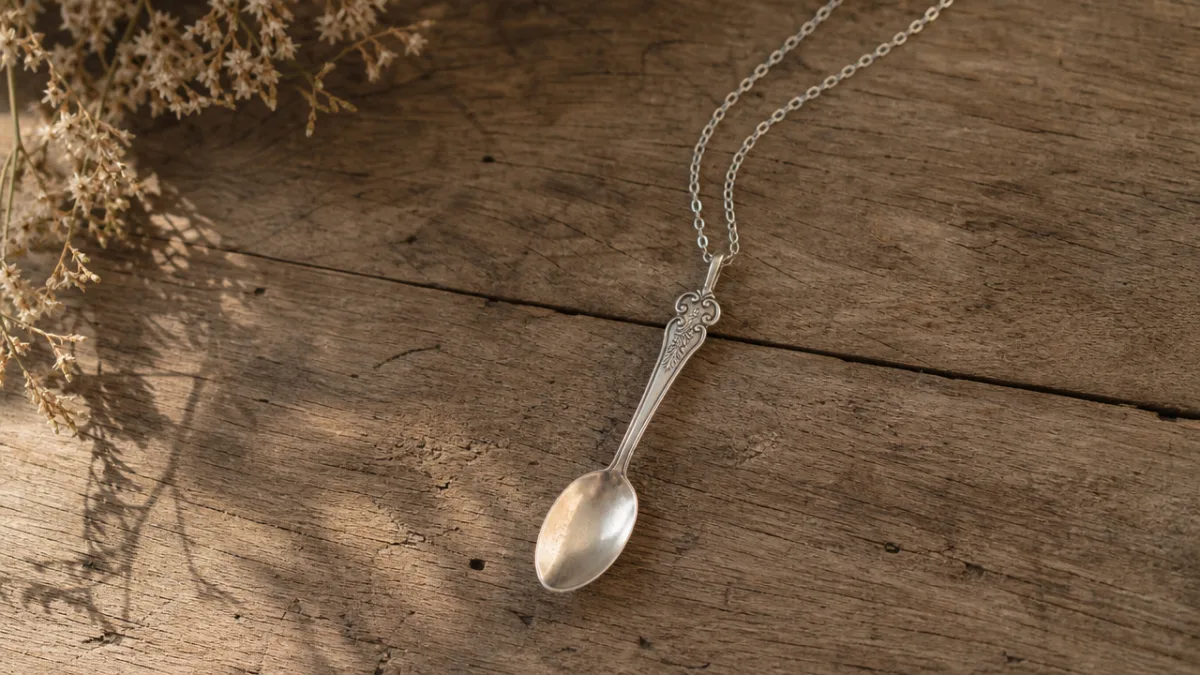
Modern spoon necklaces blend this rich heritage with contemporary materials and techniques. Stainless steel, in particular, has emerged as a favored medium for artisans who want to honor the aesthetic legacy of antique silverware while delivering a product that is durable, hypoallergenic, and accessible to a wide range of wearers. The characteristic tooled and scroll designs seen on the finest spoon necklaces echo the ornate engraving and repousse work found on Victorian-era flatware, connecting the wearer to a long lineage of decorative craftsmanship.
What makes a tooled and scroll spoon necklace truly special is the level of intentional artistry involved in its creation. Unlike simple stamped metal pendants, these pieces typically feature hand-worked or precision-etched surface patterns that give each necklace a sense of depth and individuality. The scrollwork, with its graceful curves and interlocking motifs, transforms a functional object into a miniature canvas. Whether worn as a statement piece or a subtle everyday accessory, a well-made spoon necklace carries with it a story of transformation — of something ordinary elevated into something extraordinary.
Why Stainless Steel Is the Ideal Material for Spoon Necklaces
The choice of stainless steel for a spoon necklace is far from arbitrary. This material has earned a prominent place in the jewelry world precisely because it balances aesthetic appeal with practical durability in a way that few other metals can match. Unlike sterling silver, which tarnishes readily and requires regular polishing, stainless steel maintains its bright, mirror-like finish with minimal maintenance. A wearer can shower, swim, and go about daily life without worrying that their necklace will corrode, discolor, or lose its luster over time.
From a health and sensitivity standpoint, stainless steel offers significant advantages. Many people suffer from reactions to nickel and other alloys commonly found in costume jewelry and even some gold and silver pieces. High-quality stainless steel, particularly 316L surgical-grade steel, is widely regarded as hypoallergenic and safe for sensitive skin. This makes a stainless steel spoon necklace an excellent choice for anyone who has struggled to find jewelry they can wear comfortably for extended periods, opening up the world of decorative accessories to a broader audience than ever before.
Beyond its wearability, stainless steel is an exceptionally good material for capturing and holding fine surface detail. The tooled and scroll patterns that define the most desirable spoon necklaces require a material capable of taking crisp, clean impressions and retaining them under years of daily wear. Stainless steel meets this requirement admirably. Its hardness means that engraved lines and textured surfaces remain sharp and defined long after softer metals would have blurred or worn smooth, ensuring that the decorative investment in the piece continues to pay aesthetic dividends for decades.

Understanding Tooled and Scroll Designs: A Closer Look at the Craft
The terms “tooled” and “scroll” refer to specific decorative techniques and motifs that have deep roots in metalworking history. Tooling, in its broadest sense, describes any process in which a craftsperson uses hardened implements to shape, texture, or pattern a metal surface. In the context of spoon necklaces, tooling typically involves engraving, chasing, or stamping intricate patterns into the steel, creating a relief that catches light differently across the surface of the piece and gives it a visual complexity that flat, unworked metal simply cannot achieve.
Scroll motifs are among the oldest and most enduring decorative forms in human visual culture. Found in ancient Greek and Roman architecture, medieval manuscript illumination, Baroque furniture, and Victorian silverware, the scroll is a graceful, spiraling line that can be combined and mirrored in endless variations to create borders, fill fields, and frame central design elements. On a spoon necklace, scroll patterns typically flow along the handle of the spoon — the elongated portion that forms the pendant shaft — and may also appear on the bowl, which often serves as the focal point of the design.
Creating a genuinely well-executed tooled and scroll design requires either skilled handwork or high-precision mechanical engraving, and often a combination of both. Many artisans begin with a machine-etched base pattern and then refine details by hand, adding subtle variations in depth and line weight that give the finished piece its sense of vitality and uniqueness. The best spoon necklaces in this style display a quality that might be called “controlled spontaneity” — the underlying order of the scroll geometry is clearly present, but within it there are small irregularities and flourishes that signal the presence of a human hand.
It is worth noting that tooled and scroll designs also carry symbolic weight for many wearers. Spirals and scrolls appear in the symbolic vocabularies of numerous cultures, representing concepts ranging from the journey of life and the movement of the cosmos to concepts of growth, return, and endless renewal. Wearing a scroll-patterned necklace is, for some people, more than a fashion choice — it is a way of aligning oneself with a visual tradition laden with meaning and beauty, of wearing a symbol as much as an ornament.
How to Choose, Style, and Care for Your Spoon Necklace
Selecting the right spoon necklace begins with understanding what you want the piece to do for your wardrobe and your sense of self. Spoon necklaces come in a remarkably wide range of sizes, from delicate miniature pendants that sit close to the collarbone to bold statement pieces featuring full-sized spoon bowls that draw the eye from across the room. Tooled and scroll designs tend to read best at medium to larger scales, where the intricacy of the surface decoration can actually be appreciated by the viewer, so it is generally worth opting for a piece with some presence rather than the smallest option available.
When it comes to styling, the spoon necklace is more versatile than many people initially expect. Its combination of vintage-inspired detailing and industrial-feeling stainless steel allows it to bridge aesthetic worlds that might otherwise seem incompatible. Consider the following pairing approaches:
- Wear a spoon necklace with a flowy bohemian blouse and layered skirts to emphasize its folk-art heritage and create an earthy, eclectic look full of texture and warmth.
- Pair it with a crisp white shirt or a minimalist fitted dress for a striking contrast between the necklace’s ornate surface and a clean, contemporary silhouette.
- Layer it with other chain necklaces of varying lengths and thicknesses to create a curated, mixed-metal look that feels modern and intentional.
- Combine it with leather or denim for a slightly edgy, handcrafted aesthetic that acknowledges both the artisanal and the utilitarian roots of the piece.
Caring for your stainless steel spoon necklace is refreshingly simple. Unlike precious metal jewelry that demands specialist cleaning products and careful storage away from moisture and air, stainless steel is forgiving and low-maintenance. A soft cloth dampened with warm water and a small amount of mild dish soap is all you need to remove everyday grime and restore a bright finish. Rinse thoroughly and dry completely before storing to prevent any water spots from forming. Avoid prolonged exposure to harsh chemicals such as bleach or chlorine-based cleaners, which can dull the surface over time even on resilient stainless steel.
Storage is also straightforward. Keep your spoon necklace in a soft pouch or lined jewelry box to prevent the pendant from scratching against harder objects, and store it separately from abrasive items. Because stainless steel is highly scratch-resistant compared to softer metals, you have considerable latitude here, but a little care goes a long way toward keeping the scroll detailing looking crisp and beautiful for as long as possible. With proper attention, a quality stainless steel spoon necklace can last a lifetime and remain a wearable pleasure throughout.
The Cultural Significance and Symbolism of Spoon Jewelry
Spoons have carried symbolic meaning in human culture for far longer than they have been worn as jewelry. In many traditions, the gift of a spoon signified nourishment, prosperity, and the hope that the recipient would never go hungry. The Welsh lovespoon, perhaps the most famous example of spoon-as-symbol, was intricately carved from a single piece of wood and given as a token of romantic affection as far back as the seventeenth century. This tradition of pouring meaningful intention into the form of a spoon is directly ancestral to the modern spoon necklace, which carries forward the idea that an everyday object can become a vessel for love, memory, and identity.
The repurposing of spoons into jewelry also connects to a broader cultural movement that values transformation, sustainability, and the reclamation of objects from mundane or discarded status. There is something philosophically resonant about taking a tool associated with daily sustenance and converting it into an adornment, effectively elevating it from the utilitarian to the aesthetic. This kind of creative transformation has appealed to artists and craftspeople across generations and speaks to something fundamental in human nature — our desire to find beauty in unexpected places and to imbue ordinary materials with extraordinary significance through the application of skill and intention.
In contemporary culture, spoon jewelry has taken on additional layers of meaning through its association with the “spoon theory” concept widely used within chronic illness and disability communities. In this context, a spoon necklace can serve as a symbol of solidarity, self-awareness, and the acknowledgment of one’s own limits and strengths. Many people within these communities wear spoon jewelry as a quiet signal to others who share their experience, creating a subtle visual language of mutual recognition and support. This social dimension adds a richness to spoon necklaces that purely decorative jewelry often lacks, making them meaningful in ways that extend well beyond the aesthetic.
Buying and Gifting Spoon Necklaces: What You Need to Know
When purchasing a tooled and scroll stainless steel spoon necklace, it pays to know what distinguishes a quality piece from a mass-produced imitation. The surface detailing should be crisp and consistent, with scroll lines that have clean edges rather than fuzzy or indistinct contours. The overall finish of the metal should be even and free from pitting, discoloration, or rough patches that suggest poor manufacturing standards. Hold the piece up to a light source and rotate it slowly — the way the tooled patterns catch and redirect light is one of the best indicators of the depth and quality of the engraving work.
Chain quality is another critical factor that shoppers sometimes overlook in their focus on the pendant. The necklace chain should be proportional to the weight of the spoon pendant, strong enough that it won’t stretch or break under normal wear, and finished with a clasp that opens and closes smoothly and securely. For a spoon necklace with significant visual weight, a box chain or a sturdy cable chain is generally preferable to a delicate fine chain, which may struggle to bear the pendant without distorting over time. Pay attention to how the pendant attaches to the chain as well — the bail or connector should be solidly constructed and neatly integrated into the overall design.
As a gift, a spoon necklace is a wonderfully thoughtful and versatile choice for a wide range of recipients and occasions. Its combination of handcrafted aesthetic, symbolic depth, and practical wearability makes it suitable for:
- Milestone birthdays, where the weight and permanence of the piece reflects the significance of the occasion and the relationship between giver and recipient.
- Weddings and anniversaries, where the nourishment symbolism of the spoon carries particular resonance as a metaphor for partnership and shared life.
- Graduation gifts, celebrating transformation and new beginnings with a piece that itself embodies the idea of something being remade into something greater.
- Holiday and seasonal giving, where the intricate scroll detailing gives the necklace a rich, festive visual quality that photographs beautifully in gift presentation.
- Gifts for chronic illness and disability community members, where the spoon symbolism carries personal and community meaning that goes beyond the decorative.
Whatever the occasion, presenting a spoon necklace with some brief context about its history and symbolism can deepen the recipient’s connection to the piece and ensure they understand the thought that went into its selection. A handwritten note describing the craft tradition of spoon jewelry, or a few words about the meaning of the scroll motifs, transforms the gift from a pretty object into a genuine story — and stories, like well-made jewelry, are things people tend to keep for a very long time.
Finally, consider supporting independent artisans and small-scale makers when purchasing spoon necklaces rather than defaulting to large retail platforms. Many skilled craftspeople sell their tooled and scroll stainless steel work through handmade marketplaces, craft fairs, and their own independent websites, and buying from them directly ensures that your purchase supports sustainable creative practice and helps keep traditional metalworking skills alive and viable. The piece you receive from an independent maker is also likely to have a greater degree of individual character and craftsmanship than a factory-produced alternative, making it a more meaningful acquisition both ethically and aesthetically.








What do you think?
It is nice to know your opinion. Leave a comment.