










Stone Paver Side Tables: The Ultimate Guide to Creating Stunning Outdoor Accent Furniture
What Is a Stone Paver Side Table and Why Everyone Is Obsessed
A stone paver side table is exactly what it sounds like — a functional, stylish piece of outdoor furniture built using concrete or natural stone pavers as the primary surface material. These tables have exploded in popularity on platforms like Pinterest and Instagram because they offer an almost perfect combination of durability, affordability, and raw aesthetic charm. Whether you stack them on a simple metal frame, a wooden base, or even a set of cinder blocks, the result is a piece that looks like it belongs in a high-end landscape design catalog without carrying the price tag to match.
The appeal goes far beyond aesthetics, though. Stone pavers are inherently weather-resistant, which makes them ideal candidates for outdoor furniture that has to endure sun, rain, temperature swings, and the occasional spilled drink. Unlike wood, which warps and rots, or metal, which can rust without proper treatment, a concrete or natural stone paver sitting atop a well-built base will look great season after season with almost no maintenance required. This durability is one of the biggest reasons homeowners and DIY enthusiasts keep returning to this concept.
What makes the stone paver side table particularly compelling in the current design landscape is its versatility. It works just as well beside a sleek, minimalist sofa set on a concrete patio as it does nestled next to a rustic Adirondack chair surrounded by wildflowers. The neutral tones of stone — grays, taupes, warm creams, and even earthy reds — complement virtually any color palette and any design sensibility. It is one of those rare furniture ideas that genuinely transcends trends because the material itself is timeless.
Choosing the Right Stone Paver for Your Table
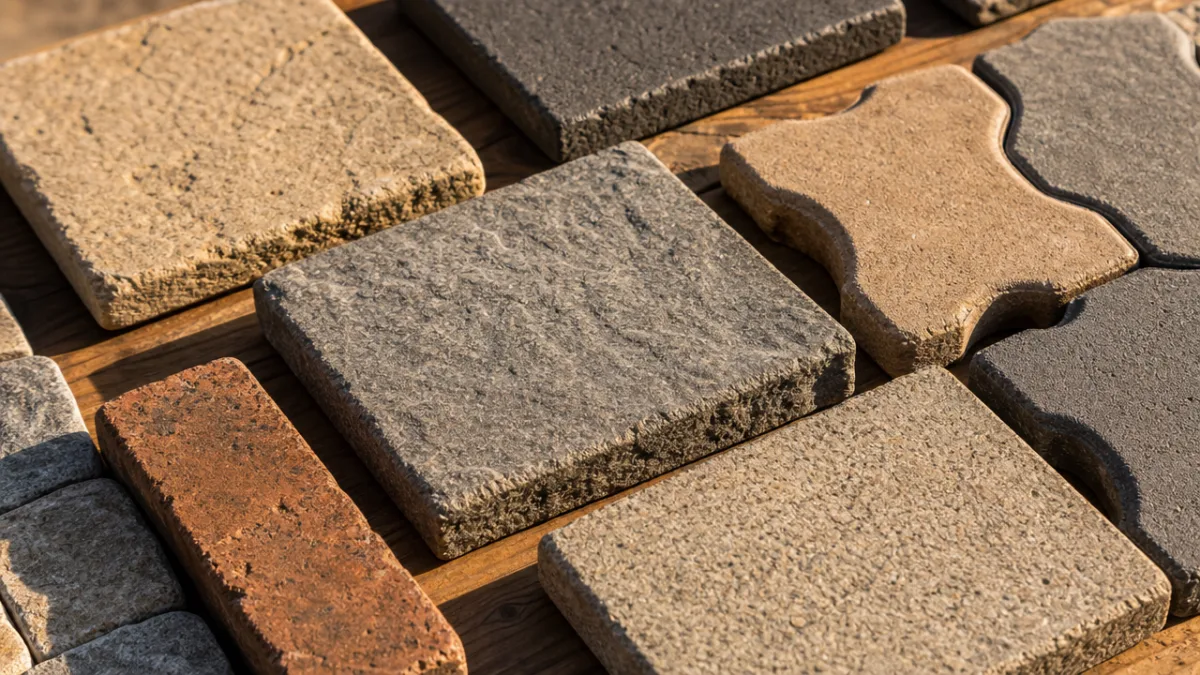
The selection process for your paver matters more than most beginners realize. Not every paver on the market is created equal, and the differences in material, thickness, texture, and finish will dramatically affect both the look and the longevity of your finished table. The most common choices you will encounter at any home improvement store fall into three broad categories: concrete pavers, natural stone pavers, and porcelain pavers. Each has distinct advantages and trade-offs worth understanding before you commit to a purchase.
Concrete pavers are the most budget-friendly option and come in the widest variety of shapes and sizes. They are dense, heavy, and extremely durable, though they are somewhat porous and may require sealing if you live in a climate with heavy frost or intense UV exposure. Natural stone options like slate, bluestone, travertine, and flagstone bring an organic, one-of-a-kind beauty that no manufactured product can fully replicate. Each piece has its own veining, color variation, and texture, which means your finished table will be genuinely unique. Porcelain pavers sit at the premium end of the spectrum — they are non-porous, incredibly durable, and available in sophisticated finishes that mimic marble, wood grain, or raw concrete.
When selecting your paver, thickness is a critical consideration. For a side table that will hold drinks, books, lanterns, and other lightweight items, a paver that is at least one and a half inches thick provides a satisfying sense of solidity and weight. Thinner pavers can work if they are properly supported across their full surface, but they carry a higher risk of cracking under point-load stress. Size is equally important: a 12-by-12-inch or 16-by-16-inch paver creates a generous tabletop surface that functions well without being so large that it overwhelms a seating arrangement. Some people opt for a cluster of smaller pavers arranged on a larger base to create a mosaic-style top, which adds visual interest and allows for creative customization.
- Concrete pavers: Affordable, widely available, heavy, may need sealing in freeze-thaw climates
- Natural stone (slate, bluestone, travertine): Unique, beautiful, premium feel, varies in porosity depending on stone type
- Porcelain pavers: Non-porous, low maintenance, modern finishes, typically the most expensive option
- Tumbled or textured finishes: Hide surface scratches well and add rustic character
- Smooth or honed finishes: Offer a more contemporary, refined appearance
Base and Frame Options: Building the Foundation of Your Table
The base of a stone paver side table is where your creativity and personal style truly come into play. Because the paver itself is heavy and often self-supporting in terms of surface integrity, the base does not need to be an engineering marvel — it simply needs to be stable, level, and proportionally appropriate to the size of your paver. The range of viable base options is genuinely wide, from reclaimed wood stumps and concrete blocks to welded steel frames and commercially produced metal hairpin legs. Your choice of base will largely define the overall aesthetic of the finished piece.
Hairpin legs are among the most popular base choices for this type of project right now, and with good reason. They are affordable, available in a range of heights and finishes, and pair beautifully with the industrial-meets-natural aesthetic that stone pavers naturally project. A set of three or four hairpin legs in black or raw steel attached to the underside of a paver creates a table that looks like it came from a boutique furniture shop. Attaching legs to stone or concrete requires the use of a two-part epoxy adhesive rather than screws, since you cannot simply drill into most pavers without specialized equipment. The bond created by a quality construction epoxy is remarkably strong and more than adequate for a side table application.
For those who prefer a more organic, less modern look, a section of a tree trunk or a large piece of driftwood makes an exceptional base. The contrast between the rough, living quality of wood and the cool, precise surface of stone creates a compelling visual tension that many people find deeply satisfying. Cinder blocks stacked in creative configurations have also become a popular DIY approach — they are free or nearly free, easy to work with, and can be painted, whitewashed, or left raw depending on your preference. Whatever base you choose, ensure that the paver is secured with adhesive or at minimum rests in a way that prevents lateral shifting, which is both a safety concern and an aesthetic one.
- Measure and select your paver size based on the scale of your seating area
- Choose your base material and determine the appropriate finished height (typically 18 to 24 inches for a side table)
- Clean the underside of the paver thoroughly before applying any adhesive
- Mix and apply two-part epoxy according to manufacturer instructions
- Press the base or leg mounting plates firmly into position and allow full cure time before use
- Optional: apply a penetrating stone sealer to the top surface for added stain resistance
Styling Your Stone Paver Side Table in an Outdoor Space
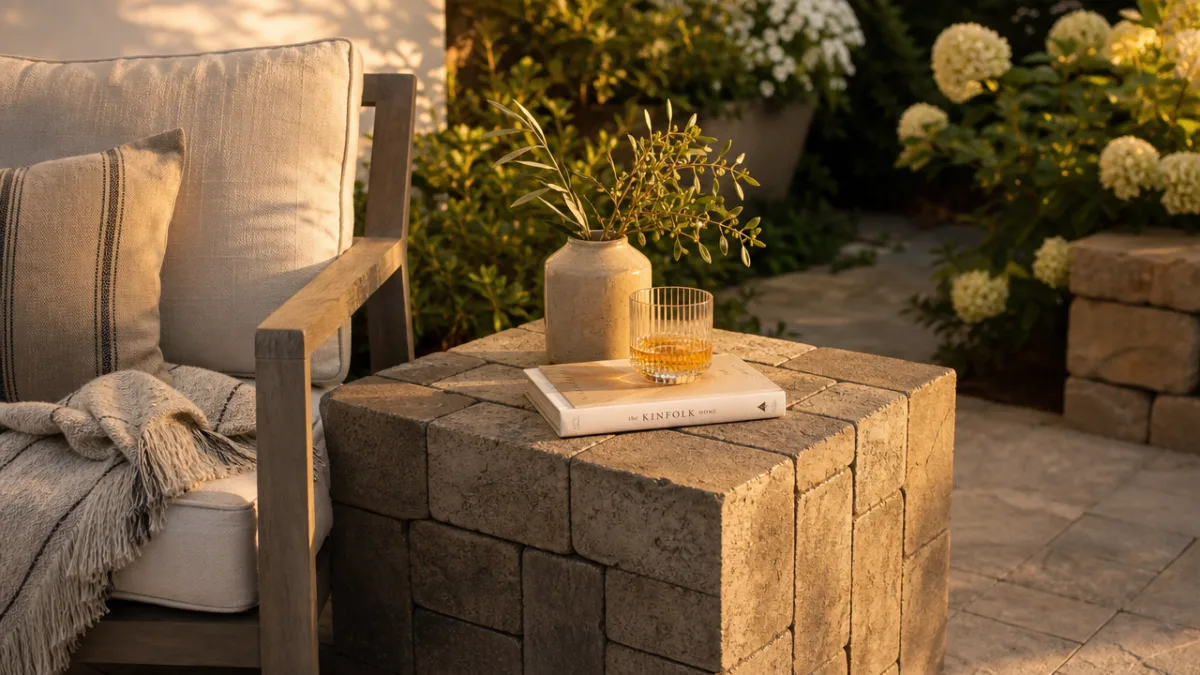
Once your table is built and cured, the real fun begins — integrating it into your outdoor living area in a way that feels intentional and cohesive. Stone paver tables are remarkably easy to style because their neutral palette acts as a grounding element that allows other colors and textures around them to shine. The table itself becomes a quiet anchor in the composition of your outdoor space rather than a loud focal point demanding attention. This is one of the reasons they photograph so well and why they keep appearing in aspirational outdoor living content across social media.
Consider what you will place on the table when thinking about how to position it in your space. A lantern or a cluster of pillar candles in varying heights creates warmth and ambiance during evening gatherings. A small potted succulent or an air plant in a simple concrete planter keeps things organic and low-maintenance. A folded throw blanket draped slightly over the edge of the table adds softness and color without overwhelming the stone’s natural character. The key to styling any side table well is layering objects at different heights while keeping the overall arrangement loosely balanced rather than symmetrically rigid.
Think carefully about scale when positioning your table relative to your seating. A side table should ideally sit at approximately the same height as the arm of the chair or sofa it accompanies, making it effortless to set down a drink or pick up a book without reaching or bending awkwardly. In a larger outdoor seating arrangement with multiple chairs grouped around a central fire pit or coffee table, stone paver side tables placed at each seat create a sense of individual comfort and accessibility that guests immediately appreciate. Using matching pavers for consistency while varying the bases slightly — one hairpin leg table, one stump base — adds visual rhythm without creating monotony.
Maintenance, Sealing, and Long-Term Care
One of the greatest selling points of a stone paver side table is how little ongoing care it actually requires. Compared to wood furniture that needs annual sanding, oiling, or painting, or wrought iron that demands rust treatment and recoating over time, a stone paver table asks very little of its owner. The basic maintenance routine for most paver tables is simple: rinse periodically with clean water, wipe up spills promptly to prevent staining on unsealed surfaces, and apply a penetrating sealer once every year or two depending on your climate and the porosity of your particular stone.
Sealing deserves a slightly more detailed explanation because it is the single most impactful maintenance step you can take to preserve the appearance and longevity of your table. Penetrating sealers — sometimes called impregnating sealers — soak into the pores of the stone rather than forming a film on the surface. This means they protect against moisture intrusion and staining without altering the natural look or feel of the stone. They are generally preferable to topical sealers for outdoor use because they do not peel, bubble, or create a slippery surface when wet. Applying a sealer is a simple process: clean the paver thoroughly, allow it to dry completely, and apply the sealer with a brush or roller in thin, even coats according to the product’s directions.
In climates where temperatures regularly drop below freezing, winter care becomes an additional consideration. Water that infiltrates an unsealed porous stone and then freezes can cause internal cracking — a process called spalling — over multiple freeze-thaw cycles. Keeping your paver well-sealed dramatically reduces this risk. You might also consider storing lighter-weight tables indoors or in a covered area during the harshest months, though most concrete pavers are dense enough to handle outdoor winters without issue when properly sealed. For natural stones like travertine, which is more porous, indoor winter storage or at minimum a breathable waterproof cover is a worthwhile investment.
Cost, Sourcing, and Where to Find Materials
One of the most appealing aspects of a stone paver side table project is its accessibility from a financial standpoint. A single concrete paver from a home improvement retailer like Home Depot or Lowe’s typically costs between one and five dollars depending on size and style. A set of four hairpin legs in black steel costs between fifteen and forty dollars depending on height and source. Add in a tube of construction epoxy at around eight to twelve dollars and an optional can of stone sealer at fifteen to twenty-five dollars, and you have a complete, functional, and genuinely attractive side table for somewhere between twenty-five and seventy-five dollars total — a fraction of what a comparable piece would cost at a furniture retailer.
For those who want to elevate the material quality without dramatically increasing the budget, reclaimed or salvaged stone is worth seeking out. Architectural salvage yards, Habitat for Humanity ReStore locations, and online marketplace listings on Craigslist or Facebook Marketplace regularly feature stone pavers, flagstone, and other hardscaping materials at steep discounts or even for free from homeowners completing renovations. These reclaimed stones often carry beautiful surface character — slight weathering, patina, mineral variation — that new pavers simply cannot replicate. A piece of reclaimed bluestone or antique brick on a well-crafted base can look like a genuinely museum-quality object.
Beyond physical stores and salvage yards, a growing number of online retailers specialize in premium pavers and natural stone tiles that ship directly to your door. Companies focused on porcelain and large-format stone tiles in particular have expanded their outdoor product lines significantly in recent years, offering sophisticated options in formats suitable for table-top use. When ordering online, always request samples before committing to a full purchase — stone and concrete vary in color and texture from batch to batch, and screen representations are often imprecise. Reading reviews specifically from customers who have used the material in a table or countertop application rather than flooring will also give you more relevant feedback about how the product performs in your intended use case.
- Home improvement stores (Home Depot, Lowe’s, Menards): Best for affordability, wide selection of concrete pavers, easy local pickup
- Architectural salvage yards: Great for character and reclaimed stone with patina and history
- Habitat for Humanity ReStore: Budget-friendly reclaimed building materials including pavers and tile
- Online marketplaces (Craigslist, Facebook Marketplace): Renovation surplus often available free or at very low cost
- Specialty tile and stone retailers: Best selection of premium natural stone and porcelain in sophisticated finishes

Design Variations and Creative Inspiration to Make It Your Own
While the basic concept of a paver plus a base is simple, the design variations you can explore within that framework are essentially endless. One of the most exciting directions is the use of oversized format pavers — 24-by-24-inch or even larger — to create a generous surface that bridges the gap between a side table and a small coffee table. Placed on a low platform base or on widely spaced legs, an oversized paver creates a dramatic centerpiece for an outdoor seating group that makes a serious design statement. Pairing this kind of statement piece with low-profile, streamlined outdoor sofas and chairs creates the sort of cohesive, architectural outdoor room that characterizes high-end landscape design.
Mixing materials is another fruitful avenue for creativity. A paver tabletop on a base made from powder-coated steel tubing brings together the organic and the industrial in a way that feels very current. A paver surface combined with a base made from macramé-wrapped PVC pipe or rope-wrapped driftwood introduces a bohemian softness that contrasts beautifully with the stone’s cool hardness. Some makers have experimented with setting smaller pavers into a cast concrete base, essentially creating a table where stone sits within stone — a monolithic, sculptural approach that looks extraordinary in a modernist garden setting. The project is inherently forgiving because the paver itself is already doing much of the heavy aesthetic lifting.
Color and finish selection opens yet another dimension of customization. While the natural gray and taupe tones of concrete and stone are perennially popular, many concrete pavers are also available in terracotta, charcoal, buff, and even subtle blue-gray tones. Mixing two complementary paver tones on the same table — perhaps as a two-tier design with slightly offset sizes — creates a dynamic, layered look with very little additional complexity. You can also paint or whitewash a concrete paver to achieve a specific color if the natural palette does not suit your space, using masonry paint formulated for exterior use that will bond properly to the surface and resist the UV degradation that causes regular paint to fade and flake on stone. The willingness to experiment is ultimately what separates a merely competent DIY result from one that genuinely surprises and delights.








What do you think?
It is nice to know your opinion. Leave a comment.