










Cozy Dream Loft Apartment: The Ultimate Guide to Luxury Modern Living
The Art of Loft Living: Embracing Open Space with Intention
There’s just something about a well-designed loft that pulls you in. The tall ceilings, the open floor plan stretching out in every direction, the industrial bones that give the space its character — it all adds up to something you really can’t find in a typical apartment. Loft living isn’t just about where you sleep; it’s about how you want to live. It’s a nod to architectural history and a vote for a more connected, flowing way of spending your days at home. Walk into a loft that’s been put together with real care, and you’ll feel it immediately — like every corner of it was actually thought about.
The whole loft living trend traces back to mid-twentieth century New York, when artists started moving into abandoned warehouses and factory buildings in neighborhoods like SoHo because the rent was cheap and the space was huge. What started as a practical workaround slowly became one of the most sought-after residential styles in the world. Today, a cozy dream loft takes that raw, gritty heritage and wraps it in warmth, texture, and a few well-chosen luxuries to turn a cavernous shell into something that actually feels like home. That push and pull between grand and intimate is honestly what makes loft design so interesting to work with.
Getting the loft look right takes a genuine feel for scale, proportion, and layering. In a regular apartment, the walls do the work of separating your living room from your bedroom. In a loft, that’s entirely up to you. You have to think like both an architect and an interior designer, carving out zones through furniture arrangement, area rugs, lighting, and maybe a floating shelf or a partial partition here and there. The goal isn’t to fight all that openness — it’s to lean into it, while still creating little pockets of warmth and coziness that keep the space from feeling vast and impersonal.
Defining Your Aesthetic: Modern Luxury Meets Industrial Warmth
The best loft apartments find a sweet spot between sleek modern luxury and the raw, tactile warmth of industrial materials. Get that balance right, and you’ve got something genuinely special. Get it wrong, and you end up with a space that either feels like a showroom nobody actually lives in, or like a half-finished renovation. Think about it: the exposed brick wall becomes the backdrop for a curated little art collection. The polished concrete floor gets a big, plush wool rug thrown over it in a warm neutral. The steel beams overhead meet the organic curves of a velvet sofa below. Nothing happens by accident — every contrast is there for a reason.
When you’re figuring out your overall look, start with materials before you even think about colors or specific furniture styles. In a luxury modern loft, materials are doing most of the talking. Play with combinations of raw concrete, reclaimed wood, matte black iron, aged leather, soft linen, and natural stone. These materials don’t need a lot of decoration to look rich — their texture, depth, and natural patina speak for themselves. Layer them throughout the space and you create a visual rhythm that ties the whole open plan together without making it feel busy.
Color in a loft tends to work quietly, coming through the undertones of your materials rather than bold painted walls. The palettes that age best lean on warm whites, soft charcoals, deep navies, and earthy terracottas, all grounded by the natural tones of wood and stone already in the space. Then you add your accent moments — a deep emerald velvet cushion here, a burnished brass floor lamp there, a richly glazed ceramic vase catching the light on a shelf. These little punctuation marks add personality without tipping the whole thing into chaos. Keeping color restrained is actually what makes a loft feel luxurious rather than overdone.
Furniture Selection: Pieces That Define Zones and Create Comfort
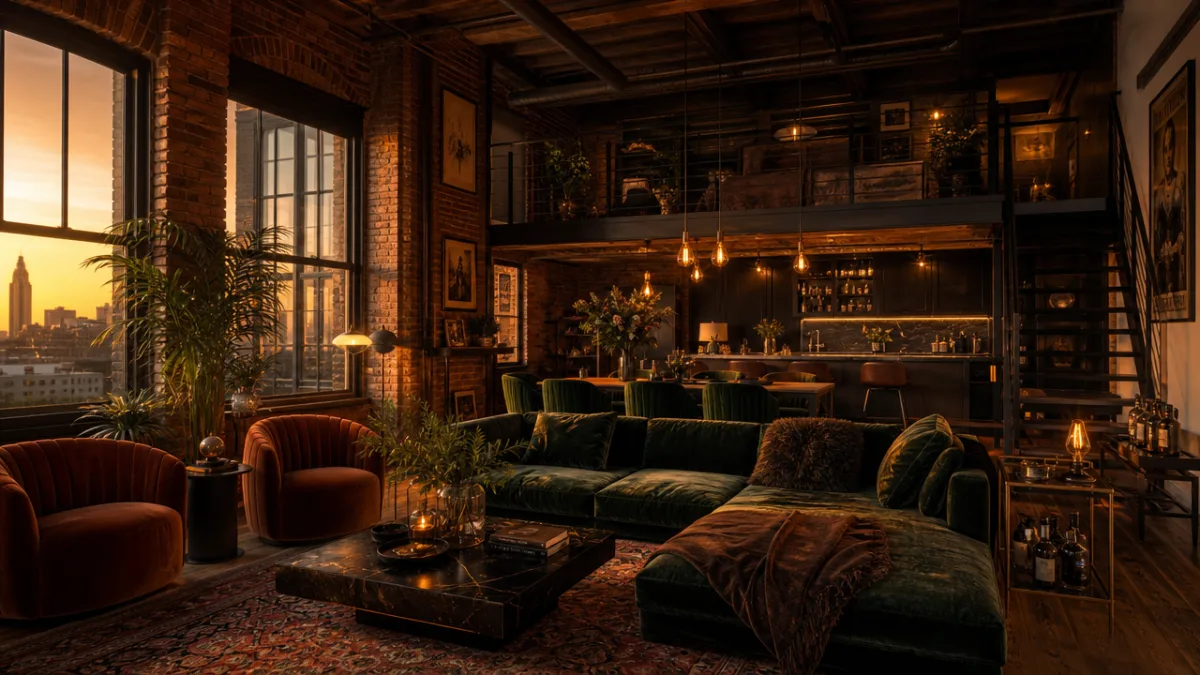
In an open-plan loft, your furniture isn’t just somewhere to sit — it’s basically doing the job that walls would normally do. It’s defining where the living area ends and the dining area begins, where “public” space gives way to a more private sleeping nook. The sofa, more than almost anything else, shapes how a loft functions and feels. Turn a big sectional so its back faces the kitchen or dining area, and you’ve instantly created a clear living zone. In a loft that you’re investing in properly, this piece is worth spending real money on — a deep, generously sized sofa in bouclé, velvet, or quality linen sets the whole tone for the apartment.
The dining area is where you get to really take advantage of those soaring ceilings. A long, dramatic dining table in solid oak or marble-topped wood, surrounded by a mix of upholstered chairs and industrial-style metal stools, bridges the gap between rustic and refined without even trying. Then hang something spectacular overhead — a cluster of blown glass globes, a dramatic rattan orb, or a sleek matte black geometric pendant — and suddenly the ceiling height becomes a feature you’re actively celebrating instead of just living with. Vertical space is one of a loft’s greatest advantages, and both your furniture and lighting choices should make the most of it.
When the bedroom is part of an open-plan layout rather than its own room, the bed and the pieces around it have to work harder to create that sense of a private, restful retreat. A tall upholstered headboard goes a long way toward making things feel enclosed and soft. Nightstands with thoughtful lighting — sculptural table lamps with warm bulbs — help define the sleeping zone further. Sheer curtain panels hung from ceiling-height rods can be drawn around the bed when you want privacy without losing light, giving the whole area a romantic, canopy-like feel that’s both cozy and quietly luxurious. A few key furniture pieces worth prioritizing in any dream loft layout:
- A large, low-profile sectional sofa in a tactile, high-quality upholstery fabric to anchor the living zone and invite relaxed lounging
- A solid wood or stone-topped dining table long enough to accommodate both intimate dinners and social gatherings with ease
- An oversized upholstered bed frame with a tall headboard that creates visual enclosure and warmth in the sleeping area
- A multi-functional coffee table — ideally in a combination of wood and metal or stone — that provides surface area and acts as a sculptural centerpiece
- Open shelving units in black iron or reclaimed wood that display books, ceramics, and plants while maintaining visual permeability throughout the space
Lighting Design: Layering Warmth Throughout Every Corner
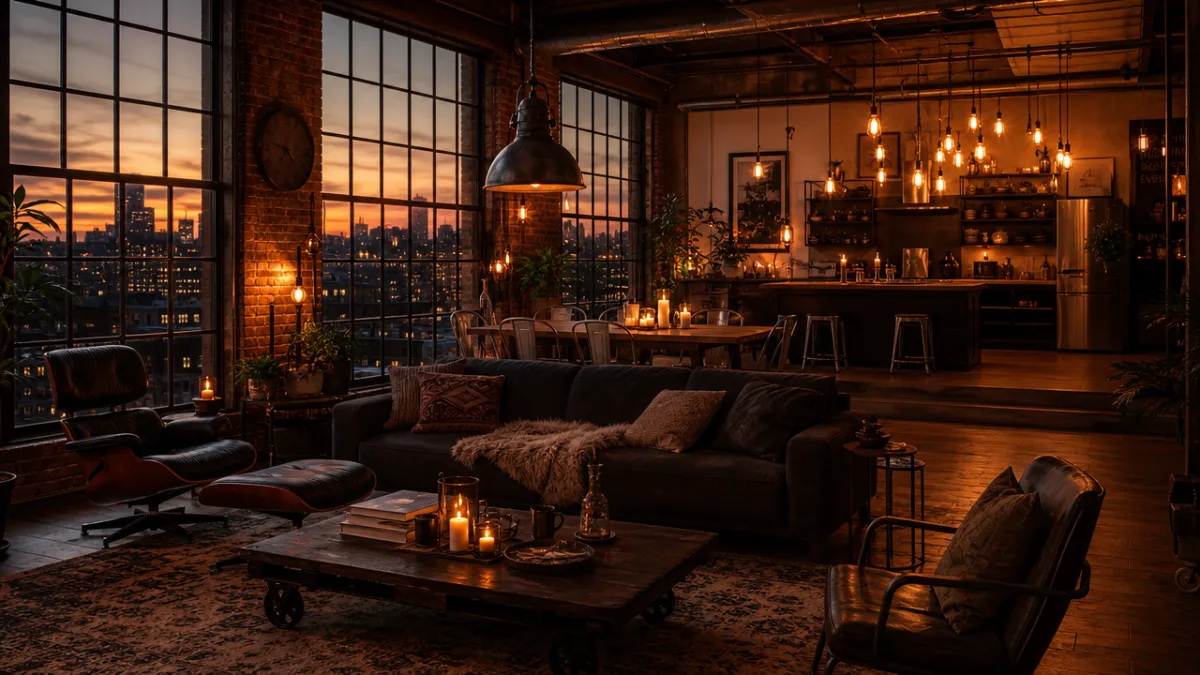
Lighting can transform any interior, but in a loft it’s especially critical. The sheer scale of the space means one overhead light source simply won’t cut it — you’ll end up with big patches of shadow and a space that feels cold no matter how great everything else looks. Good loft lighting means thinking in layers: ambient light for the overall space, task lighting for specific functional areas, and accent lighting to add depth and mood. When it all comes together, a loft can shift its atmosphere beautifully as the day moves into evening, almost like a stage set that knows when to change.
For ambient lighting, the loft already has a head start during the day — those big industrial windows flooding the place with natural light are one of its best features. After dark, though, you’re relying entirely on what you’ve set up, which is why it matters so much. Skip the single harsh overhead light. Instead, go for a combination of recessed downlights at a warm color temperature, statement pendants above the dining table and kitchen island, and floor lamps tucked into corners to push light outward and upward. That reflected light bouncing off ceilings and walls creates a soft, enveloping glow that makes the space feel genuinely warm rather than just well-lit.
Decorative and accent lighting carry a lot of expressive weight in a loft. The amber glow of Edison bulbs in exposed-filament pendants feels like a direct nod to the space’s industrial past, and it instantly makes a room feel cozier. LED strip lighting tucked under kitchen cabinets, along stair risers, or behind open shelving adds a subtle luminosity that gives surfaces a sense of depth without drawing attention to itself. And then there are candles — clustered on a coffee table, lined up along a windowsill, or grouped in a decorative fireplace — which bring a kind of flickering, living warmth that no electrical fixture can quite replicate. They also send a clear message to anyone who walks in: this is a home that was built for comfort just as much as style.
Textiles and Texture: The Secret Language of Coziness
If lighting sets the mood, textiles set the emotional temperature of a space. A loft can be architecturally perfect, beautifully furnished, and expertly lit, and still feel cold and unwelcoming without the right layer of soft goods. That’s especially true in a loft, where concrete, brick, steel, and glass are doing a lot of the structural work. Textiles are what tip the balance — they bring in human scale, tactile invitation, and the kind of warmth that makes someone want to kick their shoes off and stay for hours. Layering them well is honestly one of the highest-return things you can do in any loft space.
The area rug is your foundation. In a large open-plan space, a rug can define zones just as effectively as a wall, with the added bonuses of warmth underfoot and sound absorption — which matters more than you’d think in a space where hard floors and high ceilings can make everything echo. For a luxury loft, invest in a large, hand-knotted wool rug in a warm neutral or a subtle geometric pattern. It brings texture, depth, and a grounded feeling to the whole space. Then layer a smaller sheepskin or faux fur accent rug over it in the seating area for another hit of tactile richness that feels both relaxed and carefully considered at the same time.
From there, the textile story builds through cushions, throws, curtains, and upholstery. Mixing textures is the key — silk cushions against a nubby linen sofa cover, a chunky knit throw tossed over a leather armchair, a velvet pillow sitting next to a woven cotton one. Window treatments in a loft pull double duty: heavy linen drapes hung from ceiling-height rods soften the hard edges of big industrial windows, help with acoustics, and completely change how light feels in the room when you draw them halfway on a bright afternoon. A few textile essentials worth building your loft’s cozy factor around:
- A large, high-quality wool or hand-knotted area rug to define the living zone and introduce warmth underfoot
- Linen or velvet cushions in a mix of sizes, textures, and tonal variations to add depth and invite lounging on the sofa
- Chunky knit or cashmere throws draped casually over seating pieces for an effortlessly cozy, lived-in look
- Full-length linen curtains hung from ceiling-height rods to soften windows, improve acoustics, and add graceful vertical movement
- Upholstered headboards, bench-end seating, and dining chair cushions that bring softness into functional furniture pieces throughout the space

The Urban Sanctuary: Bringing Nature and Life Into Your Loft
One of the most effective ways to soften a loft’s hard edges and make it feel genuinely alive is simply to bring nature into it. Biophilic design — the idea that people fundamentally need a connection to the natural world, even when they’re living in the middle of a city — has gone from a niche concept to a staple of good interior design, and it makes particular sense in a loft setting. A space that’s all steel, concrete, and glass can feel a little cold no matter what you do with furniture and lighting. Add living greenery, natural wood, stone, and organic shapes, and the whole atmosphere shifts.
When it comes to choosing plants for a loft, think big. Architectural specimens like fiddle-leaf figs, monstera deliciosa, olive trees, and tall snake plants are scaled for exactly this kind of vertical space — they fill the air column between floor and ceiling in a way that a little potted succulent on a windowsill simply can’t. Groupings of smaller plants in varied ceramic pots work beautifully on shelving units and sills, while hanging plants like pothos or string of pearls can drape down from high shelves or ceiling-mounted hooks, softening overhead lines and adding a gentle sense of movement. There’s also something nice about the routine of caring for plants — it creates a daily rhythm of engagement with your home that builds a real relationship with the space over time.
Beyond the plants themselves, working natural materials and organic forms throughout the loft adds to that overall sense of warmth and refuge. A piece of driftwood on the dining table, a small collection of river stones on a bathroom shelf, a hand-thrown ceramic bowl sitting on the kitchen counter catching the afternoon light — these quiet little gestures bring the outside in and give the urban dweller something to connect with beyond the city humming away outside the windows. That’s really what a cozy dream loft is aiming for at its core: not just a beautiful space to show off, but an actual refuge — somewhere that design, warmth, and intention work together to create a place that feels, in the truest sense, like home.








What do you think?
It is nice to know your opinion. Leave a comment.