










7 DIY Decor Ideas Under ₹200: Transform Your Space on a Budget
Decorating your home beautifully does not have to drain your wallet. In fact, some of the most charming and personalised interiors in the world are the result of creativity, patience, and resourcefulness rather than expensive furniture or designer pieces. The growing DIY decor movement in India has proven time and again that with a budget as small as ₹200, you can completely transform the look and feel of a room. From repurposed bottles to handmade wall art, the possibilities are genuinely exciting and accessible to everyone, regardless of craft experience.
The secret to successful budget decorating lies in changing the way you see everyday objects. That old newspaper stack, those empty glass jars, the leftover fabric scraps from a tailor — all of these are raw materials waiting to become something beautiful. Indian homes, in particular, lend themselves wonderfully to this kind of creative repurposing because our markets are full of inexpensive materials like jute, terracotta, clay, and colourful thread that can elevate any corner of a room with minimal effort and maximum impact.
This article walks you through seven practical, affordable, and genuinely stunning DIY decor ideas that each cost under ₹200. Whether you live in a compact city apartment or a sprawling family home, these projects will help you add personality, warmth, and style to your space. Most require no special tools or skills, just enthusiasm and a few free hours. So roll up your sleeves and get ready to make your home a more beautiful place to live in.
1. Upcycled Glass Jar Lanterns
Glass jars are one of the most versatile and underused items sitting in most Indian kitchens. Old pickle jars, jam containers, or even simple glass tumblers can be transformed into gorgeous lanterns that create a warm, golden ambience in any room. All you need are a few tealight candles, some coloured tissue paper, craft glue, and twine or jute rope — materials that together cost well under ₹150 from any local stationery or craft shop. The process is simple: cut the tissue paper into irregular pieces and glue them in overlapping layers around the outside of the jar, creating a mosaic stained-glass effect.
Once the glue dries and you place a tealight inside, the light filters through the tissue paper layers and casts colourful, dancing patterns across your walls and ceiling. You can choose a single colour palette like warm oranges and yellows for a festive feel, or go with blues and greens for a calming, coastal aesthetic. These lanterns work beautifully on dining tables, window sills, bathroom shelves, or arranged in clusters on a living room floor for dramatic effect during evenings or gatherings.
What makes this project particularly appealing is its scalability and variety. You can make ten of them in a single afternoon, each slightly different in colour or size, and arrange them as a cohesive collection that looks intentional and designer-worthy. Adding a loop of jute twine around the neck of each jar takes the rustic charm up another notch and makes them easy to hang from curtain rods or ceiling hooks. This is truly one of those projects where the end result far exceeds what you might expect from such humble materials.
2. Newspaper and Magazine Wall Art
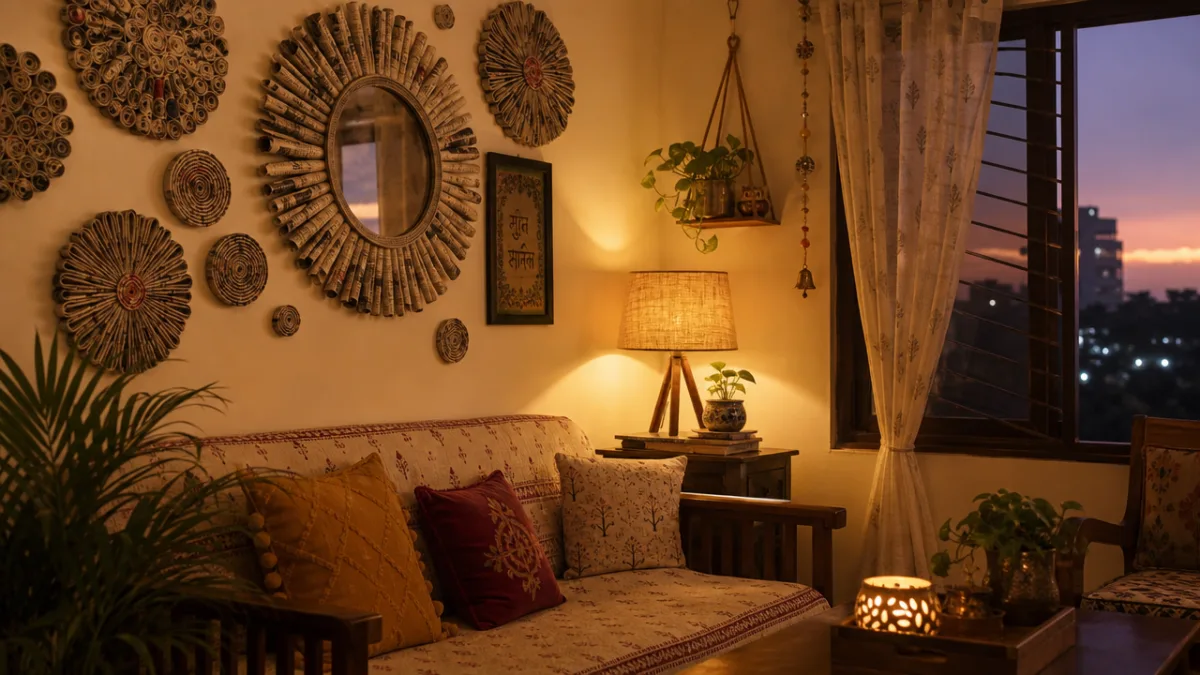
Before you toss that pile of old newspapers and magazines into the recycling bin, consider what an artistic resource you are holding. Newspaper wall art is a beloved craft tradition in many parts of the world, and for good reason — the texture, typography, and varying tones of newsprint create genuinely interesting visual effects when shaped and arranged thoughtfully. You can roll newspapers into tight tubes and coil them into circular frames or floral shapes, which can then be painted with inexpensive acrylic paint and mounted on a backing board to create striking wall panels that look almost sculptural.
Magazine pages offer even more colour and variety. You can tear or cut pages featuring bold graphics, maps, or colourful advertisements and arrange them as decoupage panels on wooden boards, old photo frames, or even directly on a section of wall. The result is a collage-style piece of wall art that is completely unique and tells a story through its eclectic layers. Frame it with a ₹50 border from a stationery shop and you have something that looks like it belongs in an art gallery, not a craft project done at home.
For those who enjoy a more structured approach, try creating a geometric pattern using newspaper tubes. Roll dozens of strips into tight coils of varying sizes, glue them together in a honeycomb or mandala arrangement, spray paint the entire piece in gold or white, and mount it on a wooden base. The finished piece has depth, texture, and a contemporary feel that suits both modern and traditional interior styles. The total cost of materials for a medium-sized panel rarely crosses ₹100, making this one of the most economical art projects you can attempt at home.
3. Terracotta Pot Makeover
Plain terracotta pots are one of India’s most affordable and widely available craft materials, and they respond beautifully to a wide range of decorative treatments. A set of three small terracotta pots can be purchased at most nurseries or roadside plant sellers for under ₹60, leaving you plenty of budget for paints, brushes, and embellishments. The natural earthy tone of terracotta makes it an ideal canvas because it absorbs paint well and gives finished designs a warm, organic quality that plastic or ceramic pots simply cannot replicate.
Some of the most popular terracotta makeover styles include geometric patterns using chalk paint and masking tape, traditional Warli art painted in white against the natural terracotta background, ombre effects using two shades of the same colour blended together, and intricate mandala designs done with a fine brush or even a toothpick dipped in paint. Each of these styles produces dramatically different results, meaning you can keep experimenting across multiple pots without ever repeating yourself. Once decorated and sealed with a coat of clear varnish to protect the design, these pots can be used indoors as plant holders, pencil cups, candle holders, or simply as standalone decorative objects on a shelf or mantelpiece.
For an added layer of texture and dimension, try wrapping the lower half of a pot with jute twine secured with craft glue, and painting only the upper half. This combination of materials gives the finished pot a sophisticated, boutique-store quality that looks far more expensive than it actually is. Grouping three pots of varying heights together, each with a slightly different but coordinated decoration style, creates an intentional, styled look that anchors any shelf, table, or windowsill beautifully. This is a project that even children can enjoy, making it a wonderful family craft activity as well.
4. Fabric Scrap Wall Hangings
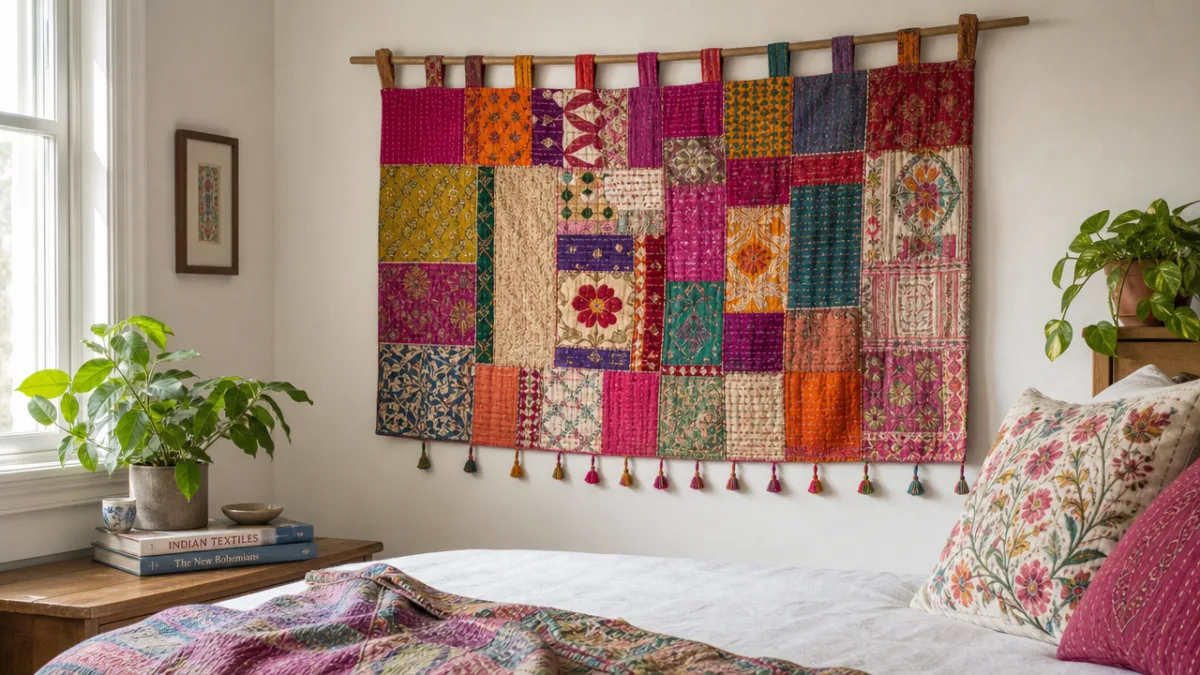
If you have ever visited a tailor or kept old sarees, dupattas, or leftover fabric from stitching projects, you are sitting on a treasure trove of decorating material. Fabric wall hangings have surged in popularity as a bohemian and eclectic decor choice, and the handmade versions often outshine the expensive ones sold in home decor stores. To make a simple fabric wall hanging, you need a wooden dowel or even a strong twig collected from outside, some lengths of fabric cut into strips, and perhaps a few wooden beads or shells for embellishment — the entire setup costs under ₹100 if you are sourcing fabric from scraps you already own.
The technique is straightforward: fold each fabric strip in half, loop it around the dowel using a lark’s head knot (which is simply a doubled-over loop pulled through itself), and repeat across the length of the rod. You can use strips of varying lengths and widths, mix solid colours with printed fabrics, and trim the bottom edges at angles or in fringe patterns for added visual interest. The result is a lush, layered textile piece that adds immediate warmth and colour to any blank wall. For a more structured look, you can weave some strips horizontally through the vertical ones to create a simple woven pattern.
What makes this project especially appealing for Indian homes is the incredible variety of fabrics available to us. The translucent shimmer of georgette, the crisp geometry of block-printed cotton, the richness of silk scraps, and the casual charm of khadi all bring completely different moods to the finished hanging. Mixing textures creates depth and interest that monochrome pieces cannot achieve. Hang your creation using a simple nail or a decorative hook, and you have an art installation that reflects your personal taste, your heritage, and your creativity all at once — for practically nothing.
5. Painted Rock Paperweights and Decor Accents
Rocks and pebbles are, of course, completely free — collected from a garden, a riverbed, a roadside, or a park. With a small set of acrylic paints costing around ₹80 to ₹100 and a thin brush, these humble stones can become gorgeous paperweights, bookends, table accents, or even small motivational art pieces. Painted rocks have become a global craft phenomenon for excellent reasons: the smooth surface of a rounded stone takes paint beautifully, the compact form makes them satisfying to hold and arrange, and the finished objects have a natural, grounded quality that complements both modern and rustic interiors.
Design ideas for painted rocks are essentially limitless. You can paint miniature landscapes or abstract patterns, write inspirational words in beautiful lettering, recreate the look of precious gemstones using metallic paints, or paint tiny succulents and flowers that look almost three-dimensional. For a more playful approach, turn rocks into animals, cartoon characters, or emoji faces that add a touch of humour and whimsy to a child’s room or a home office desk. Each rock takes less than an hour to complete from painting to drying, and a small collection of six to eight painted rocks arranged in a shallow bowl or tray makes an immediately appealing centrepiece.
Sealing your painted rocks with a coat of clear nail polish or craft varnish is an important finishing step that protects the design, gives the surface a pleasing sheen, and makes them wipeable and durable enough to handle regularly. Once sealed, these little accents can live anywhere in your home — on bookshelves between volumes, along a bathroom shelf, on a kitchen windowsill, or grouped on a coffee table tray alongside candles and small plants. They photograph beautifully for those who enjoy sharing their interiors on social media, and they make incredibly thoughtful, personalised gifts for friends and family as well.
6. Washi Tape and Masking Tape Wall Designs
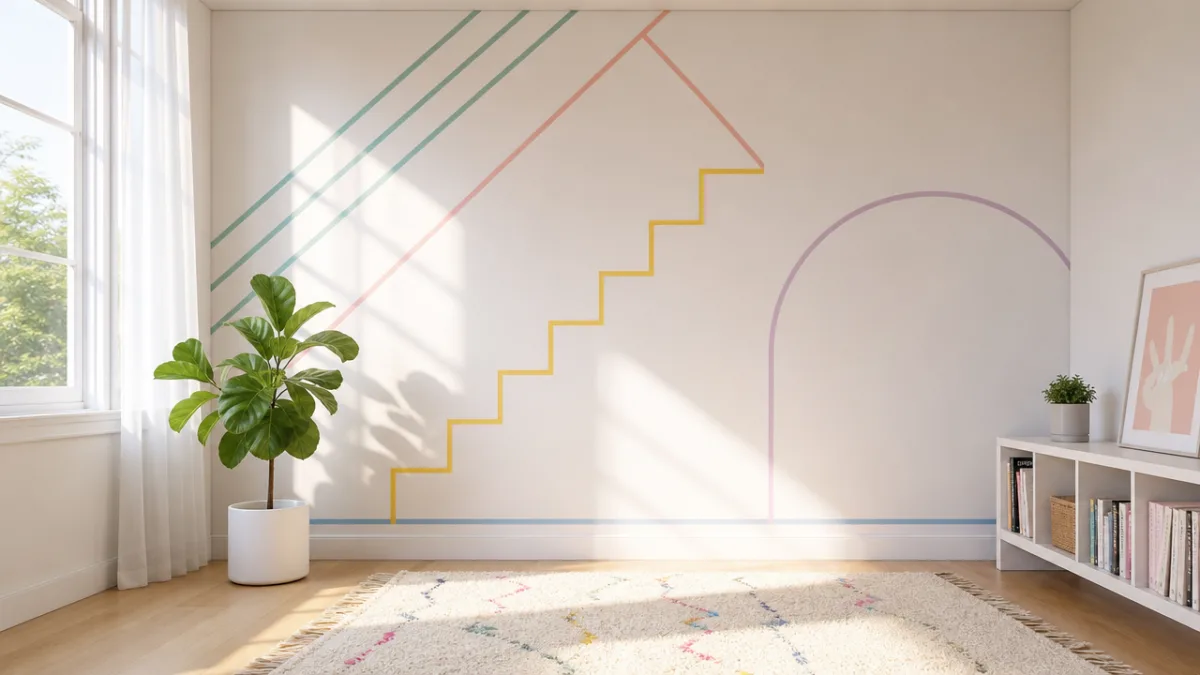
Washi tape — that delightful Japanese decorative paper tape available in hundreds of colours, patterns, and widths — has revolutionised the world of temporary home decor. A roll of washi tape or coloured masking tape typically costs between ₹30 and ₹60 at stationery shops and online marketplaces, and with three or four rolls you can completely transform a wall, a furniture surface, or a floor area without any permanent commitment. This makes it ideal for renters who cannot paint their walls, or for anyone who enjoys changing their decor with the seasons or whenever inspiration strikes.
The applications are almost endless. You can create a geometric feature wall by laying tape in overlapping diagonal lines to form triangles or diamond shapes in two or three coordinating colours. You can frame existing artwork or mirrors with a tape border to make them look more finished and intentional. You can create a faux headboard above a bed using carefully measured vertical and horizontal strips. You can even design floor patterns in unused corners, entryways, or under coffee tables that mimic the look of geometric rugs. The key is to use a level and measure carefully before applying, so your lines remain straight and the overall effect looks deliberate rather than haphazard.
One of the most popular applications of washi tape in home decor is the gallery wall arrangement hack: use small pieces to mock up the arrangement of frames on a wall before you commit to hammering nails, tracing around each frame with tape to get a perfect sense of spacing and composition. Beyond this practical use, tape art has become a genuine decorative medium in its own right, with some artists creating entire murals using nothing but layered tape in various colours. At its most basic, a simple stripe or chevron design done in two coordinating colours can make a rental apartment wall look instantly more stylish and considered for under ₹150 total.
7. Handmade Macramé Key Holders and Mini Hangings
Macramé — the art of knotting cord into decorative patterns — has made a massive comeback in contemporary home decor, and the good news is that even a beginner can create impressive results with just a few basic knots. A ball of macramé cord or thick cotton rope from a hardware or craft shop costs approximately ₹80 to ₹120, which is enough material to make multiple small projects. For a key holder or a mini wall hanging, you only need to master two or three knots: the square knot, the half hitch, and the lark’s head knot. Free tutorials are widely available online, and most people can produce a respectable first piece within a single afternoon.
A macramé key holder consists of a small wooden dowel or ring from which knotted cords hang down, with a few S-hooks or metal rings attached to hold keys. The knotted cord pattern above and between the hooks makes even such a functional object look decorative enough to become a focal point in an entryway or hallway. Beyond key holders, you can create small plant hangers that suspend terracotta pots mid-air, mini wall hangings for bathroom walls, coasters, and even decorative fringe for cushion covers or curtain edges. Each of these small projects uses very little cord and can be completed quickly.
The texture and natural colour of cotton macramé cord is inherently warm and bohemian, making it easy to incorporate into almost any interior style. It pairs especially well with indoor plants, wooden furniture, and neutral colour palettes — all extremely popular elements in contemporary Indian home decor. For added personality, you can incorporate colourful threads, wooden beads, feathers, or dried flowers into your macramé pieces. Given how visually impressive the results look compared to the minimal cost and skill required to achieve them, macramé is arguably the single highest-value DIY decor technique available to budget-conscious home decorators in India today.
Bringing It All Together: Styling Your DIY Decor
Creating individual DIY pieces is only half the journey — knowing how to style and arrange them so they work together as a cohesive whole is what elevates a collection of crafts into a genuinely decorated space. The most important principle here is curation, which simply means being selective about what you display and thoughtful about how you group things. Not every surface needs to hold a decoration, and leaving some areas clean and uncluttered actually makes the pieces you do display stand out more effectively. Choose a consistent colour palette across your DIY projects — even if each piece uses different materials, unifying them through a shared colour story creates immediate visual harmony.
Grouping objects in odd numbers, particularly threes, is a classic interior styling trick that works just as well with handmade objects as it does with purchased ones. Three terracotta pots of varying heights together look far more intentional than two or four. A cluster of three glass jar lanterns at different levels creates depth and interest. Three painted rocks in a small bowl form a natural still life. Varying heights within a group adds dynamism — use small books, folded cloth, or wooden blocks as hidden risers to lift some objects above others and create a layered, dimensional arrangement that draws the eye pleasantly across the composition.
Finally, remember that DIY decor is never truly finished — it evolves as you make new pieces, find new inspiration, or simply change your mind about what you want your home to feel like. The beauty of the projects described in this article is that they are all low-commitment, easily updated, and made from materials that cost almost nothing to replace or rework. Each time you make something new for your home with your own hands, you deepen your relationship with the space and fill it with meaning that no amount of money spent in a store could ever replicate. Your home becomes a genuine reflection of who you are, and that is the most valuable kind of decor there is.
- Start small: Pick one project from this list and complete it before moving to the next. Finishing builds confidence and momentum.
- Shop smart: Visit local stationery stores, sabzi mandi hardware stalls, and online platforms like Meesho or Amazon for the most affordable craft supplies.
- Repurpose first: Before buying anything, look around your home for materials you already have — jars, newspapers, fabric scraps, and stones are all free.
- Photograph your process: Documenting your projects step by step helps you improve over time and creates content you can share with others who might be inspired to try the same.
- Involve the family: Many of these projects are suitable for children and make for wonderful weekend activities that result in decor everyone feels proud of.








What do you think?
It is nice to know your opinion. Leave a comment.