










The Popcorn Stitch: A Complete Guide to Mastering This Beloved Crochet Technique
The popcorn stitch is one of the most visually striking and satisfying techniques in the world of crochet. Known for its bold, three-dimensional texture that literally pops off the surface of your work, this stitch has captivated crafters for generations. Whether you are a beginner looking to add dimension to a simple project or an experienced crocheter hoping to refine your skills, the popcorn stitch offers an endlessly rewarding challenge. Its rounded, bubble-like clusters create patterns that look far more complex than they actually are, making it a favorite among those who want impressive results without requiring years of advanced training.
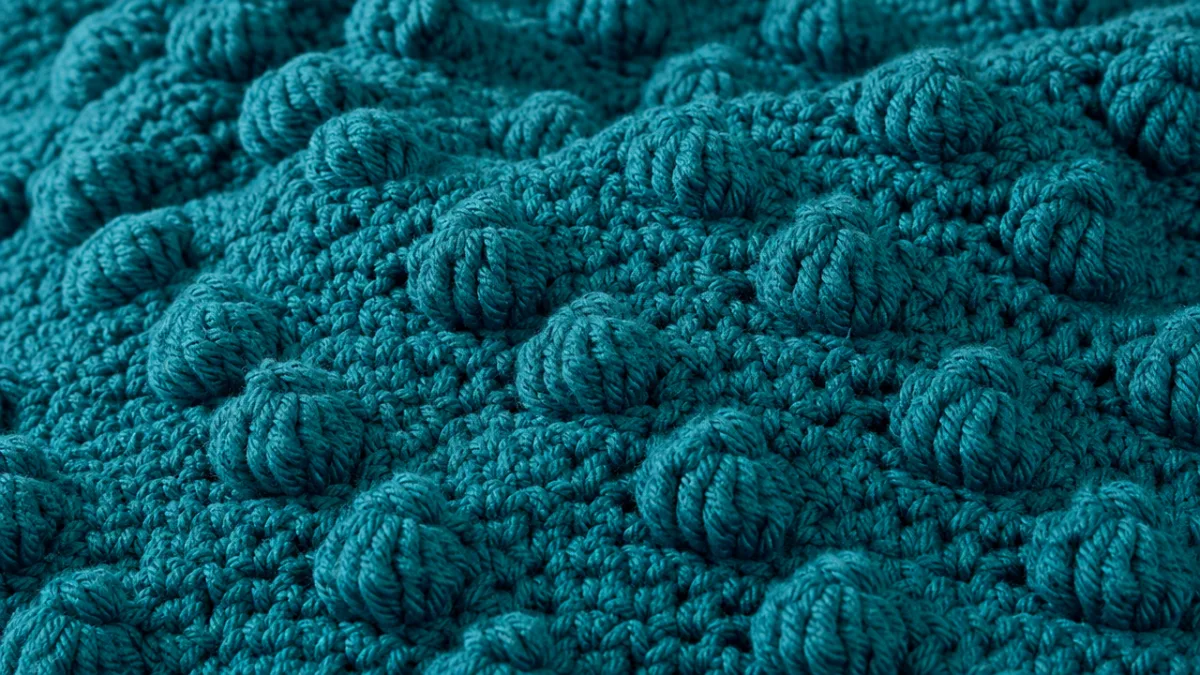
What makes the popcorn stitch so distinctive is the way it creates a raised, rounded bobble effect by working multiple double crochets into the same stitch and then joining them together at the top. Unlike the bobble stitch or the puff stitch, which remain somewhat flattened against the fabric, the popcorn stitch truly stands out from the background, creating a sculptural quality that catches both the eye and the light. This three-dimensional nature makes it perfect for decorative items like throws, pillow covers, bags, and garments where texture plays a central role in the design aesthetic.
Throughout this guide, we will explore everything you need to know about the popcorn stitch, from its origins and the materials best suited for it, to step-by-step instructions, common mistakes, and inspiring project ideas. By the time you finish reading, you will have a thorough understanding of how to incorporate this beloved stitch into your own crochet practice and why so many crafters consider it an absolute staple in their technique repertoire. Let us dive into the wonderful, textured world of the popcorn stitch and discover why it continues to be so universally adored.
A Brief History of the Popcorn Stitch
The popcorn stitch has roots that trace back to traditional needlework traditions across multiple cultures, though its modern form is most closely associated with the broader evolution of crochet as a craft throughout the nineteenth and twentieth centuries. Early crochet patterns from Victorian-era publications frequently showcased raised cluster stitches as a way of mimicking the intricate lacework and embroidery that was fashionable at the time. As crochet became more accessible to everyday households, techniques like the popcorn stitch transitioned from high-fashion decorative arts into beloved home crafts passed down through families and communities.
During the mid-twentieth century, particularly throughout the 1960s and 1970s, textured crochet experienced a significant surge in popularity as part of the broader handcraft revival that swept through Western countries. Afghans, bedspreads, and clothing items featuring the popcorn stitch became iconic symbols of that era’s DIY aesthetic. Craft magazines of the period were filled with patterns showcasing elaborate popcorn stitch designs, and many of today’s crocheters first learned the technique from grandmothers or aunts who mastered it during those decades. This intergenerational transmission has helped keep the stitch alive and relevant even as trends in fiber arts have shifted dramatically over the years.
Today, the popcorn stitch enjoys a renewed appreciation thanks in large part to social media platforms like Pinterest, Instagram, and YouTube, where crafters share their work with global audiences and inspire one another to experiment with classic techniques in fresh, contemporary ways. Modern designers have found exciting new applications for the stitch, incorporating it into boho-style wall hangings, luxury baby blankets, stylish market bags, and even wearable fashion pieces. The stitch’s timeless appeal lies in its ability to feel both nostalgic and entirely current, bridging the gap between traditional craftsmanship and contemporary design sensibility with remarkable ease.
Understanding the Materials and Tools You Will Need
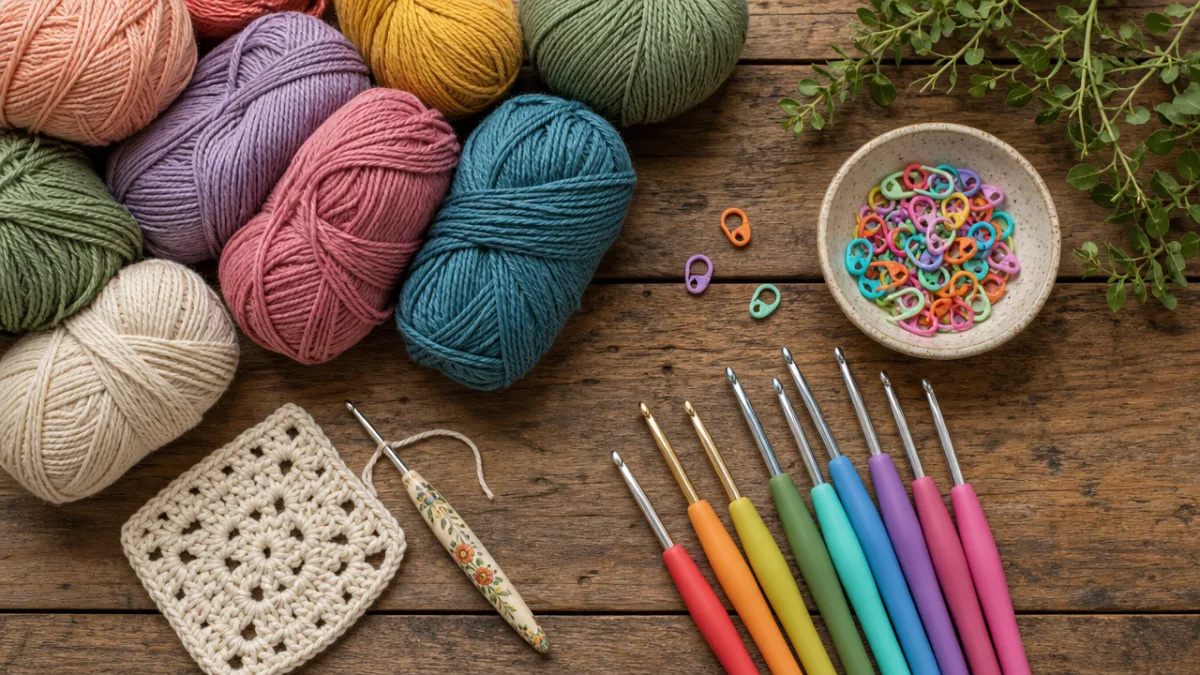
Choosing the right materials is an essential first step before attempting the popcorn stitch, as the yarn weight, fiber content, and hook size all significantly influence the final appearance and feel of your work. Medium weight yarns, commonly referred to as worsted weight or category four yarns, are generally considered the ideal starting point for beginners because they are substantial enough to clearly show off the three-dimensional quality of the popcorn clusters without being so bulky that the stitch becomes difficult to manage. Cotton yarns are particularly popular for this technique because their low elasticity helps the popcorns maintain their rounded shape without collapsing back into the fabric over time.
The choice of crochet hook is equally important when working the popcorn stitch. Most patterns recommend using a hook that is slightly larger than the size suggested on your yarn label, as the multiple loops involved in creating each popcorn cluster can tighten significantly as you work through them. A hook with a comfortable, ergonomic grip is especially valuable here, since the popcorn stitch requires a bit more manipulation than basic stitches and can put extra strain on the hand and wrist during extended crafting sessions. Aluminum hooks tend to work smoothly through multiple loops, while hooks with rubber or foam grips reduce fatigue during longer projects.
Beyond yarn and hooks, a few additional tools will make your popcorn stitch experience much more enjoyable. Locking stitch markers are invaluable for keeping track of where your popcorns should be placed, especially in patterns with repeating sequences across many stitches. A yarn needle with a large eye is necessary for weaving in the extra ends that popcorn stitches tend to generate, particularly when you are working in multiple colors. Having a small pair of sharp scissors, a row counter, and a stitch dictionary or printed pattern nearby rounds out a well-prepared workspace. With the right tools assembled, you will find the learning curve for this technique far more manageable and enjoyable from the very beginning.
Yarn Recommendations for Popcorn Stitch Projects
When selecting yarn specifically for popcorn stitch projects, texture and memory are the two most critical qualities to consider. Yarns with good memory, meaning those that spring back to shape after being stretched or manipulated, will produce popcorn clusters that retain their plump, rounded appearance even after the finished piece is washed and used over time. Pure wool and wool-blend yarns excel in this regard, as the natural crimp in wool fibers gives them exceptional resilience. However, if you are making an item that will require frequent washing, such as a baby blanket or kitchen dishcloth, a superwash wool or a high-quality acrylic blend will serve you better in terms of long-term care.
Color is another dimension to consider thoughtfully when choosing yarn for popcorn stitch projects. Solid colors and tonal colorways allow the three-dimensional texture of the popcorn clusters to take center stage, as the raised surfaces catch light differently from the background fabric and create naturally occurring shadows and highlights that emphasize the sculptural quality of the stitch. Variegated yarns can produce beautiful results as well, though very busy color changes can sometimes compete visually with the texture and make it harder to see the individual popcorns clearly, especially in photographs or from a distance.
For those looking to create truly luxurious pieces, specialty fibers like alpaca, bamboo, and merino blends bring an added dimension of softness and sheen to popcorn stitch work. Alpaca in particular creates wonderfully soft, warm popcorns that feel incredibly cozy against the skin, making it a popular choice for hats, scarves, and baby items. Bamboo-blend yarns add a subtle luster that gives popcorn clusters an almost jewel-like quality under certain lighting conditions, making them ideal for decorative home accessories. Whatever fiber you choose, always crochet a gauge swatch first to ensure your final project will achieve the dimensions you intend, as yarn behavior can vary significantly between brands and even between dye lots of the same yarn.
Step-by-Step Instructions for Working the Popcorn Stitch
Working the popcorn stitch for the first time can feel a little awkward, but with clear instructions and a bit of patience, most crocheters find they can master the basic technique within a single practice session. The standard popcorn stitch consists of five double crochets worked into the same stitch or space, though variations using four or six double crochets are also widely used depending on the desired level of texture and the weight of the yarn being used. Heavier yarns often benefit from using only four double crochets to avoid an overly bulky cluster, while lighter yarns may require six or more to achieve a satisfying puff of texture.
To begin a basic five-double-crochet popcorn stitch, start by inserting your hook into the designated stitch or space and working five complete double crochets in that same location. Your hook will now have one loop remaining from each of the five double crochets sitting on it, plus the one loop you started with at the base. At this point, carefully remove your hook from the working loop and reinsert it through the top of the very first double crochet you made in that cluster, going from front to back. Pick up the dropped working loop with your hook and pull it through the top of that first double crochet, cinching all five double crochets together into a single, rounded cluster that pops toward the front of your work. Chain one to secure the popcorn in place if your pattern calls for it.
Consistency is the key to achieving beautiful, uniform popcorn stitches throughout a project. Try to maintain the same tension throughout every cluster, as variations in how tightly or loosely you work the double crochets will result in popcorns of different sizes that can make the overall fabric look uneven. Many crocheters find it helpful to practice the stitch repeatedly on a small swatch before beginning a larger project, using the practice piece as an opportunity to develop muscle memory and find a comfortable rhythm. It is also worth noting that working popcorn stitches on wrong-side rows, where the clusters will naturally push toward the right side of the fabric, is a common technique used in patterns to achieve consistent results without constantly having to manipulate the clusters to face the correct direction.
Common Variations of the Popcorn Stitch
One of the most appealing aspects of the popcorn stitch is the range of variations available to crocheters who want to customize the look and feel of their work. The front post popcorn, for example, involves working the double crochets around the post of a stitch from the previous row rather than into the top of the stitch, creating a cluster that stands even further out from the surface of the fabric and produces an almost sculptural relief effect. This variation is particularly popular in Celtic-inspired designs and other patterns that aim to create a woven or braided visual impression across the finished piece.
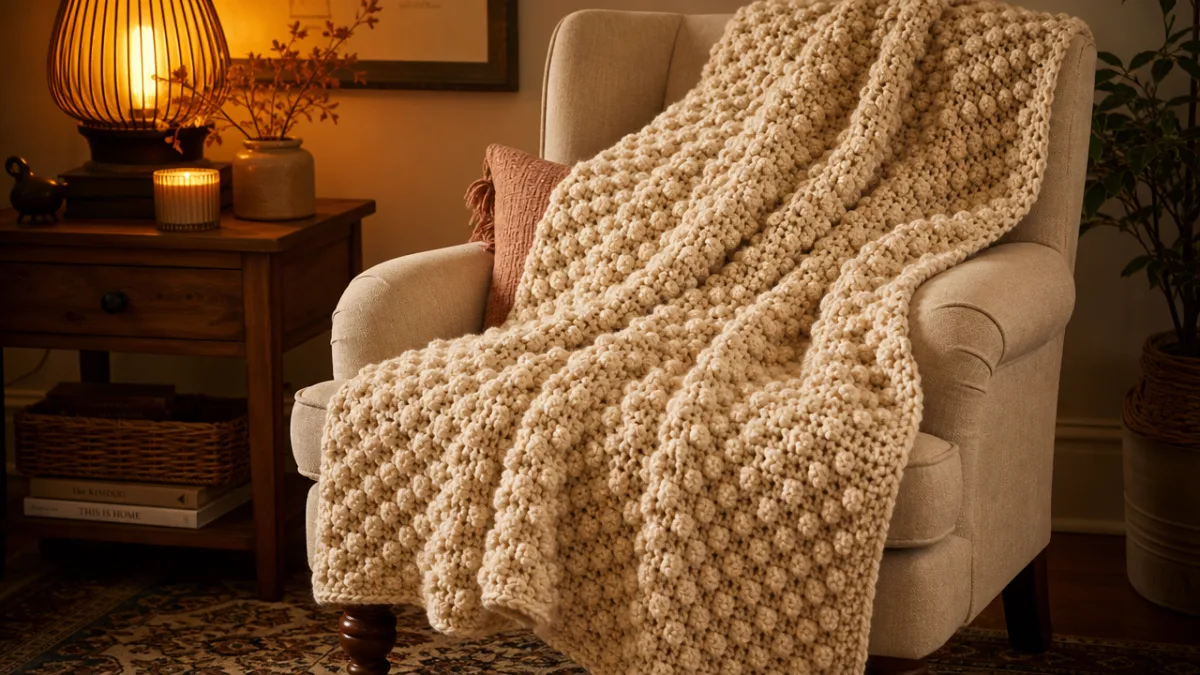
The mini popcorn, typically made with just three double crochets instead of five, produces a more subtle texture that works beautifully in finer weight yarns and more delicate projects. This variation is commonly seen in lacework-inspired patterns and lightweight shawls where a full-sized popcorn would feel out of proportion with the overall design. Conversely, jumbo popcorns made with seven or more stitches create an exaggerated, dramatically textured effect that makes a bold statement in home décor items like chunky throw blankets and oversized cushion covers worked in bulky or super bulky yarns.
Color-block popcorn techniques offer yet another exciting dimension of creative possibility. By working the individual double crochets of a single popcorn in alternating colors, crafters can create clusters that appear to contain multiple hues within a single stitch, producing a confetti-like visual effect that is both playful and technically impressive. Carrying yarn up the sides or working with bobbins allows for seamless color transitions within popcorn arrangements, making it possible to create gradient effects, color gradients, or complex geometric patterns that incorporate the dimensional texture of the popcorn alongside sophisticated colorwork design principles. These multi-color approaches do require more careful planning and yarn management, but the results are consistently striking and well worth the additional effort involved.
Popular Projects That Showcase the Popcorn Stitch
The popcorn stitch lends itself to an extraordinary range of project types, from practical everyday items to elaborate decorative showpieces that serve as functional works of art. Baby blankets are perhaps the single most beloved application of the popcorn stitch, and it is easy to understand why. The soft, rounded texture of the clusters creates a tactile wonderland for tiny hands to explore, and the stitch’s visual complexity gives handmade baby blankets a heirloom quality that recipients tend to treasure for decades. When worked in pastel or neutral yarns with good stitch definition, a popcorn stitch baby blanket looks effortlessly beautiful and feels wonderfully luxurious against delicate skin.
Bags and totes represent another spectacular category for popcorn stitch projects. The dimensional texture adds both visual interest and structural integrity to bag bodies, as the raised clusters create a natural stiffness that helps bags maintain their shape without requiring extensive lining or interfacing. Market bags, backpacks, and clutch purses worked in cotton or jute yarns with a popcorn stitch pattern have a distinctly artisanal, handcrafted quality that stands out beautifully in a world saturated with mass-produced accessories. The stitch also holds up remarkably well to the wear and stretching that bags experience in daily use, making these projects as durable as they are attractive.
Home décor items including throw pillows, wall hangings, pot holders, and decorative baskets provide wonderful opportunities to showcase the popcorn stitch in ways that allow the texture to be appreciated up close and in daily life. A throw pillow featuring a symmetrical arrangement of popcorn clusters in a geometric pattern becomes an instant focal point on a couch or bed, adding warmth and handmade character to any room. Wall hangings that incorporate popcorn stitches alongside other textural elements like fringe, tassels, and mixed fiber types have become particularly popular in the modern bohemian interior design aesthetic, where layered textures and natural materials are highly prized as expressions of personal style and creative individuality.
Patterns for Every Skill Level
Beginner crocheters looking to try the popcorn stitch for the first time will find plenty of accessible, well-designed patterns available both online and in print that offer gentle introductions to the technique. Simple dishcloth and pot holder patterns are ideal starting points because they are small enough to complete in a single session, use readily available cotton yarn, and provide immediate, satisfying results. Many beginner-friendly patterns space the popcorn stitches generously across the fabric so that each cluster can be worked individually without the complication of managing multiple closely packed clusters simultaneously. These initial successes build confidence quickly and motivate crafters to tackle progressively more ambitious designs as their skills develop.
Intermediate patterns typically combine the popcorn stitch with other techniques such as shells, clusters, and basic colorwork, creating more complex visual effects that reward the additional time and attention they require. Geometric baby blankets, colorful tote bags, and decorative pillow covers fall comfortably in this skill range, offering enough challenge to keep experienced beginners engaged without demanding the kind of advanced pattern-reading skills that might discourage someone still building their crochet vocabulary. Many intermediate patterns also introduce the concept of working popcorn stitches in the round, which opens up possibilities for creating circular or hexagonal motifs that can be joined together into larger projects like afghans and table runners.
Advanced patterns push the popcorn stitch into truly spectacular territory, incorporating it as one element in highly complex designs that may also include intricate cables, detailed colorwork, fine lacework, or ambitious garment construction. Wearable fashion pieces like oversized cardigans, structured tote bags with multiple pockets, and elaborate home textiles designed to serve as centerpieces in carefully curated interior spaces all represent the upper reaches of what the popcorn stitch can achieve in skilled hands. Advanced crocheters often find the greatest satisfaction in designing their own popcorn stitch patterns from scratch, using graph paper or digital tools to plan out arrangements that express their unique creative vision and technical understanding of how the stitch behaves across different yarn weights and hook sizes.
Tips, Tricks, and Troubleshooting for Perfect Results
Even experienced crocheters encounter challenges when first working with the popcorn stitch, and understanding the most common pitfalls in advance can save considerable time and frustration. One of the most frequently reported issues is difficulty reinserting the hook through the first double crochet of a cluster after completing all five, particularly when working with a tightly tensioned yarn. To make this step easier, try loosening your tension slightly as you work the five double crochets themselves, giving yourself a bit of extra slack to work with when it comes time to gather the cluster together. Some crocheters also find it helpful to use a slightly smaller hook just for the reinsertion step, which can be removed and replaced with the working hook once the loop has been pulled through.
Maintaining an even fabric tension throughout a project that incorporates many popcorn stitches is another common challenge, since the clusters naturally draw the fabric in slightly compared to sections worked in flat stitches. To compensate for this tendency, consider working the rows or rounds that contain popcorns with a slightly looser overall tension, or using a hook one size larger than your standard working hook exclusively for those sections. Blocking your finished piece is also highly recommended for popcorn stitch projects, as the process of gently wetting, shaping, and allowing the fabric to dry in the desired dimensions helps even out any tension inconsistencies that developed during the working process and allows the clusters to bloom into their full, rounded glory.
Counting stitches carefully is absolutely essential when working popcorn stitch patterns, as it is remarkably easy to accidentally increase or decrease your stitch count when dealing with the multiple loops and dramatic visual interruptions that each cluster creates. Develop a habit of counting your stitches at the end of every row or round, and use locking stitch markers generously to indicate the beginning of each pattern repeat and the location of each planned popcorn cluster. If you find that your stitch count keeps coming up wrong despite careful attention, try using a different color yarn for a practice swatch and tracing through the pattern with a highlighter to ensure you are interpreting every instruction correctly before committing to your actual project yarn. These simple organizational habits make a remarkable difference in achieving consistently beautiful results.
Caring for Finished Popcorn Stitch Projects
Proper care is essential for keeping popcorn stitch projects looking their best over time, as the dimensional clusters that make these pieces so beautiful can be somewhat vulnerable to crushing and distortion if not handled appropriately during washing and storage. Always refer to the care instructions on your yarn label as the primary guide for washing, since fiber content determines the appropriate water temperature, agitation level, and drying method. Most popcorn stitch items benefit from being hand washed gently in cool water with a mild wool wash or delicate detergent, then pressed lightly between clean towels to remove excess moisture without wringing or twisting, which can permanently distort the clusters.
Blocking after washing is particularly valuable for maintaining the shape and texture of popcorn stitch items. Lay the piece flat on a clean, padded surface such as a blocking mat or several folded towels, and gently reshape each cluster with your fingers, coaxing them back into their rounded, upright position if they have flattened during washing. Rustproof pins can be used around the edges to hold the piece in the correct dimensions while it dries, and many crocheters use a fine mist of water or a blocking spray to help the fibers relax into the desired shape. Allow the piece to dry completely in a well-ventilated area away from direct sunlight before moving or using it, as handling a damp piece can re-distort the carefully shaped clusters.
Storage also deserves thoughtful attention for popcorn stitch items, especially delicate pieces like heirloom baby blankets or decorative items that are not in regular use. Store these pieces loosely folded or gently rolled rather than tightly compressed, and avoid placing heavy objects on top of them in storage drawers or bins. Acid-free tissue paper tucked around and between layers can help cushion the clusters and prevent permanent creasing over extended storage periods. For items made from natural fibers, adding cedar blocks or lavender sachets to your storage area will discourage moths and other fiber-damaging pests without exposing your precious handmade items to the harsh chemicals found in traditional mothballs. With proper care and thoughtful storage, a well-made popcorn stitch project can remain beautiful and structurally intact for many years, even becoming a treasured heirloom passed down through generations of fiber-loving families.








What do you think?
It is nice to know your opinion. Leave a comment.