










Houttuynia Cordata: The Remarkable Chameleon Plant and Fish Mint
Introduction to Houttuynia Cordata
Houttuynia cordata, commonly known as the chameleon plant or fish mint, is one of the most visually striking and botanically fascinating perennial herbs found across Asia and beyond. This extraordinary plant belongs to the family Saururaceae and has captivated gardeners, herbalists, and ecologists for centuries due to its remarkable adaptability, vibrant foliage, and extensive medicinal heritage. Whether grown as an ornamental ground cover or cultivated for its culinary and therapeutic properties, Houttuynia cordata occupies a unique place in the botanical world that few other plants can claim.
Native to Southeast Asia, East Asia, and the Himalayas, Houttuynia cordata thrives naturally in moist, shaded environments such as stream banks, forest edges, and wetland margins. It has been used for thousands of years in traditional medicine systems across China, Japan, Korea, Vietnam, and India. The plant’s ability to flourish in difficult growing conditions, combined with its striking visual appeal and documented health benefits, has led to its widespread cultivation around the world, including in Europe and North America, where it is often grown as an ornamental perennial.
Despite its many admirable qualities, Houttuynia cordata is also known for its vigorous, sometimes invasive growth habit. Once established in a suitable environment, it spreads aggressively through underground rhizomes, forming dense colonies that can be difficult to control. This dual nature — simultaneously beautiful and potentially problematic — makes the chameleon plant a subject of ongoing discussion among gardeners and conservationists alike. Understanding the plant’s biology, cultural requirements, and responsible cultivation practices is essential for anyone considering adding this remarkable species to their garden or landscape.
Botanical Characteristics and Identification
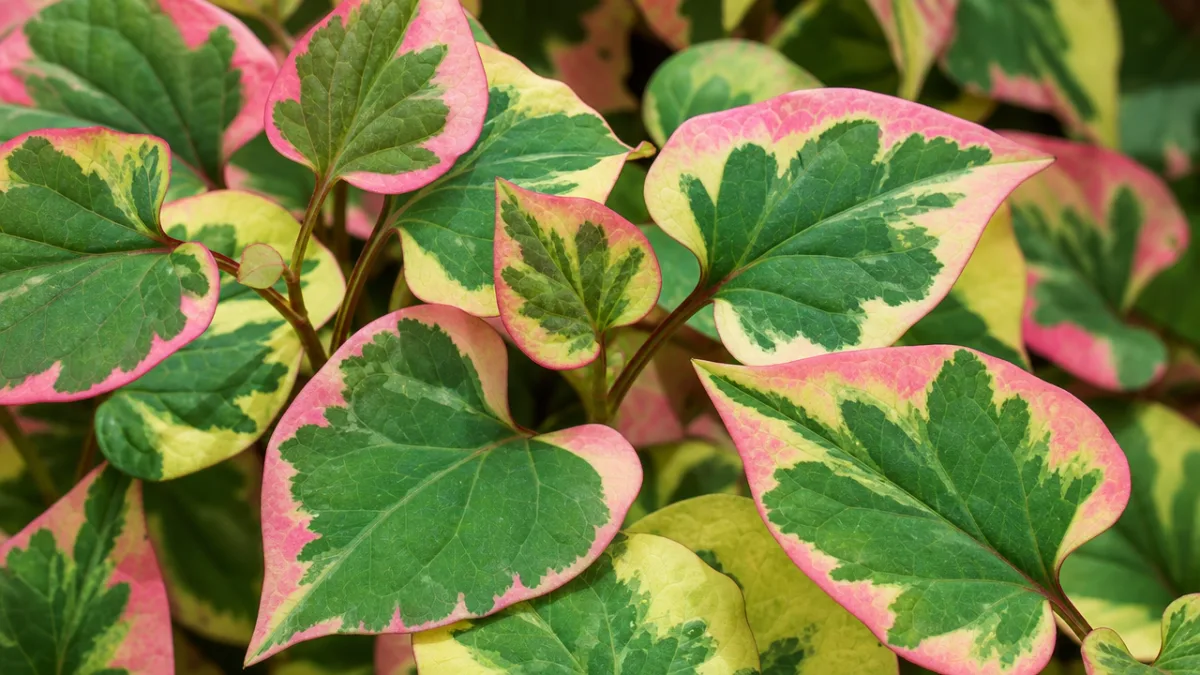
The chameleon plant is immediately recognizable by its heart-shaped leaves, which typically measure between four and nine centimeters in length. In the most popular ornamental cultivar, known as Houttuynia cordata ‘Chameleon,’ the foliage displays a stunning mosaic of green, red, yellow, and pink colors that shift and intensify depending on sunlight exposure, temperature, and seasonal changes. This dramatic variegation is precisely what earned the plant its common name, as the leaves seem to change color much like the reptilian chameleon adapts to its surroundings. The green species form, by contrast, features uniformly deep green leaves with a distinctive purplish or reddish tinge along the margins.
One of the plant’s most notable characteristics is its distinctive odor, which has been variously described as fishy, peppery, earthy, or reminiscent of coriander. This pungent aroma, caused by a complex mixture of volatile organic compounds including decanoyl acetaldehyde and lauraldehyde, is responsible for the plant’s other common name: fish mint. The smell intensifies noticeably when the leaves are bruised or crushed, and while many people find it off-putting at first, those who use the plant regularly in cooking or herbal medicine often come to appreciate its complex, layered fragrance as an integral part of the plant’s character and medicinal profile.
The flowering phase of Houttuynia cordata adds another dimension to its visual appeal. The plant produces small, densely packed flower spikes called spadices, each surrounded by four to six prominent white bracts that are often mistaken for petals. These white bracts, which resemble miniature dogwood blossoms, give the flowers an elegant, refined appearance that contrasts beautifully with the plant’s bold, colorful foliage. Flowering typically occurs from late spring through midsummer, and the blooms attract a variety of pollinators including bees and butterflies. The seeds that follow are tiny and relatively inconsequential to the plant’s reproduction, as it spreads primarily through its extensive rhizome system.
Growing Conditions and Cultivation Requirements
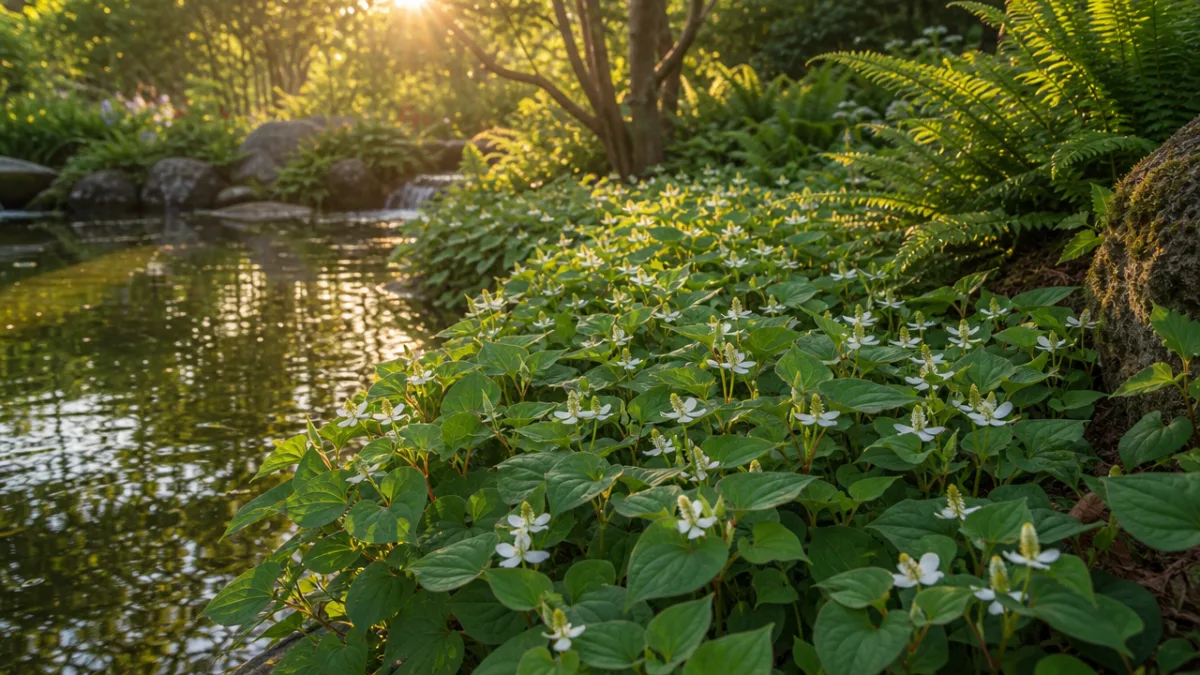
Successfully cultivating Houttuynia cordata begins with understanding its native habitat preferences. In the wild, this plant grows in moist to wet soils along waterways, in boggy meadows, and beneath the partial shade of forest canopies. Replicating these conditions as closely as possible in a garden setting will yield the most vigorous and visually appealing results. The plant performs best in consistently moist or even waterlogged soils rich in organic matter, making it an excellent candidate for rain gardens, bog gardens, pond edges, and any low-lying area in the landscape where water tends to accumulate.
Regarding light requirements, Houttuynia cordata is quite adaptable but displays different characteristics depending on its exposure. Plants grown in full sun tend to produce the most intensely colored foliage, particularly in the variegated ‘Chameleon’ cultivar, where the red, yellow, and pink hues become especially vivid with direct sunlight. However, full sun cultivation requires consistently adequate moisture, as the plant will wilt and suffer in hot, dry conditions. In partial shade, the colors may be somewhat less intense, but the plant grows more lushly and tolerates slightly drier conditions. Deep shade generally results in predominantly green foliage and reduced vigor, though the plant will still survive and spread.
Soil pH is relatively flexible for Houttuynia cordata, as it tolerates a range from mildly acidic to slightly alkaline conditions. However, it performs best in slightly acidic to neutral soils with a pH between 5.5 and 7.0. Amending heavy clay soils with organic matter such as compost or leaf mold can significantly improve drainage and aeration, benefiting root development and overall plant health. In containers, a moisture-retentive potting mix works well, and container cultivation is actually one of the most recommended approaches for managing this plant’s potentially invasive spread, as it physically contains the rhizomes and prevents unwanted colonization of surrounding areas.
Given its rhizomatous growth habit, gardeners choosing to grow Houttuynia cordata in the open ground should take preventive measures to manage its spread. Some effective strategies include:
- Installing deep root barriers or edging at least 30 to 45 centimeters deep around planting areas to contain underground rhizomes
- Planting in submerged containers or large pots buried at ground level to prevent rhizome escape
- Regularly patrolling garden borders and removing any shoots emerging beyond the desired planting area
- Choosing naturally confined growing locations such as between paved surfaces or within raised beds with solid barriers
- Conducting annual division and root pruning to maintain controlled plant size and prevent excessive spread
Medicinal and Therapeutic Uses
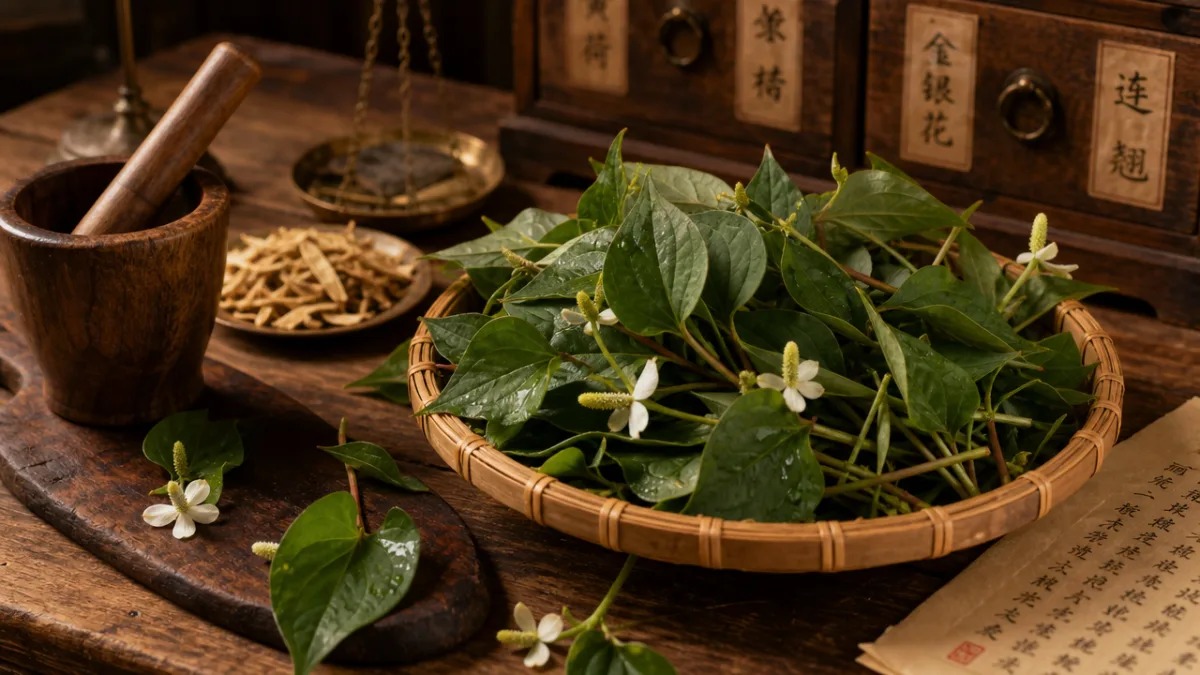
The medicinal legacy of Houttuynia cordata is ancient, deep, and remarkably well-documented across multiple Asian medical traditions. In Traditional Chinese Medicine, the plant — known as Yu Xing Cao, meaning “fishy smell herb” — has been used for over two thousand years to treat a broad spectrum of ailments. It is classified as having a cold nature that clears heat and detoxifies the body, making it particularly valued for conditions associated with inflammation, infection, and excess heat according to TCM principles. Modern pharmacological research has increasingly validated many of these traditional applications, identifying specific bioactive compounds responsible for the plant’s observed therapeutic effects.
Scientific investigation of Houttuynia cordata has revealed an impressive array of biologically active constituents, including flavonoids, alkaloids, essential oils, polysaccharides, and various phenolic compounds. Among the most extensively studied of these is quercetin, a powerful antioxidant flavonoid with well-documented anti-inflammatory, antiviral, and anticancer properties. The plant’s essential oil contains the distinctive compound decanoyl acetaldehyde, which has demonstrated significant antibacterial and antifungal activity in laboratory studies. These chemical constituents work synergistically to produce the broad spectrum of medicinal effects observed in both traditional use and modern clinical research.
Among the most extensively documented uses of Houttuynia cordata in traditional medicine are its applications for respiratory conditions. The herb has long been used to treat coughs, bronchitis, pneumonia, and other lung infections, and this use gained renewed international attention during the SARS outbreak of 2003, when researchers in China investigated the plant’s antiviral properties against the coronavirus responsible for that epidemic. Several studies reported encouraging results, suggesting that Houttuynia cordata extracts could inhibit viral replication and reduce inflammation in lung tissue. While more rigorous clinical trials are needed, these findings have stimulated considerable scientific interest in the plant as a potential source of novel antiviral compounds.
Beyond respiratory applications, the plant is used traditionally for a diverse range of therapeutic purposes, including:
- Treating urinary tract infections and promoting kidney health through its diuretic and antimicrobial properties
- Managing skin conditions such as eczema, acne, and bacterial skin infections when applied topically as a poultice or wash
- Supporting immune function through its rich antioxidant and immunomodulatory compound profile
- Reducing inflammation in conditions such as arthritis and inflammatory bowel disease
- Supporting detoxification and liver health through its bitter, cholagogue properties
Culinary Applications and Nutritional Profile
While the distinctive aroma of Houttuynia cordata may seem challenging at first encounter, the plant occupies an important and cherished place in the culinary traditions of several Asian cultures. In Vietnam, where it is known as rau diếp cá or simply diếp cá, fresh leaves and stems are consumed as a salad herb and eaten raw alongside rice paper rolls, pho, and other traditional dishes. The flavor is complex and difficult to describe to those who haven’t experienced it — simultaneously herbaceous, fishy, peppery, and vaguely citrusy — and it is considered an acquired taste that enthusiasts find deeply satisfying and even addictive once the palate adjusts.
In Yunnan province in southwestern China and in parts of Northeast India, particularly in the states of Manipur, Nagaland, and Meghalaya, Houttuynia cordata is a staple culinary ingredient used in chutneys, salads, and cooked dishes. The Manipuri preparation known as singju features the plant’s fresh leaves combined with other local herbs and fermented fish paste, creating a deeply flavored condiment that is integral to the regional cuisine. In these cultures, the plant is valued not only for its bold, distinctive taste but also for its perceived health-promoting properties, with regular consumption believed to support digestion, boost immunity, and maintain overall vitality.
From a nutritional standpoint, Houttuynia cordata offers meaningful contributions to the diet when consumed as a food plant. Research has documented the presence of significant quantities of vitamins and minerals in the fresh herb, including vitamin C, potassium, calcium, and iron. The plant is also a source of dietary fiber, beta-carotene, and various B vitamins. Perhaps most nutritionally significant are its exceptionally high levels of flavonoids and other polyphenolic antioxidants, which exceed those found in many commonly consumed vegetables. For populations in rural Asia who have traditionally relied on wild and semi-wild plants for nutritional supplementation, Houttuynia cordata has provided a meaningful contribution to micronutrient intake alongside its celebrated medicinal properties.
Ecological Role and Environmental Significance
In its native Asian ecosystems, Houttuynia cordata performs important ecological functions that extend well beyond its role as a medicinal or culinary herb. As a rhizomatous ground cover in riparian and wetland environments, it contributes significantly to soil stabilization along stream banks and in flood-prone areas, where its dense mat of interlocking roots helps prevent erosion and reduce sediment runoff into waterways. The plant’s ability to colonize disturbed, degraded, or compacted soils also makes it an early-successional species that helps initiate ecosystem recovery following disturbance events such as floods, landslides, or human land modification.
The plant’s relationship with soil chemistry is particularly interesting. Houttuynia cordata has been studied for its potential role in phytoremediation — the use of plants to remove, transform, or immobilize environmental contaminants from soil and water. Research conducted in China and Japan has indicated that the plant can accumulate certain heavy metals, including cadmium and lead, from contaminated soils, potentially contributing to the gradual decontamination of polluted sites over time. While it is not among the most efficient hyperaccumulators identified for phytoremediation purposes, its robust growth in moist, disturbed environments gives it practical advantages for large-scale remediation applications where establishment and maintenance challenges often limit the use of more sensitive plant species.
For wildlife, Houttuynia cordata provides habitat and resources for numerous species. The dense ground cover it forms creates shelter and nesting opportunities for small invertebrates, amphibians, and ground-dwelling insects. Its flowers, though not exceptionally nectar-rich by comparison with many flowering plants, attract and support generalist pollinator species including various native bee species, hoverflies, and butterflies during the late spring and early summer flowering period. In aquatic margins and bog gardens, the plant’s stems and foliage provide structural habitat for aquatic invertebrates and the aquatic larvae of terrestrial insect species, contributing to the overall biodiversity value of wetland ecosystems where it grows.
However, the ecological picture is not entirely positive when Houttuynia cordata escapes cultivation outside its native range. In parts of North America and Europe, the plant has demonstrated invasive tendencies, particularly in moist woodland gardens and naturalized areas near water. When it escapes into natural areas, it can form dense monocultures that displace native vegetation, reduce plant diversity, and alter the structural complexity of ground-layer plant communities. Conservation organizations in several countries now list it as a potentially invasive species, and responsible gardeners are encouraged to take stringent precautions to prevent escape into natural habitats. This situation exemplifies the complex ecological calculus involved in cultivating non-native plants, even those with undeniable ornamental and medicinal value.
Cultivation Varieties and Ornamental Uses in Modern Gardens
While the wild-type Houttuynia cordata is a handsome plant in its own right, it is the cultivated varieties that have most captured the imagination of gardeners worldwide. The cultivar ‘Chameleon,’ also sometimes listed as ‘Tricolor’ or ‘Court Jester,’ is by far the most widely grown and commercially available form. Its extraordinary multicolored foliage — displaying an ever-changing mosaic of green, red, cream, and yellow — performs beautifully as a ground cover, container specimen, or accent plant at pond margins. The intensity and distribution of colors varies with the seasons and growing conditions, ensuring that the plant never looks quite the same from one week to the next, which is a quality that many gardeners find endlessly engaging.
The double-flowered cultivar known as ‘Flore Pleno’ offers a different but equally striking aesthetic appeal. This variety produces abundant flowers with multiple layers of white bracts, creating a more elaborate and showy bloom than the simple four-bracted flowers of the species. While its foliage is less dramatically variegated than ‘Chameleon,’ being primarily green with reddish undertones, the prolific flowering display more than compensates and makes this cultivar particularly attractive to gardeners seeking a plant that excels in bloom rather than foliage. ‘Flore Pleno’ is also somewhat less aggressively spreading than the species type, making it marginally more manageable in garden settings where containment is a concern.
In contemporary garden design, Houttuynia cordata has found a secure niche in several distinct planting contexts. Water garden designers prize it for its ability to grow with its roots submerged in shallow water or in consistently waterlogged soil at pond margins, where it creates a lush, colorful fringe that softens hard edges and provides habitat value. In shade gardens and woodland settings, it works beautifully as a ground cover beneath trees and large shrubs, filling in bare soil areas where few other plants thrive. Container gardeners appreciate its bold foliage as a thriller or spiller component in mixed plantings, where its spreading habit fills containers quickly and creates a lush, full display throughout the growing season.
Pairing Houttuynia cordata thoughtfully with other plants can enhance its visual impact and create harmonious planting compositions. Some particularly effective plant combinations include:
- Pairing the colorful ‘Chameleon’ cultivar with the bold blue-green foliage of hostas and the vertical accents of Japanese iris in a shade garden setting
- Combining it with golden creeping Jenny, purple ajuga, and variegated sweet flag along pond margins for a richly textured, multicolored ground cover tapestry
- Using it as a low ground cover beneath the arching stems of hardy ferns and astilbes in moist, partially shaded woodland garden beds
- Growing it alongside cardinal flower and joe-pye weed in a rain garden planting designed to manage stormwater while providing wildlife habitat and ornamental interest
The future of Houttuynia cordata in horticulture and herbal medicine appears bright, driven by increasing consumer interest in ethnobotanically significant plants and the ongoing discovery of novel bioactive compounds with pharmaceutical potential. As global interest in traditional Asian medicinal plants continues to grow, fish mint is attracting attention from pharmaceutical researchers, nutraceutical developers, and health-conscious consumers seeking plant-based alternatives to conventional medicines. Simultaneously, the plant’s ornamental virtues ensure its continued popularity among gardeners who appreciate its low-maintenance requirements, bold visual character, and ecological versatility. Approached with appropriate awareness of its vigorous growth habits and respect for its remarkable natural history, Houttuynia cordata richly rewards those who choose to cultivate it.








What do you think?
It is nice to know your opinion. Leave a comment.