










Hot People Read: The Art of the Soy Candle and the Culture of Bibliophile Luxury
The Rise of the Literary Candle: Where Fragrance Meets Identity
In recent years, a fascinating intersection has emerged between the world of artisan candles and literary culture. Candles branded with witty, book-lover-centric slogans have become a beloved staple among readers who want their living spaces to reflect not just their aesthetic sensibilities, but their personalities and passions. The “Hot People Read” candle is a perfect embodiment of this trend — a small, 2-ounce soy vessel that carries with it an entire cultural statement about who we are and how we want to be perceived. It is not simply a candle; it is a badge of identity.
The appeal of these literary candles goes far beyond their scent profile, though that is certainly central to the experience. When someone places a candle like this on their reading nook shelf or nightstand, they are curating a lifestyle. They are saying, with gentle humor and unapologetic confidence, that reading is not just a hobby — it is a marker of a certain kind of person. This kind of lighthearted self-expression has found a massive and enthusiastic audience on platforms like Pinterest, Instagram, and Etsy, where independent candle makers have built thriving communities around book-lover aesthetics.
The proliferation of small-batch, artisan candle shops has democratized the luxury fragrance market in a meaningful way. No longer must a consumer spend a small fortune on a designer brand to enjoy a sophisticated, thoughtfully composed scent in their home. Indie candle makers bring creativity, personal passion, and often superior ingredient transparency to the table. The “Hot People Read” candle, with its 100% soy wax base and its warm, complex fragrance blend of Flowering Clove and Sandalwood, represents exactly the kind of quality and intentionality that has made this market segment explode in popularity.
Understanding 100% Soy Wax: Why It Matters
Not all candles are created equal, and the distinction between soy wax and its alternatives — paraffin, beeswax, gel, and synthetic blends — is far more significant than many consumers realize. Paraffin wax, derived from petroleum byproducts, has long been the industry standard largely because of its low cost and easy availability. However, paraffin candles release a range of potentially harmful chemicals when burned, including toluene and benzene, which are classified as known carcinogens. For people who burn candles regularly and in enclosed spaces, this is a genuine concern that has driven many consumers to seek out cleaner alternatives.
Soy wax, derived from hydrogenated soybean oil, emerged in the early 1990s as a cleaner, more sustainable alternative to paraffin. It burns at a lower temperature, which means it burns more slowly and lasts longer than paraffin candles of equivalent size. It produces significantly less soot, keeping walls, ceilings, and furnishings cleaner over time. Soy wax is also biodegradable and water-soluble, which means cleanup is dramatically easier — a spill on a tablecloth can be treated with soap and water rather than harsh solvents. These practical benefits compound into a genuinely superior product experience.
The environmental credentials of soy wax deserve special attention. Soybeans are a renewable agricultural resource, and soy wax production supports farming communities, particularly in the United States, where the majority of the world’s soybeans are grown. Choosing a 100% soy candle is a small but meaningful act of support for sustainable agriculture and reduced petrochemical dependence. When an artisan candle maker commits to using 100% soy — not a blend, not “soy-derived,” but pure, unadulterated soy wax — they are making a statement about quality and environmental responsibility that discerning consumers increasingly recognize and reward.
For fragrance performance, soy wax also excels. It has an excellent “cold throw” — the scent you detect from an unlit candle — and a strong “hot throw,” which is the fragrance released when the candle is burning. This means that a 2-ounce soy candle, though modest in size, can fill a small to medium room with rich, noticeable fragrance. The lower burning temperature of soy wax also allows fragrance oils to release more gradually and evenly, preventing the scent from burning off too quickly and leaving you with an odorless lump of wax before the vessel is half consumed.
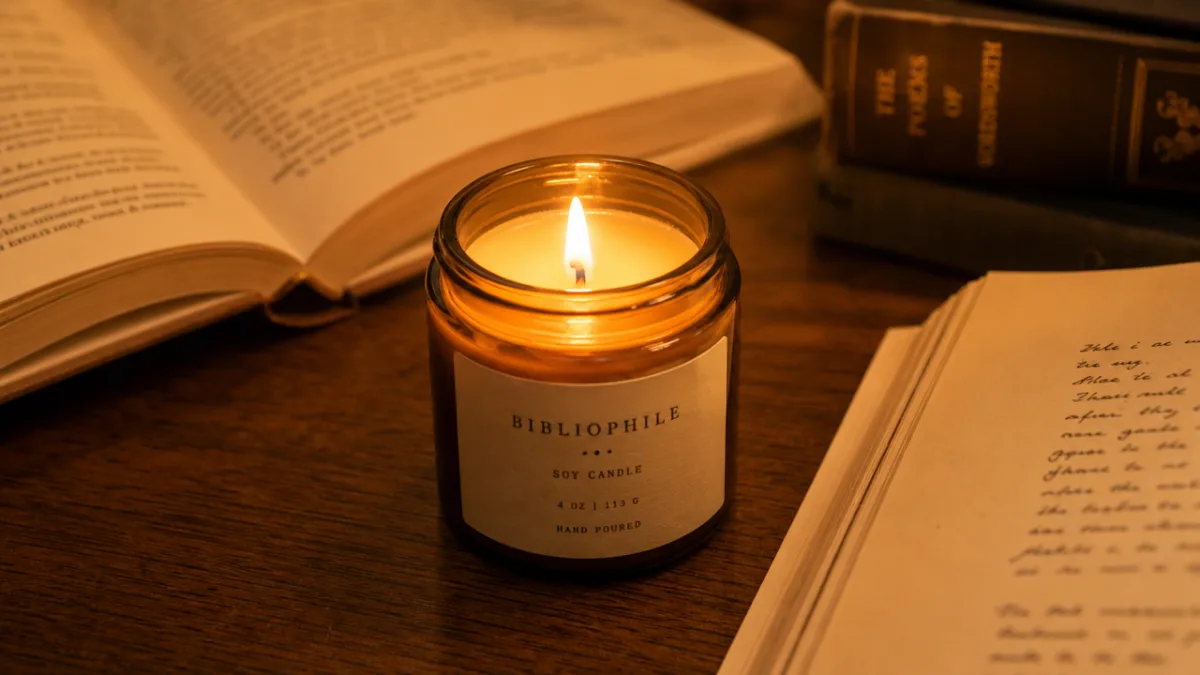
The Fragrance Profile: Flowering Clove and Sandalwood
Fragrance is, of course, the soul of any candle, and the combination of Flowering Clove and Sandalwood chosen for the “Hot People Read” candle is a masterclass in complementary scent pairing. These two notes occupy different ends of the aromatic spectrum yet share a deep, warm, grounding quality that makes them extraordinarily harmonious. Together, they create a fragrance that is simultaneously stimulating and calming — intellectually invigorating and emotionally reassuring — which makes perfect sense for a candle designed to accompany the act of reading.
Clove has one of the most storied fragrance histories in the world. For centuries, clove was among the most valuable spices traded along ancient routes from the Maluku Islands of Indonesia to Europe and the Middle East. Its scent is characterized by a sharp, spicy, slightly sweet warmth driven primarily by the compound eugenol. “Flowering Clove” adds an additional dimension to this familiar base note — the floral aspect of the clove bud itself, which carries a slightly softer, greener quality compared to the dry heat of mature clove spice. This distinction gives the fragrance an unusual freshness alongside its inherent warmth and intensity.
Sandalwood is perhaps the most beloved base note in all of perfumery, and for good reason. Its scent — creamy, woody, slightly milky, with subtle hints of vanilla and musk — has a documented calming effect on the nervous system. Aromatherapy practitioners have long used sandalwood to promote focus, reduce anxiety, and encourage meditative states. For a reading candle, this is not incidental. The sandalwood grounds the sharper top notes of clove and creates an olfactory environment that supports sustained concentration and a sense of deep, comfortable immersion — exactly the psychological state a devoted reader craves.
When these two notes combine, they produce something greater than either alone. The clove provides lift, brightness, and a slight edge of excitement that keeps the mind alert and engaged. The sandalwood provides depth, continuity, and a silky warmth that prevents the scent from becoming abrasive or overwhelming over a long reading session. The result is a fragrance experience that evolves gently as the candle burns — spicier and more vivid in the first hour, mellowing into a deeper, woodier warmth as it progresses. This kind of fragrance arc is the hallmark of a thoughtfully composed scent blend.
The 2 oz Format: Small Candles and the Case for Intentional Living
At first glance, a 2-ounce candle might seem like a modest offering — a sample size, perhaps, or a token gift. But the 2-ounce format has its own philosophy, and for a growing number of candle enthusiasts, it represents the ideal unit of fragrance consumption. In a culture increasingly oriented toward minimalism, mindful purchasing, and the reduction of clutter and waste, small candles offer something the large jar simply cannot: focused intentionality. You light it for a specific purpose, in a specific moment, and it belongs entirely to that experience.
The practical advantages of the 2-ounce size are also considerable. A small candle is a low-stakes way to explore a new fragrance without committing to a large, expensive vessel you may tire of or find incompatible with your space. It is the perfect size for a bedside table, a bathroom shelf, a desk corner, or a reading chair side table — those intimate, personal spaces where scent can most powerfully shape mood and atmosphere. Two ounces burns for approximately 10 to 15 hours depending on the specific wax and wick configuration, which is enough time to form a genuine connection with a fragrance before deciding whether to invest in a larger version.
From a gifting perspective, the 2-ounce candle occupies a particularly sweet spot. It is substantial enough to feel like a real, considered gift — not a throwaway trinket — while being small enough to be genuinely accessible in terms of price point. For literary-themed candles like the “Hot People Read” edition, this size is especially well-suited to inclusion in book subscription boxes, reader gift baskets, or as an accompaniment to a thoughtfully chosen book. It is the kind of gift that says “I know you, and I know what makes you happy” without requiring either excessive expenditure or elaborate planning.
- Burn time: Approximately 10–15 hours for a 2-ounce soy candle, offering multiple extended reading sessions from a single vessel.
- Portability: Small enough to pack in a bag or carry to a friend’s home, a hotel room, or a cozy café corner where candles are permitted.
- Fragrance exploration: Ideal for trying new scent profiles without the financial commitment of a larger candle purchase.
- Gifting versatility: Perfect for book clubs, literary subscription boxes, reader care packages, or as a thoughtful standalone gift for any book lover.
- Aesthetic cohesion: Small candles can be grouped in clusters to create visually striking shelf displays without dominating the space.
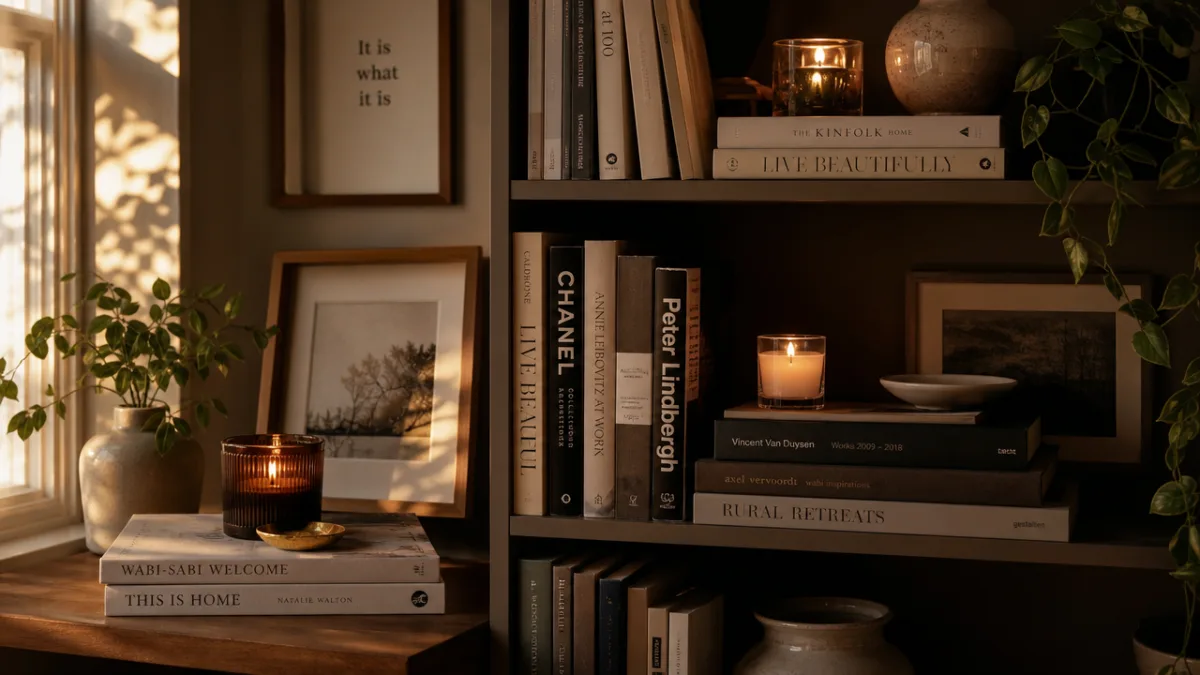
The Culture of “Hot People Read”: Identity, Humor, and the Modern Reader
The slogan “Hot People Read” deserves its own analysis, because it encapsulates something genuinely interesting about contemporary reader culture. For most of the twentieth century, the image of the reader — particularly the serious, literary reader — was associated with introversion, awkwardness, social marginalization, and a certain deliberate indifference to physical appearance or popular culture. The stereotype of the bookish person was, to put it plainly, not particularly glamorous. Reading was coded as the alternative to being cool, not the evidence of it.
Something has shifted dramatically over the past decade, and it is visible everywhere from TikTok’s explosive #BookTok community to the resurgence of independent bookstores in cities across the country. Reading has been thoroughly reclaimed as something aspirational, desirable, and yes, attractive. The rise of “dark academia” aesthetics, the explosion of literary merchandise, and the extraordinary engagement of younger readers on social media platforms have collectively reframed what it means to be a reader. “Hot People Read” is a distillation of this cultural shift into four words — cheeky, confident, and entirely unapologetic.
The humor embedded in the phrase is also important. It does not take itself too seriously, which is precisely why it works. It invites the reader to share a gentle joke with themselves — yes, of course, reading is the mark of a superior and beautiful person, wink — while simultaneously expressing a genuine and deeply felt conviction. This balance of self-awareness and sincere passion is characteristic of modern fandom culture more broadly, where intense enthusiasm and ironic detachment coexist comfortably. It is a sensibility that resonates particularly strongly with millennial and Gen Z readers who have grown up in the age of the knowing meme.
Candles bearing literary slogans have become a form of social signaling in the best possible sense — a way of identifying oneself to like-minded individuals, of creating community through shared aesthetic objects. When you place a “Hot People Read” candle on your shelf or feature it in a shelfie on Instagram, you are broadcasting your membership in a community that values curiosity, imagination, and the quiet pleasure of a good book. This is the candle as cultural artifact, as conversation starter, as small but meaningful declaration of values and identity.
Candle Care, Reading Rituals, and the Art of the Slow Evening
A candle is only as good as the care it receives, and soy candles in particular reward attentive stewardship with superior performance and longevity. The most important ritual for any new candle is the first burn, sometimes called the “memory burn.” On its inaugural lighting, a candle should be allowed to burn until the entire surface of the wax has melted into a liquid pool reaching the edges of the vessel. For a 2-ounce candle, this typically takes between one and two hours. If a candle is extinguished before this full melt pool is achieved, the wax develops a “tunnel” — a deep narrow channel down the center — that will persist through every subsequent burn and dramatically reduce the candle’s effective life.
Wick maintenance is equally essential and equally overlooked by casual candle users. Before every lighting, the wick should be trimmed to approximately one-quarter of an inch. An untrimmed wick creates a large, unsteady flame that produces excess soot, consumes the wax unevenly, and generates more heat than the vessel is designed to handle. A properly trimmed wick produces a smaller, steadier flame that burns cleaner, lasts longer, and distributes fragrance more evenly. Wick trimmers — small scissor-like tools designed specifically for this purpose — are an inexpensive and worthwhile investment for anyone who burns candles regularly.
Beyond the technical, there is the deeper question of ritual — of how to build a reading practice that is genuinely restorative and pleasurable rather than merely dutiful. Lighting a candle before settling in with a book is one of the most effective ways to signal to your brain that it is time to shift into a different mode — slower, more receptive, more imaginative. The act of lighting a match or a lighter, watching the flame catch and settle, and inhaling the first warm drift of Flowering Clove and Sandalwood is a small ceremony that marks the transition from the hyperactive, distracted mode of modern life to the deep, immersive attention that good reading demands.
- Set the scene first: Choose your reading spot, arrange your seating, and gather your book and any beverages before lighting the candle, so you do not have to move once you are settled.
- Dim other light sources: Allow the candle to contribute meaningfully to the ambient light rather than being lost in a brightly lit room.
- Turn off notifications: The candle ritual is most powerful when paired with a genuine commitment to uninterrupted time — silence your phone for the duration.
- Match fragrance to reading material: Warm, spicy scents like Clove and Sandalwood pair beautifully with historical fiction, gothic literature, fantasy, and anything with a rich, immersive world-building quality.
- Allow the cool-down: After extinguishing the candle, resist the urge to move immediately to the next task. Let the residual warmth and fragrance linger as a gentle transition back to the ordinary world.
The concept of the slow evening — deliberately unhurried time devoted to pleasure, reflection, and sensory richness — is something that candle culture and reading culture share at their core. Both represent a conscious resistance to the acceleration of modern life, a refusal to treat every moment as a unit of productivity to be optimized. A 2-ounce candle burning on your reading table is a small but genuine act of reclamation — of time, of attention, of the particular joy that comes from being fully present in a story, surrounded by warmth and fragrance, with nowhere else to be and nothing else to do. That, ultimately, is what the “Hot People Read” candle is selling: not just a scent, but a way of being in the world.









What do you think?
It is nice to know your opinion. Leave a comment.