










Cream Pillar Candles with Glass Holders: The Ultimate Guide to Cozy Centerpieces
The Timeless Appeal of Cream Pillar Candles
There’s something about a cream pillar candle that just works — no matter the room, no matter the style. Unlike candles in bold or bright colors, cream has this quiet warmth that plays nicely with practically any décor, whether you’re going for cozy farmhouse vibes or clean, modern minimalism. That soft ivory tone catches your eye without screaming for attention, which makes cream pillars perfect anchors for centerpieces that feel thoughtfully put together rather than thrown into place. Group a few at different heights and suddenly you’ve got this natural, flowing arrangement that feels genuinely alive.
Pillar candles have been a decorating staple for centuries — they started as purely practical light sources and gradually became symbols of celebration, ceremony, and that particular feeling of home. Cream pillars sit in this interesting sweet spot today where they’re both classic and completely current. Interior designers keep coming back to them because they never really go out of style. A well-arranged grouping on a dining table can take the whole space from ordinary to genuinely special, and you don’t need anything else alongside them to make it work.
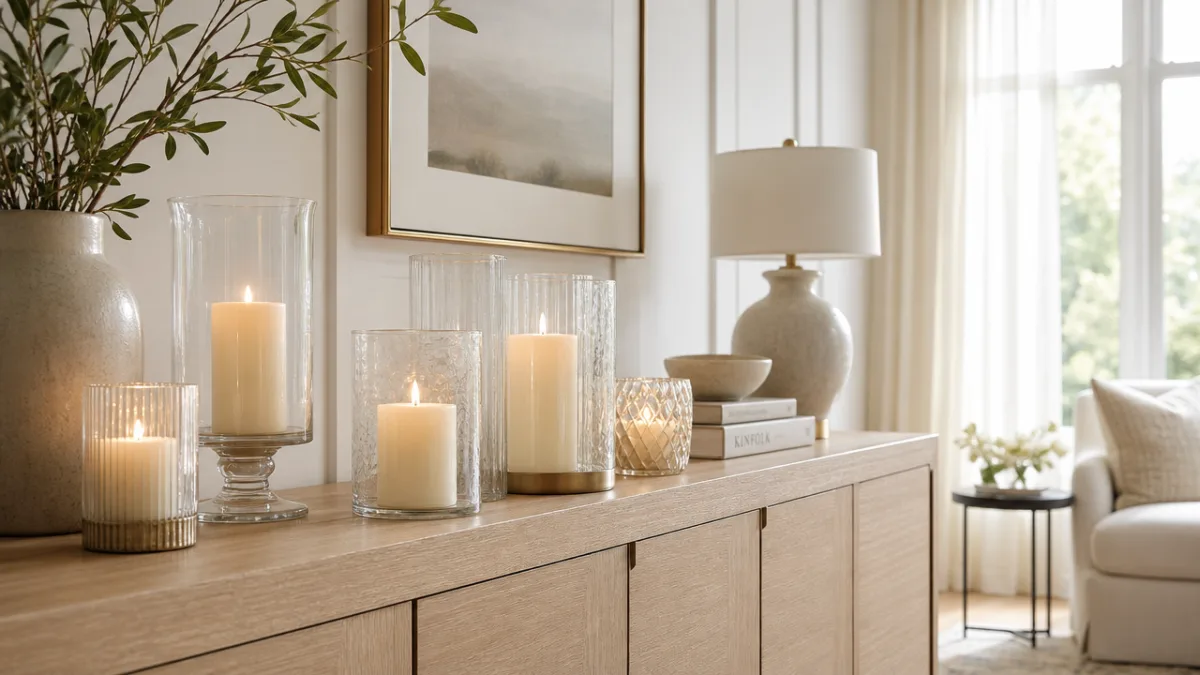
The thing that sets a cream candle apart from a plain white one is the warmth baked into its color. That subtle yellow or beige undertone echoes natural beeswax, giving it an organic quality that stark white candles tend to miss. Once you actually light the candle, that warmth really comes through — the flame illuminates the wax from the inside, casting this honeyed, glowing light that transforms the whole mood of a room. Add a glass holder into the mix, and the result feels both elegant and genuinely welcoming.
Choosing the Right Glass Holders for Your Candles
Honestly, picking the right glass holder matters just as much as picking the candle itself. Glass holders do a lot of heavy lifting: they protect your surfaces from wax drips, they amplify candlelight through refraction, and they give the whole arrangement a polished, finished look. There are a lot of options out there, and knowing what each style brings to the table (literally) will help you build centerpieces that feel cohesive and intentional. Clear glass lets light move through freely and works beautifully in modern, airy spaces, while frosted or etched glass softens the flame into something dreamier and more diffused.
Hurricane holders are probably the most popular choice for pillar candles, and it’s easy to see why. Those tall, cylindrical vessels protect the flame from drafts while framing the candle in a way that makes even a simple pillar look like a real statement. Shorter glass cylinders are great when you want to show off a wider candle or keep things lower and more intimate at the table. If you want a bit more height and formality — for a wedding reception or a holiday dinner — footed glass holders are a lovely option that reads as dressed-up without being stuffy.
Pay attention to the finish and thickness of the glass too. Thicker walls catch and scatter light in these really interesting, complex ways — you’ll see tiny flickers of flame reflected all across the surrounding surfaces, almost like little constellations. Thinner glass is more delicate and elegant but produces a quieter visual effect. And if you want to bring in a bit of color without abandoning your neutral palette, tinted glass in amber, blush, or smoky gray can shift the whole mood of an arrangement beautifully. Just always make sure any holder you buy is specifically rated for pillar candles — glass that isn’t designed for the heat can crack, which is not the vibe you’re going for.

Designing Your Centerpiece: Principles of Visual Harmony
Getting a centerpiece to look effortlessly put-together isn’t magic — it comes down to a few design basics that are pretty easy to apply once you know them. The most important one is varying your heights. When you group candles at different levels, your eye naturally travels across the whole arrangement, and the whole thing feels dynamic rather than flat. A classic starting point is three candles in a rough height ratio — maybe a tall one flanked by a medium and a shorter one — forming a gentle triangular shape that looks good from every seat at the table.
Odd numbers are your best friend here. Groups of three, five, or seven just feel more natural and interesting to look at than even-numbered groupings, which can come across as a little rigid or formal. That’s not to say symmetry is always wrong — two matching cream pillars on either side of a floral arrangement can look really composed and lovely. But for a freestanding candle centerpiece, odd numbers give you that organic quality where the eye wants to linger and explore rather than just quickly scan and move on.
Don’t overlook what’s underneath and around your candles either. A mirrored tray reflects the candlelight upward and creates this luminous, almost magical quality that a plain surface just can’t replicate. Natural materials like a raw wood slice, a marble slab, or woven rattan add Texture and warmth that plays really nicely against soft cream wax. Fill in the spaces between holders with dried botanicals, smooth river stones, pine cones, or fresh greenery and suddenly the whole thing looks like it was gathered together over time rather than assembled in twenty minutes on a Sunday afternoon.
Seasonal Styling: Adapting Cream Candle Centerpieces Year-Round
One of the best things about cream pillar candles is how easily they adapt to every season. Because they’re not tied to any particular color story, cream candles act like a neutral backdrop that takes on whatever energy you build around them. In spring, pair them with fresh eucalyptus, ranunculus, and soft pink peonies for a centerpiece that feels alive and fragrant. The cream wax echoes those petal tones without competing with them, letting the flowers be the star while the candles bring the warm, flickering glow that makes blooms look even more beautiful.
Summer calls for playing up the contrast between cool glass and warm candlelight. Tuck shells, sea glass, or pieces of driftwood around glass-housed cream pillars for a laid-back coastal look. Or try massing cream candles at varying heights inside oversized glass bowls filled with water and floating flower heads — it’s dramatic and romantic and honestly looks like something out of a garden party magazine spread. Since cream is so neutral, it blends right in with the bright, saturated colors that summer entertaining tends to bring out.
Autumn and winter are honestly where cream pillar candles get to shine brightest. Grouped with rich seasonal accessories, they provide a warm, luminous counterpoint to the deeper, moodier tones of the season. Some of the most popular seasonal pairings worth trying:
- Autumn: cream pillars with dried orange slices, cinnamon sticks, amber glass holders, and clusters of pinecones on a bed of dried fall leaves
- Winter holiday: cream pillars arranged with frosted glass, silver and gold ornaments, fresh holly, and mercury glass votives scattered between the larger holders
- Late winter: cream candles with white amaryllis, bare birch branches, and cool-toned grey stone surfaces for a Scandinavian-inspired hygge aesthetic
- Transitional seasons: cream pillars with neutral linen, aged brass holders, and dried pampas grass for a timeless, weather-independent arrangement
The through-line across all of these is that cream never competes — it participates. It lends warmth and a sense of occasion to whatever seasonal story you’re telling, which means you can refresh your centerpieces as the seasons change without ever having to swap out the candles themselves (assuming they haven’t been burned down, of course). That neutrality isn’t a limitation. It’s genuinely the candle’s superpower.

Safety Considerations for Pillar Candles in Glass Holders
All the beauty in the world isn’t worth much if you’re not being safe about it, so let’s talk candle safety — and please don’t skip this part. Glass holders should always sit on heat-resistant surfaces, because even thick glass can transfer a significant amount of heat to whatever’s underneath during a long burn. Never leave lit candles unattended, no matter how securely they’re sitting in their holders, and keep them well away from anything flammable: curtains, dried botanicals, paper decorations, and tablecloths that drape close to the flame are all things to watch for. These feel like obvious rules, but they’re worth repeating.
Wick trimming is something a lot of people skip, and it really does make a difference. Before each lighting, trim your wick to about a quarter inch using a proper wick trimmer or a pair of sharp scissors. An untrimmed wick produces a bigger, less stable flame that creates excess soot, causes uneven burning, and can generate enough heat to crack glass holders over time. A properly trimmed wick burns cleanly and steadily, extends the life of the candle, and keeps your glass in good shape for the long haul.
One more thing: don’t let a pillar candle burn all the way down inside a glass holder. Stop the burn when there’s still at least half an inch of wax left at the base — this keeps the holder from absorbing direct heat from the flame, which can cause thermal shock cracking even in quality glass. If you notice your candle tunneling (burning a narrow channel down the center while leaving tall wax walls on the sides), try creating a loose aluminum foil tent over the top of the candle during its next burn to redirect the heat outward and even things up. A little attention to these details keeps your arrangements looking great and your home genuinely safe, season after season.
Sourcing, Caring For, and Styling With Quality Candles
Spending a little more on quality cream pillar candles is genuinely worth it — both for how they perform and how they look. Good pillar candles are usually made from a blend of paraffin with additives that promote even burning, or from natural alternatives like soy wax, beeswax, or palm wax. Beeswax cream pillars are particularly special: they have a subtle natural honey scent, they burn slowly, and the light they give off is this exceptionally warm, golden glow that cheaper candles just can’t replicate. Soy wax pillars are a great option if you prefer plant-based products, though they tend to have a slightly softer finish that not everyone loves the look of.
When you’re shopping for cream pillar candles, here are a few things worth checking before you buy:
- Consistent color throughout the whole candle — blotchy or streaky wax is a sign of poor quality control during manufacturing
- A centered, straight wick running cleanly through the middle without any deviation
- A smooth, unblemished surface with no air bubbles, cracks, or rough patches that could interfere with even burning
- Appropriate hardness for the wax type — a very soft pillar candle may slump or lose its shape if your space gets warm
- Accurate diameter sizing to make sure the candle actually fits your glass holders properly, with a bit of clearance on all sides
How you store your candles between uses matters more than most people realize. Keep them in a cool, dark spot away from direct sunlight, which can cause cream wax to yellow or fade unevenly — horizontal or vertical storage both work fine. Wrapping them in tissue paper or keeping them in their original packaging protects the surface from dust and scratches. And if you’re storing candles near anything strongly scented, move them — wax absorbs odors surprisingly easily, which can conflict with any fragrance the candle is already carrying. Treat them well and quality cream pillar candles will stay beautiful and ready to anchor a gorgeous centerpiece for a long time to come.
Creating Atmosphere: The Psychology of Candlelight in Interior Spaces
There’s a reason candlelight feels so universally good — and it goes deeper than aesthetics. Firelight sits around 1800 Kelvin, with a characteristic flicker that our nervous systems have been responding to for as long as humans have existed. It’s wired into us: that warmth signals safety, nourishment, and shelter at a really fundamental level. Candles produce exactly that same quality of light, which means lighting a few cream pillars in a room actually shifts how the people in it feel physiologically. Cortisol levels drop. Conversations soften. People relax in a way that no overhead lighting can manufacture.
From a pure design standpoint, candlelight solves things that electric lighting often can’t. It eliminates harsh shadows, rounds off strong architectural lines, and creates these warm pools of light that naturally draw people toward each other and toward the table. A centerpiece of cream pillar candles in glass holders becomes the visual and emotional heart of a room — not just something to look at, but something that generates atmosphere. This is exactly why candles remain a cornerstone of fine dining, wedding design, and hospitality spaces where the goal is to make people feel something specific the moment they walk in.
All of this connects to hygge, the Danish and Norwegian philosophy of coziness and contentment that has resonated with so many people around the world in recent years. Hygge isn’t really a decorating style — it’s more of an intention, a deliberate effort to create environments that support comfort, connection, and genuine wellbeing. Cream pillar candles grouped in glass holders on a dinner table, or tucked onto a coffee table next to a stack of books and a soft blanket, embody that intention almost perfectly. They don’t demand anything from the space. They just quietly make it feel more like home.








What do you think?
It is nice to know your opinion. Leave a comment.