










Texture: The Invisible Force That Shapes How We Experience the World
What Is Texture and Why Does It Matter?
Texture is one of those things we interact with constantly but rarely stop to think about. At its core, it’s the surface quality of an object — how it feels under your fingers, and just as importantly, how it looks to your eyes. The rough bark of an old oak tree, the cool smoothness of polished marble — these surfaces are telling you something about the physical world before your brain has even had a chance to catch up. It’s a kind of instinctive language that every human being understands from the moment they’re born.
Designers, artists, and scientists generally split texture into two categories. The first is tactile texture — the actual physical surface quality you feel when you run your hand over something, like the grain of wood, the scratch of a wool sweater, or the slickness of glass. The second is visual texture, which is the impression of surface quality created through pattern, light, and shadow in two-dimensional work. A skilled painter can make a completely flat canvas look rough, soft, or deep purely through their handling of visual texture — no physical surface required.
Why does any of this matter? Because texture has a surprisingly powerful effect on how we feel. Environmental psychology research consistently finds that people are drawn to spaces and objects with varied, layered textures, and put off by things that are relentlessly smooth and uniform. Texture gives a space warmth and character, a sense that it’s actually lived in. When it disappears entirely — as it did in many of the stark, sterile interiors of the mid-twentieth century — people tend to feel cold, on edge, and somehow disconnected. Texture, in a very practical sense, is part of what makes the world feel real.
Texture in Art and Design Throughout History
Artists have been fascinated by texture since the very beginning. Paleolithic painters working in caves were clever enough to use the natural bumps and contours of the rock walls as part of their animal depictions, giving their bison and horses a three-dimensional energy that still amazes people today. Ancient Egyptian relief carvers paid close attention to surface variation, creating works that shifted and came alive as sunlight tracked across them through the day. Texture was never just decoration back then — it was communicative, even spiritual.
The Renaissance changed everything in terms of how Western artists handled texture. Painters like Jan van Eyck developed oil techniques that let them capture the look of velvet, fur, metal, and skin with almost unnerving accuracy. A pearl’s glassy depth, the coarse weave of burlap — all of it rendered on flat canvas so convincingly that people instinctively wanted to reach out and touch it. That mastery of visual texture became one of the great achievements of European painting, setting a technical standard artists chased for centuries afterward.
The twentieth century took a completely different turn. Movements like Dadaism and Surrealism started incorporating actual physical materials into artworks — newspaper, sand, fabric, random found objects — blurring the line between representation and reality. Alberto Burri deliberately burned and scarred his canvases. Jean Dubuffet celebrated rough, unpolished surfaces and the raw energy of outsider art. These approaches cracked the door open to a much broader understanding of what texture in art could actually do.

Texture in Interior Design and Architecture
Any interior designer worth their salt will tell you that texture is one of the most powerful tools they have. Take two identical rooms — same size, same colors, same layout — and furnish one with nothing but smooth, reflective surfaces and the other with rough stone, woven textiles, and aged wood. They’ll feel completely different. Texture shapes how sound moves through a space, how temperature feels, and most of all, the emotional atmosphere of a room. An exposed brick wall makes a space feel grounded and a little historic. Mirrored surfaces push it toward the expansive and glamorous.
Layering textures thoughtfully is one of the fundamentals of good interior design. Skilled designers work with a deliberate mix of soft and hard, rough and smooth, matte and reflective, because that contrast is what makes a room feel both balanced and genuinely interesting. A linen sofa next to a polished brass lamp on a chunky jute rug — those textures are having a conversation with each other, keeping both the eye and the hand engaged without tipping into chaos. Textural contrast is every bit as important to a harmonious interior as color contrast.
Architecture scales these same ideas up to something monumental. The pitted surface of raw Brutalist concrete creates dramatic shadow play across the day. The rhythmic repetition of a brick facade gives a building a sense of human scale. Reflective glass curtain walls dissolve the division between building and sky. Architects like Tadao Ando have built entire careers on a devotion to controlling surface texture, because they understand that how a wall feels to the eye determines how light moves through a space — and how people feel inside it.
Right now, there’s a strong pull toward organic, natural textures in interior design, and it makes a lot of sense when you think about it. Rattan, linen, raw plaster, travertine, reclaimed timber — these materials have surged in popularity because their imperfect, varied surfaces offer something that polished manufactured finishes simply can’t. The Japanese aesthetic of wabi-sabi, which finds beauty in imperfection and age, has become hugely influential in Western design for exactly this reason. There’s something in those rough, irregular surfaces that feels honest in a way that smooth, perfect ones don’t.
Texture in Fashion and Textiles
At its most basic, fashion is a conversation between texture and the human body. The choice of fabric is never purely practical — it’s expressive and deeply personal. How a garment feels against your skin affects how you move, how you stand, and how you carry yourself. A stiff brocade jacket projects authority. A fluid silk blouse suggests ease. A chunky cable-knit communicates warmth and comfort. Texture in clothing is a kind of nonverbal communication that works below the level of conscious thought.
The textile world has developed a remarkably rich vocabulary for all of this. Weaving techniques alone — plain weaves, twills, satins, jacquards, velvets — produce an enormous range of surface qualities from a single underlying technology. Knitting opens up another whole world of cables, ribs, lace, and bouclé loops. Add felting, embossing, pleating, smocking, laser cutting, and you start to get a sense of just how vast the fashion designer’s textural toolkit really is.
One of the most reliable ways to make an outfit feel sophisticated rather than flat is to mix textures deliberately. Fashion editors and stylists hammer this point for good reason: a glossy patent leather bag with a matte cashmere coat, rough denim paired with delicate lace — these combinations create visual depth and interest that a single-texture look simply can’t. Grasping this principle is a big part of the difference between a wardrobe that feels thoughtfully put together and one that feels a bit one-note.
- Smooth textures — silk, satin, patent leather — convey elegance, sensuality, and modernity.
- Rough textures — tweed, denim, burlap — suggest durability, authenticity, and casual strength.
- Soft textures — cashmere, velvet, fleece — communicate warmth, comfort, and approachability.
- Structured textures — brocade, taffeta, stiff canvas — project formality, confidence, and ceremony.
- Organic textures — linen, raw silk, handwoven cotton — signal naturalness, sustainability, and care.

Texture in Nature: The Original Source
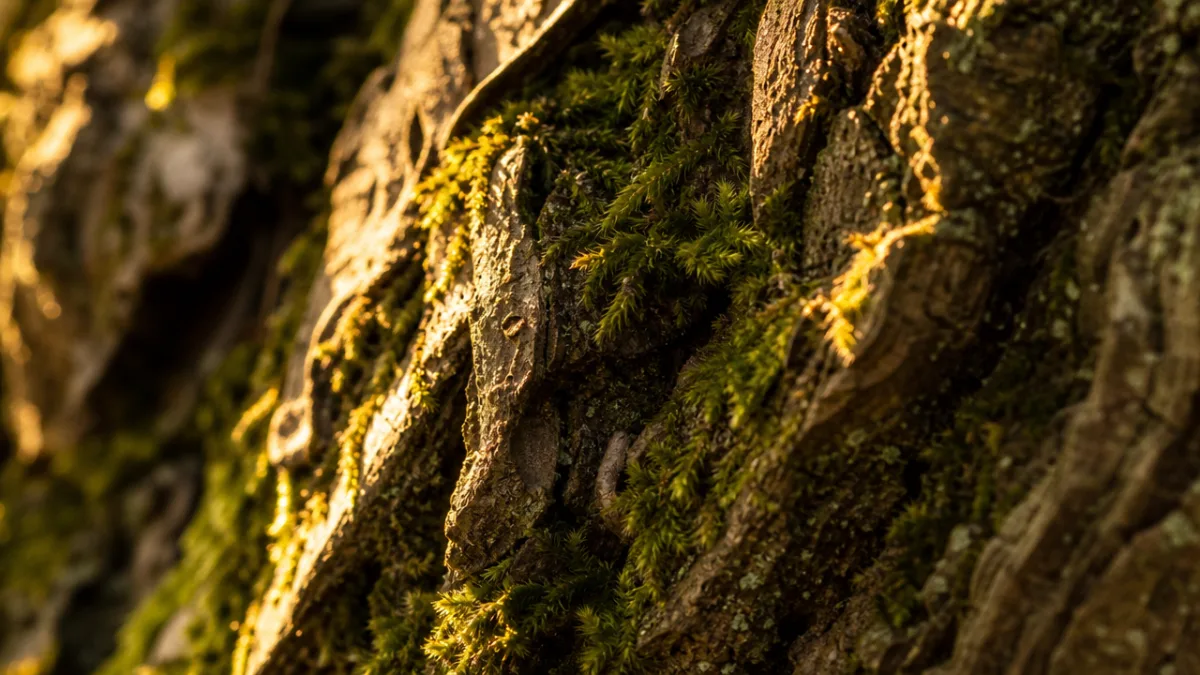
Nature is the original master of texture, and it never runs out of ideas. The overlapping scales of a pinecone, the intricate veining of a leaf, the granular sparkle of wet sand, the jagged face of split granite — the range is staggering. And none of it is random. These textures emerge from the physical and biological processes that shape matter over time: erosion, growth, crystallization, weathering, decay. Every natural surface is essentially a record of the forces that made it, which is why natural textures manage to be both beautiful and scientifically interesting at the same time.
A huge amount of what we find compelling in art, design, and fashion traces back directly to natural surfaces. Biomimicry — learning from and replicating nature’s solutions — extends to texture in some fascinating ways. The dimpled surface of a golf ball came from noticing that rough balls flew farther than smooth ones, echoing the turbulence-managing texture of bird feathers. Velcro copies the hook-and-loop structure of burdock burrs. Sharkskin swimwear reduces drag by mimicking the microscopic ridges on actual shark skin. Nature’s textures aren’t just beautiful — they’re functionally brilliant.
There’s also good evidence that spending time in natural environments rich with varied textures — forests, beaches, mountains, gardens — does measurable good for our mental state. Attention restoration theory suggests that the gently complex, fractal textures of the natural world let our overworked attention systems rest and recover, reducing stress and refreshing mental clarity. It’s why walking barefoot on grass, running your fingers through sand, or pressing your palm against a rough tree trunk feels instinctively restorative. Texture is one of the bridges between our bodies and the natural world we evolved in.
The Psychology and Science of Texture Perception
Perceiving texture is actually a remarkable feat of neuroscience. It involves touch receptors in the skin, visual processing in the brain, and a lifetime’s worth of stored tactile memories all working together. The skin alone contains at least four distinct types of mechanoreceptors — Merkel’s discs, Meissner’s corpuscles, Ruffini endings, and Pacinian corpuscles — each tuned to different aspects of surface contact: fine spatial detail, edge detection, sustained pressure, vibration. Together, they produce the rich, layered quality of what we simply call touch.
Vision and touch are more closely linked than most people realize. When you look at a textured surface, your brain automatically activates the sensory and motor regions associated with actually touching it — a phenomenon called visual-haptic crossover. This is why photographs of rough, sharp, or unpleasant textures can produce a genuine physical reaction. Your brain is running a simulation of what that surface would feel like, drawing on memory to predict the experience before your fingers ever get near it. It’s a deeply practical system, even if it occasionally makes looking at certain images mildly uncomfortable.
Texture also shapes how we judge quality, value, and authenticity in ways we’re largely unaware of. Consumer psychology research has found that the texture of packaging significantly influences people’s perception of what’s inside. A heavy, matte-finished cardboard box feels premium in a way a light, glossy one simply doesn’t. A rough-textured wine label reads as artisanal; a smooth foil label reads as mass-produced. Luxury brands spend serious money on the tactile design of their packaging because they know that what your fingers feel shapes what your brain concludes about value.
- Texture communicates structural integrity — rough, dense surfaces feel stronger and more reliable than flimsy, smooth ones.
- Texture conveys age and authenticity — naturally worn, patinated surfaces signal history and genuine use rather than mass production.
- Texture triggers memory — specific surface qualities can instantly transport us to childhood experiences, places, and people.
- Texture creates desire — the anticipated pleasure of touching a beautiful surface motivates purchase, connection, and attention.
- Texture establishes trust — the physical consistency of a surface reassures us about the material world’s reliability and solidity.
As digital technology takes up more and more of our lives — replacing physical books with screens, in-store shopping with scrolling, handwritten notes with typed messages — the texture that remains in our physical world becomes more important, not less. There’s a growing body of research and cultural commentary suggesting that the flattening of our tactile experience through digitization creates a kind of sensory gap that people instinctively reach to fill. The explosion of craft culture, artisanal food, handmade ceramics, and natural material design in recent years makes a lot more sense when you look at it this way: it’s a collective hunger for the kind of rich, complex surfaces that no screen can provide. Texture is, in the end, part of how we know we’re alive in a physical world — present, embodied, and connected to something genuinely real.








What do you think?
It is nice to know your opinion. Leave a comment.