










25 DIY Home Decor Crafts That Make Your Home Look Expensive on a Budget
Why DIY Home Decor Is the Secret to a Luxury-Looking Home
There’s a stubborn myth floating around that beautiful, sophisticated home decor requires a fat budget and a professional interior designer on speed dial. But honestly? Some of the most stunning homes you’ll find on social media and in design magazines were put together by creative homeowners who simply refused to let money get in the way of their vision. DIY home decor has blown up in popularity for a good reason: it hands the power of transformation to anyone willing to roll up their sleeves and get a little creative.
The difference between a home that looks expensive and one that just looks… fine… usually comes down to Texture, layering, and intentional styling — not the price tag on individual pieces. A thrifted vase filled with dried pampas grass, a gallery wall built from dollar-store frames you spray-painted gold, or a concrete-effect lamp base you poured yourself can anchor a room just as effectively as anything from a high-end boutique. And when you make things yourself, you get to customize the scale, color, and finish in ways that no mass-produced item ever could.
Maybe the best part, though, is the sense of ownership that comes with DIY decor. When a guest compliments something in your home and you get to say you made it yourself, there’s a quiet pride in that moment that no shopping cart can give you. This article walks you through 25 of the most impactful DIY home decor projects, organized by room and technique, so you can start building the home you’ve always wanted without blowing your budget.
Statement Wall Treatments That Transform Any Room
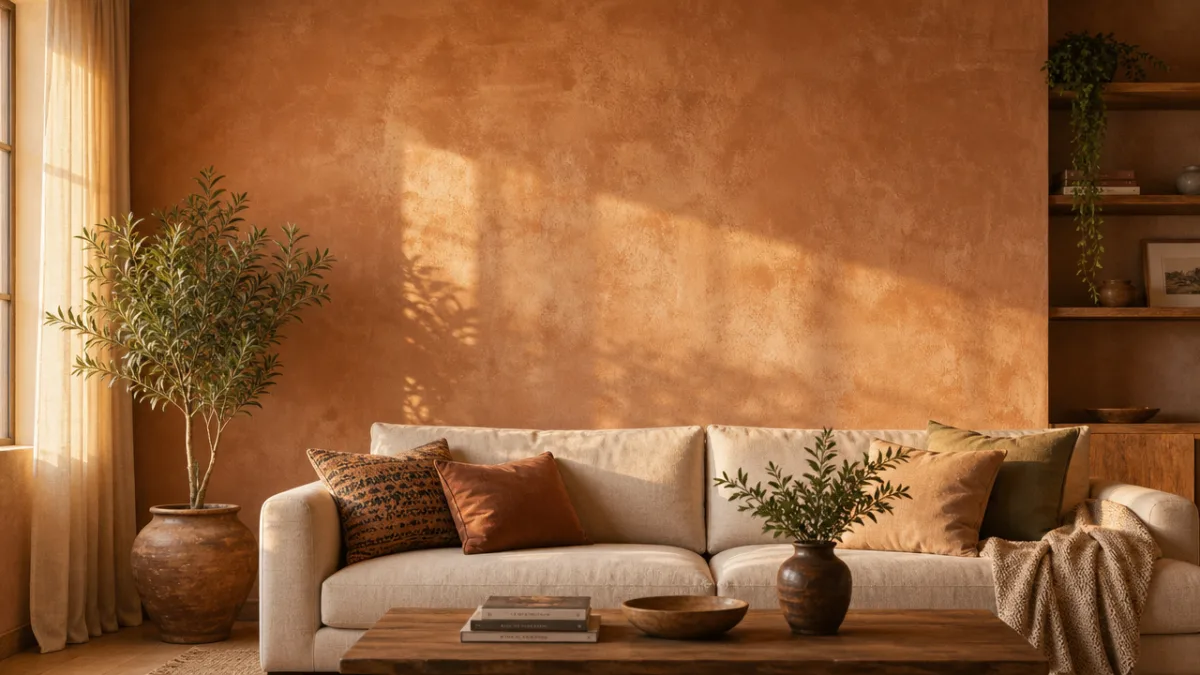
Walls are the biggest canvas in any room, and transforming them with DIY techniques is honestly one of the highest-impact, lowest-cost moves you can make. Limewash painting, for example, creates a rich, layered, slightly mottled finish that looks like it belongs in a Tuscan villa. All you need is a tinted limewash paint, a large brush, and a willingness to apply it in loose, overlapping strokes. The result is a wall treatment that designers charge thousands to execute professionally — and you can get there for the cost of a single gallon of specialty paint.
Shiplap and board-and-batten accent walls have dominated interior design trends for years, and it’s easy to see why. They add architectural interest and a sense of craftsmanship that instantly lifts a space. Using thin strips of MDF or plywood from your local hardware store, you can pull off either look with basic tools and a free weekend. Paint the finished wall in a deep, moody color — forest green or navy are perennial favorites — and it reads as a custom architectural feature rather than a weekend DIY project.
Geometric tape art is another wall treatment that delivers a serious visual punch for almost no money. With painter’s tape, a level, and a bold contrasting paint color, you can lay out diamond, herringbone, or chevron patterns on any wall in your home. It works especially well in entryways, nurseries, and home offices where you want one strong focal point that feels modern and deliberate. Tape and a quart of paint will rarely set you back more than fifteen dollars, which makes this one of the most budget-friendly transformations on this entire list.
Thrift Store Flips and Upcycled Furniture Projects
Thrift stores, estate sales, and online marketplaces are absolute gold mines for the DIY decorator. The trick is learning to look past whatever a piece currently looks like and focus on its bones instead. A solid wood dresser with great proportions but awful hardware and a dated stain can be completely transformed with a coat of chalk paint, new drawer pulls from a hardware store, and an hour of your time. The finished piece can look indistinguishable from something sold at a boutique furniture store for several hundred dollars more.
Caning and rattan have made a massive comeback in contemporary interior design, and you can bring this look to existing furniture with cane webbing purchased online for very little money. Just remove the flat panel inserts from cabinet doors or drawer fronts, cut the cane webbing to size, and secure it with a staple gun and some trim. This simple modification turns a plain, forgettable cabinet into something that feels both vintage and current — the kind of piece you’d find in a curated design shop selling mid-century modern at premium prices.
Reupholstering dining chairs sounds intimidating, but it’s genuinely one of the more straightforward DIY projects out there for most chair styles. Drop-in seat cushions — the most common type — involve nothing more than removing a few screws, pulling fresh fabric taut over the seat pad, stapling it underneath, and popping the seat back in. Choose something with visual weight, like a bouclé, a textured linen, or a bold geometric print, and even the most basic wooden chair becomes a design statement. A full set of six chairs can be completely refreshed for under fifty dollars in fabric.
Handmade Textiles and Soft Furnishing Projects
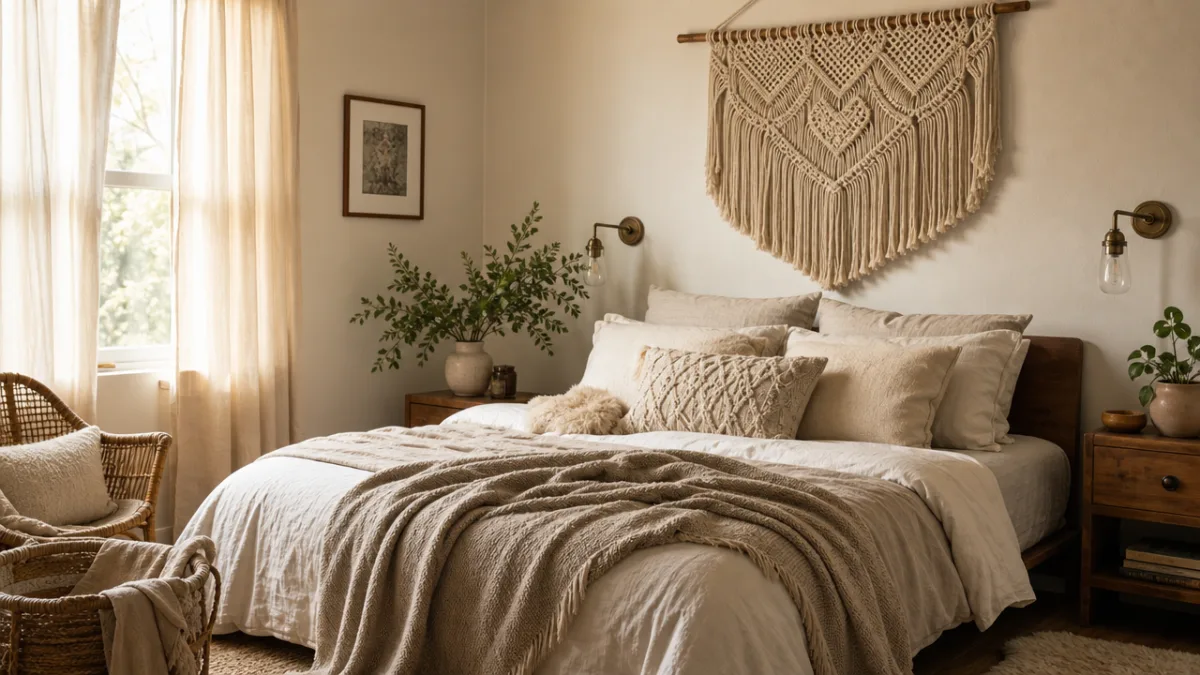
Textiles are one of the most powerful tools in an interior designer’s arsenal, and here’s the thing — handmade textiles often look far more bespoke and luxurious than their mass-produced counterparts. Macramé wall hangings, once firmly associated with a very specific 1970s aesthetic, have evolved into sophisticated, large-scale fiber art pieces that can carry an entire wall. Using thick natural cotton rope and a handful of basic knots, even a complete beginner can produce a wall hanging that would sell for well over a hundred dollars in a boutique home decor store.
No-sew pillow covers are a genuine revelation for anyone who wants to refresh their soft furnishings quickly and cheaply. Using fabric glue or iron-on hem tape, you can create envelope-style pillow covers from virtually any fabric that catches your eye — a remnant from a fabric store, a linen tea towel, or even a piece cut from an old garment with interesting texture. Swap them out seasonally to keep your living room feeling fresh without buying entirely new pillows every few months.
Hand-tufted or punch-needle rugs take more time, but they produce pieces of real artisanal quality that can anchor an entire room. Punch needle kits are widely available and come with everything you need to create a custom rug in whatever size, color, and design you want. A small accent rug made this way carries far more visual interest than anything you’d find at a comparable price point in a home goods store — and the process itself is oddly meditative. Try designing one around colors already present in your space to pull the whole room together.
DIY Lighting Projects That Create Atmosphere
Lighting is the element that separates a well-designed room from a merely decorated one, yet it’s also one of the most commonly skipped opportunities in budget home decor. The simplest and most impactful DIY lighting upgrade you can make is swapping out a dated pendant shade for a new one — or making your own from unexpected materials. A bundle of dried pampas grass or tropical leaves arranged around a basic bulb socket creates a dramatic, organic pendant light that looks effortlessly expensive. Paper lantern pendants, given a coat of spray paint in gold or matte black, can similarly transform a basic fixture into a genuine focal point.
Table lamps are another rich area for DIY creativity. Thrifted lamp bases can be painted, wrapped in natural rope or leather cord, dipped in paint for a color-blocked effect, or hit with a concrete-texture spray for an industrial look. Pair any of these with a new, oversized drum shade in linen or cotton, and the whole lamp looks like it came out of a high-end home goods catalog. The total cost for this kind of transformation usually runs between ten and twenty-five dollars, compared to a hundred dollars or more for a comparable store-bought lamp.
Candle arrangements and DIY candle making are also worth bringing up when we’re talking about atmosphere. Pillar Candles grouped at varying heights on a mirrored tray, tapered candles clustered in mismatched candlesticks from a thrift store all spray-painted to match, or hand-poured soy candles in vintage glassware — all of these create warmth and intimacy that no overhead light can replicate. They’re also among the most gift-friendly projects on this list, which means your DIY skills can extend well beyond your own four walls.
Decorative Accents and Styling Projects
The final layer of any well-decorated room is the accents: the objects, vessels, and small decorative pieces sitting on shelves, mantels, and side tables that tie the whole composition together. This is where DIY really gets to shine, because craft stores, dollar stores, and thrift shops are genuinely overflowing with potential. Concrete vessels, for instance, can be made by pressing a mixture of concrete and water into silicone molds or shaping it around balloons. The finished pieces have a tactile, sculptural quality that feels authentically artisanal.
Dried floral arrangements are having a major moment in interior design right now, and creating your own is both simple and satisfying. Bundles of dried lavender, wheat, eucalyptus, pampas grass, and lunaria look beautiful in terracotta pots, vintage bottles, or handmade vases, and they’ll last for months or even years without any maintenance. The beauty of dried botanicals is that they photograph wonderfully and age gracefully, developing an even more muted, sophisticated color palette over time. Forage what you can from your garden or neighborhood and fill in the gaps with dried bundles from a craft store.
Gallery walls are one of the most enduring and versatile DIY decor projects around, and they reward thoughtful curation over expensive purchases every time. A mix of thrifted frames unified by a single coat of paint, prints downloaded for free from public domain art archives, personal photographs, pressed botanicals, and hand-lettered quotes creates a display that feels deeply personal and visually rich. The key to a gallery wall that looks intentional rather than chaotic is consistent spacing, a shared color palette for the frames, and a mix of orientations and sizes within a clear overall shape — whether that’s a grid, a salon-style arrangement, or a clean horizontal line.

Bringing It All Together: A Cohesive Budget Decor Strategy
The most effective budget home decorators don’t think about their space as a series of isolated projects. Instead, they build a clear vision for the overall look they’re going for — a consistent color palette, a dominant material or two, a general mood — and they let those choices guide every project and purchase decision along the way. Before you dive into any of the projects in this article, spend some time gathering images of interiors you love and looking for the common threads between them. You’ll probably find your taste is more specific than you realized, and that clarity will save you from the costly mistake of making beautiful things that don’t actually work together.
A really useful framework for budget decorating is the layering principle. Start with the largest surfaces — walls, floors, and major furniture — since these form the backdrop for everything else. Then add the mid-layer: textiles like rugs, curtains, and throw pillows that bring texture and warmth into the room. Finally, layer in the small accents — plants, candles, books, and art. When each layer is handled with intention, even a small or awkwardly shaped room can feel curated, comfortable, and genuinely stylish. Most of the projects in this article slot neatly into one of these three layers.
Here’s a quick summary of the key project categories covered in this article to help you plan your approach:
- Statement wall treatments: Limewash painting, board-and-batten, geometric tape art, removable wallpaper panels, and textured plaster effects.
- Thrift store furniture flips: Chalk paint makeovers, cane webbing inserts, new hardware swaps, reupholstered seats, and decoupage tabletops.
- Handmade textiles: Macramé wall hangings, no-sew pillow covers, punch needle rugs, woven wall panels, and tie-dye or block-printed fabric art.
- DIY lighting: Pendant shade replacements, rope-wrapped lamp bases, concrete-effect table lamps, candlestick arrangements, and hand-poured candles.
- Decorative accents: Concrete vessels, dried floral arrangements, gallery walls, air plant terrariums, and hand-painted ceramic objects.
The financial case for DIY home decor speaks for itself, but the deeper reward is the home you end up with — one that actually reflects who you are, what you love, and the time you chose to invest in it. Design trends come and go, but a home filled with handmade, meaningful objects has a timeless quality that no catalog purchase can touch. Pick one project to start this weekend, and you’ll quickly find that the skills, confidence, and momentum you build will carry you through every single room in your home.








What do you think?
It is nice to know your opinion. Leave a comment.