










Funky Modern Loft Apartment Ideas: Bright & Airy Aesthetic Interior Design
The modern loft apartment has come a long way from its industrial warehouse roots — and honestly, what it’s become is pretty spectacular. Today’s funky loft is less about raw square footage and more about self-expression: open-plan living that somehow feels both airy and deeply personal, with vibrant color, eclectic furniture, and just the right amount of organized chaos. Whether you’re actually in a converted factory or just living in a loft-style build, the bright, breezy, a-little-bit-wild design principles work just as well either way.
Embracing Open-Plan Living and Architectural Character
The thing that makes a loft a loft is the bones — soaring ceilings, exposed structural elements, a floor plan that refuses to be boxed in. And the best funky modern interiors don’t fight any of that; they lean into it completely. Exposed brick walls become natural gallery space. Steel beams painted in unexpected accent colors turn into sculptural focal points you actually want people to notice. Polished concrete floors reflect light beautifully and feel warmer underfoot than you’d expect, especially once you’ve layered in some good rugs.
Double-height ceilings are honestly one of the greatest gifts a loft can give you. That extra vertical dimension is something most standard apartments just don’t have, and smart design makes the most of every inch of it. Oversized pendant lights that would feel totally oppressive in a normal room suddenly look exactly right here — whether you’re hanging them in dramatic clusters or letting one big statement piece do all the work. Mezzanine sleeping platforms, floating staircases with open risers, tall bookshelves that practically touch the ceiling — all of these take full advantage of that precious height.
There’s a real honesty to the best loft interiors, and it’s part of what makes them so compelling. Instead of covering everything up with drywall and drop ceilings, these spaces celebrate what’s already there. Painted ductwork becomes a deliberate design choice. Original timber joists add warmth and a sense of history. Even the imperfections — uneven plaster, old bolt holes in steel columns, patched concrete — tell a layered visual story that brand-new construction simply can’t fake. That raw, authentic quality is a huge part of why loft living feels so aspirational in the first place.
Color Psychology and the Bright, Airy Palette
Getting that bright, airy feel in a loft is really about understanding how color and light interact. Most successful bright loft palettes start with white — but not just one white. Think of it as a whole family of warm whites, cool whites, and off-whites that shift depending on which direction the light is coming from and what time of day it is. These foundation tones bounce available light around the room, making the whole space feel more open and preventing all that square footage from feeling cold or clinical.
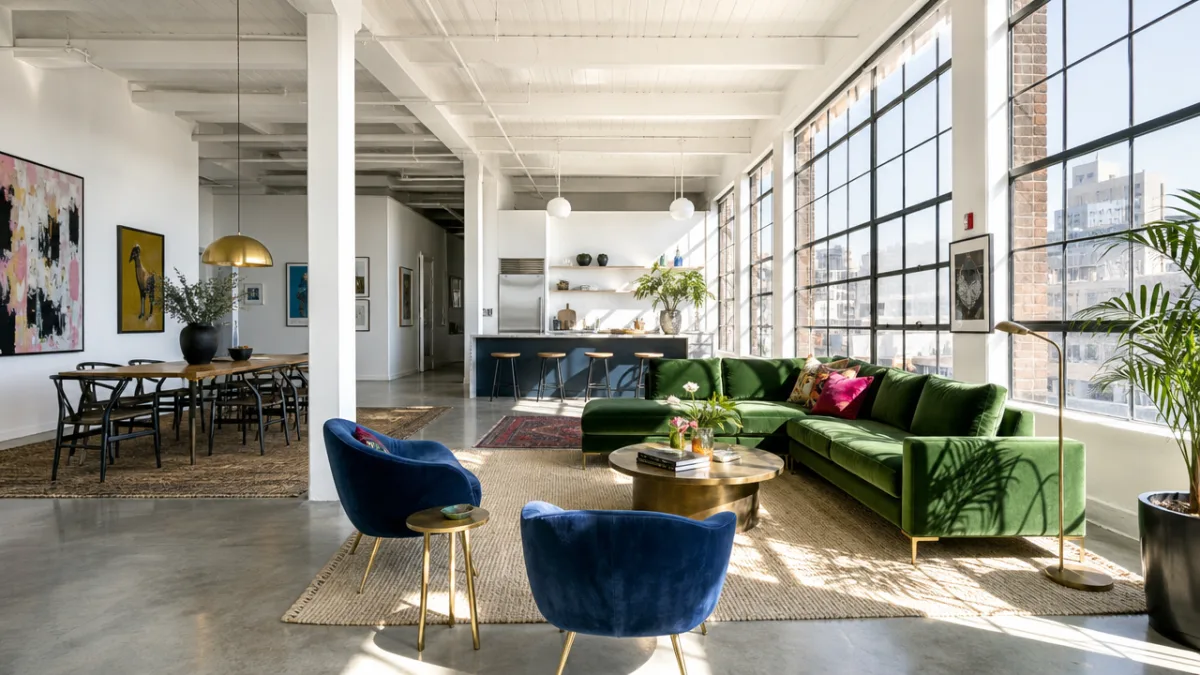
But “bright and airy” definitely doesn’t mean boring. The funky side of this aesthetic is all about knowing where and how to bring in color for maximum effect. A deep-teal kitchen island in an otherwise white open-plan kitchen creates a focal point so confident it anchors the whole space. A terracotta-painted archway framing a sleeping nook brings in warmth and depth without overwhelming the rest of the room. Jewel tones — emerald, cobalt, mustard, burnt orange — used on individual furniture pieces, an accent wall, or one big piece of art inject real personality while the expansive white surroundings keep everything from tipping into visual overload.
Color blocking is a great technique for lofts specifically, because those large uninterrupted wall surfaces are practically begging for bold decisions. Painting the lower half of a concrete column in a contrasting color, or giving the kitchen zone its own distinct wall color separate from the living area, helps carve out functional spaces within the open plan without needing physical dividers. Gradient effects — where color deepens at the base of a wall and fades toward the ceiling — are a subtle way to reinforce that wonderful sense of vertical airiness that makes loft living feel so freeing.
Furniture Selection: Eclectic, Intentional, and Unapologetically Bold
Furnishing a funky loft means being willing to mix eras, styles, and materials in ways that feel curated rather than chaotic. The scale of the space demands furniture that can actually hold its own — pieces that are genuinely oversized, visually substantial, or grouped into deliberate clusters that create cozy zones within the bigger volume. A single armchair that would dominate a small studio looks lost and lonely in a loft. What works here is a generous sectional, a dining table that seats ten, a media console with some real presence. Proportions matter a lot.
The eclectic mixing is where the “funky” really comes alive. A sleek mid-century modern sofa in warm walnut paired with a baroque-inspired gilded mirror creates a productive tension that keeps the eye curious and moving. A brutalist concrete coffee table sitting in front of a dusty rose velvet daybed is that irresistible push-pull between hard and soft, industrial and romantic. The trick to making these combinations feel intentional is repetition — a color, a material, or a silhouette that shows up throughout the space and quietly ties all those different pieces into one coherent conversation.
Multifunctional furniture earns its keep in a loft, where the open plan means everything exists in full view of everything else all the time. A few pieces worth considering:
- Extendable dining tables that handle both a quiet dinner for two and a full dinner party without cluttering the visual field when they’re compact
- Storage ottomans in statement fabrics that work simultaneously as coffee tables, extra seating, and hidden organization
- Platform beds with integrated drawers that take care of bedroom storage in sleeping nooks without adding extra furniture
- Kitchen islands on casters that you can move around to open up floor space when you need it
- Modular shelving systems that can be reconfigured as your collection of books, plants, and objects grows and shifts over time
Vintage and secondhand pieces are honestly essential for achieving that authentic funky loft character. A perfectly patinated Chesterfield sofa, a set of mismatched dining chairs unified by a single spray-painted color treatment, a vintage industrial factory cart turned coffee table — these pieces carry history and craftsmanship that mass-produced furniture just can’t replicate. They also tend to be built at a scale and quality that suits the robustness of loft architecture far better than anything you’d bring home in flat-pack boxes.
Lighting Design: Layering Light for Drama and Warmth
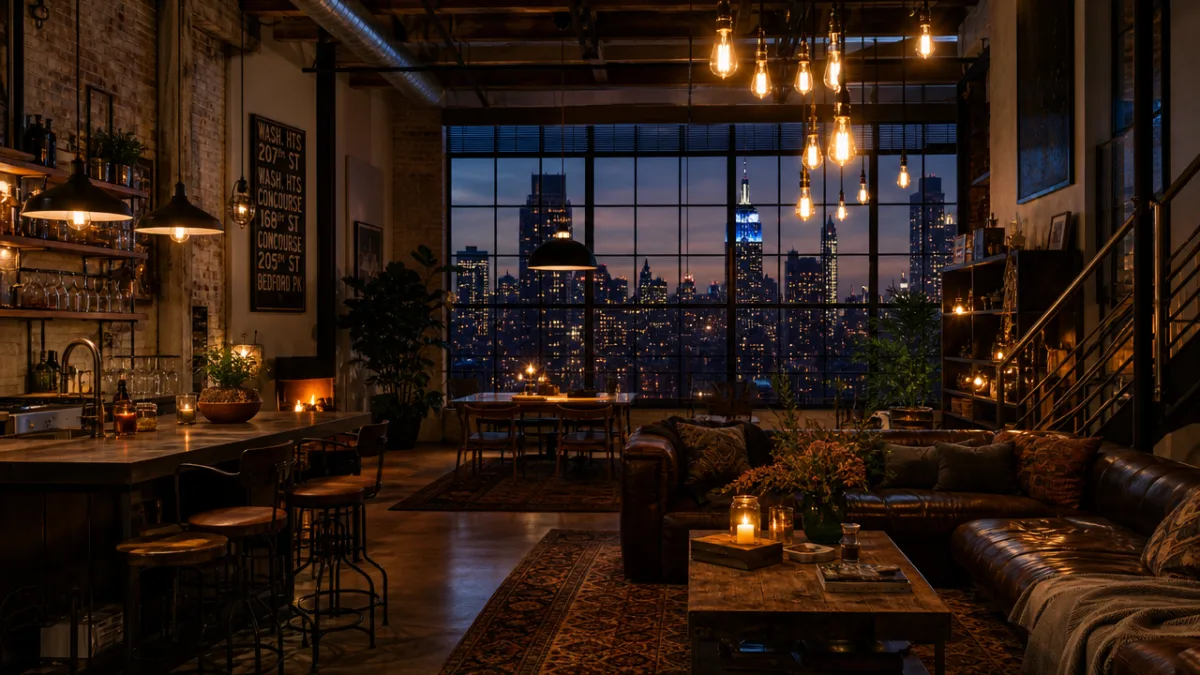
Good lighting in a bright, airy loft has to do two seemingly opposite things at once: keep the space feeling luminous and open during the day, then shift into something intimate, warm, and dramatically layered once the sun goes down. That’s a lot to ask of one overhead fixture — and that’s exactly why one overhead fixture will always fall short. The best loft lighting works in multiple independent layers you can dial up or down depending on the mood, the time of day, or what you’re doing in the space.
Natural light comes first, and it’s the most important layer. Loft apartments often have incredible windows — steel-framed industrial glazing, original factory skylights, floor-to-ceiling glass installed during conversion — that pour directional light into the interior. The way you treat those windows really matters. Sheer linen or cotton panels that filter and diffuse light while maintaining privacy are almost always a better choice than heavy drapes or blackout treatments, which completely undercut the airy quality you’re going for. Positioning mirrors opposite windows — a large vintage mirror propped against a wall, a loose cluster of decorative mirrors arranged in a gallery — bounces light deeper into the floor plan and makes the space feel visually twice as large.
For artificial lighting, a well-designed loft needs at least these four distinct layers working together:
- Ambient lighting — large pendant clusters, track lighting on exposed ceiling beams, or uplighters that fill the full volume of the space and show off the drama of those high ceilings
- Task lighting — adjustable desk lamps, under-cabinet kitchen lighting, and reading lights placed exactly where you actually need them
- Accent lighting — directional spots aimed at artwork or architectural features, LED strips tucked behind open kitchen shelving, candles or Edison bulb strings for textural warmth
- Decorative lighting — statement fixtures that function as sculpture even when they’re switched off, like oversized rattan pendants, vintage Sputnik chandeliers, or a neon sign in custom lettering
Bulb color temperature is one of those decisions that’s easy to overlook but makes a real difference. Warmer temperatures in the 2700–3000K range create that golden, inviting glow that makes open-plan spaces feel cozy and lived-in rather than vast and impersonal — especially in the evening. Cooler temperatures work better in kitchen and studio zones where you need accurate color rendering and mental alertness. And dimmable circuits throughout the loft give you full control over the atmosphere whenever you need it.
Textiles, Texture, and the Art of Softening Industrial Spaces
One of the most common mistakes people make with loft design is treating all that exposed concrete, bare metal, and unfinished brick as the finished look — when really it’s more of a starting point. Those industrial elements are visually incredible, but they’re also acoustically harsh and physically cold in ways that make prolonged living in them surprisingly uncomfortable. Layering in textiles and texture is what takes a loft from impressive architectural statement to a home you actually want to be in — somewhere that wraps you in warmth while still honoring all those structural details you love.
Rugs are probably the single most transformative tool you have for breaking up an open-plan loft floor and creating distinct, human-scaled zones within the larger space. An oversized vintage Persian rug in warm reds and golds under a seating arrangement creates a living room island that feels genuinely grounded and contained without any walls involved. A chunky natural wool rug in oatmeal tones beneath a dining table softens the acoustics of all that hard flooring and adds visual warmth. Layering rugs — placing a smaller cowhide or shag on top of a larger flatweave — is a particularly funky styling move that adds depth, pattern, and personality to the floor without any renovation required.
Window treatments, throw pillows, blankets, and upholstered furniture all contribute to the acoustic softening that separates genuinely comfortable loft living from something that sounds like a squash court. Linen, cotton velvet, bouclé, woven wool — these materials photograph beautifully and feel genuinely luxurious to live with. Mixing textures across throw pillows — a velvet cushion beside a linen bolster beside a printed cotton square — creates that layered, collected-over-time look that sets a thoughtfully styled home apart from a showroom. Plants bring another dimension of softness and organic movement into the mix, and large-format tropicals like monsteras, fiddle-leaf figs, and bird of paradise have exactly the scale you need to hold their own in a loft interior — plus they make everything feel just a little more alive.
Personalizing Your Loft: Art, Collections, and Expressive Details
All the design decisions in the world only get you so far. What actually turns a beautiful loft into someone’s home is the personal layer — the art, the collections, the details that communicate taste and history and humor and obsession. This is where “funky” finds its fullest expression, not in any single choice but in the accumulation of personal ones. A loft without this layer, however impeccably designed, ends up feeling more like a hotel suite than somewhere a real person lives.
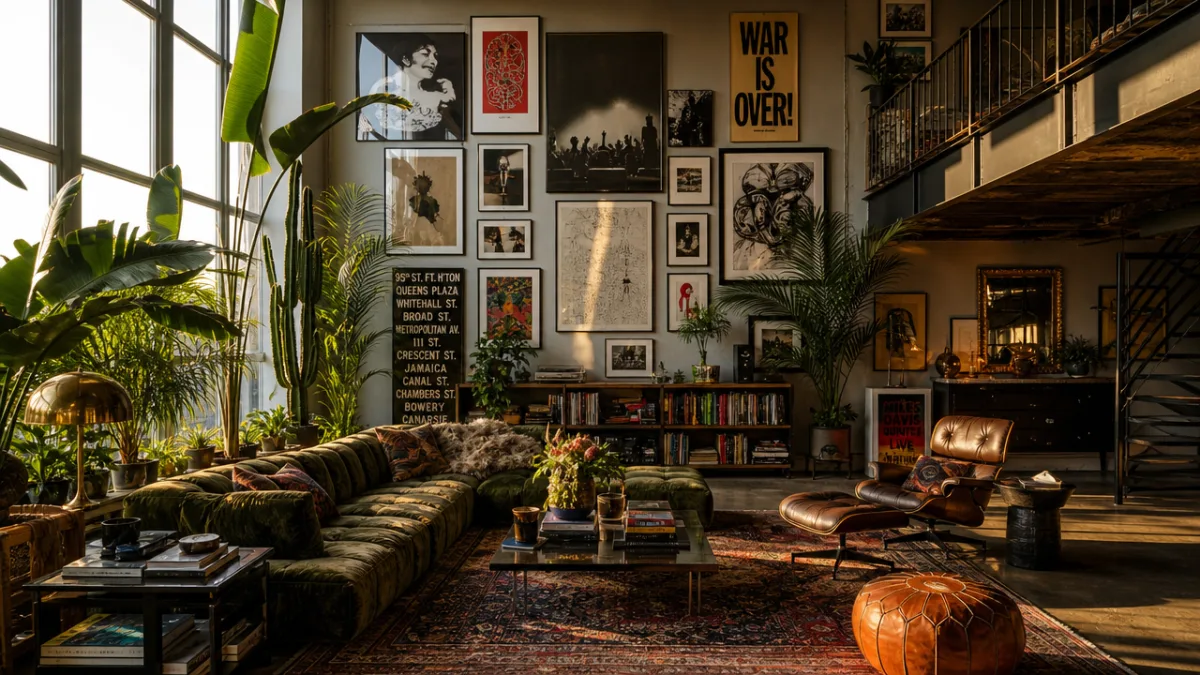
Gallery walls in a loft have an advantage that’s hard to overstate: the walls are simply massive, and they deserve to be treated that way. Rather than defaulting to the small-frame grid that works in conventional rooms, loft gallery walls often hit their stride when they include genuinely large-format pieces — prints, canvases, or framed textiles at 60 inches or more — mixed with medium and smaller works in a loose, asymmetrical arrangement that feels naturally accumulated rather than rigidly planned. The mix of media matters as much as the mix of sizes: oil paintings alongside photography alongside graphic prints alongside three-dimensional wall-hung objects creates a collection that looks like it was gathered over years, not ordered from one website in an afternoon.
Open collections — books organized by color on floor-to-ceiling shelves, vintage ceramics grouped on open kitchen shelving, vinyl records in custom-built display units — communicate personality in a way that closed storage simply never can. The key to displaying collections without creating visual chaos is what you might call considered density: grouping items of related scale and tone into deliberate clusters, leaving generous breathing room between those clusters, and making sure each grouping has a clear visual logic even if that logic is purely personal. Objects from travels, inherited pieces with family history, things that represent genuine obsessions — these are the details that turn a well-designed loft into the truest kind of home.
At its best, the funky modern loft aesthetic is a genuinely optimistic way to live. It believes spaces should be generous — with light, with scale, with color, with personality. It trusts that good design and real self-expression are the same project, not competing ones. And it insists that a home should be readable as the home of a specific, interesting person — not a catalog spread, not a mood board, but a living environment that gets richer and more layered with every year you actually live in it.








What do you think?
It is nice to know your opinion. Leave a comment.