










Passionflower Growing Guide: From Planting to Bloom
Introduction to Passionflower
Passionflower, known botanically as Passiflora, is one of the most visually striking and exotic-looking plants you can grow in a home garden or along a fence line. With its intricate, otherworldly blooms featuring layered petals, vivid corona filaments, and prominent stamens, the passionflower seems almost too elaborate to be real. Yet despite its dramatic appearance, this vigorous vine is surprisingly accessible to gardeners of all skill levels, thriving in a wide range of climates and conditions across the world.
The genus Passiflora encompasses over 550 species, native primarily to the tropical and subtropical regions of the Americas. While many species are tropical and frost-sensitive, several are cold-hardy enough to survive in temperate gardens as far north as USDA Zone 5 or 6. The most commonly cultivated species include Passiflora incarnata, the native North American maypop, and Passiflora caerulea, the blue passionflower widely grown in European gardens. Each brings its own character and appeal, from flower color to fruit production and wildlife value.
Beyond pure aesthetics, passionflower has a rich history of medicinal and cultural use. Indigenous peoples of the Americas used Passiflora incarnata as a sedative and anxiolytic herb, and it remains a popular herbal supplement today. Spanish missionaries in the 16th century famously used the flower’s anatomy as a teaching tool for Christian symbolism, naming it after the Passion of Christ. Growing passionflower in your garden is therefore not just a horticultural pursuit but an engagement with centuries of human history, folklore, and botanical wonder.
Choosing the Right Variety for Your Garden
Selecting the appropriate passionflower species or cultivar for your specific climate and garden goals is the single most important decision you will make before planting. For gardeners in the southeastern United States and similar temperate climates, Passiflora incarnata is the gold standard — it’s cold-hardy down to Zone 5, dies back to the roots in winter and re-emerges reliably each spring, and produces pale lavender flowers followed by edible, egg-shaped fruit called maypops. It also serves as a host plant for several native butterfly species, including the gulf fritillary and the zebra longwing.
For those in milder climates or growing passionflower as a container plant that can be brought indoors, Passiflora caerulea is a popular choice, producing striking blue-and-white flowers almost continuously from late spring through early fall. It is hardy to around Zone 7 and can withstand light frost. Cultivars such as ‘Constance Elliott’ offer pure white flowers with a subtle fragrance, making them especially appealing for cottage or moon garden styles. In truly tropical environments, species like Passiflora edulis — the fruit-producing passion fruit vine — or Passiflora quadrangularis reward growers with large, richly scented blooms and edible harvests.
When choosing a variety, consider not just cold-hardiness but also the available space in your garden. Passionflowers are vigorous, fast-growing vines that can easily reach 15 to 30 feet in length within a single growing season, depending on the species and climate. A small courtyard trellis may be overwhelmed by a rampant Passiflora incarnata, while a garden fence or pergola would suit it perfectly. Dwarf and compact cultivars are increasingly available for those with limited space, and many species perform beautifully in large containers where their root spread can be managed.
- Passiflora incarnata — Hardy to Zone 5, lavender flowers, edible maypop fruit, native wildlife value
- Passiflora caerulea — Hardy to Zone 7, blue and white flowers, vigorous climber for temperate gardens
- Passiflora edulis — Tropical, produces passion fruit, large aromatic flowers, best in Zones 9–12
- Passiflora racemosa — Striking red flowers, excellent for conservatories and warm greenhouses
- Passiflora ‘Incense’ — Hybrid with intensely fragrant, deep violet flowers, hardy to Zone 6
Soil, Sun, and Site Preparation
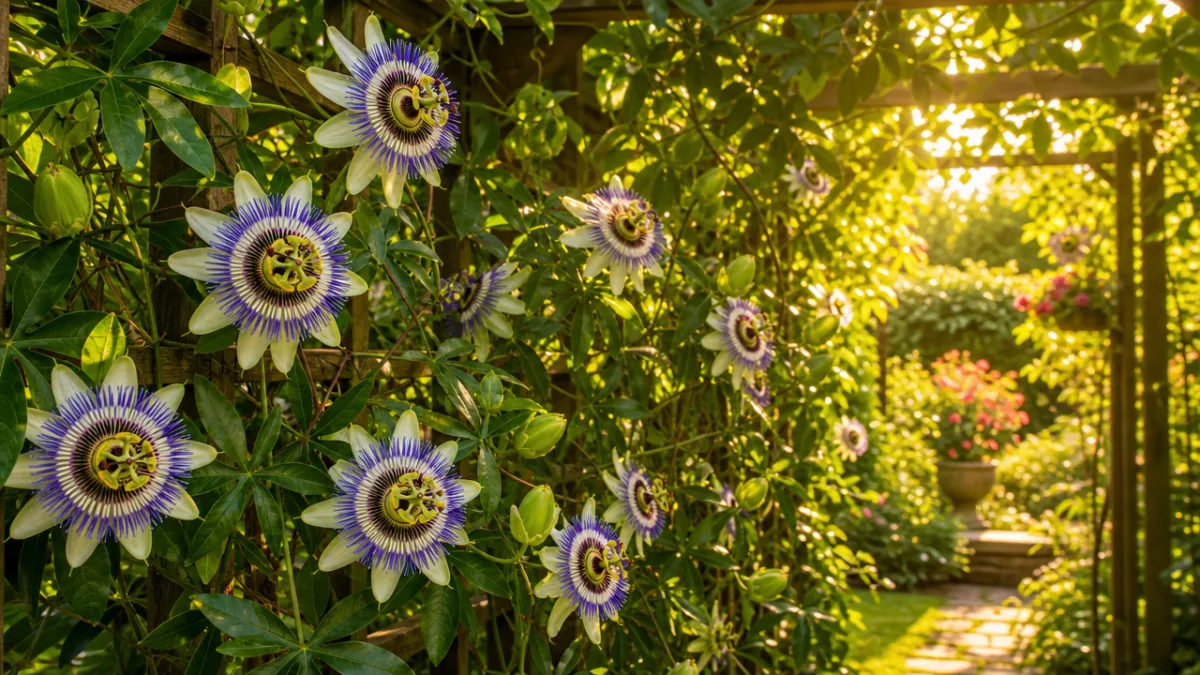
Passionflowers are adaptable but perform best when given a site that matches their natural preferences. They demand full sun to partial shade, with a minimum of six hours of direct sunlight per day for reliable, abundant blooming. Plants grown in too much shade will produce lush foliage but disappointingly few flowers. If you are growing passionflower against a wall or fence, a south- or west-facing aspect is ideal in the Northern Hemisphere, capturing the maximum available warmth and light throughout the day and providing the sheltered microclimate that slightly tender species need to thrive.
In terms of soil, passionflowers prefer a well-draining, moderately fertile medium. They are notably tolerant of poor soils and will perform well in sandy or loamy ground that would challenge many other ornamental plants. What they cannot tolerate is waterlogged soil — standing water around the roots, particularly in winter, is one of the most common causes of passionflower failure. If your garden has heavy clay soil, amend it generously with horticultural grit, perlite, or coarse sand before planting, and consider raising the planting area slightly to improve drainage. A soil pH of 6.0 to 7.5 is ideal, and most passionflowers are not particularly sensitive to pH extremes.
Site preparation should begin several weeks before planting. Dig the planting area to a depth of at least 12 inches, breaking up any compacted subsoil and incorporating organic matter such as well-rotted compost or aged manure to improve soil structure and fertility. Remove weeds thoroughly, as passionflowers may struggle to compete with aggressive weeds in their first season while they establish. Install any permanent support structures — trellises, wire systems, or post-and-rail fencing — before planting, since it is difficult and potentially damaging to the vine to retrofit supports after it has begun to grow and climb.
Planting Your Passionflower
Passionflower can be established in the garden either from seeds, rooted cuttings, or nursery-grown container plants, each method having its own advantages and timelines. Planting from seed is economical and rewarding but slow — seeds can take anywhere from 10 days to 3 months to germinate, and seedlings typically will not flower in their first year. To improve germination rates, soak seeds in warm water for 24 to 48 hours before sowing, and provide bottom heat of around 70 to 80°F using a heat mat. Sow seeds in a quality seed-starting mix and maintain consistent moisture until germination occurs.
For faster establishment, planting from stem cuttings taken in late spring or early summer is highly effective. Select healthy, non-flowering shoot tips approximately 4 to 6 inches long, remove the lower leaves, and dip the cut end in rooting hormone powder before inserting into a moistened mix of perlite and compost. Cover with a clear plastic bag or humidity dome to maintain moisture, and place in bright indirect light. Roots typically develop within 4 to 6 weeks, at which point the young plant can be gradually acclimated to outdoor conditions and planted out. This method preserves the exact characteristics of the parent plant, which is particularly important when propagating named cultivars.
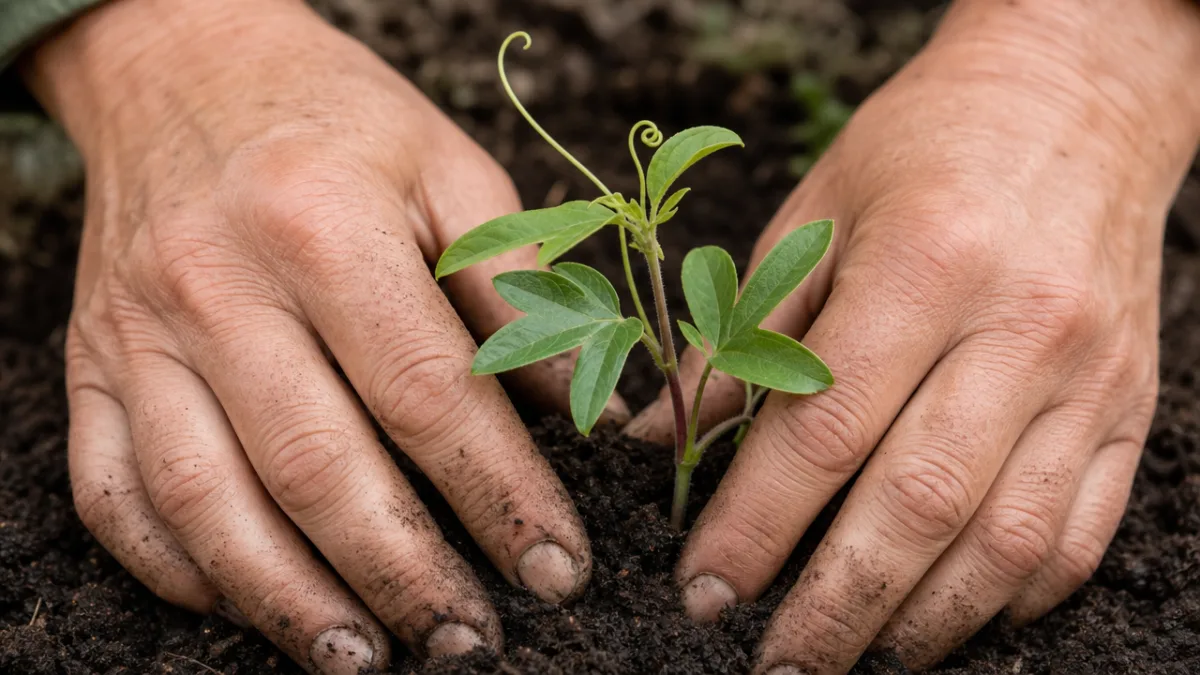
Whether planting seeds, cuttings, or nursery stock, timing is critical. In temperate climates, plant passionflowers outdoors only after all risk of frost has passed — typically late spring. Dig a planting hole twice as wide and equal in depth to the root ball of the young plant. Position the plant at the same depth as it was growing in its container, backfill with soil, and firm gently. Water thoroughly after planting and apply a 2- to 3-inch layer of organic mulch around the base of the plant, keeping the mulch a few inches away from the stem to prevent rot. Newly planted passionflowers may appear dormant for several weeks while they focus energy on root development before beginning to put on visible top growth.
- Prepare the planting site by digging to 12 inches and amending with compost and drainage material.
- Install support structures such as trellises or wires before planting.
- Soak seeds in warm water 24–48 hours before sowing, or prepare cuttings from healthy shoot tips.
- Plant after the last frost date, positioning the plant at its original depth.
- Water deeply after planting and apply organic mulch around the base.
- Begin training young shoots onto supports as they emerge to encourage upward growth.
Watering, Feeding, and Ongoing Care
Once established — typically after the first full growing season — passionflowers are remarkably drought-tolerant and require relatively little supplemental watering in regions that receive regular rainfall. During their first year, however, consistent moisture is essential to support root development and help the plant get established. Water young plants deeply once or twice a week during dry periods, allowing the soil to partially dry out between waterings. Avoid overhead irrigation if possible, as wet foliage can encourage fungal diseases; instead, water at the base of the plant using a soaker hose or drip system.
Fertilization should be approached with a light hand. Passionflowers growing in average garden soil generally do not need heavy feeding, and over-fertilizing with nitrogen-rich products will produce abundant leafy growth at the expense of flowers. A balanced, slow-release granular fertilizer applied in early spring as new growth emerges is usually sufficient for most garden situations. If you wish to encourage particularly strong flowering, switch to a low-nitrogen, high-phosphorus fertilizer such as a tomato fertilizer once per month during the growing season. Container-grown passionflowers, which have limited soil volume and are watered frequently, will benefit from more regular feeding with a diluted liquid fertilizer throughout the summer months.
Pruning is one of the most important — and most often neglected — aspects of passionflower care. Left unpruned, these vigorous vines can become a tangled, impenetrable mass that reduces air circulation, harbors pests and diseases, and produces fewer flowers. In late winter or early spring, before new growth begins, cut back all the previous season’s growth by approximately one-third to one-half, removing dead, damaged, or overcrowded stems entirely. This hard pruning stimulates the production of fresh, flowering growth from the base and lower portions of the plant. Throughout the growing season, pinch back the tips of excessively long shoots to encourage bushier, branching growth and more flower production along lateral stems.
Pest, Disease, and Winter Management
Passionflowers are generally robust and relatively resistant to serious pest and disease problems, but they are not entirely immune. The most common insect pests include spider mites, which thrive in hot and dry conditions and cause stippled, yellowing foliage; aphids, which cluster on tender new growth and can transmit viral diseases; and caterpillars of the gulf fritillary butterfly, which can defoliate a plant rapidly. While butterfly caterpillars may cause cosmetic damage, many gardeners choose to tolerate them given the ecological value of supporting native butterfly populations. For spider mites and aphids, a strong jet of water or an application of insecticidal soap provides effective control without harming beneficial insects.
Fungal diseases, particularly Fusarium wilt and various root rots, represent the most serious disease threats to passionflowers, and both are directly linked to overwatering or poor soil drainage. Affected plants will show wilting, yellowing leaves, and dieback of stems, and in severe cases the entire plant may collapse. Prevention through well-draining soil and careful watering practices is far more effective than any chemical treatment after the fact. Powdery mildew can also appear on foliage during periods of high humidity and poor air circulation, presenting as a white powdery coating on leaves. Improving airflow through timely pruning and, if necessary, applying a potassium bicarbonate spray provides adequate control in most cases.
Winter management depends heavily on the species grown and the local climate. Hardy species such as Passiflora incarnata can simply be cut back to the ground in autumn and mulched heavily with straw, shredded leaves, or wood chips to protect the roots from deep freezing. The plant will die back completely but regrow vigorously from the root system in spring. For marginally hardy species growing in borderline climates, additional protection such as horticultural fleece wrapped around the crown of the plant, or a collar of insulating material placed around the base, can make the difference between survival and winter loss. Container-grown tropical passionflowers should be brought indoors before the first frost, placed in a cool but frost-free location with bright light, and watered sparingly until they resume active growth in spring.
Encouraging Blooms and Enjoying the Harvest
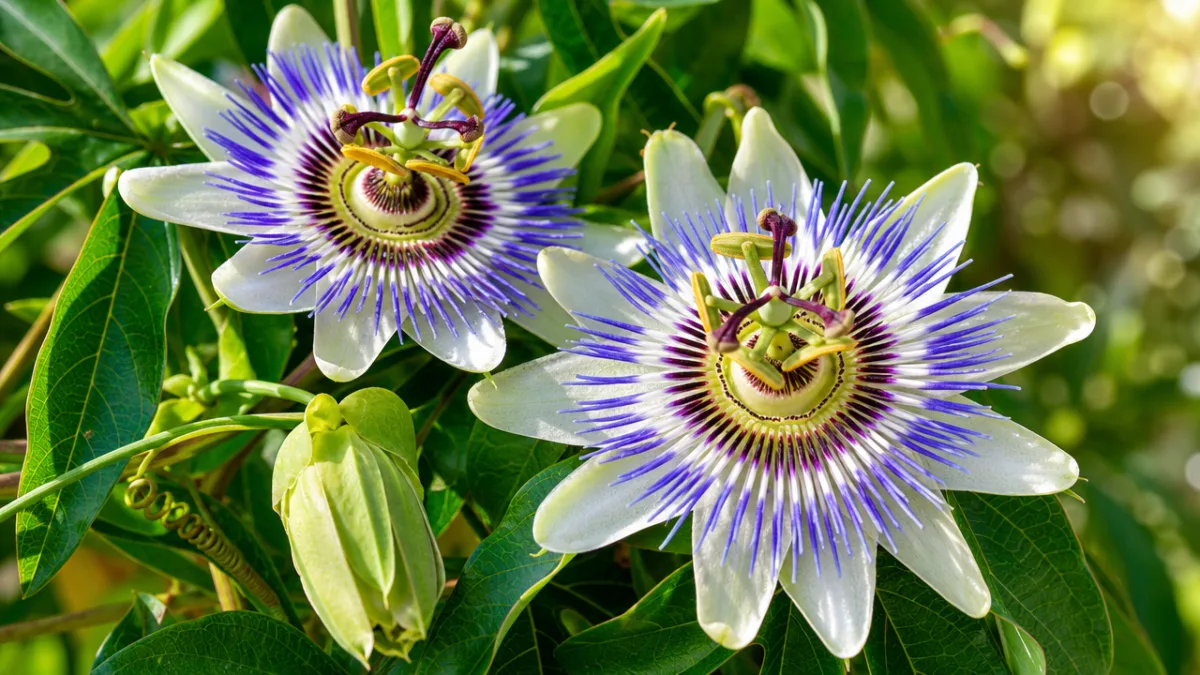
The ultimate reward of growing passionflower is, of course, the extraordinary blooms — and with the right approach, you can extend and maximize their display season significantly. Passionflowers typically begin blooming in early to midsummer and continue producing flowers until the first frosts of autumn, with individual blooms lasting only a single day but being constantly replaced by new buds. To encourage the longest and most prolific flowering period, ensure the plant receives maximum sunlight, avoid excessive nitrogen fertilization, and keep the vine well-pruned and trained so that light and air can penetrate throughout the canopy. Deadheading, while not strictly necessary since the spent flowers fall naturally, can marginally encourage more rapid bud production.
Many passionflower species produce edible fruit following successful pollination of the flowers, and this secondary harvest is a delightful bonus for the home gardener. Passiflora incarnata produces oval green fruits known as maypops that ripen to yellow in late summer, with a sweet-tart, gelatinous interior full of seeds — similar in flavor to commercial passion fruit. They can be eaten fresh, added to fruit salads, or used to make juice, jam, and baked goods. Passiflora edulis and its hybrid forms produce the familiar wrinkled purple or yellow passion fruit sold commercially, and these will ripen on the vine in warm climates from summer into early autumn. Allow fruits to ripen fully on the vine for the best flavor; a slight wrinkling of the skin indicates peak ripeness.
Beyond fruit and flowers, passionflower vines deliver exceptional ecological value in the garden, attracting a wide array of pollinators including bumblebees, carpenter bees, and hummingbirds, all drawn by the generous supply of nectar and pollen. The intricate structure of the passionflower bloom has co-evolved with specific pollinators, and watching these visitors work the flowers is one of the great pleasures of growing this remarkable plant. As a habitat plant, passionflower also supports butterfly breeding, provides dense vegetative cover for small birds, and contributes to the overall biodiversity of the garden. Whether you grow it for its flowers, its fruit, its wildlife value, or its sheer visual drama, the passionflower will reward every effort you invest with a generosity and exuberance matched by few other plants in the gardening world.








What do you think?
It is nice to know your opinion. Leave a comment.