










Upcycled Gift Wrap Ideas: Beautiful, Sustainable, and Surprisingly Creative
Gift-giving is one of life’s great pleasures, but the mountains of wrapping paper, plastic ribbons, and single-use decorations that end up in landfills after every holiday season tell a less cheerful story. In the United States alone, an estimated 4.6 million pounds of wrapping paper are thrown away each year between Thanksgiving and New Year’s Day. The good news is that some of the most beautiful, thoughtful gift presentations you can create cost almost nothing and come entirely from materials you already have at home.
Upcycled gift wrapping is more than a trend — it is a return to the kind of resourceful creativity that people practiced for generations before mass-produced holiday supplies became the norm. When you wrap a gift in yesterday’s newspaper, a beloved old map, or a length of fabric saved from a worn-out shirt, you are telling a story. You are saying that care went into every single layer of the gift, not just the object inside. That intention comes through, and recipients almost always notice.
This article will walk you through a wide range of upcycled gift wrap ideas organized by material type, technique, and occasion. Whether you are wrapping a birthday present for a child, a wedding gift, a holiday hamper, or a small token of appreciation for a colleague, there is an upcycled solution here that will look stunning and feel genuinely meaningful. Get ready to look at the paper, fabric, and odds and ends around your home with completely new eyes.
Paper-Based Upcycling: Turning the Everyday into the Extraordinary
Paper is the most obvious starting point for upcycled gift wrapping, and the variety of paper items that pass through an average household is remarkable. Newspapers, magazines, book pages, sheet music, brown paper grocery bags, paper grocery receipts, old calendars, and even coffee-stained notebook pages can all become beautiful wrapping material with a little imagination. The key is to think about visual texture and to choose paper that has some personal resonance with either the giver or the recipient.
Old newspapers are a classic choice, but the results look far more intentional when you choose your pages carefully. A sports section for a sports fan, a crossword page for a puzzle lover, or a travel supplement for someone about to embark on an adventure all make the wrapping feel like a small additional gift in itself. Wrapping the parcel neatly with crisp folds, then tying it with kitchen twine or a strip of brown paper bag, gives the whole package a pleasingly rustic and considered aesthetic that is hard to achieve with shiny commercial paper.
Magazine pages offer even more visual richness. Choose pages with bold color palettes that complement the occasion, or look for typography-heavy spreads that create an interesting graphic effect. Collaging several pages together before wrapping — overlapping them slightly and securing with a glue stick — creates a patchwork paper that is entirely unique. Old illustrated books, particularly vintage cookbooks, botanical guides, or children’s encyclopedias found at thrift stores or estate sales, provide pages with genuine nostalgic charm. Just make sure the books being repurposed are ones that have genuinely reached the end of their readable life.
Brown paper bags deserve a special mention because they are so versatile and so readily available. Cut open along the seams to reveal a large flat sheet, the inside of a brown grocery bag is a wonderful blank canvas. You can leave it plain for a minimalist look, stamp it with vegetable prints or hand-cut potato stamps, paint it with watercolors, or write directly on it with a marker in lieu of a gift tag. The slightly rough texture of kraft paper holds ink and paint beautifully and gives finished packages a warm, artisanal quality that delights recipients of all ages.

Fabric Wrapping: The Furoshiki Tradition and Beyond
Fabric wrapping is one of the most elegant and genuinely reusable approaches to gift presentation, and it has deep roots in Japanese culture through the art of furoshiki — the practice of wrapping objects in cloth using a series of folding and knotting techniques. Traditional furoshiki cloths are square pieces of fabric, often printed with beautiful patterns, used to carry and present everything from bento boxes to formal gifts. The techniques involved are surprisingly simple to learn and produce results that look almost impossibly refined.
You do not need to purchase special furoshiki fabric to practice this method. Squares cut from old cotton bedsheets, pillowcases, lightweight scarves, bandanas, tea towels, or even the bodice panels of unworn dresses all work perfectly well. The basic double-furoshiki wrap requires only a square of fabric slightly larger than the gift’s diagonal measurement. Place the gift in the center, bring two opposite corners together over the top and tie them in a simple knot, then bring the remaining two corners up and tie them over the first knot to create a neat handle. The whole operation takes about ninety seconds and looks like it came from a boutique.
For irregular-shaped gifts, fabric wrapping is actually easier than paper wrapping, not harder. A bottle of wine can be rolled into a length of fabric and tied at both ends like an oversized candy wrapper. An awkwardly shaped toy can be bundled into a square of fabric and secured with a ribbon tied in a large bow. Books, which are notoriously tricky to wrap neatly in paper, slide into a simple fabric envelope — a rectangle of fabric folded in thirds and stitched at the sides — with no fuss at all. The fabric becomes part of the gift, and savvy recipients will unfold it and use it as a tote bag, a kitchen cloth, or a craft supply.
Old scarves deserve particular attention as wrapping material because they bring an immediate sense of luxury and thoughtfulness to any package. A silk scarf wrapped around a jewelry box and secured with a vintage brooch pulled from a forgotten corner of a jewelry drawer creates a presentation that is genuinely breathtaking. Even simple cotton scarves or bandanas, folded and tied with care, elevate the simplest gift into something that feels curated and special. This kind of wrapping communicates that you spent time and thought on presentation, which is ultimately what all gift wrapping is supposed to do.
Natural Elements: Botanicals, Twigs, and Foraged Decorations
Once you have your base wrapping sorted — whether paper or fabric — the decoration is where upcycled wrapping truly comes alive. Natural foraged and garden elements are among the most beautiful embellishments available, and they cost absolutely nothing beyond a short walk outside. Sprigs of rosemary, eucalyptus, dried lavender, small pine cones, cinnamon sticks, dried orange slices, seed heads, feathers, and even interesting stones can all be tucked under twine or ribbon to create arrangements that look like they came from a high-end gift shop.
Dried citrus slices are particularly popular and wonderfully aromatic. Slice oranges, lemons, or blood oranges thinly, lay them on a baking rack, and dry them in an oven set to its lowest temperature for several hours until they are translucent and papery. String them on kitchen twine or simply tuck a single slice under a bow for a decoration that smells as good as it looks. Cinnamon sticks bundled together and tied with thread, or a small pouch of dried herbs, bring a similar sensory dimension to gift wrapping that no amount of commercial ribbon can replicate.
For winter holidays, evergreen clippings — cedar, pine, fir, holly — tuck beautifully under twine or ribbon and keep their fragrance and color for several days. In spring and summer, fresh flower heads from the garden can be laid across the top of a package and secured lightly with a rubber band hidden under decorative string. Dried pressed flowers, made by pressing blooms between the pages of a heavy book for two to three weeks, can be glued directly to plain kraft paper to create an effect that looks like fine stationery. Even a few autumn leaves — pressed flat and allowed to dry — bring rich color and texture to a fall gift with zero cost and minimal effort.
Reusing ribbon and string is another dimension of natural and minimal decoration worth embracing fully. Save every length of ribbon, every twist tie, every piece of raffia from incoming gifts throughout the year and keep them in a jar or basket. Layering several thin ribbons of different colors together, or combining rough twine with a single silky ribbon, creates visual interest that a single roll of uniform ribbon can rarely achieve. The slightly irregular, collected quality of reused ribbon is actually part of its appeal — it signals a kind of generous attentiveness that commercial decorations simply cannot fake.

Creative Containers: Boxes, Jars, Tins, and Bags Reborn
Sometimes the most creative approach to upcycled gift presentation is to reconsider the container itself rather than focusing purely on the outer wrapping. Tins, glass jars, wooden crates, baskets, hatboxes, and even sturdy shipping boxes can all become beautiful and reusable gift containers with minimal transformation. A mason jar filled with homemade cookies and decorated with a fabric lid and a handwritten label is both gift and container in one. A vintage tin discovered at a thrift store for under a dollar becomes a keepsake box when filled with chocolates or small trinkets.
Shoeboxes are endlessly useful as gift containers and deserve far more credit than they typically receive. A sturdy shoebox with a well-fitting lid can be transformed into something gift-worthy in a dozen ways. Cover it with pages torn from an old atlas for a travel-themed gift. Wrap it in layers of tissue paper saved from incoming deliveries, sealed with a sticker made from a colorful magazine cutout. Paint it with leftover house paint in a bold color, let it dry, and stamp a simple pattern on it with a carved eraser. Line the inside with a square of fabric from an old shirt, and the whole box feels like something from a specialty store.
Kraft paper grocery bags with handles are another brilliant container option, particularly for gifts that are awkward to wrap as parcels. Fold down the top of the bag a few inches, punch holes with a hole punch or a skewer, and thread ribbon or twine through the holes to create a handle that replaces the original one with something more decorative. Stamp, paint, or decoupage the outside. Stuff the interior with crinkle-cut newspaper strips instead of bought tissue paper and nestle the gift inside. The result is a fully functional, attractive gift bag assembled entirely from materials destined for recycling.
Fabric bags and pouches are perhaps the most permanently useful of all gift containers, because the recipient can use them long after the gift itself is opened. Simple drawstring bags sewn from cotton fabric scraps require only a straight stitch on a sewing machine and can be made in under fifteen minutes. Larger tote bags sewn from old denim or canvas are sturdier still. Even without sewing, fabric can be folded into envelope-style bags and secured with a few stitches of hand-sewing or even iron-on hem tape. Label the outside with fabric marker or an embroidered tag, and you have a gift container that will last years and be used regularly.
Making It Personal: Tags, Labels, and Handwritten Touches
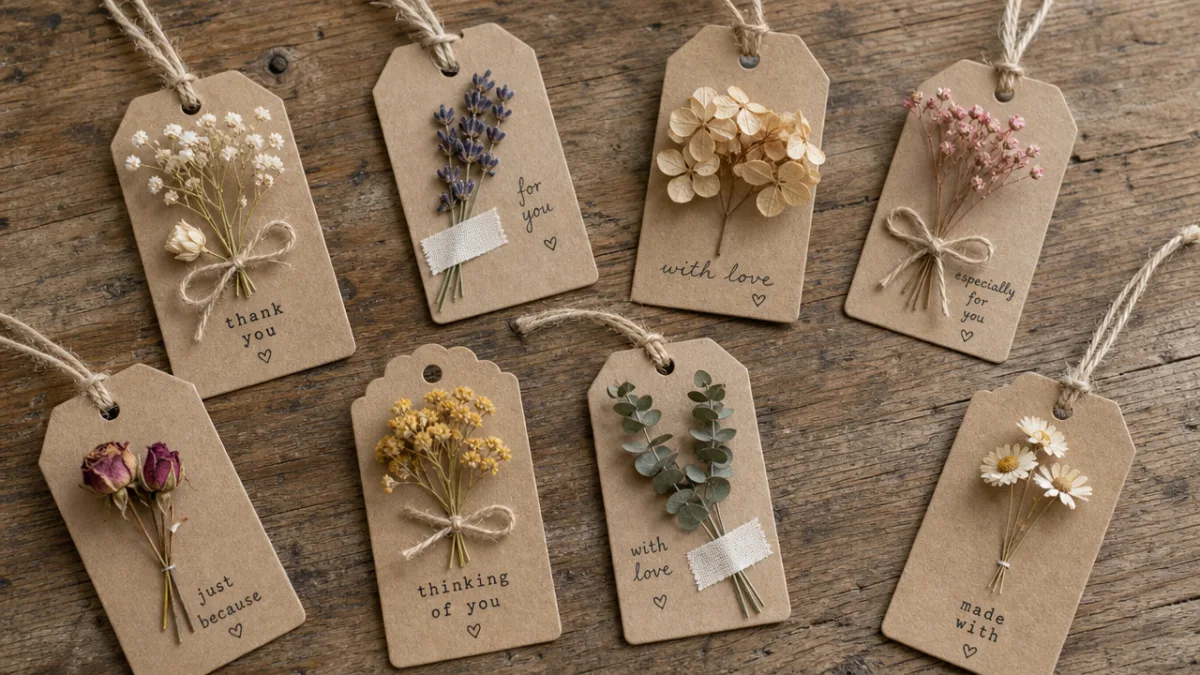
A gift tag is a small thing, but its impact on the overall presentation of a wrapped package is surprisingly large. Commercially produced tags tend to be generic and easily forgotten, but a handmade tag cut from recycled materials and written with care becomes a tiny keepsake that many people hold onto for years. The materials needed are minimal: cardboard from cereal boxes or packaging, a hole punch, kitchen twine or thread, and a pen. Cut the cardboard into any shape you like — a simple rectangle, a tag shape with a rounded top, a small house, a star — punch a hole at one end, and loop a length of twine through it.
The writing on a handmade tag deserves as much attention as its construction. Rather than simply writing “To” and “From,” consider adding a short phrase that speaks to why the gift was chosen, a snippet of a poem, a line from a shared joke, or even a tiny sketch. Watercolor washes applied over dried writing create a gentle, beautiful effect, as does pressing a small dried flower head under a coat of diluted white glue on the surface of the tag. Stamps made from carved erasers or cut potatoes dipped in ink add a playful graphic element. The investment of even five extra minutes in a gift tag communicates a depth of care that expensive commercial alternatives cannot match.
Beyond tags, consider other handwritten or hand-decorated elements that can be integrated into upcycled wrapping. A recipe written on a strip of brown paper and tucked under the twine around a food gift doubles as both decoration and bonus content. A short letter written on paper torn from an old notebook and folded into an origami envelope can replace a card entirely. A series of small drawings mapping out a shared memory, wrapped around the parcel like a border, turns the wrapping into a narrative that the recipient can read before they even open the gift. These personal touches are the whole point of upcycled gift wrap — they make giving feel like a genuine act of communication, not a transaction.
Wax seals, which have experienced a well-deserved revival in recent years, can be used to secure fabric folds, close paper envelopes, or decorate the knots of twine with a touch of old-world elegance. Wax seal kits are inexpensive and reusable, and the effect they create is remarkable for something that takes only seconds to apply. Alternatively, stickers made from cut circles of colored paper, hand-stamped or hand-drawn, serve the same sealing function at no cost whatsoever. Gold paint dabbed with a fingertip along the edges of kraft paper or brown bags adds a festive shimmer to winter holiday wrapping without requiring any purchased metallic paper.
Planning Your Upcycled Wrapping Station: Collecting, Storing, and Using Materials Year-Round
One of the most practical steps you can take toward genuinely sustainable gift wrapping is to create a dedicated collection system for reusable and upcyclable materials throughout the year. A simple box or basket placed in a closet or under a bed can become your wrapping station supply cache. Every time you receive a delivery, save the kraft paper, tissue paper, ribbon, and any padded envelopes that are still in good condition. Every time you read a particularly beautiful magazine, tear out a few pages before recycling the rest. Every time you finish a jam jar, wash it and add it to the collection. Within a few months, you will have an impressive and varied supply of materials to work with.
Organizing this collection matters, because a chaotic pile of saved materials is discouraging to work with and means items get lost or damaged. Simple categorization — papers in one section, fabrics folded flat in another, natural elements in a small basket, ribbons and strings wound into a jar, containers stacked — makes the whole process much easier when a gift-wrapping occasion arises. Keeping a pair of sharp scissors, a roll of washi tape, a glue stick, and a selection of markers within the same storage area means you never have to hunt for supplies and are more likely to invest creative energy in the wrapping when the time comes.
Seasonal gathering is another aspect of a year-round upcycled wrapping practice worth building into your routine. A walk in autumn specifically to collect interesting leaves, pine cones, and seed heads requires almost no detour from a regular outing and yields months of beautiful embellishments. Citrus fruits are abundant and cheap in winter — drying a batch of slices in January provides decorative material through the following holiday season. Pressing flowers from a summer garden in July means you have a collection of dried botanical decorations ready for birthday presents, teacher gifts, and winter holidays in the months that follow.
Perhaps most importantly, embracing upcycled gift wrapping fully means letting go of the expectation that every package needs to look identical or professionally uniform. The slight variations in color, texture, and technique that characterize handmade wrapping are not imperfections — they are evidence of genuine human attention and effort. A package wrapped in a piece of your grandmother’s old apron fabric, tied with ribbon saved from every birthday present you received over the last three years, and decorated with a pine cone from the tree at the end of your street is not a compromise. It is a gift wrapped with layers of meaning that no amount of commercial paper and plastic ribbon could begin to replicate. That is the real gift of upcycled wrapping: it transforms the packaging itself into an act of love.








What do you think?
It is nice to know your opinion. Leave a comment.