










The Shelf Trick That Unlocks Hidden Space in Any Room
Every home has space that goes unnoticed, tucked away in plain sight yet never fully utilized. Walls stretch upward past eye level, corners sit empty, and the areas above doorframes and furniture collect nothing but dust. The shelf trick that has taken Pinterest by storm is not about buying more storage solutions or renovating your home — it is about rethinking the vertical dimension of every room you already have. Once you see it, you cannot unsee it, and the transformation it creates is nothing short of remarkable.
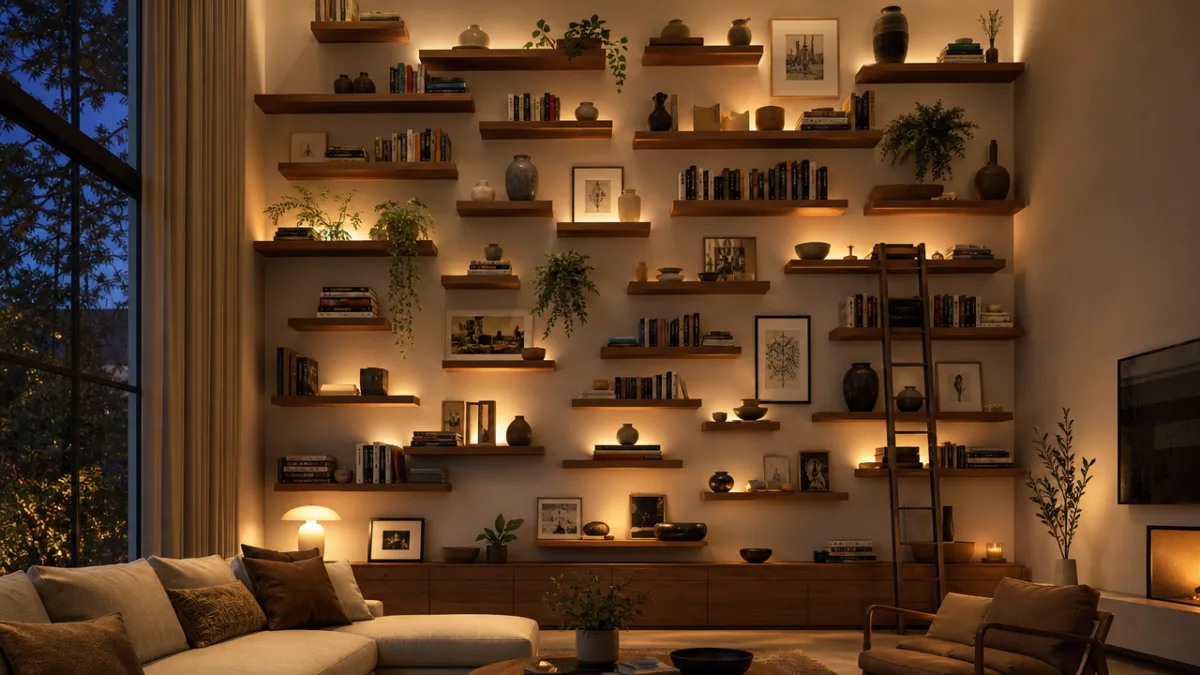
The concept is deceptively simple: instead of thinking about shelf placement at waist or eye level, you extend your storage all the way to the ceiling, and you do it with intentionality and style. Floating shelves installed in a staggered or continuous pattern from mid-wall to the very top of the room can double or even triple your usable storage footprint without consuming a single square inch of floor space. This approach is especially powerful in small apartments, compact bedrooms, and narrow hallways where every foot of space is precious and traditional furniture simply cannot fit.
What makes this trick go viral time and again on Pinterest is how visually stunning the result looks when done well. These high-placed shelves become a design feature in their own right, drawing the eye upward and making ceilings feel taller rather than oppressive. Whether you style them with books, trailing plants, ceramics, or a curated mix of objects, the effect is architectural and intentional. Homeowners across every style spectrum — from minimalist Scandinavian to maximalist bohemian — have adapted this approach to suit their aesthetic, proving that the trick is truly universal.
Why Vertical Space Is Almost Always Ignored
There is a deeply ingrained human habit of organizing life at eye level and below. We reach for things, place things, and notice things within the comfortable arc of our arms and gaze. Everything above roughly six feet tends to register as ceiling rather than opportunity. Interior designers have long understood this blind spot, but it has only recently filtered into mainstream home organization culture thanks to social media platforms that reward visually dramatic before-and-after content. The shelf trick exploits exactly that ignored zone above our typical field of vision.
In most standard homes, the space between the top of a bookcase or kitchen cabinet and the ceiling can range from two to four feet. In older homes with high ceilings, that gap might be five or six feet — an enormous amount of vertical real estate sitting completely unused. Multiply that gap across every wall in a room and the math becomes staggering. You could, in theory, add dozens of linear feet of shelf space to a single room without moving a stick of existing furniture or changing the floor plan in any way. The space was always there; the trick is simply claiming it.
Part of the reason this space stays ignored is practical. Items stored very high up require a step stool to access, which feels inconvenient in everyday life. But this is actually a feature, not a bug, when you approach it correctly. The highest shelves are ideal for things you need only occasionally — seasonal decorations, sentimental keepsakes, archive boxes, spare linens, or rarely consulted reference books. By reserving these heights for low-frequency items, you free up your more accessible shelves for daily use, creating a tiered system of storage logic that makes the entire room function more efficiently.
How to Plan Your Shelf Layout Before Lifting a Drill
Rushing into shelf installation without a plan is how you end up with mismatched heights, shelves that look crowded, and brackets that miss studs. Good planning takes no more than an afternoon and pays dividends for years. Start by photographing the wall you intend to work with, then print that photograph or sketch it to scale on paper. Mark the location of any electrical outlets, light switches, windows, and existing furniture that sits against or near that wall. These are your fixed constraints, and your shelf layout must work around them respectfully.
Next, decide on the visual rhythm you want to create. The most popular approaches fall into a few categories. A continuous run of shelves at equal spacing from a mid-point on the wall all the way to the ceiling creates a clean, library-like effect that works beautifully in living rooms and home offices. A staggered or asymmetric arrangement where shelves of varying lengths are placed at irregular heights creates a more organic, gallery-like feel that suits bohemian and eclectic interiors. A bracketed system using visible hardware in black iron or brass adds an industrial or farmhouse character. Each choice carries a different visual weight and works best in specific contexts.
When planning depth, resist the temptation to make all shelves the same. Deeper shelves near the bottom can hold bulkier items and anchor the arrangement visually, while shallower shelves near the ceiling — where you are likely storing lighter objects — look more delicate and intentional. A shelf that is ten inches deep near the ceiling is perfectly proportioned for a row of paperbacks or a collection of small ceramics. A shelf at counter height can be twelve or even fourteen inches deep and still feel balanced. Varying depth across a single wall installation creates layering and visual interest that flat, uniform shelving simply cannot achieve.
Choosing the Right Materials for High Shelves
Material choice matters enormously when shelves are going high. Heavy solid wood, while beautiful, can become a safety concern if not properly secured into wall studs at height. For shelves above six feet, consider lighter-weight alternatives that offer the same aesthetic warmth without the structural risk. Furniture-grade plywood finished with a veneer edge is lighter than solid wood while retaining rigidity. MDF with a painted finish is even lighter and creates a seamless, modern look. Both options can be cut to any length and finished to match or complement your existing interior palette.
Bracket selection is equally critical. The bracket carries the load of both the shelf and whatever you place on it, and brackets installed at height are harder to access if they fail. Look for brackets rated well above the weight you intend to place on each shelf — a bracket rated for fifty pounds per pair is appropriate for a shelf you plan to load with only fifteen pounds of books. For very long shelves, add a center bracket to prevent bowing over time. Concealed floating shelf brackets, which slide into a channel routed into the back of the shelf, create a seamless look but require precise installation; visible brackets in quality hardware are often more forgiving and just as attractive.
Finish durability should factor into material choices for shelves in kitchens and bathrooms, where humidity and grease are ongoing realities. In these spaces, sealed or lacquered finishes outperform raw wood or unsealed MDF over time. Consider using melamine-coated shelving in utility spaces, reserving the more beautiful materials for living areas where they will be seen and appreciated. The durability investment pays off when shelves installed years ago still look as clean and intentional as the day they were hung, without warping, staining, or peeling that compromises their appearance and function.
Installation Tips That Make the Difference Between Safe and Sorry
The single most important rule of shelf installation at any height is this: anchor into studs wherever possible, and use appropriate wall anchors rated for your load when studs are not available. At lower heights, a poorly anchored shelf is an annoyance when it pulls from the wall. At height, it is a safety hazard. A stud finder is not an optional tool — it is a necessity. Mark every stud location with painter’s tape before you begin, then plan your bracket positions around those marks rather than placing brackets first and hoping for the best.
Use a laser level or a long spirit level for every single shelf. The human eye is remarkably poor at detecting a one-degree slope across a six-foot span, but once a shelf is hung and loaded with objects, that slope becomes unmistakable and visually aggravating. Laser levels can be rented inexpensively from hardware stores if you do not own one, and the few minutes spent getting each shelf perfectly horizontal will save you the frustration of rehinging later. Mark your level line on the wall with a pencil before drilling any holes, and double-check the line before committing to it.
When working at heights above six feet, safety practices become non-negotiable. Use a proper step ladder or scaffolding — never a chair, countertop, or makeshift platform. Work with a partner whenever possible, both for safety and because holding a shelf in position while simultaneously marking bracket holes is genuinely difficult to do solo. Wear safety glasses when drilling overhead, as debris falls directly into your field of vision. Take your time with each shelf rather than rushing to complete the project in a single session; fatigue leads to measurement errors and safety shortcuts that can have lasting consequences.
Styling High Shelves for Maximum Visual Impact
Styling shelves that sit above eye level requires a different approach than styling shelves you interact with at arm’s reach. Objects on high shelves are seen from below and from a distance, which means fine detail is largely lost. Lean into silhouette and scale instead. Large, simply shaped objects — tall vases, stacked books with interesting spines, architectural ceramics, woven baskets — read beautifully from below. Small fiddly objects that would look charming up close become visually incoherent when viewed from six or eight feet away and should be reserved for lower shelves where they can be properly appreciated.
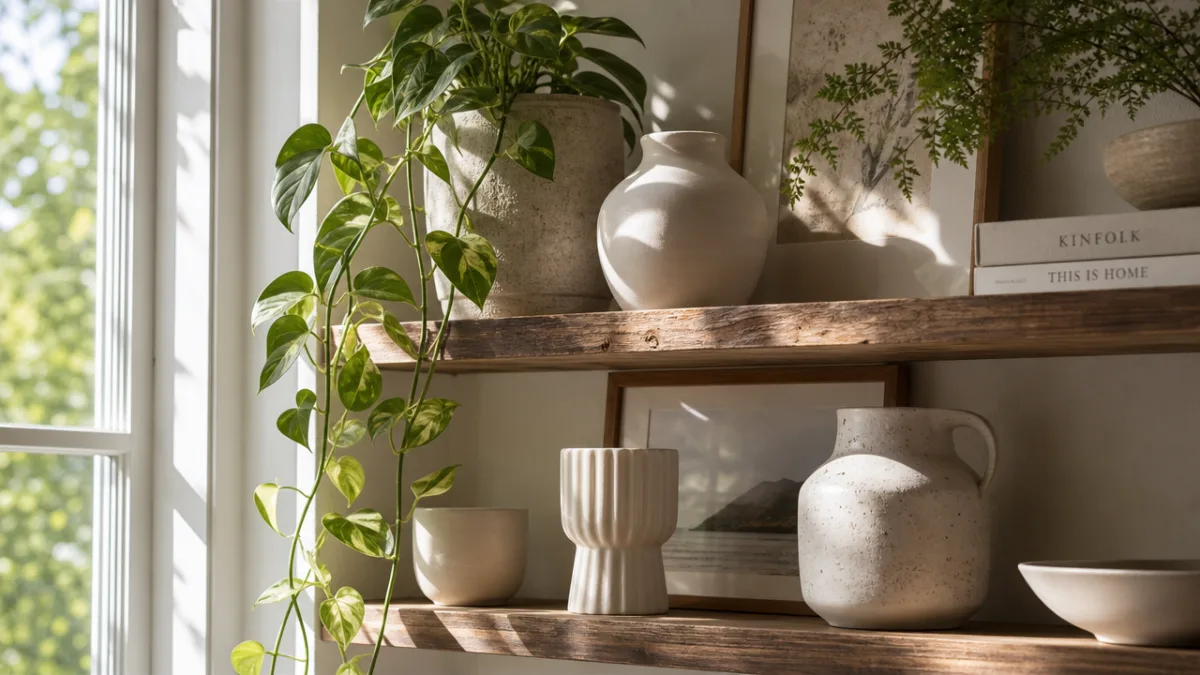
Color coordination at height is more important than at eye level because the distance flattens contrast and detail. A monochromatic arrangement — all white ceramics, all natural wood tones, all terracotta — holds together cohesively from across a room in a way that a mismatched mix of colors never quite achieves at height. If you love eclectic collections, consider grouping by color family rather than by object type, which creates visual order from a distance while still feeling personal and curated up close. This approach also makes rearranging easier since objects within the same color family can swap positions freely without breaking the overall composition.
Trailing plants deserve a special mention in the context of high shelves because they are uniquely suited to elevated placement. A pothos, string of pearls, or heartleaf philodendron allowed to cascade downward from a high shelf creates a living, organic element that transforms the shelf from a storage solution into a genuine design feature. The trailing growth softens the geometric lines of the shelving, adds texture and color at multiple heights simultaneously, and creates a sense of abundance and life that no inanimate object can replicate. Even a single trailing plant on an otherwise minimal high shelf can completely change the energy of a room.
Room-by-Room Applications of the Shelf Trick
The beauty of this approach is that it adapts to virtually every room in a home, though the specific application varies by context and need. In the living room, high shelves are an opportunity to display a curated book collection, create a gallery of meaningful objects, or build the kind of rich, layered backdrop that makes a space feel truly lived-in and personal. Position the highest shelves above a sofa or media console to create a visual anchor for the entire seating area, and use the graduated shelves below to transition smoothly between the high decorative zone and the working storage zone at eye level.
In the kitchen, the space above upper cabinets is one of the most persistently neglected areas in any home. Installing a single continuous shelf in this zone, finished to match or complement the cabinet fronts, immediately creates storage for serving platters, large mixing bowls, seasonal bakeware, and the collection of appliances that only come out a few times a year. Wicker baskets on kitchen high shelves are particularly practical, providing contained storage for loose items while also looking warm and intentional from below. The result is a kitchen that feels custom and considered rather than like a catalog installation.
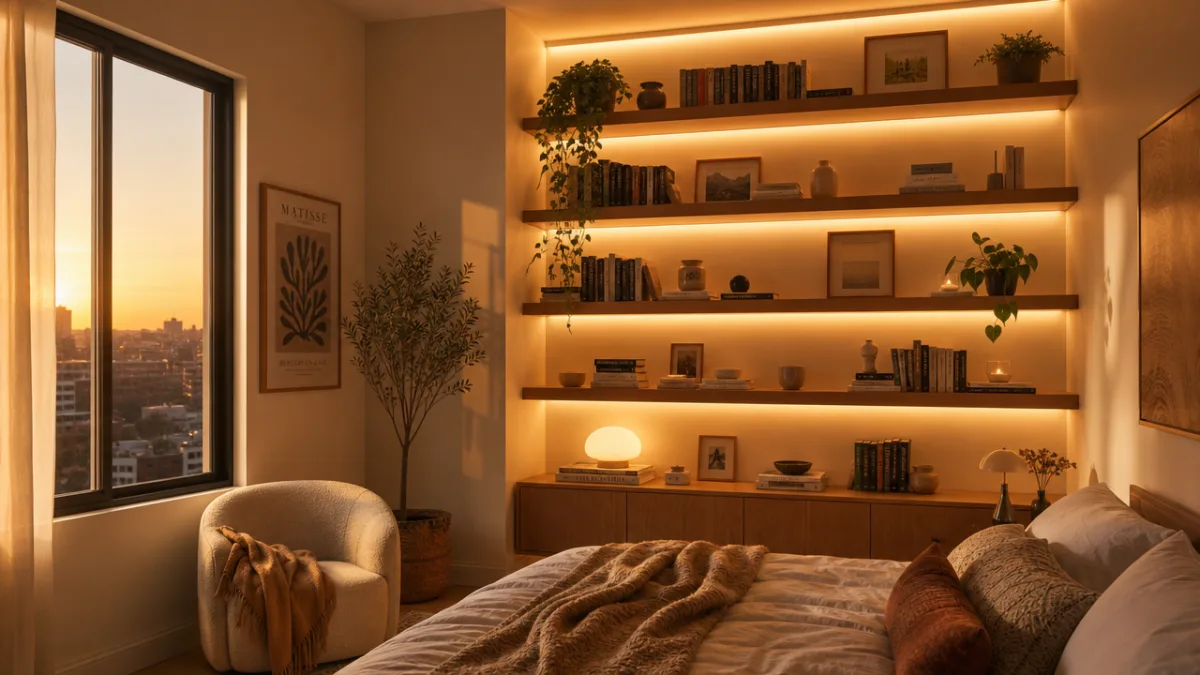
Bedrooms benefit from high shelves in ways that directly improve daily function and sleep quality. Moving books, decorative objects, and extra linens to high shelves clears bedside tables and dressers of clutter, which research consistently links to better sleep and reduced anxiety. A continuous shelf installed at ceiling height around the perimeter of a bedroom, stopping where windows and doors interrupt the run, creates a cozy, enveloping effect sometimes called a plate rail and feels both architectural and intimate. Style it with a consistent collection of objects — travel mementos, favorite books, sleeping candles — and the bedroom transforms from a functional room into a genuinely personal sanctuary.
Avoiding the Most Common Shelf Trick Mistakes
The most frequently seen mistake in high shelf installations is overloading the visual field. More shelves are not always better, and cramming every available wall with shelves at every conceivable height creates a chaotic, cluttered feeling that works against the clean, expansive effect you are trying to achieve. Leave breathing room between shelves, and leave some walls completely free of shelving to give the eye a place to rest. The negative space between and around shelves is as important as the shelves themselves, and restraint in placement nearly always produces a more sophisticated result than ambition run unchecked.
A related mistake is overstuffing the shelves once they are installed. The shelf trick works because the high placement creates a sense of abundance without encroachment — things are stored and displayed, but they do not crowd your living space. Pack shelves edge to edge with objects and that sense of airy abundance disappears, replaced by the visual weight of clutter at altitude, which is no improvement over clutter on the floor. Aim for shelves that are approximately seventy percent full, leaving deliberate gaps between groupings that allow each object or collection to breathe and be read as an individual composition.
Finally, neglecting lighting is a mistake that undermines even the most beautifully planned and executed shelf installation. High shelves in shadow become visual dead zones, regardless of how lovely the objects placed on them might be. Consider small battery-powered LED strip lights adhered to the underside of shelves, which cast a gentle downward glow that illuminates the shelf below without requiring any electrical work. For a more dramatic effect, a small spotlight directed at a high shelf grouping from a nearby floor lamp or ceiling fixture turns the arrangement into a genuine focal point, particularly in the evening when ambient light is low and the contrast makes the display genuinely luminous.
The Lasting Value of Thinking Vertically
Adopting vertical thinking as a permanent lens through which you view your home pays compounding dividends over time. Once you have successfully executed the shelf trick in one room, you begin to see similar opportunities everywhere — the wall above the washing machine, the narrow corridor beside the staircase, the alcove that has always held nothing but a lamp. Each of these spaces is a candidate for the same principle applied with the same logic: claim the vertical dimension, store infrequently used items at the highest points, style deliberately, and allow the floor to breathe free of the clutter that accumulates when storage options are exhausted.
There is also a meaningful financial argument for this approach. Expanding storage vertically costs a fraction of what equivalent square footage would cost to add through construction or relocation. A set of quality floating shelves, properly installed, represents an investment of perhaps a few hundred dollars in materials and a weekend of effort. The same amount of usable storage added through a built-in unit or an addition to the home would cost orders of magnitude more. For renters, command-strip floating shelves and tension pole systems offer similar vertical expansion with no permanent modification, making the principle accessible even without the ability to drill into walls.
Perhaps most importantly, thinking vertically changes your relationship with your home in a way that is genuinely freeing. When you know that you have maximized the storage potential of your existing space, the anxious impulse to acquire more furniture or rent a larger place quiets considerably. You stop feeling constrained by your square footage and start feeling creative within it. The shelf trick is, at its core, a reminder that the resources we need are often already present — we have simply not yet learned to see them. That lesson, applied consistently and with care, is what transforms a house into a home that works beautifully for the life actually lived inside it.








What do you think?
It is nice to know your opinion. Leave a comment.