










Unique Bracelets: The Ultimate Guide to Wearable Art for Your Wrist
Bracelets have been gracing human wrists for thousands of years — all the way back from the simple bone and shell pieces our earliest ancestors wore to the stunning works of wearable art we see today. Along the way, these small but meaningful accessories have carried a lot of weight: they’ve signaled social status, expressed spiritual devotion, declared romantic love, and helped people show the world who they are. In practically every culture on every continent, the bracelet has earned its place in the human story of self-expression.
Right now, the world of unique bracelets is richer and more varied than it’s ever been. Handcrafted beaded pieces from independent makers, fine jewelry set with precious stones, bohemian leather wraps, minimalist sterling silver cuffs — there’s genuinely something out there for every personality, every occasion, and every wrist. The modern bracelet market is a real celebration of craftsmanship and creativity, and it rewards anyone willing to look a little beyond the mass-produced options at mainstream retailers.
Whether you’re a seasoned jewelry collector looking to add something special, someone hunting for the perfect meaningful gift, or just a person who wants a little more individuality in their everyday look, getting to know the world of unique bracelets opens up a lot of exciting possibilities. This guide covers everything — from the rich history of bracelet-making to the most compelling contemporary styles, materials, and the artists behind them.
A Brief History of Bracelet-Making Across Cultures
The oldest known bracelet was discovered in Siberia and is thought to be around 40,000 years old, crafted from chlorite by the ancient Denisovan people. That single artifact tells us something fascinating about human nature: even before written language, before agriculture, before any of the great civilizations rose and fell, people felt a pull to create beauty and wear it close to their bodies. The wrist — always visible, always moving — has always been a natural home for that kind of expression.
The ancient Egyptians turned bracelet-making into a genuine high art, crafting stunning pieces from gold, carnelian, turquoise, and lapis lazuli. These weren’t just decorative objects — they were deeply symbolic, often featuring gods, scarabs, and hieroglyphic inscriptions meant to offer protection and divine favor to the wearer. In ancient India, bangles carved from shell, bone, and eventually gold and silver have been worn continuously for over five thousand years, with different styles and materials carrying specific cultural and spiritual meanings that people still honor today.
The Celtic peoples of Iron Age Europe created intricate torcs — twisted metal neck rings and arm bands — that showed off remarkable metallurgical skill. Indigenous cultures across the Americas developed breathtaking traditions working with turquoise, shell, and copper. In sub-Saharan Africa, beaded bracelets became elaborate systems of communication, with colors and patterns conveying messages about age, marital status, social standing, and tribal identity. This global heritage of bracelet-making is the foundation that today’s designers are still building on.
Materials That Make Bracelets Truly Unique
The material a bracelet is made from might be its most defining quality — it shapes everything from the visual impact to how the piece feels against your skin to the story it tells about the person who made it and the person wearing it. Precious metals like gold, silver, and platinum remain perennially beloved for their luminous beauty, durability, and lasting value. Gold in particular has a warmth and richness that nothing else quite replicates, and its ability to be shaped, hammered, engraved, and set with stones makes it endlessly versatile in a jeweler’s hands.
Beyond precious metals, the range of materials showing up in unique bracelets today is pretty staggering. Natural stones — the deep blue of lapis lazuli, the fiery orange of carnelian, the forest green of malachite, the ethereal shimmer of moonstone — bring something of the earth itself to the wrist. Artisan bead-makers work with everything from hand-blown Venetian glass to ancient trade beads, ceramic beads fired in wood kilns, and polymer clay beads sculpted into tiny works of art. Leather, whether raw and rustic or carefully finished and tooled, brings a warmth and organic quality that a lot of people find genuinely appealing.
Then there are the more unconventional materials that are really pushing the boundaries of what a bracelet can be. Contemporary jewelers experiment with titanium, which can be anodized to produce vivid colors impossible to achieve with traditional metals. Reclaimed and upcycled materials — vintage watch parts, fragments of antique porcelain, sea glass worn smooth by waves — become the raw ingredients for pieces with real stories built right into their substance. Wood, bone, horn, resin, and even fabric are all finding their place in the hands of makers determined to explore new territory.
- Precious metals: Gold, silver, platinum, and rose gold offer timeless elegance and exceptional durability, making them ideal for heirloom-quality pieces designed to last generations.
- Natural gemstones: Turquoise, amethyst, garnet, labradorite, and dozens of other stones bring color, texture, and earthly energy to bracelet designs of every style.
- Beads: Glass, ceramic, wooden, and seed beads allow for intricate patterns and enormous color variety, supporting both traditional folk craft traditions and contemporary artistic experimentation.
- Leather and cord: Waxed cotton, silk, hemp, and leather cords provide the foundation for casual, bohemian, and artisan styles with a natural, handmade feel.
- Alternative materials: Resin, titanium, recycled materials, and found objects enable jewelers to create one-of-a-kind pieces that challenge conventional notions of what jewelry can be.
The Most Captivating Styles of Unique Bracelets Today
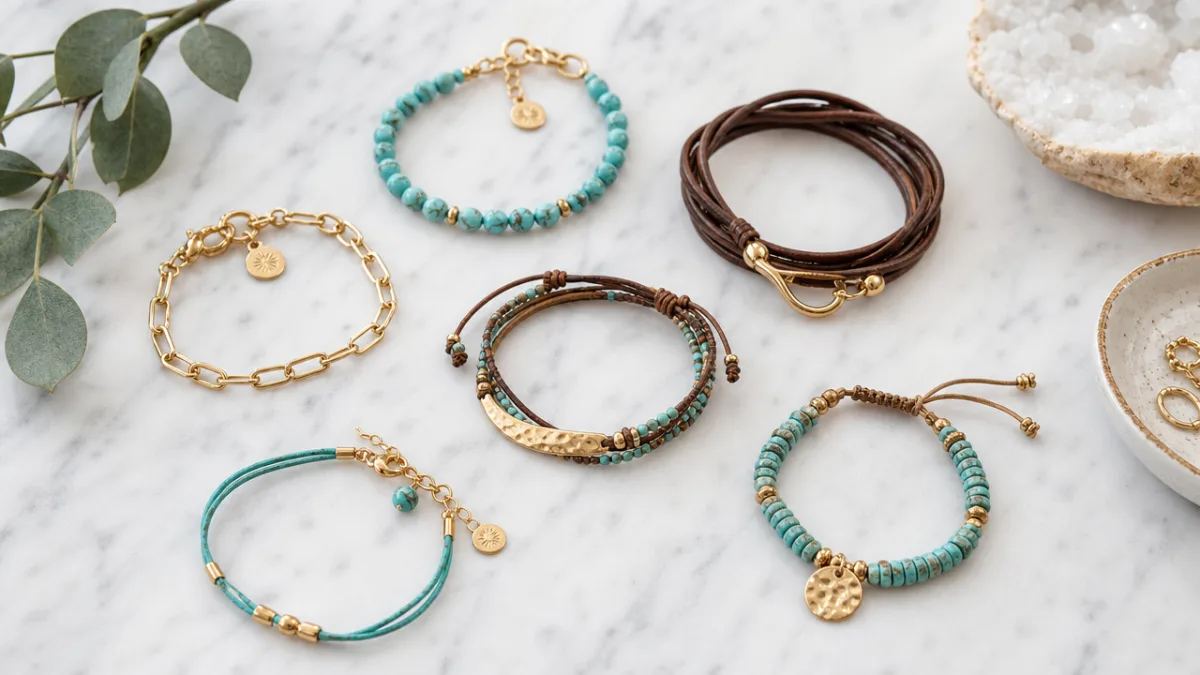
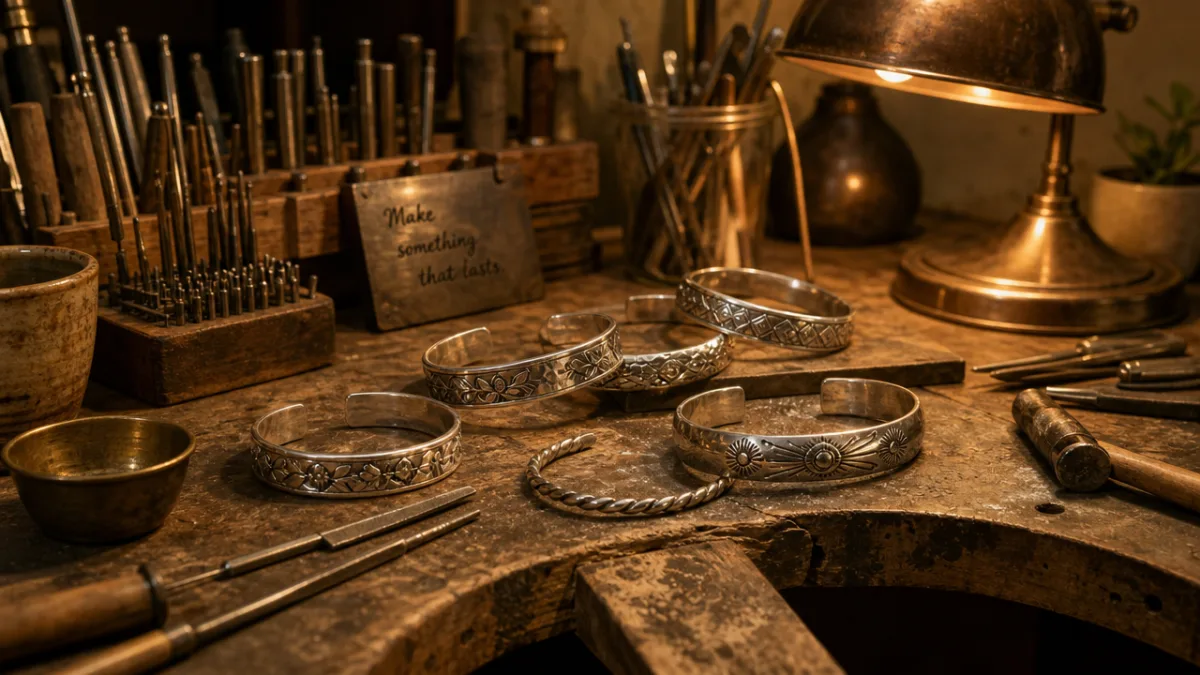
The bracelet landscape today spans an almost overwhelming variety of styles, each with its own aesthetic logic, cultural roots, and devoted following. The cuff — a rigid or semi-rigid band that wraps around the wrist — is one of the most architecturally satisfying forms out there, offering a broad canvas for engraving, hammering, stone-setting, and sculptural shaping. A wide cuff in hammered sterling silver can evoke ancient warrior adornments while feeling completely contemporary, and a narrow gold cuff with delicate engraving is one of the most quietly elegant things a jeweler can produce.
Beaded bracelets are probably the most democratic and globally widespread style — they appear in some form in virtually every culture that has ever existed. Today’s beaded bracelet artisans draw on that rich heritage while pushing it forward, combining unusual bead types, playing with spacing and pattern, and pairing beads with metal elements to create pieces with real sophistication. A single-strand bracelet of hand-knotted pearls says something very different from a chunky turquoise bead bracelet with a silver toggle clasp, yet both belong to the same ancient lineage of strung adornment.
Chain bracelets offer their own universe of variation. A delicate trace chain in gold is a classic of understated elegance; a chunky figaro or curb chain makes a bold, confident statement. Contemporary jewelers are experimenting with unusual gauges and configurations, adding charms, enamel elements, or asymmetrical details that transform a simple chain into something genuinely distinctive. Charm bracelets deserve a special mention here — they’re uniquely suited to personal storytelling, with each added charm becoming a small monument to a memory, a passion, or a relationship.
Wrap bracelets, which wind multiple times around the wrist using leather, cord, or chain, have surged in popularity for their bohemian, layered look and the satisfying tactile experience of wearing them. Bangle stacks — multiple thin bangles worn together in clinking, chiming multitudes — have been a beloved South Asian tradition for millennia and have now been adopted globally as a way to mix metals, stones, and textures into a personal composition. And the tennis bracelet, a continuous line of matched gemstones in a delicate setting, remains a cornerstone of classic jewelry elegance.
Finding and Supporting Independent Bracelet Artisans
One of the best parts of exploring the world of unique bracelets is discovering the remarkable community of independent artisans who make them. Unlike mass-produced jewelry turned out in factories, handmade bracelets from independent makers carry the touch, intention, and creative vision of a real person who spent hours — sometimes days — bringing a single piece to life. Buying from independent artisans isn’t just a way to own something beautiful and genuinely one-of-a-kind; it’s a direct investment in a creative person’s livelihood and craft.
Online platforms have dramatically expanded the reach of independent jewelry makers, letting artisans from small towns and remote communities connect with customers around the world. A silversmith working in a studio in the mountains of New Mexico, a beadwork artist continuing a tradition passed down through generations in Kenya, a resin jeweler experimenting in a spare bedroom in Edinburgh — all of them can now share their work with a global audience and find the people who truly appreciate what they create. Pinterest in particular has become a powerful discovery engine for unique jewelry, connecting people who know what they love with the makers who create it.
When it comes to actually finding artisans to support, a few approaches work especially well. Local craft markets and artisan fairs are wonderful for discovering makers in your own community and having the special experience of meeting the person behind the work. Dedicated jewelry galleries and boutiques curate selections of handmade pieces and can introduce you to makers you’d never find on your own. Online marketplaces specializing in handmade goods host thousands of jewelry sellers, though it’s worth taking time to read maker profiles carefully, look through portfolios, and watch for signs of genuine craft and originality rather than reselling.
- Visit local craft markets and artisan fairs where you can meet makers in person, handle their work, and hear the stories behind their designs directly from the source.
- Follow independent jewelers on social media to stay connected with new work, limited releases, and the creative process behind the bracelets that inspire you.
- Explore dedicated handmade marketplaces carefully, reading maker profiles and looking for evidence of genuine craft, original design, and consistent quality.
- Commission custom pieces when you find an artisan whose style resonates with you — many independent jewelers love the challenge of creating something designed specifically for one person.
- Share and recommend makers whose work you love, because word of mouth remains the most powerful engine for growing a small creative business.
How to Build and Wear a Bracelet Collection with Personal Style
Building a bracelet collection is one of the most personal and pleasurable forms of creative self-expression there is. Unlike clothing, which dates quickly and demands seasonal reinvention, a carefully chosen bracelet can become a permanent companion — something you wear every single day until it becomes as much a part of your identity as your own face. The key to building a collection that feels genuinely yours, rather than randomly assembled, is developing a clear sense of your own aesthetic instincts and shopping with intention rather than impulse.
A well-thought-out bracelet collection usually balances a few things: scale, texture, material, and meaning. Mixing a substantial cuff with fine chain bracelets and a beaded piece creates visual interest through contrast, while keeping everything within a coherent color palette or material story — all metals, all natural materials, or a consistent gemstone palette — gives the collection a sense of harmony. Stacking bracelets is something that really rewards experimentation; what works and what doesn’t is deeply personal and can only be discovered through the pleasure of trying different combinations on your own wrist.
Meaning matters enormously in a well-curated collection. The most treasured pieces are rarely the most expensive — they’re the ones with stories attached. The bracelet you bought on a trip that changed you, the piece inherited from a grandmother, the simple cord bracelet tied on by a friend at a moment of particular closeness, the charm bracelet that has slowly accumulated years of small meaningful tokens. Building your collection with an eye to meaning alongside beauty ensures it will only grow richer over time, becoming a kind of autobiography written in metal, stone, and cord around your wrist.
Taking care of your collection is essential to keeping both its beauty and its longevity intact. Different materials need different approaches: silver benefits from regular polishing and storage in anti-tarnish pouches; leather should be kept away from prolonged water exposure and conditioned periodically; beaded bracelets strung on silk or cord benefit from being restrung every few years to prevent breakage. Precious stones generally just need gentle cleaning with a soft cloth and mild soap, though porous stones like turquoise and pearls need extra care and should never come into contact with harsh chemicals or ultrasonic cleaners.
Bracelets as Gifts: Choosing Something Truly Special
A bracelet is one of the most personal and enduring gifts you can give, combining wearable beauty with the potential for real symbolic meaning. When chosen thoughtfully, a bracelet communicates something that words alone often can’t — that you’ve paid attention to who this person is, what they love, and what matters to them. The simple act of placing a bracelet on someone’s wrist carries an intimacy and care that sets it apart from almost any other kind of present.
The key to choosing a bracelet gift that will actually be treasured is attentiveness. Notice what the recipient already wears: do they favor gold or silver? Do they gravitate toward bold statement pieces or quiet, delicate ones? Are they drawn to natural materials and bohemian aesthetics, or do they prefer clean, modern lines? Do they have any gemstone preferences, birthstones that hold meaning, or colors that dominate their wardrobe? These observations will guide you toward something that feels personally chosen rather than generically appropriate — and that difference is everything when it comes to a gift someone keeps for life.
For those who want to give something with especially deep personal resonance, a custom or commissioned bracelet is worth the extra investment of time and money. Many independent jewelers offer personalization options — engraving a meaningful date or initial, incorporating a specific stone that holds significance for the recipient, or creating a completely bespoke design based on a conversation about what the person loves. A bracelet made specifically for one individual carries a kind of intention and care that no off-the-shelf piece, however beautiful, can quite replicate. It’s a gift that says, in the most eloquent way possible, that this person is worth something made just for them.
The Future of Unique Bracelet Design
The future of bracelet design is being shaped by a really interesting convergence of forces: a renewed appreciation for traditional craft, technological innovation, growing awareness around sustainability and ethical sourcing, and an expanding global conversation about what jewelry means and who gets to define it. These currents are producing some of the most exciting work in the long history of this art form, and there are real reasons to be optimistic about where unique bracelet design is heading.
Sustainability has become a central value for the most thoughtful contemporary bracelet makers. Recycled and reclaimed metals, ethically sourced gemstones, lab-grown diamonds and colored stones, natural and organic materials from traceable sources — these are no longer niche concerns but mainstream expectations among a growing segment of jewelry buyers. The most forward-thinking artisans are building their entire creative practices around the challenge of making beautiful things in ways that do minimal harm to the planet and the people who extract its materials. And their work is demonstrating convincingly that ethical choices and aesthetic excellence don’t have to be in tension.
Technology is offering bracelet makers tools that would have seemed like magic to earlier generations of craftspeople, while simultaneously sparking a counter-movement that prizes the evidence of the human hand more than ever. 3D printing and computer-aided design let jewelers realize forms of staggering complexity that would be impossible to fabricate by hand, opening up entirely new territories of sculptural possibility. Yet alongside these digital tools, there’s a powerful and growing appreciation for the marks, textures, and slight imperfections that reveal a piece as genuinely handmade — the hammer marks on a forged silver cuff, the slight variation in hand-rolled beads, the unique patina that develops on a piece worn daily by a real human body. The future of unique bracelets lives in that creative tension between the new and the ancient, the digital and the handmade, the global and the deeply personal.








What do you think?
It is nice to know your opinion. Leave a comment.