










Crochet Portraits: The Art of Thread and Expression by @asesuune
The Emerging World of Fiber Art Portraiture
Crochet has traveled a remarkable journey from its origins as a practical textile craft into the vibrant landscape of contemporary fine art. For centuries, people associated crochet with doilies, blankets, and functional garments — beautiful in their own right, but rarely considered alongside oil painting or sculpture in serious artistic conversations. That perception has shifted dramatically in recent years, as a new generation of fiber artists has pushed the boundaries of what a hook and thread can accomplish, creating works of astonishing complexity, emotional resonance, and visual sophistication that demand to be taken seriously as high art.
Among those leading this charge is the artist known online as @asesuune, whose crochet portraits have captured the attention of art lovers, craft enthusiasts, and cultural commentators alike. Working with thread in the way a painter works with pigment, this artist constructs human faces and figures that pulse with life and personality. The butterfly motif that frequently accompanies these works is not merely decorative — it speaks to transformation, to the metamorphosis of humble yarn into something luminous and alive. Each portrait represents hours, sometimes weeks, of meticulous work, with every loop and stitch serving as a deliberate mark in a larger visual composition.
What makes fiber art portraiture particularly compelling is the tactile dimension it adds to likeness-making. A painted portrait communicates through color and line; a crochet portrait communicates through all of those elements plus texture, dimension, and the physical memory of the hand that made it. Viewers often feel an irresistible urge to touch these works, to trace the raised contours of a cheek or the flowing curves of crocheted hair. This physical intimacy between artwork and audience is something traditional portraiture rarely achieves, and it gives fiber art a unique emotional power that continues to draw new practitioners and admirers into its orbit.
Understanding the Technical Craft Behind Crochet Portraits
Creating a recognizable human portrait in crochet is a feat of considerable technical skill that requires an artist to think simultaneously like a sculptor, a colorist, and a textile engineer. Unlike painting, where mistakes can be painted over, crochet portraits demand forward planning and a deep understanding of how stitches accumulate to form larger shapes. The artist must envision the finished face while executing one tiny loop at a time, holding the complete image in mind across many sessions of work that may stretch across days or weeks of concentrated effort.
The foundational techniques involved include tapestry crochet, intarsia crochet, and freeform crochet, each bringing different qualities to the final piece. Tapestry crochet allows for intricate color changes within a single row, making it ideal for rendering the subtle gradations of skin tone and shadow that give a portrait its sense of depth and volume. Intarsia techniques allow different colored sections to be worked independently before being joined, useful for bold geometric transitions in background elements or clothing. Freeform crochet, perhaps the most expressive of these methods, abandons the grid entirely and allows organic shapes to emerge intuitively from the artist’s hands.
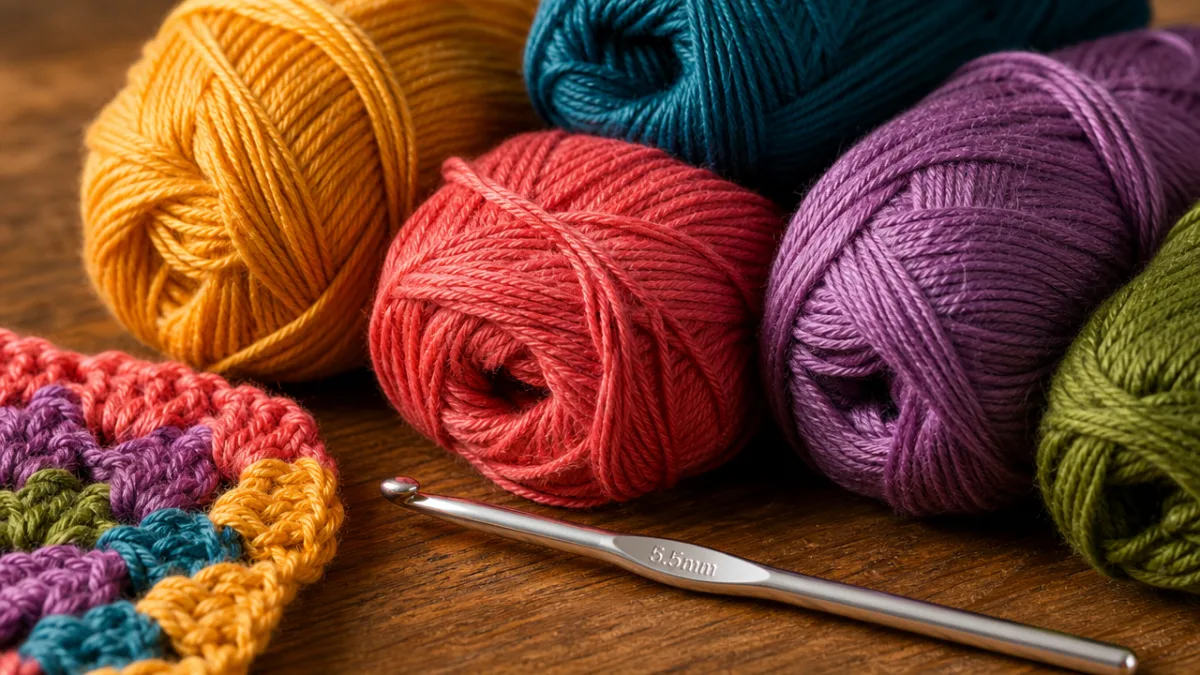
Color selection is arguably the most demanding aspect of crochet portraiture, and artists working in this medium must develop an eye for color theory that rivals that of any trained painter. Human skin alone requires a complex palette that shifts from warm golden undertones to cool blue-purple shadows, and achieving convincing flesh tones in yarn means sourcing or dyeing threads in precise shades that may not be commercially available. Artists like @asesuune often work with dozens of distinct thread colors in a single portrait, blending and alternating them within stitches to create visual effects that read as smooth gradation from a normal viewing distance, much like the individual dots of a pointillist painting resolving into a coherent image.
The Cultural and Historical Roots of Textile Portraiture
The impulse to render human likenesses in textile is far older than most people realize, predating the European tradition of oil portraiture by many centuries. Ancient Andean weavers created remarkable tapestries depicting human figures and faces with a sophistication that astonished European colonizers who encountered them in the sixteenth century. Across Africa, the Americas, and Asia, cultures developed their own traditions of textile imagery that served ritual, historical, and commemorative functions — much the same purposes that portraiture served in the European academies. Understanding this deep history enriches our appreciation of contemporary fiber artists who are, in a sense, reconnecting with something very ancient in human creative impulse.
Needlework portraits gained particular cultural prominence in early modern Europe, where embroidered miniatures served as intimate keepsakes exchanged between lovers, given as diplomatic gifts, or preserved in family collections as memorials to the dead. Mary Queen of Scots famously practiced embroidery during her long imprisonment, and her surviving needlework pieces are studied today as much for their personal and political symbolism as for their technical accomplishment. This tradition of textile portraiture as a mode of personal expression, emotional communication, and cultural memory runs directly beneath the contemporary crochet portrait movement, even when today’s artists may not be consciously invoking that lineage.
The gendered history of textile arts is also impossible to ignore in any serious discussion of crochet portraiture. For most of recorded Western history, needlework and fiber arts were categorized as “women’s work” and consequently devalued in critical discourse dominated by male gatekeepers who defined “fine art” in ways that systematically excluded crafts primarily practiced by women. The feminist art movements of the 1970s began to challenge these hierarchies directly, with artists like Judy Chicago deliberately incorporating fiber arts into gallery contexts to force a reconsideration of what counted as serious artistic labor. Contemporary crochet portrait artists are the beneficiaries and continuers of that reclamation project, working in a cultural moment that is finally beginning to grant fiber arts their proper critical respect.
The Symbolism of the Butterfly in @asesuune’s Work
The butterfly that accompanies @asesuune’s crochet portraits is not a casual or arbitrary decoration — it functions as a rich symbolic language that deepens the meaning of these works considerably. In the most immediate sense, the butterfly speaks to transformation: the metamorphosis from caterpillar to butterfly serves as a perfect metaphor for the artistic process itself, in which raw, undistinguished thread is transformed through patient labor into something of breathtaking beauty and complexity. This alchemical quality of the creative process is something fiber artists understand with particular intimacy, because the distance between a skein of yarn and a finished portrait is so vast that the transformation can feel almost miraculous to witness.
Butterflies carry profound meaning across many of the world’s cultures and traditions, making them a particularly resonant symbol for an artist whose work reaches a global online audience. In Japanese culture, butterflies are associated with the souls of the living and the dead, with transformation, and with joy. In ancient Greek, the same word — psyche — served for both butterfly and soul. In many Indigenous American traditions, butterflies represent guidance, change, and the ability to navigate between different states of being. By incorporating this symbol into portrait work, @asesuune invites viewers to bring their own cultural associations to the image, creating a layered meaning that shifts depending on who is looking and what they carry with them into the encounter.
There is also something deeply appropriate about the butterfly as a symbol for the crochet portrait specifically as a medium. Both the butterfly’s wing and a piece of crochet lace are objects of fragile, intricate beauty created through processes of patient accumulation — one scale or one stitch at a time. Both reward close examination, revealing increasing complexity and refinement the more carefully one looks. And both achieve their most powerful effects through a combination of structure and improvisation, with underlying patterns giving rise to effects that seem, at first glance, entirely spontaneous and organic. The butterfly and the crochet portrait are, in this sense, kindred objects that illuminate each other through their juxtaposition.
Building an Audience and Community in the Digital Age
The rise of social media platforms like Pinterest and Instagram has transformed the landscape for fiber artists in ways that would have been unimaginable to previous generations of craft practitioners. Before the internet, a talented crochet artist working in relative geographic isolation might have found an audience of a few hundred people at most — local craft fair attendees, subscribers to specialist magazines, members of guilds or clubs. Today, a single compelling image posted to the right platform can reach hundreds of thousands of viewers overnight, connecting artists with admirers, collectors, students, and fellow practitioners across every continent and time zone simultaneously.
For artists like @asesuune, platforms like Pinterest serve multiple functions simultaneously. They act as portfolio spaces where finished work can be displayed and discovered; they function as mood boards and inspiration archives where artists can curate the visual influences that inform their practice; and they operate as community hubs where practitioners exchange technical advice, encouragement, and critique. The comment sections beneath a striking crochet portrait often contain remarkable conversations between people who would never have encountered one another in the pre-internet world — an experienced weaver in Portugal advising a beginner in South Korea, or a painter in Brazil finding unexpected resonance between their practice and the work of a fiber artist in Japan.
The visibility that digital platforms provide has also had tangible economic consequences for fiber artists, opening up markets for original work, commissioned portraits, pattern sales, and teaching materials that were previously difficult or impossible to access. Many contemporary crochet artists now sustain themselves professionally through a combination of these revenue streams, achieving a degree of financial independence that earlier generations of fiber artists rarely enjoyed. This economic empowerment matters not just for individual artists but for the art form itself, because it allows talented people to devote more of their time and energy to pushing the craft forward rather than treating it as a hobby subordinate to other income-generating activities.
How to Begin Your Own Crochet Portrait Journey
For those inspired by @asesuune’s work to try their hand at crochet portraiture, the path forward requires a combination of foundational skills, patience, and a willingness to embrace a steep but deeply rewarding learning curve. Crochet portraiture is not a beginner’s project, but it is absolutely an achievable goal for anyone willing to invest time in developing the necessary foundations. The journey itself, from first awkward stitches to a finished face that actually resembles a person, is one of the most satisfying creative progressions available to anyone who loves both craft and the human figure.
The essential skills and materials you will need to gather before attempting your first portrait include the following areas of preparation:
- Master basic crochet stitches thoroughly, including single crochet, half double crochet, and double crochet, until they feel completely automatic and consistent in your hands — inconsistent tension is the enemy of clean portraiture.
- Study color theory specifically as it applies to portraiture, paying attention to how shadow and highlight interact with different skin tones and how warm and cool colors can be used to create the illusion of three-dimensional form on a flat surface.
- Invest in high-quality thread in a wide range of values and hues, because the range of your palette will directly determine the expressive range of your portraits.
- Practice tapestry crochet with simple geometric designs before attempting facial features, developing your ability to carry multiple colors cleanly without tangling or puckering the fabric.
- Study portraiture itself as a discipline — look at master painters, study how they handle light and shadow, and learn to see faces analytically in terms of planes, values, and proportions rather than as collections of symbolic features.
- Keep a sketchbook where you can plan color arrangements and compositional decisions before committing them to thread, saving yourself the frustration of unraveling hours of work.
Perhaps most importantly, approach your early crochet portraits with a spirit of experimentation rather than perfectionism. The artists whose work inspires us most have all produced early pieces that embarrassed them, made technical errors that taught them valuable lessons, and persisted through frustration to develop the skills and visual language that now feel effortlessly expressive. The butterfly symbol that @asesuune incorporates into their work is, in this context, a reminder to all of us: transformation is never instantaneous, and the struggle toward something new and beautiful is part of the meaning of the finished work itself. Your first portrait will not look like a master’s; your tenth will surprise you; and somewhere along the way, the thread and hook will begin to feel like genuine extensions of your own creative vision.
The Future of Fiber Art in Contemporary Culture
As the twenty-first century progresses, fiber arts are occupying an increasingly prominent and respected position within the broader landscape of contemporary art and culture. Major museums and galleries that once would have dismissed crochet as craft rather than art are now mounting serious exhibitions of textile work and beginning to incorporate fiber pieces into their permanent collections. Critical frameworks for discussing textile art are becoming more sophisticated and more widely understood, giving curators, critics, and audiences better tools for engaging with these works on their own terms rather than always measuring them against the standards developed for painting and sculpture.
The intersection of traditional fiber techniques with digital technology represents one of the most exciting frontiers for the next generation of artists working in this space. Some artists are using digital imaging software to plan complex color arrangements before translating them into thread; others are experimenting with augmented reality to create interactive textile experiences; and a growing number are exploring the conceptual connections between the binary code that underlies digital images and the binary over-under logic that underlies weaving and crochet. These experiments suggest that fiber arts are not a nostalgic retreat from the digital present but an active participant in shaping what contemporary art looks and feels like.
Artists like @asesuune are at the vanguard of this cultural moment, demonstrating through their work that crochet can be a vehicle for serious artistic expression, emotional communication, and cultural commentary of the highest order. The portraits they create are not merely technically impressive — they are humanly meaningful, capturing something true and enduring about the faces and identities they render in thread. As more people encounter this work through digital platforms and as the cultural conversation around fiber arts continues to expand and deepen, the audience for crochet portraiture will only grow, and the art form itself will continue to evolve in directions that none of us can yet fully anticipate. The butterfly, after all, cannot know what it will become until it has fully emerged from its chrysalis — and fiber art, as a recognized force in contemporary culture, is still very much in the process of that beautiful becoming.








What do you think?
It is nice to know your opinion. Leave a comment.