










Transform Your Living Space: The Ultimate Guide to Home Decoration Ideas
The Art of Creating a Home That Reflects You
Home decoration is so much more than just rearranging furniture or picking a paint color. It’s a deeply personal process — one that turns four walls and a roof into a real reflection of who you are. Every little choice you make, from the texture of a throw pillow to the glow of a lamp, says something about your personality, your values, and the kind of life you want to live at home. When you approach it with that mindset, decorating becomes one of the most satisfying creative outlets there is.
The most beautiful homes aren’t necessarily the most expensive ones. What makes a space truly special is coherence, a sense of intention, and that warm feeling that makes guests immediately comfortable. You don’t need a designer’s budget to pull that off. You need a clear vision, a willingness to experiment, and the patience to build your space gradually rather than cramming every corner at once. Good decorating is often about knowing what to leave out just as much as what to put in.
The whole idea of what home decoration means has shifted quite a bit in recent years. Where people once chased showroom perfection, today’s most admired interiors lean into personality, imperfection, and a certain happy eclecticism. A vintage lamp next to a modern sofa, a gallery wall mixing family photos with abstract prints, a kitchen shelf holding both everyday ceramics and a trailing houseplant — these unexpected pairings tell a story. They show that someone actually lives there, and that’s ultimately what makes a home feel alive rather than staged.
Understanding Color: The Foundation of Every Beautiful Room
Color is probably the single most powerful tool you have as a decorator. The right palette can make a small room feel twice as large, turn a chilly north-facing space into something warm and welcoming, or carve a sprawling open-plan area into distinct, purposeful zones. You don’t need to memorize color theory rules to get this right — you just need to develop a feel for how colors interact with each other, how natural light shifts them throughout the day, and what kind of mood you’re actually going for in a given room.
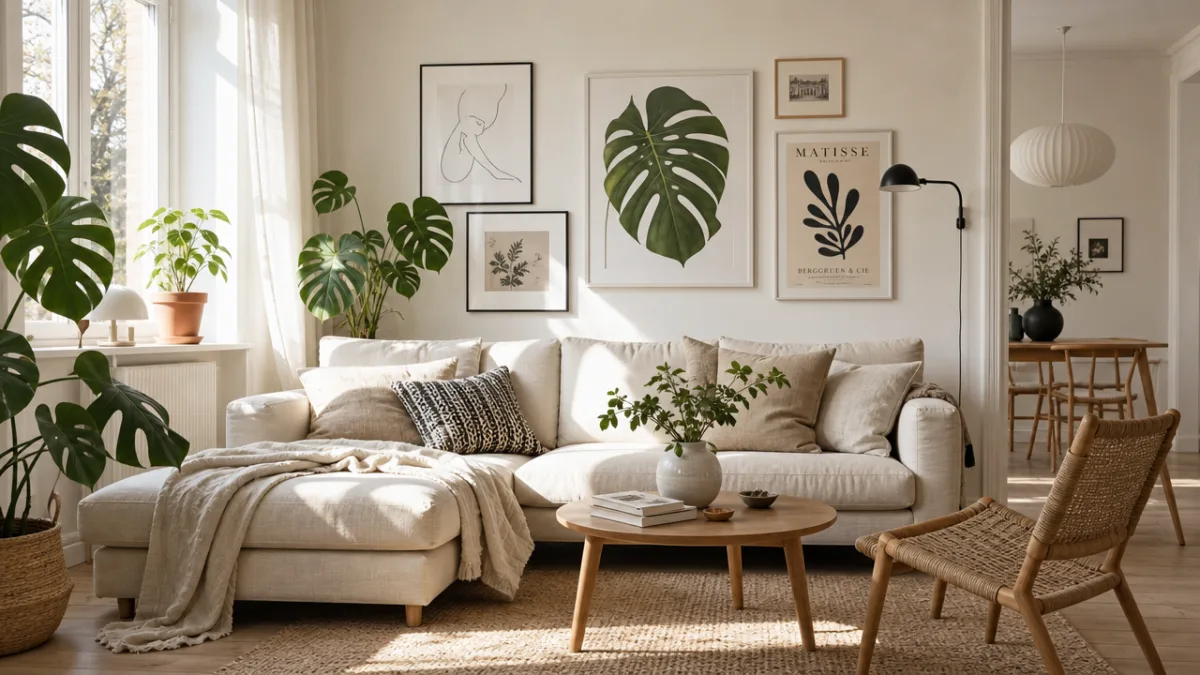
Neutral palettes have dominated interior design for a couple of decades now, and honestly, it makes sense. Soft whites, warm creams, earthy taupes, and gentle greys create a calm, flexible backdrop that lets your furniture, art, and accessories do the talking. But the modern take on neutrals goes well beyond simply painting everything white. There’s a real distinction now between “warm neutrals” and “cool neutrals,” and the undertones in a paint color can completely transform a room’s feel depending on how much natural light it gets at different times of day.
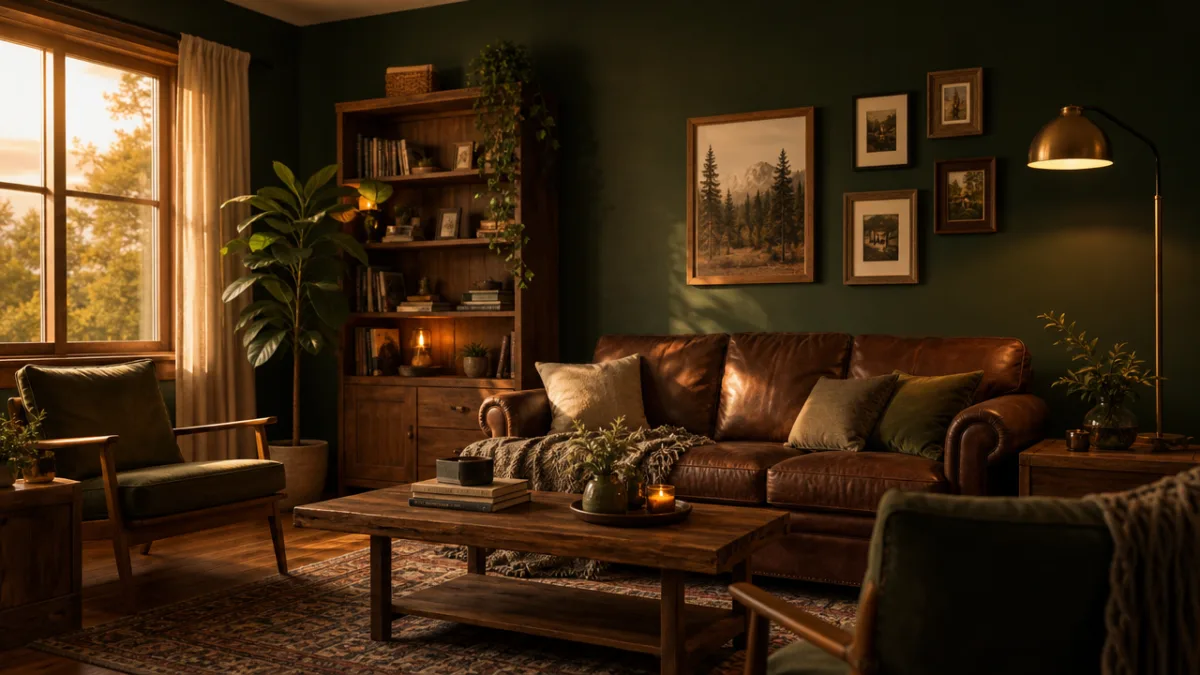
If you’re ready to push past neutrals, though, there’s a whole world of color waiting. Deep jewel tones like forest green, navy, terracotta, and rich burgundy have become incredibly popular for accent walls and even full-room treatments. These bold shades work best when you balance them with natural materials — raw wood, linen, cotton, stone — so the color feels grounded rather than overwhelming. A useful rule of thumb is the 60-30-10 split: sixty percent dominant color, thirty percent secondary, ten percent accent. It keeps things visually interesting without tipping into chaos.
Furniture Selection and Spatial Arrangement
Furniture choices are among the most consequential decisions you’ll make when decorating, both because of the cost involved and because your furniture shapes how a space actually functions every single day. Before you fall in love with a piece in a showroom or online, get clear on your room’s dimensions, how people move through it, and what activities it needs to support. A sofa that looks incredible in a photo can completely swamp a small living room, while something that looks almost too delicate in a catalog might be perfectly proportioned for a generous open-plan kitchen and dining area.
How you arrange your furniture matters just as much as the pieces themselves. One of the most common mistakes people make is pushing everything against the walls, thinking it’ll free up floor space. In practice, it usually just makes a room feel cold and disconnected. Pulling furniture away from the walls and clustering pieces together creates cozy conversation areas and gives the room a sense of purpose and warmth. In a living room, positioning sofas and armchairs around a central coffee table — even with a gap of a couple of feet from the walls — immediately makes the space feel more intentional and inviting.
Mixing furniture styles is one of the hallmarks of sophisticated contemporary decorating. The era of the matching suite is pretty much behind us, replaced by a more thoughtful approach that blends pieces from different eras and traditions. A mid-century modern dining table can look fantastic with industrial metal chairs. A rustic farmhouse bench might feel perfectly at home at the foot of a sleek, minimalist bed. The secret to making eclectic combinations click is finding a unifying thread — a consistent color, a shared material, a similar sense of scale — that ties everything together visually even when the individual styles differ.
- Measure twice, buy once: Always measure your room and sketch out a rough floor plan before buying any large pieces — it saves you from expensive, frustrating mistakes.
- Consider scale and proportion: Large rooms can handle substantial furniture; smaller rooms call for pieces with a lighter, more delicate footprint.
- Allow for traffic flow: Leave at least 36 inches for main pathways and around 18 inches around seating areas so the room actually feels comfortable to move through.
- Invest in quality for anchor pieces: Put your money into the sofa, bed, and dining table you’ll use every day, and be more economical with decorative items you’ll likely swap out over time.
Lighting Design: The Element Most Often Overlooked
If there’s one thing that separates truly polished interiors from those that fall just a little flat, it’s lighting. Most people default to a single overhead light in each room, which gives you that flat, shadowless brightness that makes a space feel clinical no matter how carefully you’ve decorated everything else. Rooms that really come alive use layered lighting — a mix of ambient, task, and accent sources working together to create depth, warmth, and an atmosphere that shifts naturally as the day moves into evening.
Ambient lighting is your base layer — it’s the general illumination that fills the whole room, whether that comes from recessed ceiling lights, a statement pendant, or a chandelier. Task lighting is more focused, meant to support specific activities: a reading lamp beside a bed or armchair, under-cabinet lighting in a kitchen, or a desk lamp in a home office. Accent lighting is about drawing attention to the things you love — a picture light angled toward a favorite painting, an uplighter highlighting an architectural feature, or small spots inside a bookcase casting a warm, intimate glow.
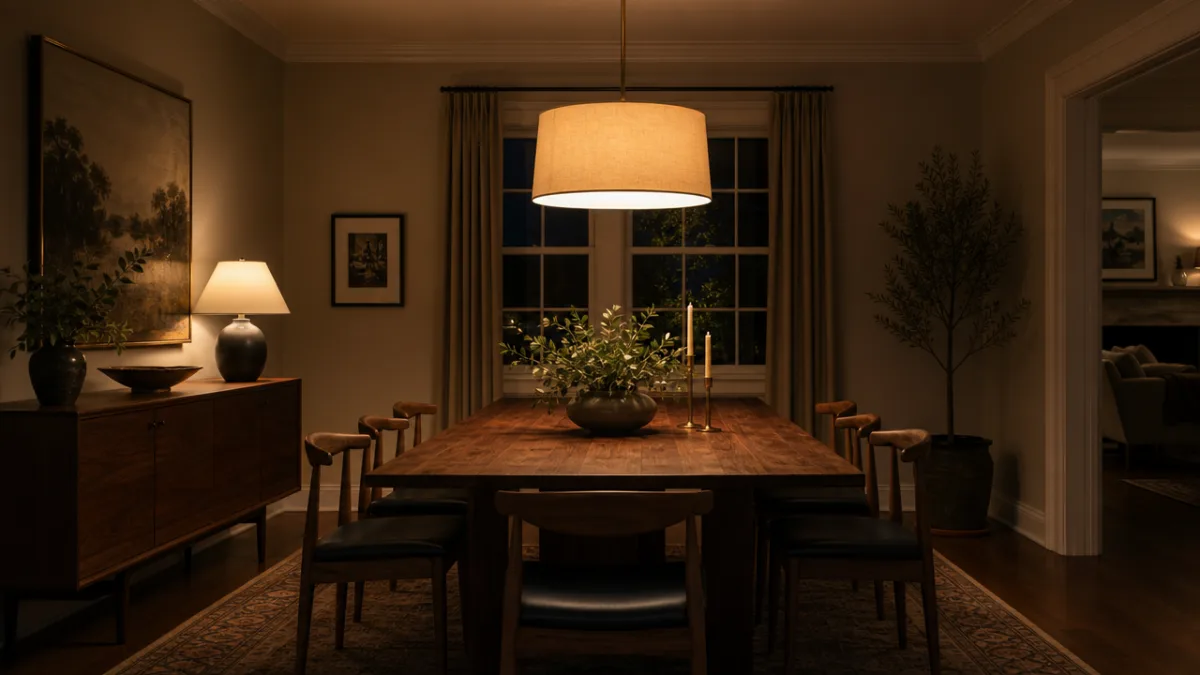
One detail that makes a surprisingly big difference is the color temperature of your bulbs. Bulbs are measured in Kelvin, and the range goes from warm (2700–3000K, that golden, candle-like quality perfect for living rooms and bedrooms) to cool (4000–6500K, a brighter, crisper light better suited to bathrooms, kitchens, and home offices where you need clarity and focus). Mixing temperatures in the same room creates a jarring, disjointed effect, so it’s worth taking the time to standardize your bulbs throughout each space — it’s a small effort that makes a noticeably professional difference.
Textiles, Textures, and the Sensory Dimension of Decoration
A room that photographs beautifully but feels cold or uncomfortable in person has almost certainly skipped the textural dimension of decorating. Textiles — rugs, curtains, cushions, throws, upholstery — are what make a space feel genuinely livable. They bring softness to hard surfaces, warmth to cool materials, and visual richness to plain walls and floors. They’re also among the most affordable and easily swapped elements in any decorating scheme, which makes them a great way to refresh a room seasonally or test out new colors and patterns without committing to anything permanent.
Layering textures is something interior designers do instinctively to add depth and richness to a room. Think about a bed dressed with smooth cotton, a cable-knit throw draped across one corner, a velvet cushion against a linen pillow, and a jute rug on the floor beside it. Each material brings a different visual weight and tactile quality, and together they create a sense of comfort and abundance that no single perfect textile could achieve on its own. The same idea applies to a living room — a leather sofa with wool cushions, a silk lampshade, and a shaggy floor rug produces something visually layered and genuinely inviting.
Curtains and window treatments are worth giving real thought to, because they take up a lot of visual real estate in most rooms and have a significant influence on how light moves through the space all day. Hanging floor-length curtains close to the ceiling — even if the actual windows are much shorter — creates an illusion of height and grandeur that can transform an ordinary room. Choosing curtain fabric that complements rather than exactly matches your upholstery gives a more sophisticated, layered effect. Natural linen in undyed tones is hard to go wrong with — it has a soft, organic quality that slots seamlessly into almost any style, contemporary or traditional.
- Start with a rug: In any main living space, a well-chosen area rug anchors the furniture and defines the zone — it’s the ideal foundation to build your whole textile scheme around.
- Mix at least three different textures: Aim for a combination of smooth, rough, and soft materials in every room to prevent things from feeling flat or one-dimensional.
- Consider weight and drape: Heavier fabrics like velvet and thick wool bring warmth and a sense of luxury, while lighter materials like cotton voile and linen keep things feeling airy and fresh.
- Repeat colors across textiles: Connecting different textile pieces through a shared color or pattern creates visual rhythm and keeps a room from feeling scattered or cluttered.
Plants, Art, and the Personal Touches That Complete a Home
Even the most carefully considered room — great color, well-chosen furniture, thoughtful lighting, beautiful textiles — will still feel a little hollow without the personal elements that show real people actually live there. Artwork, houseplants, books, ceramics, travel souvenirs, family photographs — these are the final layer that turns a professionally styled space into an actual home. They deserve just as much thought as any other decorating decision, because they’re ultimately what make your home unmistakably yours and nobody else’s.
Houseplants have had a genuine renaissance in interior design over the past decade, and it’s easy to see why. They bring life, movement, and natural color into a space in a way nothing inanimate really can. Large, architectural plants like fiddle-leaf figs, monsteras, and bird-of-paradise make dramatic focal points in living rooms and hallways. Smaller plants grouped together on a windowsill or open shelf create a sense of abundance and energy. Even a single trailing pothos or string of pearls cascading from a high shelf adds organic movement that softens the hard angles of modern architecture and furniture.
A gallery wall is one of the most effective ways to put your personality on display, and it requires far less commitment than most people think. The trick is to start with a larger central piece and build outward, mixing frame sizes, orientations, and styles for that eclectic, collected-over-time feel. Lay your arrangement out on the floor before putting a single nail in the wall — it lets you play around until something clicks. And don’t limit yourself to framed prints alone. Mixing in mirrors, small sculptural objects, ceramic plates, or woven wall hangings adds a wonderful three-dimensional quality to the whole composition.
Sustainable and Budget-Conscious Decorating for the Modern Home
One of the most encouraging shifts in contemporary decorating is the growing focus on sustainability and buying with intention. The disposable approach — cheap furniture and accessories, replaced every few years as trends cycle through — is giving way to something more thoughtful: choosing quality, longevity, and pieces that actually mean something. This isn’t just better for the planet; it tends to produce more interesting, characterful interiors, because things chosen for their craftsmanship accumulate meaning over time in a way that flat-pack furniture simply never does.
Secondhand and vintage sourcing has become one of the most creatively rewarding ways to build a distinctive home. Charity shops, estate sales, online marketplaces, and antique dealers are full of well-made furniture, lighting, artwork, and accessories at a fraction of what they’d cost new. Vintage pieces bring genuine history and authenticity to a space that’s impossible to fake with new purchases. A mid-century sideboard found at a flea market, refinished and given new hardware, becomes something truly one-of-a-kind — and the story of finding and restoring it becomes part of your home’s character.
Decorating on a budget is really about prioritization and patience rather than going without. The most effective approach is to identify the two or three elements in each room that carry the most visual weight and put your money there, then find creative, economical solutions for everything else. A quality sofa and a beautiful rug will lift even modest accessories around them, while the reverse — cheap anchor pieces surrounded by expensive accents — tends to look unsatisfying no matter how hard you try. In the same vein, DIY projects like painting old furniture, reupholstering chair seats, or making your own artwork can deliver results that are both budget-friendly and genuinely personal — adding a handmade quality to your home that no retail purchase ever quite matches.








What do you think?
It is nice to know your opinion. Leave a comment.