










Homemade Dusting Spray: The Natural Cleaning Solution Your Home Deserves
Why Commercial Dusting Sprays Are Doing You More Harm Than Good
Next time you’re in the cleaning aisle, take a closer look at those brightly colored bottles. There are dozens of them, each promising to banish dust forever — but what the labels leave out is that most commercial dusting sprays are loaded with synthetic chemicals, artificial fragrances, and petroleum-based ingredients that keep floating around in your air long after you’ve put the bottle away. If you have kids, pets, or anyone at home who’s sensitive to allergens or has respiratory issues, that kind of ongoing chemical exposure is worth taking seriously.
Here’s another thing that bothers me about a lot of commercial dusting products: they actually attract more dust over time. The silicone compounds in many furniture polishes leave behind a film that looks great at first but gradually turns into a magnet for pet dander, airborne particles, and all kinds of microscopic gunk. So you end up cleaning more often just to maintain the same result — spending more money on the very product that’s making your dust problem worse. It’s a frustrating cycle, and it benefits the manufacturer a lot more than it benefits you.
Then there’s the environmental side of things. Aerosol cans, single-use plastic bottles, non-biodegradable chemicals — it all adds up. When you switch to a homemade dusting spray, you’re reusing the same bottle over and over, cutting out volatile organic compounds from your home’s air, and stepping away from chemically intensive manufacturing altogether. It’s genuinely one of the easiest swaps you can make to shrink your household’s environmental footprint without giving up a clean home.
The Core Ingredients and What Each One Does
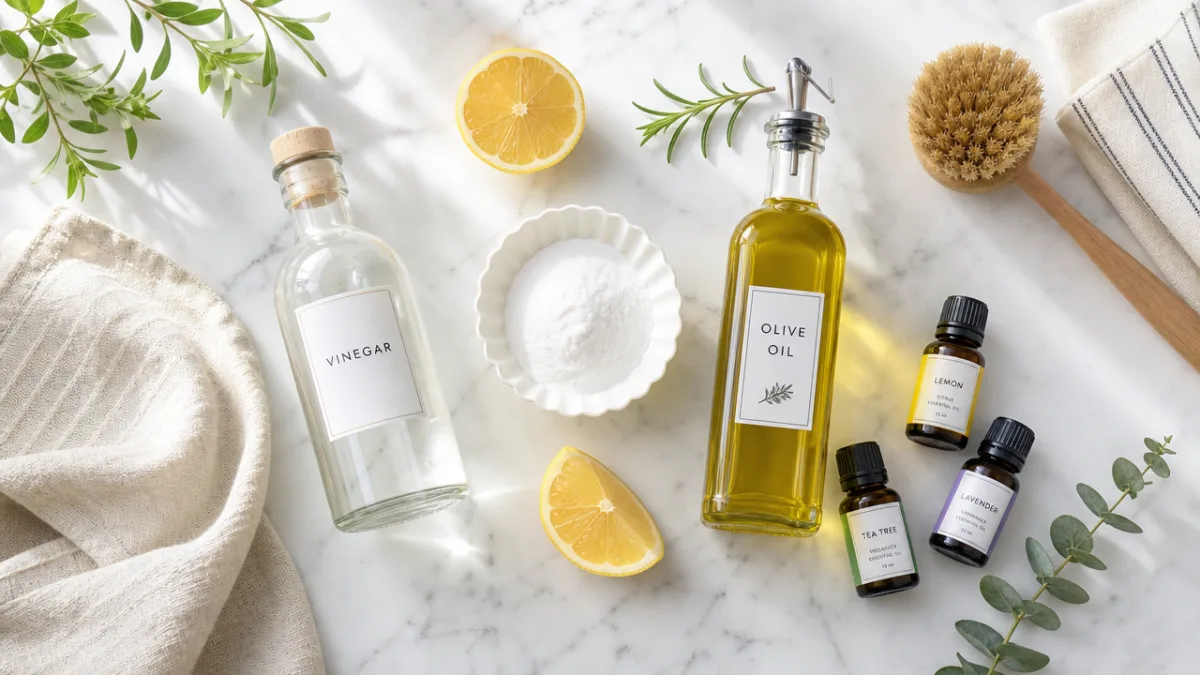
What I love most about this recipe is how simple it is. You only need a few ingredients, and chances are you already have most of them on hand. The base is distilled water — not tap water, because the minerals in tap water can leave spots and streaks on finished surfaces. Distilled water applies clean and evaporates without a trace, which is exactly what you want on wood, glass, or lacquered furniture.
White vinegar does the heavy lifting here. It has mild antibacterial and antifungal properties, cuts through the light grease and grime that builds up on shelves and tabletops, and actually helps break down the static charge that makes dust stick so stubbornly to surfaces. The smell is a bit sharp when you first spray it, but it dissipates almost completely as it dries — no lingering odor, and definitely none of that overwhelming fake-fresh scent you get from store-bought sprays.
A small amount of olive oil or fractionated coconut oil acts as a conditioning agent, giving wood surfaces a light nourishing layer that helps them resist future dust buildup and keeps them looking naturally healthy. And then there are the essential oils — lavender, lemon, tea tree, eucalyptus — which you’re adding for both scent and their well-documented antimicrobial benefits. A little goes a long way, and this is where you get to make the recipe your own based on what you like and what your home needs.
Step-by-Step Guide to Making Your Homemade Dusting Spray
This takes less than five minutes, and you don’t need any special equipment. A clean 16-ounce glass spray bottle is the ideal choice because glass won’t absorb essential oils or react with the vinegar over time the way some plastics can. If all you have is a plastic bottle right now, that’s totally fine to start — just consider making the switch to glass eventually for something more durable and neutral.
The basic recipe for a 16-ounce bottle: one cup of distilled water, half a cup of white vinegar, two tablespoons of olive oil or fractionated coconut oil, and 15 to 20 drops of your chosen essential oils. A lot of people like combining oils — ten drops of lemon for that clean, fresh brightness and ten drops of lavender for its calming antimicrobial qualities is a really nice pairing. Others prefer the sharp, clean hit of eucalyptus or peppermint, both of which also happen to deter certain insects that don’t love strong botanical scents.
Just add the ingredients to your bottle in the order listed, starting with the water and vinegar before pouring in the oil. Screw on the spray nozzle, give it a good shake, and you’re done. Since oil and water naturally separate as it sits, make sure to shake the bottle before every use. Label it with the contents and the date, and store it somewhere cool and dark — direct sunlight can degrade the essential oils. Made and stored this way, your spray will stay effective and fragrant for about four to six weeks.
A Quick Reference Ingredient List
- 1 cup distilled water
- ½ cup white vinegar (plain, not apple cider)
- 2 tablespoons olive oil or fractionated coconut oil
- 15–20 drops essential oils of your choice (lemon, lavender, eucalyptus, or tea tree work well)
- One 16-ounce glass or high-quality plastic spray bottle
- Optional: 1 teaspoon of rubbing alcohol to help emulsify the mixture
How to Use Your Dusting Spray for Best Results
How you apply the spray matters almost as much as what’s in it. Microfiber cloths are hands-down the best tool for this job because their electrostatically charged fibers actually trap dust, pet hair, and pollen rather than just pushing it around or sending it back into the air, which is exactly what paper towels and regular cotton rags tend to do. Keep a few on hand so you can swap to a fresh one when yours gets saturated — you’ll clean more efficiently and won’t end up redistributing grime across surfaces you’ve already done.
Work from top to bottom and from the back of the room toward the door. Professional cleaners do it this way so that any dust knocked loose from higher surfaces doesn’t drift down onto spots you’ve already cleaned. Spray the mist onto your cloth rather than directly onto the surface whenever you can, especially near electronics, books, and anything delicate. For wood furniture, antiques, or anything with a special finish, test in a small hidden spot first to make sure the oil component doesn’t darken or affect the finish in a way you don’t want.
This spray works well on a wide range of surfaces: wood furniture, sealed stone countertops, metal fixtures, plastic electronics housings, glass, and painted walls. Skip it on unfinished or unsealed wood, and on natural stone like marble or travertine that hasn’t been sealed — moisture and acid can cause damage there. For those surfaces, a dry microfiber cloth is the safer call. A little thoughtfulness about where you use it goes a long way toward keeping everything looking great for years.
Surfaces Where This Spray Excels
- Sealed hardwood and laminate furniture
- Shelving units, bookcases, and display cases
- Television screens and monitor bezels (applied to cloth, not directly to screen)
- Ceiling fan blades and light fixtures
- Baseboards, window sills, and door frames
- Decorative objects, frames, and knickknacks

Customizing Your Recipe for Different Needs and Preferences
One of the best parts of making your own cleaning products is being able to tweak the recipe for your specific situation. If you have young kids who touch absolutely everything, adding tea tree oil gives you extra antimicrobial protection without reaching for harsh disinfectants that are really overkill for everyday dusting. Tea tree has a strong, medicinal scent — some people love it, others find it a bit much — so start with just ten drops and adjust from there.
For pet households, especially homes with heavy-shedding dogs or cats, a few drops of cedarwood essential oil can naturally help repel fleas and make your furniture less appealing to insects, all while leaving behind a warm, pleasant woody scent. If dust mite allergies are a real issue in your home, clove or cinnamon essential oil are worth exploring — both have shown some promise as natural dust mite deterrents. Just use them sparingly, since they’re potent, and keep in mind they can be irritating to pets.
Seasonal blends are a genuinely fun way to keep your cleaning routine from feeling repetitive. In spring and summer, a citrus mix of lemon, orange, and grapefruit brings a bright, energizing lift to the whole process. Come fall, swapping to cinnamon, clove, and cedarwood makes dusting feel almost cozy. And in winter, peppermint or eucalyptus gives off that crisp, clean feeling even when all the windows are shut tight against the cold.
Making Homemade Cleaning Part of a Broader Natural Home Philosophy
For most people, switching to a homemade dusting spray isn’t a one-and-done change — it’s the start of something bigger. Once you see how easy, affordable, and genuinely effective these recipes are, it becomes pretty hard to justify going back to expensive store-bought products with ingredient lists you can’t fully decipher. There’s something really satisfying about knowing exactly what’s in every cleaning product you use, especially in the spaces where your family eats, sleeps, and spends most of their time. That kind of peace of mind is a real quality-of-life upgrade.
The savings are also worth mentioning. A 16-ounce bottle of commercial dusting spray can run anywhere from four to ten dollars, and plenty of households go through more than one a month. The ingredients for a homemade version cost a fraction of that, especially once you’ve made the initial investment in a glass bottle and a small collection of essential oils. Over the course of a year, making your own cleaning products can easily save you hundreds of dollars — while also cutting down on synthetic chemical exposure and plastic waste at the same time.
Sharing these recipes with people you know creates a nice ripple effect. A batch of homemade dusting spray in a beautiful glass bottle makes a genuinely thoughtful housewarming or holiday gift, especially when you pair it with a handwritten recipe card so the recipient can keep making their own. It turns a small, practical gift into a lasting habit for someone else. Sharing natural living knowledge this way is one of the most low-key but meaningful ways individual choices add up into something bigger — and honestly, a humble little spray bottle is a surprisingly good conversation starter about what intentional homemaking can look like.
Other Natural Cleaning Recipes to Try Next
- All-purpose kitchen spray with vinegar, water, and lemon essential oil
- Baking soda and castile soap scrub for bathroom tile and grout
- Glass and mirror cleaner using rubbing alcohol, vinegar, and water
- Natural fabric softener with white vinegar and lavender essential oil
- DIY toilet bowl cleaner with baking soda, vinegar, and tea tree oil
- Hardwood floor cleaner with diluted castile soap and a drop of orange oil
The path toward a naturally clean home is cumulative, and it’s a genuinely rewarding one. Every recipe you get comfortable with, every plastic bottle you stop buying, every synthetic chemical you phase out — it all counts. Your homemade dusting spray is the perfect starting point because it’s fast, nearly foolproof, and the results are immediately obvious. The first time you shake that bottle and run it across a dusty shelf to reveal a clean, lightly conditioned surface underneath, you’ll wonder why it took you so long to try. Natural cleaning isn’t a compromise — with the right recipes and a little practice, it’s just better.








What do you think?
It is nice to know your opinion. Leave a comment.