







![Homemade Deck Cleaner [Safe for Plants & Pets]](https://i.pinimg.com/originals/b6/5d/26/b65d265fc28b9f796cc6459adeb92d90.jpg "Homemade Deck Cleaner [Safe for Plants & Pets]")


Homemade Deck Cleaner: Safe for Plants & Pets
Why Your Deck Needs Regular Cleaning
Your outdoor deck is one of the most used spaces around your home, serving as a gathering spot for family dinners, weekend barbecues, and lazy afternoon relaxation. Over time, exposure to the elements causes a buildup of dirt, mildew, algae, and grime that not only looks unsightly but can actually compromise the structural integrity of your wood or composite decking. Regular cleaning extends the life of your deck significantly, protecting your investment and keeping the space welcoming and safe for everyone who uses it.
Many homeowners reach for commercial deck cleaners without a second thought, not realizing that these products are often loaded with harsh chemicals like sodium hypochlorite, phosphates, and volatile organic compounds. These substances can leach into the soil surrounding your deck, harming plant roots and disrupting the delicate balance of your garden ecosystem. Even more concerning, pets who walk across a freshly cleaned deck can absorb these chemicals through their paw pads or ingest them during grooming, potentially leading to skin irritation, digestive upset, or worse health complications.
The good news is that you do not need aggressive chemical formulas to get a beautifully clean deck. Homemade deck cleaners made from simple pantry and household staples can tackle even stubborn mildew, algae stains, and ground-in dirt with remarkable effectiveness. These DIY solutions are cost-effective, environmentally responsible, and most importantly, safe for the plants and pets that share your outdoor living space. Making the switch is easier than you might think, and the results are genuinely impressive.
Understanding What Makes a Cleaner Pet and Plant Safe
Before mixing your own deck cleaner, it helps to understand what properties make a cleaning solution safe for the living things in your yard. A plant-safe cleaner should be biodegradable, meaning it breaks down naturally in the soil without leaving toxic residues that accumulate over time. It should also have a pH that will not dramatically alter the soil chemistry around your plants, since extreme acidity or alkalinity can prevent roots from absorbing the nutrients they need to thrive. Gentle surfactants derived from natural sources are far preferable to synthetic detergents that persist in the environment.
For pets, the safety calculus involves a few different factors. Dogs and cats are particularly vulnerable because they are low to the ground, often lick their paws after walking on treated surfaces, and have skin and mucous membranes that readily absorb chemical substances. A pet-safe cleaner should contain no compounds that are toxic when ingested in small amounts, no artificial fragrances that can irritate respiratory systems, and no substances that cause skin sensitization or chemical burns on paw pads. Natural ingredients like white vinegar, baking soda, and castile soap meet these criteria comfortably.
It is also worth noting that timing matters even when using safe formulas. Allow the cleaner to sit on your deck surface for the recommended dwell time, then rinse thoroughly before allowing pets or children back onto the surface. Even gentle ingredients can cause mild irritation in concentrated form, so a complete rinse with clean water is always the final and essential step. Keeping pets and small children inside while you clean and during the rinse process is a simple precaution that makes the entire experience worry-free.
The Best Homemade Deck Cleaner Recipes
There are several reliable homemade deck cleaner formulas, each suited to different levels of grime and different types of deck surfaces. The basic all-purpose cleaner is perfect for routine maintenance cleaning and works beautifully on wood, composite, and PVC decking alike. For more stubborn mildew or algae stains, a slightly stronger oxygen-boosted formula delivers powerful results without crossing into territory that would harm your yard’s ecosystem. Knowing which recipe to reach for depending on your situation will save you time and ensure you always get the best outcome.
The most popular and versatile homemade deck cleaner combines just a few simple ingredients that you likely already have at home. Start with one gallon of warm water as your base, then add one cup of white distilled vinegar, which provides gentle acidity that cuts through organic growth like algae and mildew. Stir in a quarter cup of dish soap or liquid castile soap, which acts as a surfactant to lift dirt from the surface and suspend it so it rinses away cleanly. For an extra cleaning boost, add half a cup of baking soda, which provides mild abrasion and helps neutralize odors trapped in the wood grain.
For decks with visible mildew staining or green algae patches, an oxygen bleach formula is your best friend. Unlike chlorine bleach, oxygen bleach — sold under brand names like OxiClean or available as sodium percarbonate in bulk — is plant and pet safe once rinsed. Mix two cups of oxygen bleach powder into one gallon of warm water, stirring until fully dissolved. Apply generously to the stained areas, allow it to sit for fifteen to twenty minutes, and then scrub with a stiff-bristled brush before rinsing. The results will genuinely surprise you with how effectively this formula restores the original appearance of your decking.
Quick Reference Recipe Guide
- All-Purpose Maintenance Cleaner: 1 gallon warm water, 1 cup white vinegar, 1/4 cup castile or dish soap, 1/2 cup baking soda. Ideal for monthly cleaning routines.
- Oxygen Bleach Stain Remover: 1 gallon warm water, 2 cups oxygen bleach powder. Best for mildew, algae, and deep staining. Rinse thoroughly after 15-20 minutes.
- Quick Spot Treatment: Undiluted white vinegar applied directly to small mildew spots, left for 10 minutes, then scrubbed and rinsed. Perfect for between full cleanings.
- Grease and Grill Stain Cleaner: Paste made from baking soda and a few drops of dish soap, applied directly to the stain and scrubbed in with a brush before rinsing.
Step-by-Step Cleaning Process
A successful deck cleaning is as much about the process as it is about the cleaning solution itself. Rushing through the steps or skipping preparation can result in uneven cleaning, residue left on the surface, or damage to the surrounding garden. Taking the time to follow a systematic approach ensures you get professional-quality results safely and efficiently. The entire process for an average-sized deck typically takes between one and two hours, making it a very manageable weekend project.
Begin by clearing everything off your deck completely. Move furniture, potted plants, grills, and any decorative items to a safe location away from the cleaning area. Sweep the deck thoroughly with a stiff broom to remove loose debris, leaves, and dirt. Pay special attention to the gaps between deck boards, where organic matter tends to accumulate and feed mildew growth. If you have a leaf blower, a quick pass before sweeping makes this step even easier. Pre-wetting the deck with plain water from a garden hose before applying your cleaner helps the solution penetrate evenly and prevents it from drying too quickly on hot days.
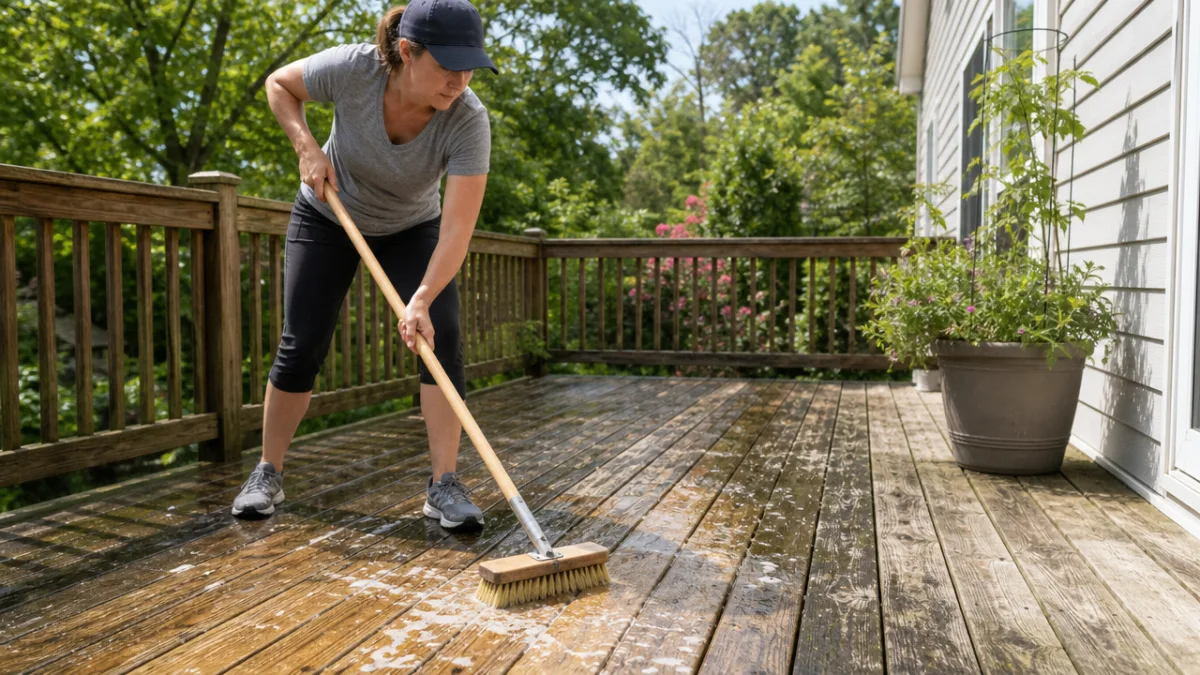
Apply your chosen homemade cleaner generously across the entire deck surface, working in manageable sections if your deck is large. Use a long-handled scrub brush or a deck-cleaning brush attachment on a push broom to work the solution into the wood grain using consistent, circular or back-and-forth strokes. Allow the solution to dwell on the surface according to the recipe guidelines — never let it dry out completely, as this can make rinsing more difficult. Once you have scrubbed each section, rinse thoroughly with a strong stream of water from your garden hose or a pressure washer set to a low, wood-safe PSI setting, working with the grain of the wood to avoid raising fibers.
Essential Tools for the Job
- Stiff-bristled deck scrub brush with a long handle to protect your back during scrubbing
- Garden hose with an adjustable spray nozzle for rinsing, or a pressure washer set below 1500 PSI
- Two five-gallon buckets — one for your cleaning solution and one for rinse water
- Protective rubber gloves, even when using natural cleaners, to keep your hands clean and dry
- Old clothes or an apron, since even safe cleaners can cause splashing that stains fabric
- A stiff hand brush for working solution into corners, railings, and between deck boards
Protecting Your Plants and Pets During and After Cleaning
Even when using completely natural and biodegradable cleaning solutions, taking a few extra precautions to protect your garden plants and pets during the cleaning process is a smart and responsible approach. Plants near the deck can be inadvertently splashed with cleaning solution during scrubbing, and while natural ingredients are far less damaging than chemicals, concentrated soap or vinegar can still burn delicate foliage if it sits on leaves for an extended period. A few simple steps will ensure that your garden comes through the cleaning day looking just as healthy as your freshly scrubbed deck.
Before you begin cleaning, thoroughly water any plants, shrubs, or grass immediately adjacent to your deck. This pre-watering serves two purposes: it dilutes any cleaner that runs off the deck into the surrounding soil, and it creates a buffer that helps plants resist minor chemical exposure. You can also drape lightweight plastic sheeting or old bedsheets over particularly vulnerable plants or garden beds if they are very close to the deck edge. Once you have finished cleaning and rinsing, give the surrounding vegetation another generous watering to flush any residual cleaner away from root zones. This extra attention takes just a few minutes but makes a meaningful difference.
For pets, the safest approach is to keep them indoors or in a completely separate area of the yard until the deck has been fully rinsed and allowed to air dry. Even pet-safe ingredients can cause mild paw irritation in concentrated wet form, and excited dogs especially have a way of getting underfoot at exactly the wrong moment during cleaning projects. Once the deck surface is dry to the touch — usually within an hour or two on a warm, sunny day — it is completely safe for pets to return to their favorite lounging spots. You will have peace of mind knowing you have given your outdoor space a deep clean without compromising anyone’s health.
Maintenance Tips to Keep Your Deck Cleaner Longer
The best way to minimize the effort required for deep deck cleaning is to establish a consistent maintenance routine that prevents heavy buildup from developing in the first place. A deck that receives a light cleaning every few weeks will never reach the point of requiring intensive scrubbing with stain-removing formulas. Maintenance is not just about aesthetics — it is also about preserving the wood or composite material beneath the grime, preventing the kind of moisture retention that leads to rot, warping, and premature deterioration of decking materials.
After each rainstorm or period of damp weather, give your deck a quick sweep to remove wet leaves and debris before they have a chance to decompose on the surface and leave staining tannins behind. Every two to four weeks, a simple mop-down with the basic all-purpose cleaner recipe followed by a thorough rinse will keep algae and mildew from gaining a foothold. Pay particular attention to shaded areas of your deck, where moisture lingers longer and organic growth tends to develop more quickly. Keeping nearby tree branches trimmed back to allow more sunlight to reach the deck surface is a surprisingly effective long-term maintenance strategy.
At the end of each season, consider applying a natural deck sealant or penetrating oil finish to wood decking after your cleaning session. A good sealant creates a protective barrier that repels water, prevents UV damage, and dramatically slows the accumulation of the grime and organic growth that makes cleaning necessary. Look for water-based sealants with low volatile organic compound content, which are both more environmentally friendly and safer for households with pets and children. With proper sealing and consistent light maintenance, you may find that your annual deep-cleaning session becomes faster and easier every single year.
Seasonal Deck Care Calendar
- Spring: Perform a deep clean using the oxygen bleach formula to remove winter mildew and grime. Inspect for loose boards, protruding nails, or winter damage before sealing.
- Summer: Light maintenance cleaning every three to four weeks. Spot-treat grease stains from grilling immediately with the baking soda paste method.
- Fall: Sweep frequently to remove falling leaves before they stain. Do one final medium-intensity cleaning before temperatures drop consistently.
- Winter: In mild climates, continue sweeping as needed. In cold climates, allow the deck to rest but never use rock salt for ice removal, as it damages wood and harms pets.

Troubleshooting Common Deck Cleaning Challenges
Even with the best homemade cleaners and proper technique, you may occasionally encounter stubborn staining or persistent problems that require a bit of extra strategy. Black stains on wood decking are almost always caused by tannins — naturally occurring compounds in the wood itself — reacting with iron deposits from metal furniture legs, nails, or brackets. These stains can look alarming but respond well to a solution of oxalic acid, which is a naturally occurring organic acid derived from plants and considered one of the safer wood brightening agents available. Apply it carefully, allow it to dwell, and rinse thoroughly for impressive results.
Persistent green or black algae that returns quickly after cleaning is usually a sign of a moisture or drainage problem rather than an ineffective cleaner. Check that water is not pooling on sections of your deck after rain, which can indicate a slight leveling issue or blocked drainage channels between boards. Improve air circulation around and under the deck if possible, as stagnant air is the primary driver of rapid algae regrowth. In particularly shady spots, you may need to clean more frequently during the wetter months of the year, accepting that biology will work against you in these conditions regardless of which cleaner you use.
If your deck boards have developed a grey, silvery color, this is natural weathering caused by UV exposure and is not actually a form of dirt or biological growth. Weathered wood can be restored to a warmer, more natural tone using a wood brightener or deck restorer product, applied after a thorough cleaning. Many commercially available brighteners are mild enough to be considered relatively safe for plants and pets once rinsed, but always read labels carefully and rinse the surrounding soil generously when using any product beyond your basic homemade formula. With the right approach and a little patience, most deck surface problems have effective and responsible solutions well within reach of any motivated homeowner.








What do you think?
It is nice to know your opinion. Leave a comment.