










10 Outdoor Wood Address Sign Ideas That Give Your Home a Charming and Personal Welcome
Your home’s address sign is often the very first thing a visitor, delivery driver, or neighbor notices about your property. It sets the tone for everything that lies beyond the front door. While many homeowners settle for generic metal numbers affixed to a mailbox or brick wall, a thoughtfully crafted wood address sign offers something far more meaningful — a handcrafted declaration of personality, warmth, and pride. Wood as a material carries a timeless appeal that few other substances can match, aging gracefully with the seasons and blending harmoniously with nearly every architectural style from rustic farmhouse to sleek modern craftsman.
The growing popularity of outdoor wood address signs reflects a broader cultural shift toward personalization and slow living. People are increasingly drawn to objects that feel intentional and human-made, a contrast to the mass-produced aesthetic that dominates so much of contemporary life. A wood sign carved, burned, or painted by hand communicates something essential about the values of the household within. It says that someone took time, exercised creativity, and chose beauty over mere function. That message resonates deeply with guests before they even knock on the door.
In this article, we explore ten distinct outdoor wood address sign ideas that range from the elegantly simple to the elaborately decorative. Whether you are a seasoned woodworker with a full workshop or a weekend DIY enthusiast with basic tools and a good eye, there is an idea here that will inspire you to upgrade your home’s curb appeal in a way that feels genuinely personal and enduringly charming. Each concept can be adapted to suit different wood types, finishes, and surrounding landscapes, making the possibilities nearly limitless.
1. Rustic Log Slice Address Signs
Few materials carry the raw, organic beauty of a naturally cross-cut log slice. When you take a thick section of a hardwood trunk — oak, cedar, or black walnut are particularly popular choices — you get a surface that is entirely unique, marked by its own growth rings, knots, and grain patterns. Routing or burning your house numbers directly into this surface results in a sign that looks as though it grew out of the earth itself. The natural edge of the wood becomes part of the design, an irregular border that no factory could ever replicate. Mounted on a post or hung beside the front porch, a log slice address sign commands quiet attention.
The key to success with log slice signs lies in proper wood preparation and sealing. Raw wood that is taken outdoors without treatment will quickly absorb moisture, crack along the grain, and potentially harbor mold or insects. The best approach is to allow the wood to dry thoroughly after cutting, sand the face smooth to a fine grit, and then apply multiple coats of an exterior-grade penetrating oil or spar varnish. This not only protects the wood from the elements but also deepens the color and highlights the natural grain in a way that is visually striking, especially in low afternoon light.
For lettering, wood burning — also known as pyrography — produces particularly beautiful results on log slices. The burn marks darken naturally into the grain, creating contrast that reads clearly even from a distance. Alternatively, you can use a router with a V-groove bit to carve numbers with crisp, clean edges, then fill them with exterior paint in white, black, or a color that complements your home’s palette. Some crafters choose to leave the carved channels in their natural wood color and instead apply a dark stain to the background, making the numbers appear lighter and more prominent. All of these approaches yield stunning, durable results.
2. Reclaimed Barn Wood Planks
Reclaimed barn wood has become one of the most beloved materials in contemporary home décor, and for very good reason. Each plank carries decades of history — the evidence of weather, use, and time written into its surface in the form of silver-grey patina, nail holes, saw marks, and subtle color variations. Using reclaimed wood for an address sign immediately gives your home’s exterior an air of story and substance. It signals an appreciation for heritage and craftsmanship that brand-new materials simply cannot convey. The character that others might try to fake through distressing techniques comes absolutely free with genuinely reclaimed material.
When working with barn wood, the structural integrity of the board matters as much as its appearance. Before committing a plank to an outdoor sign project, check carefully for soft spots, rot, or insect damage that could compromise its longevity. Run a metal detector over the surface to locate any embedded nails or hardware that might damage your tools. Once you have selected a sound piece, the preparation is relatively minimal — light sanding to smooth any truly rough splinters while preserving the textured surface, followed by a coat of exterior clear sealer to lock in the existing patina and protect it from further weathering. Many designers prefer to apply the sealer with a cloth rather than a brush to avoid covering the fine surface texture.
Address numbers on reclaimed barn wood look exceptional when applied in contrasting metal. Black powder-coated iron house numbers, mounted slightly proud of the wood surface with standoff hardware, create a beautiful interplay of rustic and refined. Alternatively, numbers can be stenciled on using exterior chalk paint for a softer, more cottage-inspired look, or cut from thin sheet metal and riveted directly to the plank. Hanging the finished sign with heavy-gauge rope or wrought iron brackets completes the aesthetic and reinforces the sense of solid, hand-built quality that makes this style so enduringly popular.
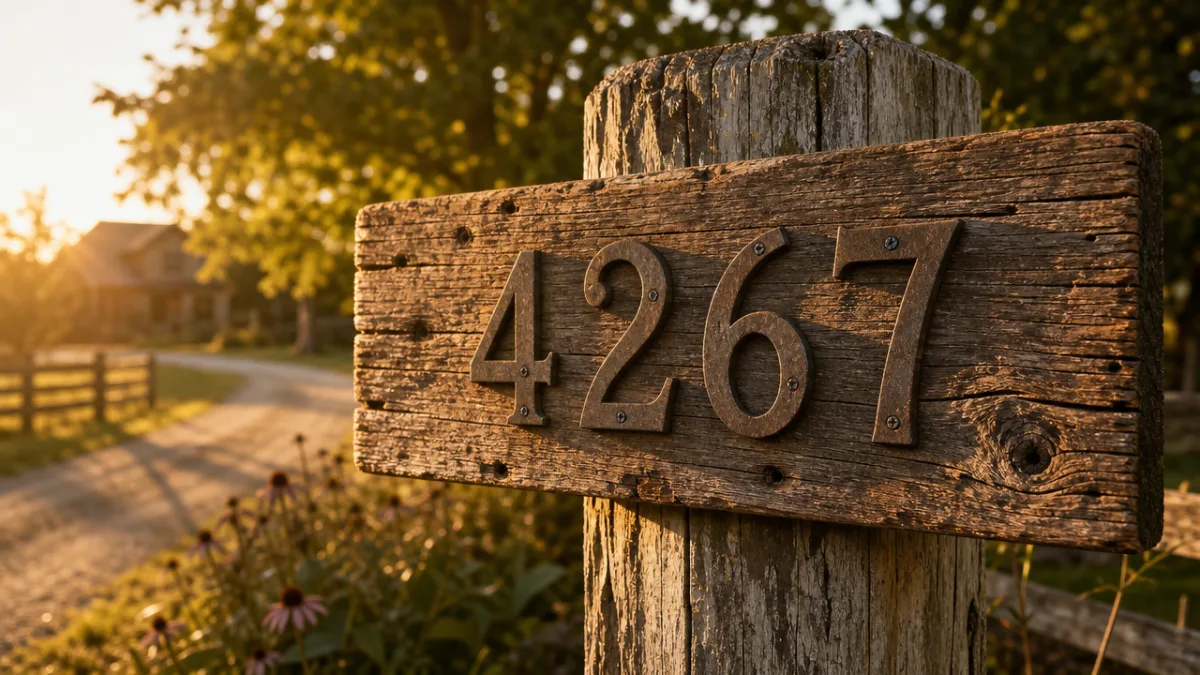
3. Carved and Painted Cedar Plaques
Cedar is one of the finest woods available for outdoor signage, prized by professional sign makers and DIY enthusiasts alike for its combination of natural beauty, workability, and inherent resistance to moisture and insects. The wood’s relatively tight, straight grain accepts carving tools with ease, making it possible to achieve crisp, detailed lettering and decorative elements without the grain fighting back. Western red cedar, in particular, offers a warm reddish-brown color that weathers to an attractive silver-grey if left unsealed, or can be preserved in its original warm tones with an appropriate finish. Either approach produces a sign with genuine character and excellent outdoor durability.
The most sophisticated version of this idea involves relief carving — cutting away the background of the plaque so that the numbers and any decorative elements stand in raised relief against a recessed field. This technique, which requires some practice and a good set of carving gouges or a sharp router, produces a three-dimensional quality that catches light beautifully throughout the day. As the sun moves across the sky, the depth of the carving casts different shadows across the surface, meaning the sign actually looks subtly different in the morning than it does in the afternoon. This dynamic quality is one of the things that separates a truly fine wood sign from a flat, printed alternative.
Painting carved cedar plaques opens up a world of color possibilities. Many homeowners choose a background color that matches or complements their front door, with numbers in a contrasting shade — forest green with cream numbers, navy with gold, or charcoal with bright white. Botanical motifs are a particularly popular decorative addition: a carved branch of laurel, a simple floral border, or a small woodland animal nestled beside the numerals can transform a functional sign into something approaching folk art. Use exterior-grade latex paint for its flexibility and UV resistance, and seal everything with a clear coat designed for outdoor wood to ensure the colors remain vibrant through years of sun and rain.
4. Floating Number Wood Panels
For homeowners who appreciate a more contemporary aesthetic, floating number wood panels offer a sophisticated alternative to traditional sign formats. In this approach, individual numbers are either cut from the wood itself using a scroll saw or jigsaw, or the numbers are mounted as separate elements — often in metal or painted wood — that stand away from a background panel on small standoff hardware. The slight gap between number and panel creates a shadow line that gives the whole composition a graphic, three-dimensional quality more commonly associated with high-end architectural signage than with residential address markers. The result is a sign that feels both modern and warm, an increasingly sought-after combination.
The wood panel itself in this design is often kept relatively minimal — a clean rectangle or horizontal band of smooth-planed hardwood, finished to highlight the grain rather than disguise it. Walnut is an especially popular choice for this style because its deep chocolate-brown color provides excellent contrast for lighter-colored numbers, and its fine, consistent grain gives the panel an almost furniture-like quality. Maple, with its pale, creamy tone, works beautifully as a background for dark metal numbers. The wood can be finished with a rubbed oil for a matte, natural look, or with a clear satin varnish for slightly more sheen and a stronger weather barrier.
Installation of a floating number panel deserves careful thought, as the clean lines of this style are easily compromised by clumsy mounting hardware. Concealed keyhole brackets that allow the panel to hang flat against the wall with no visible screws are ideal. If the sign is to be post-mounted, choose a post that is appropriately scaled — too slender and it looks precarious, too massive and it overwhelms the delicate proportions of the floating number design. Cedar or pressure-treated posts with a square profile tend to work well, and painting or staining the post to match either the panel or the numbers ties the whole composition together with satisfying visual logic.
5. Driftwood and Coastal Style Signs
For homes near the water — or for those who simply love the easy, breezy aesthetic of coastal living — driftwood address signs offer a charming option that feels genuinely connected to the natural world. Driftwood, shaped and smoothed by years of water and sun, arrives already possessing a sculptural quality and a bleached, silvery finish that no amount of artificial distressing can truly replicate. Collecting your own driftwood from a nearby beach or riverbank adds a personal dimension to the project; the material itself becomes part of the home’s story, a souvenir of place that visitors can literally see and touch.
Working with driftwood requires a flexible approach, since each piece dictates its own possibilities rather than conforming to a predetermined plan. The irregular shapes and unpredictable surfaces of driftwood mean that your address sign will inevitably be one of a kind, a feature rather than a limitation. Numbers can be painted directly onto the smoothest available surface with exterior paint and a fine brush, burned with a pyrography tool for a more permanent mark, or crafted separately from rope, shell, or additional smaller pieces of driftwood and attached with marine-grade adhesive or stainless steel screws. The goal is always to work with the material rather than against it, letting the wood’s natural form guide the composition.
To protect a driftwood sign from further weathering while preserving its characteristic bleached appearance, apply a coat of exterior matte clear sealer rather than a glossy varnish, which would look out of place on this naturally casual material. Rope hanging hardware suits the coastal aesthetic perfectly — thick natural hemp or cotton rope threaded through drilled holes and knotted with sailor’s knots creates a mounting system that is both practical and decorative. Pairing your driftwood sign with nearby planters filled with sea grass, lavender, or other salt-tolerant plants completes a front entrance tableau that immediately communicates the relaxed, nature-connected spirit of a coastal home.
6. Engraved Hardwood Address Stakes
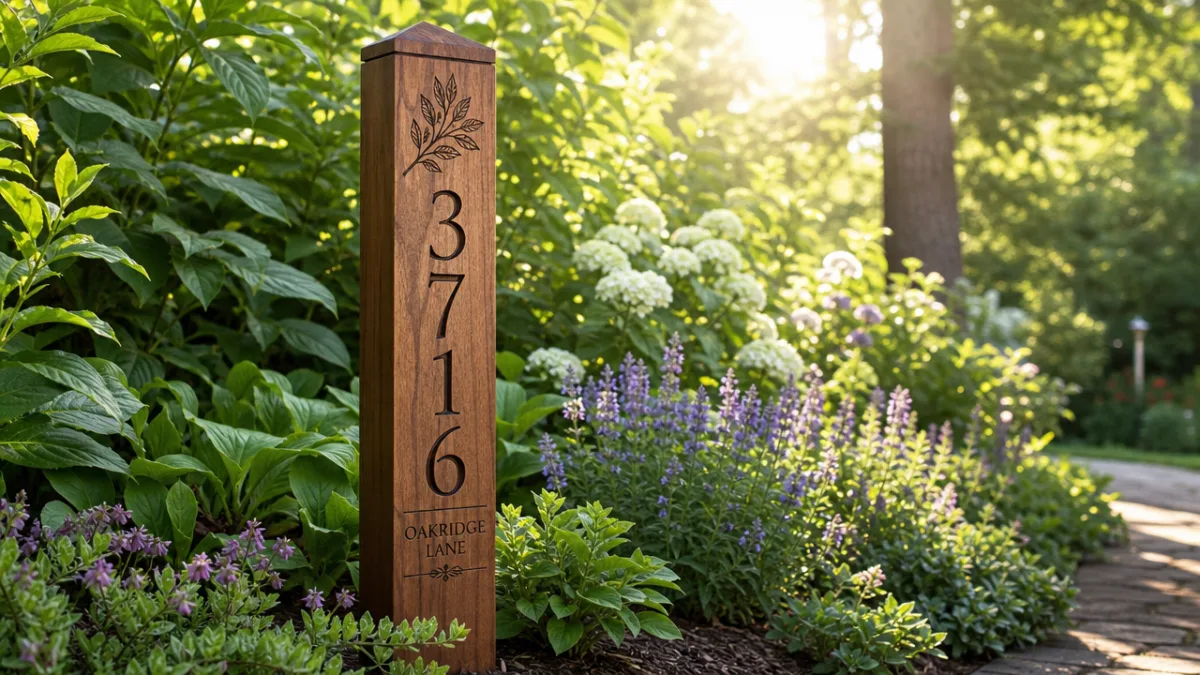
Address stakes — slender vertical posts driven directly into the ground near the front walkway or garden border — offer a practical and visually appealing alternative to wall-mounted signs. When crafted from dense hardwood such as teak, ipe, or black locust, these stakes are remarkably durable in outdoor conditions, with natural oils and tight grain structures that resist moisture penetration and insect damage for years without requiring extensive maintenance. The vertical format is also highly legible from the street, particularly if the stake is placed in a location with clear sightlines unobstructed by landscaping or parked vehicles.
Engraving is the ideal technique for address stakes because it works with the narrow proportions of the format, placing numbers in a clean vertical stack or, for shorter addresses, in a single horizontal line near the top of the stake. A CNC router produces perfectly consistent engraved lettering with professional quality results, making it an excellent option if you have access to a local makerspace or sign shop. Hand carving with a V-tool is more time-intensive but produces lettering with a warmth and slight irregularity that many people find more appealing than machine-perfect precision. Filling the carved channels with exterior paint in white or gold creates high contrast and excellent readability.
The base of a hardwood address stake should be treated with a wood preservative rated for ground contact before installation, even for naturally rot-resistant species, as sustained soil contact represents the harshest possible condition for any wood. Drive the stake to a depth of at least twelve inches for stability, or set it in a small concrete footing if your soil is particularly sandy or loose. The exposed above-ground portion — typically eighteen to twenty-four inches — can be finished with oil, stain, or left natural, depending on the wood species and your aesthetic preference. Surrounding the base with a small arrangement of river stones or low-growing ground cover softens the transition between stake and soil and makes the whole installation look intentional and considered.
7. Painted Wooden Welcome Boards with Address Numbers
The painted wooden welcome board is perhaps the most accessible and creatively open-ended category of outdoor wood address signs. In its simplest form, it is nothing more than a smooth-planed board — pine, poplar, and MDF are all popular choices for this approach — primed for outdoor use and decorated with paint. But within that simple framework lies almost infinite creative latitude. The address numbers can share space with a welcome message, a seasonal design element, the family name, or an image that reflects the homeowner’s interests. Painted welcome boards are particularly well suited to homeowners who enjoy updating their home’s décor with the seasons, since the sign can be refreshed or repainted as often as inspiration strikes.
Chalk paint and exterior latex are both widely used for this style of sign. Chalk paint produces a matte, velvety finish that photographs beautifully and lends itself to a farmhouse or cottage aesthetic, though it requires a good sealer coat to hold up outdoors. Exterior latex, available in thousands of mixed colors, is inherently more weather-resistant and can achieve anything from a crisp graphic look to a soft, hand-lettered appearance depending on application technique. Many sign makers use a combination: a base of exterior latex for the background color, then hand lettering in chalk paint for the address numbers and decorative elements, followed by two or three coats of outdoor matte sealer to protect the entire surface.
Decorative motifs popular on painted welcome boards include simple botanical illustrations — olive branches, eucalyptus sprigs, or wildflower clusters — as well as geometric borders, folk art patterns, and silhouettes of local wildlife. These elements transform an address sign into a piece of exterior art, one that reflects the homeowner’s creative personality and changes the experience of approaching the front door from a purely functional transaction into something genuinely delightful. Hanging the sign on a decorative hook, mounting it inside a simple frame, or propping it on a small easel beside the entrance are all options that add another layer of personality to this already expressive sign style.
8. Wood and Metal Combination Signs
The pairing of wood and metal in address sign design has exploded in popularity over the past several years, and the appeal is easy to understand. The combination plays on a productive tension between warmth and coolness, softness and hardness, the organic and the industrial. When executed well, a wood and metal address sign feels both contemporary and timeless, at home on the exterior of a mid-century modern house as much as a traditional craftsman bungalow. The materials bring out the best in each other — the grain of the wood looks richer against the sleekness of metal, while the metal gains warmth and visual interest from the textured wood backdrop.
There are several ways to approach the wood-metal combination. One popular format features a smooth wood plank — often finished in a dark stain to maximize contrast — with laser-cut steel or aluminum numbers mounted on standoffs. The numbers can be left in their natural metal finish, powder-coated in matte black or aged bronze, or even treated with a liver of sulfur solution to produce a warm, antique-looking patina. Another approach reverses this relationship, using a metal backing plate — perhaps a sheet of cor-ten steel developing its characteristic rust patina — with wood numbers or letters affixed to the surface. Either approach produces a sign with genuine visual sophistication.
Corten steel, also known as weathering steel, deserves special mention as a metal partner for wood in address sign design. Its rust-orange patina, which develops naturally over several months of outdoor exposure and then stabilizes, complements warm-toned woods like cedar and redwood with striking beauty. The textured, living surface of the corten against the smooth grain of the wood creates a layered, richly textured composition that improves with age rather than deteriorating. A corten and cedar address sign installed today will look even better in five years than it does on day one, making it one of the most satisfying long-term investments in curb appeal available.
9. Routed and Stained Address Boards for Post Mounting
Post-mounted address boards positioned at the end of a driveway or along the front walkway serve a dual practical and decorative function. They ensure that the address is clearly visible from the street regardless of how the house sits on its lot, and they create a defined entrance marker that gives even a modest property a sense of arrival. When the board itself is crafted from quality wood, routed with clean lettering, and finished with a well-chosen stain, this functional marker becomes a genuine landscape feature — one that architectural photographers often include in exterior shots because it composes so well with the surrounding garden and hardscape.
Routing produces some of the cleanest, most professional-looking lettering available to the home woodworker. A plunge router fitted with a V-groove bit and guided either by a template or a CNC attachment cuts sharply defined channels that hold paint or contrasting stain beautifully. The depth of cut can be adjusted to produce different visual weights — shallower cuts for a more subtle, refined look, deeper cuts for bolder, more graphic impact. After routing, the channels are typically filled with exterior paint in a contrasting color while the surrounding board is finished with a complementary stain, creating a sign that combines the warmth of natural wood with the clarity of painted lettering.
The post and mounting hardware for this style of sign are integral to the overall design rather than merely functional afterthoughts. A beautifully crafted board mounted on a spindly, generic post undermines the entire effort. Opt for posts with visual weight appropriate to the size of the board — a four-by-four or even six-by-six timber in a matching or complementary species reads as intentional and considered. Decorative post caps, finials, or routed details on the post itself can tie the whole installation together into a cohesive piece of exterior architecture. Some homeowners add small solar-powered lights to illuminate the sign at night, extending its function and visual presence into the evening hours.
10. Personalized Family Monogram Wood Signs with Address
Combining the family name or monogram with the street address on a single wood sign creates a particularly warm and personalized welcome for visitors. This approach transforms the purely functional address marker into something closer to a family crest — an emblem of the household that communicates not just location but identity and belonging. The monogram format is particularly popular with families who have a strong sense of place attachment, those who have lived in their home for many years or who inherited it from previous generations, as it links the family name to the property in a way that feels both proud and inviting.
Design options for monogram address signs range from the formally elegant to the playfully rustic. A formally elegant version might feature a large central initial letter carved in relief from a dark walnut plank, with the full last name below in a clean serif font and the street number above in smaller but equally crisp lettering — the whole composition balanced and symmetrical, like a refined bookplate translated into wood. A more rustic version might use a rough-hewn cedar board with the family name burned in a flowing script and the address numbers stamped with metal stamps for a slightly industrial contrast. Both approaches work beautifully; the choice simply depends on the overall character of the home and the personality of its occupants.
Lighting deserves particular consideration for monogram signs, as these are often the most elaborate and visually rich of all wood address sign types and therefore the most rewarding to illuminate after dark. Small directional spotlights positioned at the base of a post-mounted sign can wash the carved or burned surface with warm light, creating dramatic shadows that highlight the three-dimensional quality of the lettering. Alternatively, a pair of traditional lantern-style sconce lights flanking a wall-mounted monogram sign creates a symmetrical, formal entrance composition that looks welcoming and distinguished at every hour. The investment in thoughtful lighting makes a beautiful sign visible and impactful around the clock, extending the return on all the care and craftsmanship that went into creating it.








What do you think?
It is nice to know your opinion. Leave a comment.