










Jeffrey Bale: The Master of Mosaic and World-Class Garden Design
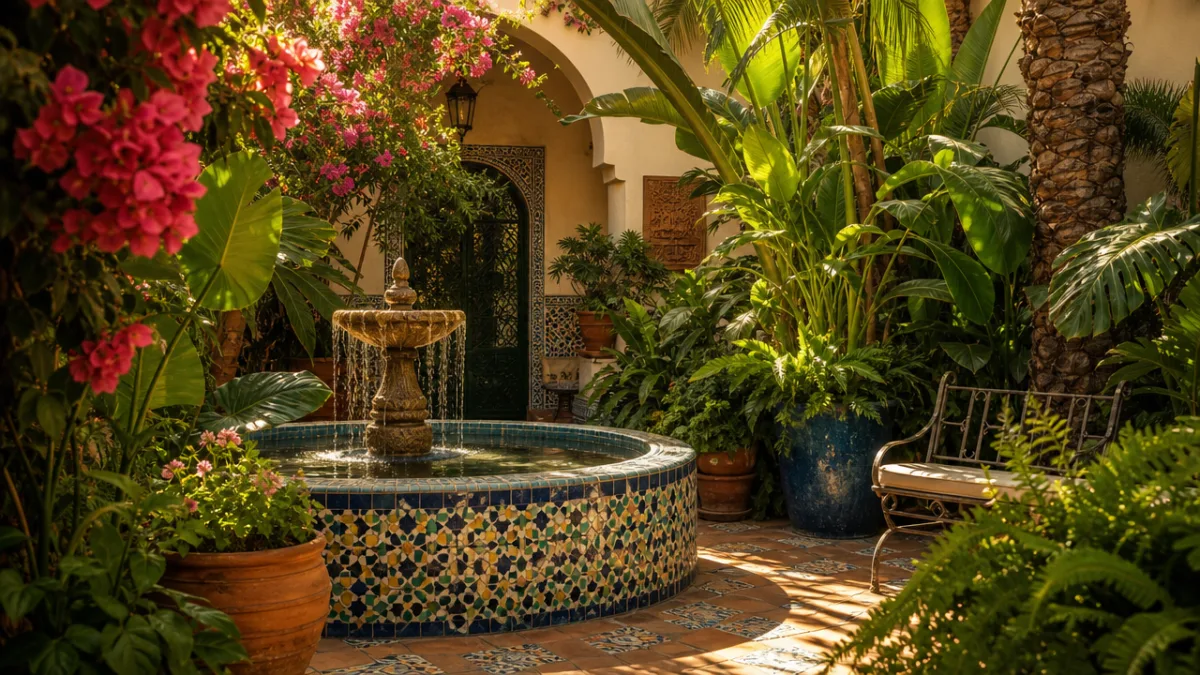
Jeffrey Bale is widely regarded as one of the most gifted and visionary mosaic artists and garden designers working in the world today. His work transcends conventional garden design, blending ancient craft traditions with a deeply personal artistic sensibility that has earned him an international following of collectors, garden enthusiasts, and fellow artists. From his base in Portland, Oregon, Bale has created extraordinary outdoor environments that feel simultaneously timeless and entirely original, drawing on influences ranging from Moroccan tilework to Portuguese azulejos to the organic forms found in nature itself.
What distinguishes Bale from other practitioners in his field is the totality of his vision. He does not simply install decorative elements within a garden space; he conceives of the entire environment as a unified work of art. Every path, every water feature, every planted bed, and every mosaic panel contributes to a coherent aesthetic whole that tells a story and creates an atmosphere of extraordinary richness and beauty. Visitors to his completed gardens frequently describe the experience as entering another world — one governed by beauty, intention, and an almost otherworldly attention to detail.
Bale’s reputation has grown steadily over several decades, built on a body of work that spans residential gardens, public installations, and instructional workshops that have inspired a generation of mosaic artists around the globe. His influence extends well beyond the gardens he has personally designed and built; through his teaching, writing, and online presence, he has helped to revive and redefine the art of pebble mosaic in the modern era, bringing new audiences to a craft with roots stretching back thousands of years into human history.
Early Life and the Path to Artistic Discovery
Like many artists who achieve mastery in a highly specialized craft, Jeffrey Bale arrived at his life’s work through a circuitous route that involved extensive travel, broad curiosity, and a willingness to follow his instincts wherever they led. As a young man, he developed a fascination with world cultures and traditional arts, and this curiosity drove him to travel widely and observe firsthand how different civilizations had used decorative arts to transform everyday environments into places of beauty and meaning. These early experiences laid the intellectual and aesthetic foundation for everything that followed.
His travels through Europe, North Africa, and Asia exposed him to the rich traditions of architectural decoration that have flourished in those regions for centuries. In Portugal, he encountered the stunning blue-and-white tile murals that adorn church facades and railway stations. In Morocco, he saw the intricate geometric zellige tilework that covers floors, walls, and fountains in the great medinas. In Japan, he observed how a handful of carefully placed stones could evoke an entire landscape. Each of these encounters deposited something essential into his growing artistic vocabulary, which he would eventually synthesize into a mature style that was distinctly his own.
Returning to the United States with a head full of images and ideas, Bale began experimenting seriously with mosaic and pebble work in the late twentieth century, teaching himself techniques through practice, research, and occasional study with master craftspeople. This period of self-directed learning was intensive and transformative, shaping not only his technical skills but also his philosophy of art and craft. He came to believe deeply that the best decorative work is inseparable from its surroundings and that true mastery requires both technical excellence and an authentic connection to materials, place, and tradition.
The Art of Pebble Mosaic: Technique and Philosophy
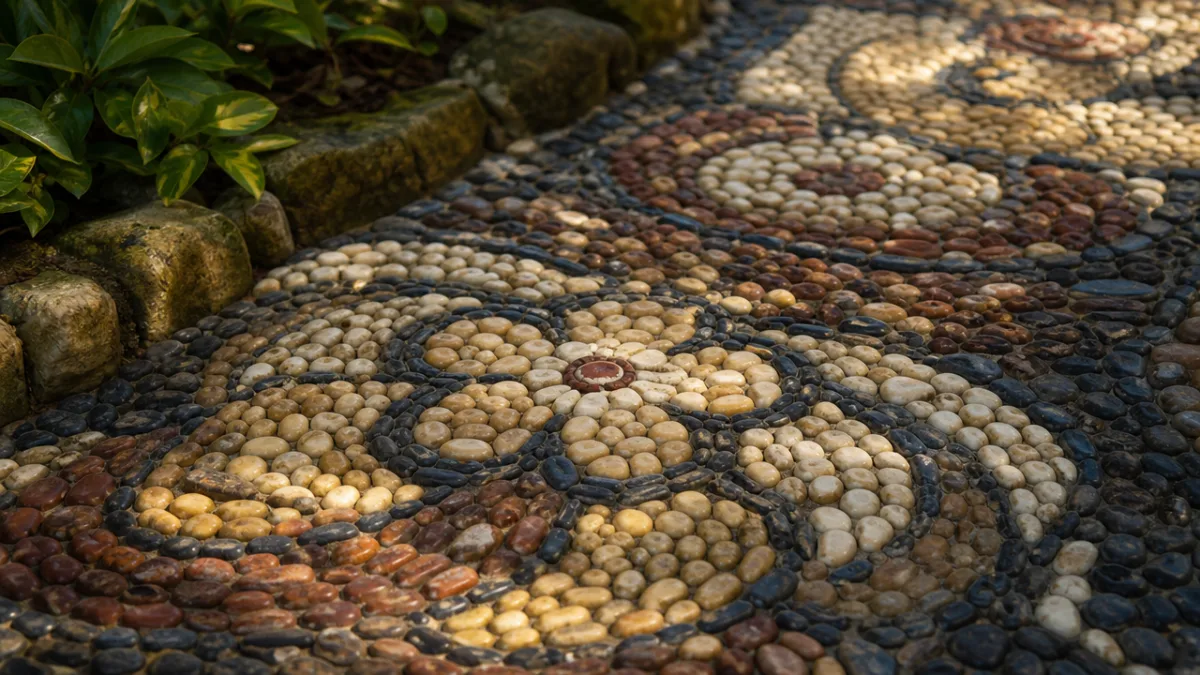
At the heart of Jeffrey Bale’s practice is the ancient art of pebble mosaic, a technique that involves setting small, naturally rounded stones into mortar to create intricate pictorial or geometric compositions on floors, paths, terraces, and walls. The craft has ancient origins — some of the finest surviving examples date back to ancient Greece and Rome — but Bale has brought to it a contemporary sensibility and a level of ambition that has pushed the medium in exciting new directions. His pebble mosaics are not decorative accents but major works of art in their own right, capable of anchoring an entire garden design and commanding sustained attention from viewers.
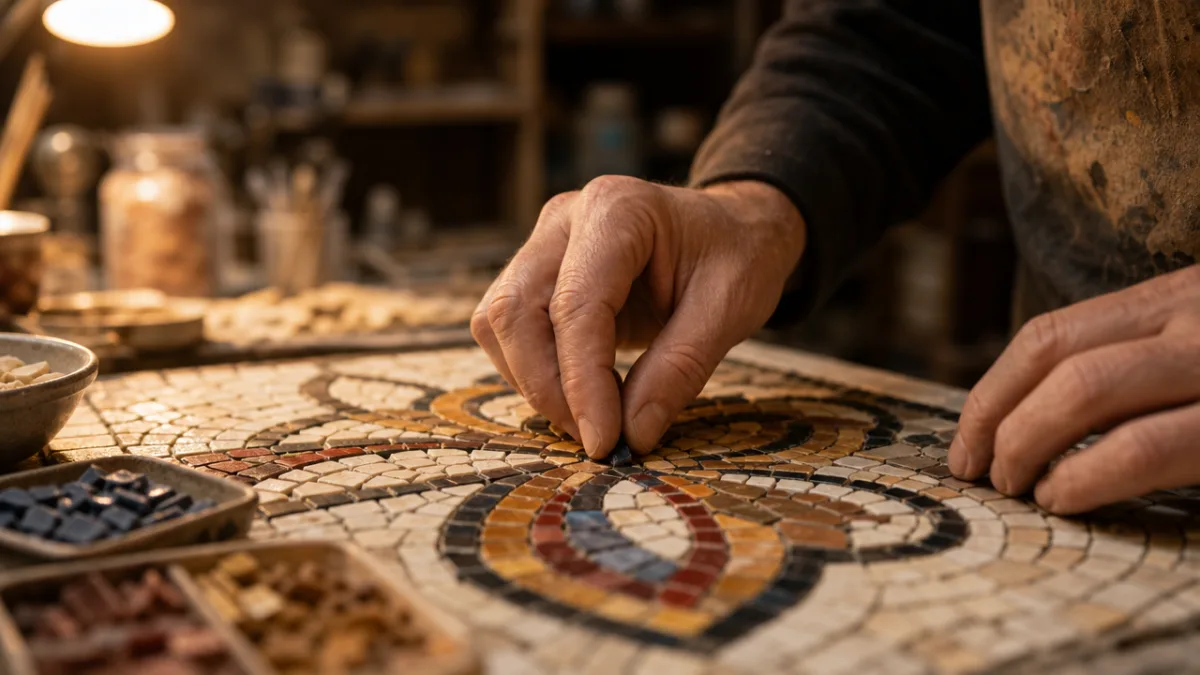
The technical demands of pebble mosaic are considerable. Each stone must be selected for its color, size, shape, and surface texture, and then set by hand at precisely the right angle and depth to create the desired visual effect. Working with natural materials means no two stones are identical, and the artist must develop an intuitive understanding of how individual elements will read when viewed as part of a larger composition. Bale has described the process as a kind of conversation with the materials — a dialogue in which the artist must remain responsive to what the stones themselves suggest, even as he pursues a predetermined design. This tension between control and responsiveness is one of the things that gives his work its remarkable vitality.
Beyond the technical aspects, Bale approaches pebble mosaic with a philosophical seriousness that elevates it from craft to fine art. He believes that floors and paths are among the most intimate surfaces in any built environment, since they are touched by every person who walks through a space and observed from close range over the course of a lifetime. Surfaces that reward this close, sustained attention — that reveal new details and nuances upon repeated viewing — represent the highest achievement in his field. This conviction drives him to work at a level of detail that goes far beyond what most clients would ever notice consciously, because he knows that beauty perceived below the threshold of conscious awareness still nourishes and sustains the people who inhabit a space.
Materials, Sourcing, and the Language of Stone
One of the most distinctive aspects of Bale’s practice is his obsessive attention to the sourcing and selection of materials. He has spent years developing relationships with stone suppliers, riverbeds, beaches, and quarries around the world, building an inventory of pebbles, cobbles, and cut stones in an extraordinary range of colors, textures, and sizes. This investment in materials is not merely aesthetic vanity; it reflects his conviction that the quality and diversity of one’s palette is the fundamental determinant of what is achievable in the finished work. Just as a painter cannot achieve certain colors without access to certain pigments, a pebble mosaic artist cannot achieve certain visual effects without access to the right stones.
The range of colors available in natural stone is surprisingly broad — from the pure whites of quartz and marble through the warm golds and ochres of sandstone and granite to the deep blacks of basalt and slate. Bale has become adept at exploiting this natural palette to create compositions of extraordinary tonal richness and depth. He frequently combines stones of different geological origins to achieve color contrasts that would be impossible with locally sourced material alone, and he has developed techniques for enhancing the natural colors of wet stone through the application of sealers that preserve the luminosity visible in the freshly washed material.
He has also written and spoken extensively about the importance of scale relationships in pebble mosaic — the way in which the size of individual stones must be calibrated to the scale of the design, the size of the space, and the typical viewing distance of the finished work. A design intended to be viewed from above while walking across a courtyard must be executed at a different scale than one installed in a small intimate garden where viewers will crouch down and examine it from close range. Getting these relationships right requires experience, spatial intelligence, and a willingness to plan meticulously before a single stone is set.
Signature Projects and Garden Masterworks
Over the course of his career, Jeffrey Bale has completed a remarkable number of significant garden projects, each one a unique response to a particular site, client, and set of creative challenges. His residential garden commissions are particularly celebrated, and several of them have been widely published in garden design books and magazines, introducing his work to audiences far beyond those who have had the privilege of seeing the gardens in person. These projects demonstrate the full range of his capabilities, from intimate courtyard gardens rich with intricate detail to expansive landscape designs that unfold over substantial acreage.
His own Portland garden, which he has developed and refined over many years, is perhaps the most complete expression of his vision. It serves simultaneously as a private retreat, a workshop laboratory, and a living portfolio of his evolving ideas about garden design and mosaic art. Visitors who have been fortunate enough to tour it describe a space of extraordinary density and beauty, where every square foot has been considered and every material speaks to every other. The garden demonstrates his belief that a truly great garden is never finished but always in the process of becoming — always being refined, extended, and deepened in response to the artist’s growing understanding.
Among his public and institutional projects, his work has appeared in gardens across the United States, Europe, and beyond. Each commission presents its own set of challenges: different climates require different stone selections and mortar formulations; different cultural contexts demand sensitivity to local traditions and visual languages; different budgets and timelines shape what is achievable in any given project. Bale has shown a remarkable ability to adapt his practice to these varying conditions while maintaining the consistent quality and vision that defines his best work. His project portfolio reads as a testament to both his versatility and his unwavering commitment to excellence.
Awards, Recognition, and Cultural Impact
The quality and originality of Jeffrey Bale’s work has earned him recognition from institutions and publications across the design and horticultural worlds. He has been featured in numerous books devoted to garden design, mosaic art, and landscape architecture, and has appeared in major periodicals including Garden Design, Fine Gardening, and Sunset Magazine, among others. This sustained media attention has played a significant role in building his international reputation and bringing his work to the attention of clients, collaborators, and fellow artists around the world.
Beyond media coverage, Bale has received recognition from professional organizations within the garden design and landscape architecture communities, who have acknowledged his contribution to elevating the craft dimensions of garden design and to reviving traditional techniques that were in danger of being forgotten or marginalized. He is also widely respected within the mosaic art community, where he is regarded as a leading voice for the integration of mosaic with landscape and architectural design — an approach that connects contemporary mosaic practice with the great traditions of decorative art in which mosaic played a central role.
Perhaps his most lasting cultural impact has been his role in inspiring and training a new generation of mosaic artists and garden designers. Through his workshops, books, and online teaching resources, he has reached thousands of students who have gone on to develop their own practices influenced by his example. This multiplier effect means that his influence now extends far beyond his own completed projects to encompass a growing community of practitioners who share his commitment to craft, beauty, and the integration of art with the living landscape.
Teaching, Workshops, and the Transmission of Knowledge
Jeffrey Bale has always understood that the preservation and development of traditional craft knowledge depends on the willingness of masters to share what they know with the next generation. This understanding has led him to invest significant energy in teaching and in the development of educational resources that make his knowledge accessible to students at every level, from complete beginners to experienced professionals seeking to expand their skills. His workshops have become legendary in the craft community for their rigor, generosity, and the depth of learning they offer to participants.
His teaching approach reflects his belief that mastery is built through careful observation, sustained practice, and a willingness to embrace the slow, demanding process of developing genuine skill. He does not offer shortcuts or simplified techniques designed to produce impressive-looking results quickly; instead, he teaches the fundamentals of stone selection, mortar preparation, design, and setting with the same thoroughness and care that he brings to his own professional work. Students who complete his workshops leave with not only new skills but also a transformed understanding of what is possible in the medium and a clearer sense of the path toward mastery.
In addition to in-person workshops, Bale has developed online resources including detailed tutorials, material guides, and design resources that extend his teaching reach to students who cannot travel to attend workshops in person. His online presence has been particularly important in building an international community of mosaic artists connected by shared interest in pebble mosaic and by their admiration for his work. This community has become a vibrant forum for the exchange of knowledge, images, and mutual encouragement among practitioners at all levels working in locations around the globe.
- Intensive multi-day pebble mosaic workshops covering design, stone selection, mortar technique, and finishing
- Shorter introductory workshops suitable for beginners with no prior mosaic experience
- Advanced workshops for experienced practitioners focused on complex design challenges and refined technique
- Online video tutorials covering specific aspects of the pebble mosaic process in depth
- Detailed written guides to material sourcing, mortar formulation, and design principles
- A curated online community where students can share work, ask questions, and support one another
Influence on Contemporary Garden Design
The influence of Jeffrey Bale’s work on contemporary garden design extends well beyond the mosaic art community to encompass broader discussions about craft, beauty, and the role of decorative art in the outdoor environment. His insistence on the highest standards of craftsmanship and his demonstration that traditional techniques can be deployed with a fresh, contemporary sensibility have helped to shift the conversation about what garden design can and should aspire to achieve. In an era when garden design has sometimes been dominated by minimalist aesthetics that favor the absence of ornament, Bale’s work offers a compelling alternative vision — one in which decoration, pattern, and rich material texture are understood as essential rather than optional dimensions of the designed landscape.
His influence is also felt in the growing appreciation for slow craftsmanship in garden design more broadly. The garden design world has, in recent decades, seen a reaction against the fast, formulaic approach associated with mass-market garden renovation and a renewed interest in work that is genuinely handmade, deeply considered, and built to last for generations. Bale’s practice embodies these values in an unusually pure and uncompromising form, making him a natural figurehead for this movement and a source of inspiration for designers who share his commitment to quality and permanence.
Looking at the garden design landscape today, it is possible to trace threads of influence running outward from Bale’s work in many directions — in the renewed interest in pebble paving among landscape architects, in the growing number of garden designers who incorporate custom mosaic elements into their projects, and in the broader discourse about the relationship between art and landscape. This influence is the measure of a truly significant artistic career: not merely the body of completed work, but the way that work changes the thinking of others and opens up new possibilities for those who come after.
Legacy, Philosophy, and the Future of the Craft
As Jeffrey Bale’s career has matured, he has increasingly been called upon to articulate the philosophical foundations of his practice — to explain not just what he does but why he does it and what he believes the deeper significance of his work to be. In various interviews, lectures, and written pieces, he has developed a rich and coherent account of his artistic values and his vision for the role that beautiful, handcrafted environments can play in human life. At the center of this philosophy is a conviction that beauty is not a luxury but a fundamental human need, and that the creation of beautiful environments is therefore a profoundly important social and cultural activity.
He has spoken movingly about the way in which truly beautiful gardens and mosaic works seem to exist outside of time — to belong simultaneously to the deep past of human craft tradition and to the living present of immediate sensory experience. This quality of timelessness is, in his view, the highest achievement available to the decorative artist, and it is what distinguishes work that will endure and continue to nourish future generations from work that is merely fashionable or technically competent. The aspiration to timelessness shapes every decision he makes in the design and execution of his projects, from the selection of materials to the choice of imagery to the refinement of proportion and scale.
Looking forward, Bale has expressed both concern and optimism about the future of the craft traditions he has devoted his life to preserving and developing. The concern arises from the continuing pressures on traditional craft knowledge — the difficulty of transmitting complex skills in a culture that tends to value speed and novelty over patience and tradition, and the economic challenges faced by artists committed to slow, labor-intensive work in a marketplace that does not always reward quality proportionally. The optimism comes from the evidence he sees in his own teaching practice: the enthusiasm and dedication of young artists who are drawn to pebble mosaic and related crafts and who are determined to carry these traditions forward.
The Enduring Power of Handmade Beauty
In an age of digital fabrication and algorithmically generated design, Jeffrey Bale’s practice stands as a powerful testament to the enduring value of the human hand and the human eye working together with natural materials over time. There is something in his pebble mosaics and garden designs that speaks to a deep need in the human psyche — a hunger for surfaces and spaces that bear the unmistakable mark of human care, attention, and skill. This quality cannot be replicated by machines, however sophisticated, because it arises not from the precision of the outcome but from the intentionality of the process and the accumulated decisions that give the finished work its particular character.
The gardens that Bale creates are also remarkable for the way they evolve over time. Unlike built structures that deteriorate from the moment of their completion, a well-designed garden grows more beautiful as it matures, as plants fill in, weather the stone, and the designed elements settle into their natural context. Bale’s mosaic work is designed with this temporal dimension fully in mind; he understands that the best work will look better in twenty years than it does on the day it is completed, and this long view shapes his approach to both design and construction. Building for permanence and for growth is itself a philosophical position — a refusal of the disposable and the ephemeral in favor of the enduring and the deepening.
Jeffrey Bale’s life and work offer a compelling model for what it means to commit fully to a craft — to bring to bear on a single field of endeavor the full resources of one’s intelligence, sensitivity, curiosity, and discipline over a sustained period of time. The result is a body of work and a living practice that have genuinely enriched the world: given beauty to hundreds of gardens and public spaces, transmitted precious knowledge to thousands of students, and demonstrated through example the extraordinary possibilities that open up when an artist of talent and dedication chooses depth over breadth and mastery over versatility. His is a legacy that will continue to inspire and instruct for generations to come.








What do you think?
It is nice to know your opinion. Leave a comment.