










“`html
The Garden Room Bar: Bringing the Outdoors In With Elegance and Style
There’s something genuinely magical about a space where the line between indoors and outdoors just… disappears. The garden room bar has captured the hearts of homeowners, interior designers, and lifestyle lovers everywhere, and it’s easy to see why. You get all the beauty of a lush, green outdoor setting without giving up the comfort of a well-stocked bar. Whether it’s tucked into a conservatory, built as a glass extension, or carved out of a converted outbuilding wrapped in greenery, a garden room bar is really just a love letter to living beautifully.
At its core, a garden room bar is about so much more than a place to mix cocktails. It’s a lifestyle choice, a way of saying that your gatherings are intentional and that the spaces you create actually matter to you. Step into a well-designed one and you feel it immediately — that shift away from the everyday into something curated, unhurried, and just a touch luxurious. Natural light, living plants, and furniture you actually want to sit in combine to create a mood that no regular indoor room can quite pull off.
The surge in popularity of garden rooms as leisure and entertaining spaces has been pretty remarkable. As more people look to get more out of their homes without committing to a full-scale extension, the garden room has become the obvious answer. Add a bar to the mix and you’ve transformed a pleasant sitting room into a genuine destination — the kind of place where friends end up on warm summer evenings, where weekend brunches quietly stretch into lazy afternoons, and where a glass of wine stops being routine and starts being something you actually savor.
Designing the Perfect Garden Room Bar Space
Designing a garden room bar is a bit of a balancing act between what looks great and what actually works day to day. Before you fall in love with a paint color or a particular bar stool, it’s worth stepping back and thinking honestly about how you’ll use the space. Is this a quiet retreat for two, or are you envisioning a lively spot for larger gatherings? That answer drives everything — the size and layout of the bar, how much seating you need, what kind of flooring makes sense underfoot.
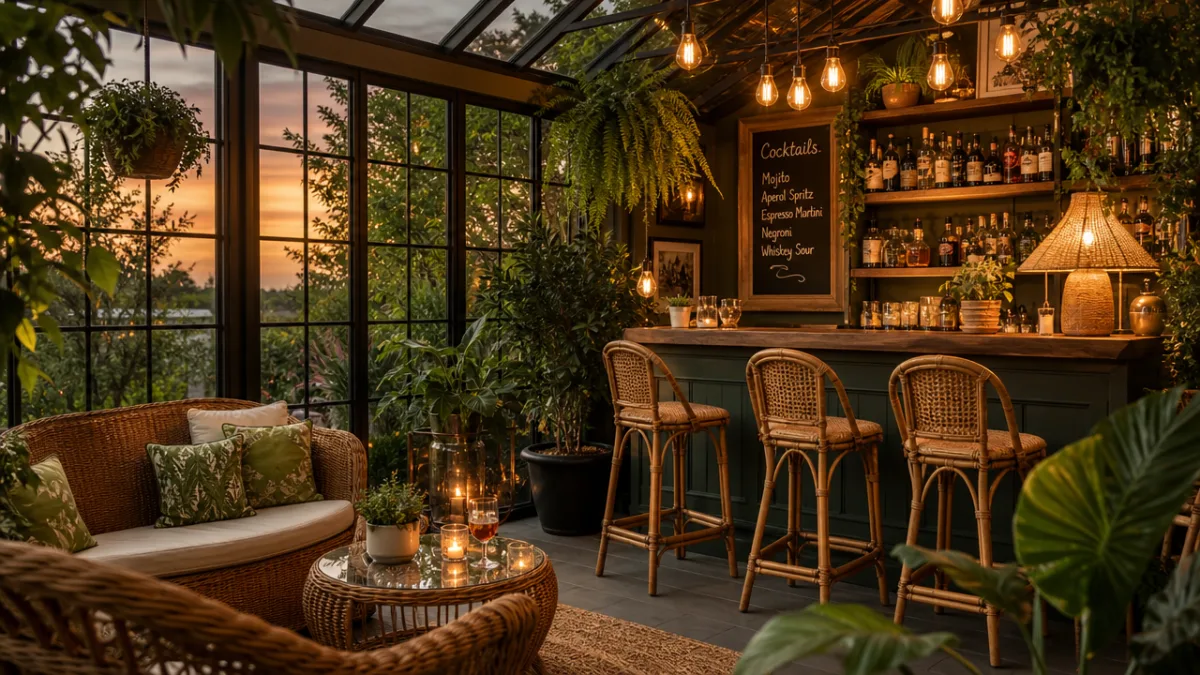
Natural materials are almost always the right call in a garden room bar. Reclaimed wood for the bar counter, rattan or wicker seating, stone or terracotta tiles, linen cushions — these all reinforce that connection to the outdoors that makes the space feel so good. They also age really well, developing character over time rather than looking tired. Throw in some brass, copper, or aged iron hardware and you get warmth and a bit of sophistication without losing that relaxed, garden-inspired feel.
Lighting can make or break a garden room bar, probably more than any other single design decision. During the day, the goal is simple: let in as much natural light as possible. Large glazed panels, roof lanterns, full-length glass doors — anything that lets sunlight pour through and makes you feel genuinely connected to the garden outside. Once the sun goes down, you need a completely different mood. Edison string lights, low pendants hanging above the bar, candles, lanterns — layer them up and you’ll get that warm, intimate glow that makes people want to stay and keep talking.
Stocking and Styling Your Garden Room Bar
Once the bones of the space are sorted, the really enjoyable part begins: putting the actual bar together. A well-stocked bar is both a practical necessity and a visual focal point, and the two things don’t have to be in tension. Open shelving behind the counter lets your bottles, glassware, and bar tools do double duty as décor. Group bottles by spirit type, vary the heights to create a bit of visual rhythm, and tuck in a small plant or a decorative object here and there. Done well, it looks less like a drinks cabinet and more like something you’d stop to admire.
What you choose to stock should reflect your own tastes and the kinds of drinks you love making for people. A garden room setting feels particularly right for botanical gins, floral liqueurs, elderflower cordials, and good sparkling wines — drinks that feel like they belong in a green, sun-filled space, especially when you’re garnishing with fresh herbs, edible flowers, or fruit straight from the garden. Keep a few reliable classics on hand alongside some more interesting or artisanal bottles, and you’ll be able to pour something for almost anyone while still having room to introduce guests to something they haven’t tried before.
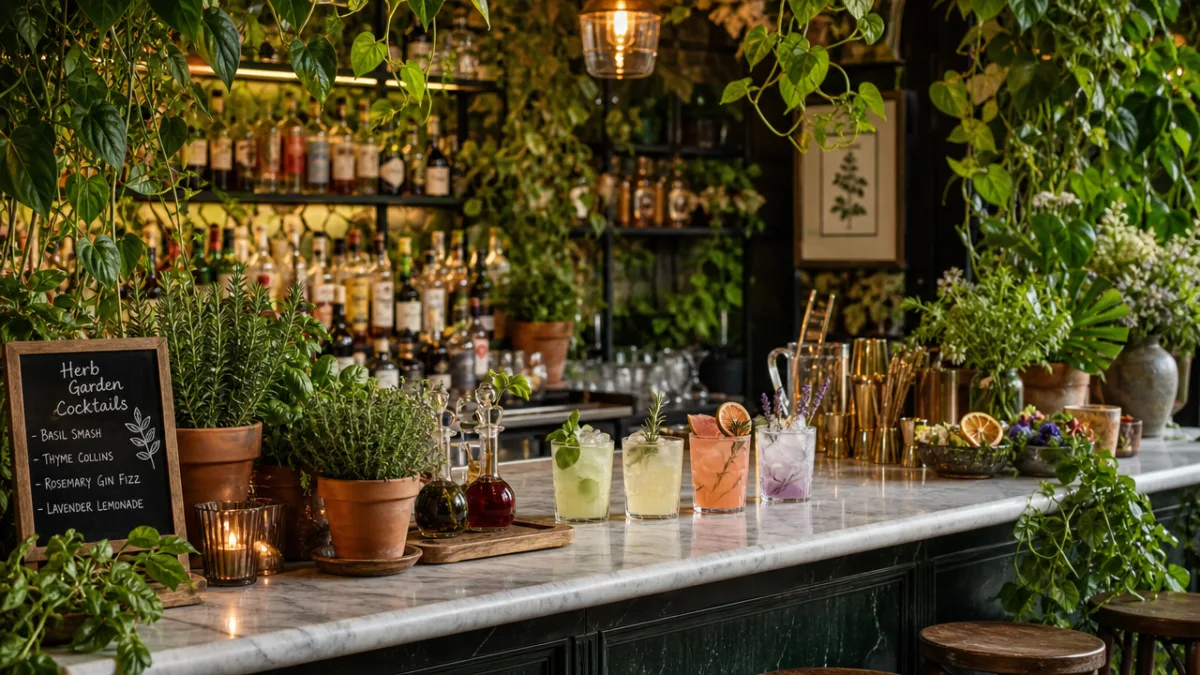
It’s easy to underestimate how much glassware matters, but in a garden room setting it really does count. The right glass makes the drink taste better and looks beautiful in the space. Tall highball glasses catch the light perfectly when they’re full of ice and something sparkling. Generous balloon glasses show off a good gin and tonic in a way that’s almost theatrical. Coupes and champagne flutes bring a touch of old-world glamour to any occasion worth celebrating. Mixing a few vintage finds from antique markets with some contemporary pieces gives your bar collection real personality — something a matching supermarket set will never quite manage.
Bringing the Garden Into the Bar
The garden room bars that really work are the ones where you genuinely can’t tell where the room ends and the garden begins, and nothing does that better than a generous helping of living plants. The species you choose matters — both practically and visually. Trailing plants like pothos or ivy tumbling down from high shelves or hanging in pendants from the ceiling create that lush, canopy-like effect that feels wonderfully immersive. Larger statement plants — a fiddle-leaf fig, an olive tree in a terracotta pot, a dramatic architectural palm — anchor the space and give it a sense of scale and presence.
Herbs deserve a special mention here because they earn their place twice over: they look great and they’re genuinely useful. A little collection of potted mint, rosemary, thyme, basil, and lemon verbena lined up on the windowsill or along the bar counter brings fragrance, color, and practicality to the same spot. Guests love being invited to pick a sprig of fresh mint for their mojito or thread a rosemary stalk through their gin cocktail — it’s a small thing, but it makes the whole experience feel hands-on and a bit special.
Beyond plants, things like moss walls, pebble borders, a small water feature, or even a terrarium can add real depth to the garden atmosphere. The aim is to build up layers of texture and life that reward a closer look — a space where there’s always something interesting to notice, whether it’s the way light through a glass roof plays across a stone floor, the condensation on a cold glass set against a wall of green leaves, or a small vase of flowers sitting quietly on the bar counter. These are the details that take a garden room bar from pleasant to genuinely memorable.
Entertaining in the Garden Room Bar
A garden room bar really comes into its own as an entertaining space, and a bit of thoughtful planning makes a huge difference. The key is to lean into what makes this space unique rather than trying to turn it into something it isn’t — a restaurant, say, or a formal dining room. The informality and warmth of a garden room bar are its biggest selling points, so let your drinks, food, and general vibe celebrate that rather than fight against it.
One of the nicest things you can do is create a seasonal cocktail menu for each gathering, built around whatever’s growing in the garden at the time. In summer, that might mean a strawberry and basil smash using fruit picked that morning, or a cucumber and elderflower fizz that tastes like a warm afternoon. Come autumn, sloe gin, apple and ginger, and warming spiced punches feel exactly right against the backdrop of a changing garden. It creates a real sense of occasion and gives your guests something genuinely worth remembering — a drink tied to a specific moment, a specific season, a specific evening in your garden room.
The food should match the spirit of the space: generous and relaxed, never fussy. Think grazing boards piled high with cheese, charcuterie, pickles, olives, and good bread; small plates of seasonal vegetables with interesting dips; elegant little canapés that you can eat standing up without any fuss. The idea is plenty without formality — food that invites people to help themselves, go back for more, and keep the conversation going without a sit-down meal interrupting the flow. Add fresh flowers on the bar, candles as the evening draws in, and a well-chosen playlist humming quietly in the background, and the scene practically sets itself.
A few practical things are worth thinking through before people arrive. Ventilation matters more than you might expect — a warm room full of people, candles, and plants can get stuffy fast, so opening sections of glazing or fitting a discreet ceiling fan helps keep everyone comfortable. Good storage for bar tools, mixers, and glasses keeps the space looking tidy even when it’s working hard. And a small under-counter refrigerator is genuinely invaluable — keeping wines and mixers properly chilled without constant trips back to the main kitchen is a game-changer.
Making the Most of Your Garden Room Bar Year-Round
One of the strongest arguments for building a proper garden room bar rather than just dragging a drinks trolley onto the patio is year-round usability. A well-built garden room is insulated, sheltered from wind and rain, and can be heated through the colder months, making it a genuinely enjoyable space no matter what the weather is doing. Rather than being a purely summer luxury, it becomes one of those rooms you find yourself retreating to most when the weather outside turns grey and unwelcoming.
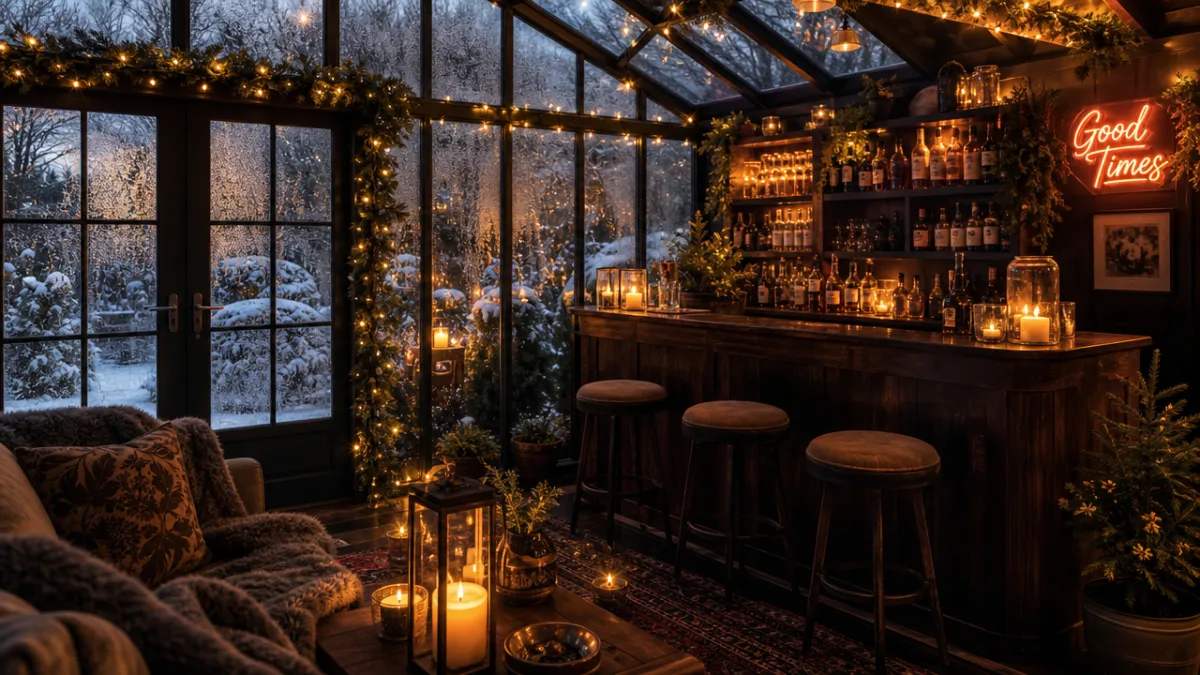
In winter, the garden room bar shifts into something altogether different — and honestly, just as lovely. Heating on, candles flickering, a warming rum punch or mulled wine in hand — it becomes a cozy haven that feels wonderfully out of step with the cold world on the other side of the glass. Seasonal touches like eucalyptus garlands, pine cones, and fairy lights woven through bare branches can refresh the look without losing the botanical character that defines the space. Even a dormant winter garden, viewed through the glass, keeps that sense of connection to the natural world that makes the experience feel so different from any ordinary indoor room.
Spring and autumn have their own particular pleasures. There’s something genuinely optimistic about sitting in a warm glass room with a fresh gin cocktail in early spring, watching the first bulbs push through the soil outside. And in autumn, that low golden light filtering through the glass, the leaves turning — it creates an atmosphere that feels rich and deeply calming in a way that’s hard to describe but easy to feel. By making the space work across all four seasons, you get a far better return on your investment and end up with one of the most used and loved rooms in your home.
Ultimately, what a garden room bar gives you is a place where everyday life feels a little richer and a little more worth celebrating. Whether you’re there alone at nine in the morning with a coffee and your plants for company, sharing a bottle of wine with a friend on a rainy afternoon, or hosting a summer party that spills out onto the terrace, it’s a space built to make things feel better. Nature, light, good drinks, and thoughtful design — when they come together well, the result is genuinely greater than the sum of its parts. A small, beautiful act of joy, every time you step through the door.
“`








What do you think?
It is nice to know your opinion. Leave a comment.