










Cozy Living Room with Plants & Bookshelf: A Complete Design Guide
The Art of Creating a Cozy Living Room
A cozy living room is so much more than a comfortable place to sit. It’s a sanctuary — somewhere that feels like you, somewhere that lets you exhale after a long day, and somewhere that makes guests feel genuinely welcome the moment they walk in. Getting that mix of warmth, practicality, and personality just right takes some thought and a willingness to play around, but it’s absolutely achievable. Whether you’re starting completely fresh or just giving an existing room a refresh, understanding what actually makes a space feel cozy is the best place to begin.
There’s a reason the Danish concept of hygge has become so popular — it puts a name to something we all instinctively crave: an atmosphere of genuine contentment created by the space around you. It’s about layering textures, softening harsh lines, and bringing in elements that feel good both physically and emotionally. Soft lighting, natural materials, things that actually mean something to you, a bit of greenery — all of these work together to create that hard-to-define but instantly recognizable feeling of being truly at home. When everything clicks, the room just feels alive.
The encouraging part? You don’t need a big budget or a professional designer to pull this off. What you do need is a bit of intentionality — a real sense of what makes you feel comfortable, and the willingness to build your space around that rather than around whatever’s trending on Pinterest. As you work through this guide, pay attention to which ideas genuinely resonate with you, and let those instincts do the heavy lifting.
Incorporating Houseplants for Life and Warmth
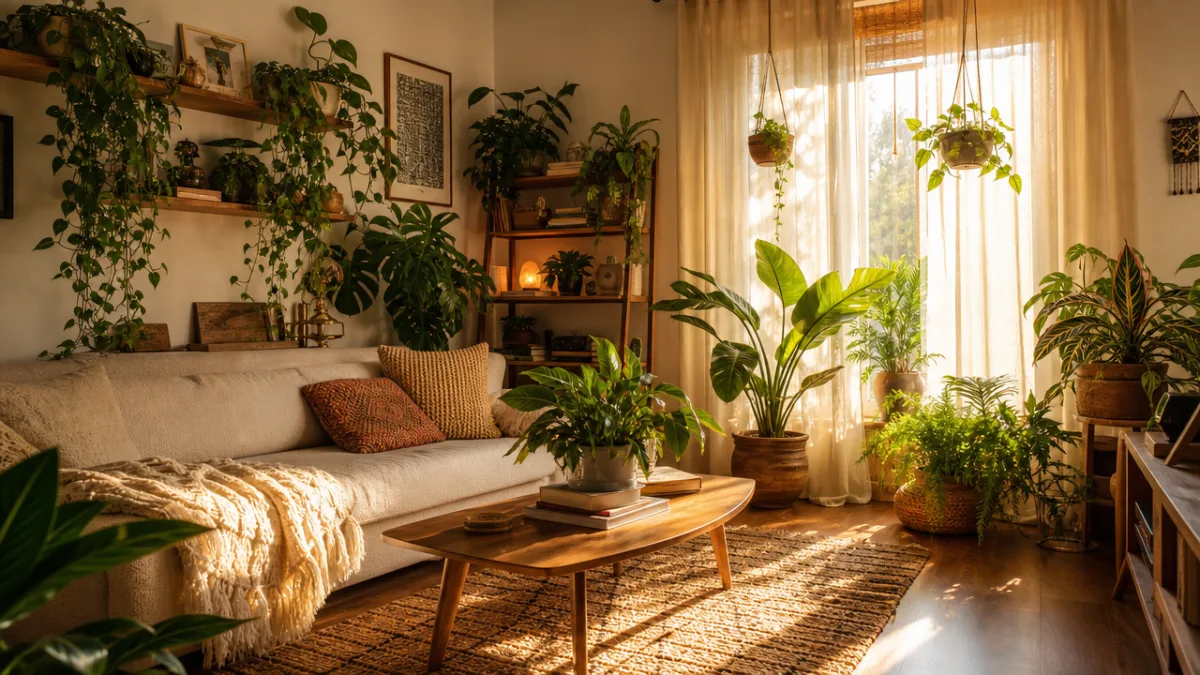
Honestly, few things transform a living room quite like houseplants. They bring in color, texture, a bit of movement, and that unmistakable sense that something living and growing shares the space with you. From a tall fiddle-leaf fig making a statement in a sunny corner to a cascade of trailing pothos spilling off a high shelf, plants come in such an incredible variety of shapes and personalities that they work with just about any style. There’s something about their presence that shifts the energy of a room in a way that furniture and art simply can’t replicate.
And it’s not just about looks. Research consistently shows that being around plants reduces stress hormones, lowers blood pressure, and genuinely improves your mood. In a room that’s supposed to be your place to relax and recharge, that’s a pretty meaningful bonus. A plant-filled living room isn’t just prettier — it’s actually better for you, offering cleaner air and a calmer atmosphere that makes coming home feel like a real escape.
When you’re adding plants, think in layers and groupings rather than lone specimens scattered around the room. One plant in the corner can feel a little sad and forgotten, but a thoughtful mix of several varieties at different heights creates something lush and immersive. Try placing taller floor plants like snake plants or rubber trees next to the sofa, medium-sized ones like peace lilies on side tables, and smaller succulents or air plants on window ledges. That layered effect mimics the natural depth of a garden and gives the whole room a wonderfully abundant, lived-in feeling.
Don’t overlook your planters, either — they matter more than you might think. Terracotta pots have that earthy, warm quality that pairs beautifully with wood furniture and woven textiles. Ceramic planters in muted, natural shades like sage, cream, or rust add a modern touch without feeling cold. Wicker or rattan baskets are great for dressing up larger floor plants, and they reinforce that natural, textured look that’s at the heart of a truly cozy room. When your planters feel considered and cohesive, the whole arrangement steps up from decoration to actual design.
Designing the Perfect Bookshelf Display
A well-styled bookshelf might be the single most characterful thing you can put in a cozy living room. Books are inherently warm objects — their spines add color and texture, their presence says something about who you are and what you care about, and no two collections ever look quite the same. But a truly beautiful bookshelf goes beyond just lining up volumes in order. Think of each shelf as a small stage where books, objects, plants, and little treasures come together to tell a story about the person who lives there.
The difference between a bookshelf that looks curated and one that looks cluttered usually comes down to two things: intentional variation and breathing room. Mix vertical rows of upright books with horizontal stacks that can act as little pedestals for objects on top of them. Resist the urge to fill every inch — leaving some open space gives your eye a place to rest and lets the things you’ve chosen to display actually register. A small trailing plant draping over the edge of a shelf, a vintage clock, a framed photo, or a handful of interesting stones can all become the kind of personal touches that turn a bookshelf from storage into something worth looking at.
Color has a bigger impact on bookshelf styling than most people expect. Arranging books by color creates a gradient effect that feels both intentional and a little painterly. If that level of organization isn’t really you, you can still achieve visual cohesion by picking out two or three dominant tones and using your decorative objects to echo those colors across the shelves. Warm neutrals, deep greens, and rich terracottas tend to be especially effective in cozy rooms, grounding the overall look in that earthy, welcoming palette.
Adding plants to your bookshelf is one of those ideas that just works every time. Small varieties like pothos, string of pearls, or mini succulents slip naturally into the gaps between books and objects, their trailing vines or compact forms adding life without taking over the display. When a plant and a well-loved book share the same shelf, the result is a little vignette that feels genuinely personal — a quiet corner of the room that rewards anyone curious enough to lean in and take a closer look.
Lighting Strategies That Set the Mood
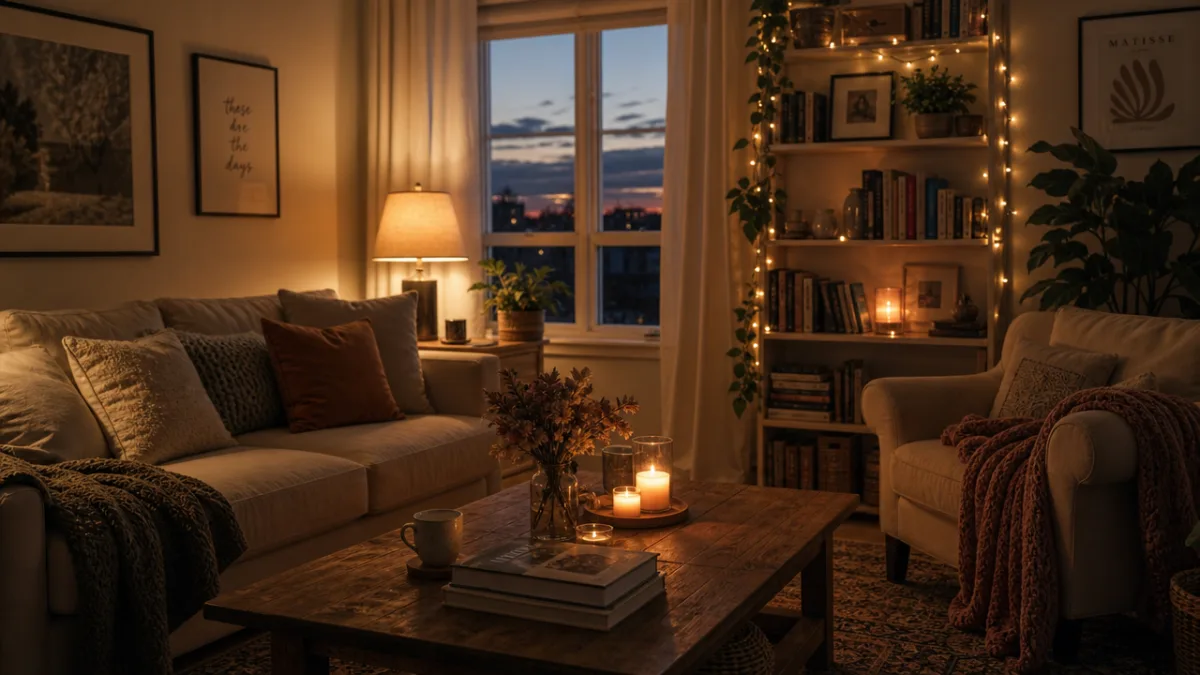
If there’s one thing that has the most dramatic effect on how cozy a living room feels, it’s lighting — and yet it’s probably the most overlooked part of the whole equation. Most of us rely on a single overhead light, which tends to give a room that flat, slightly clinical look that’s the opposite of warm and inviting. Truly cozy rooms use several light sources at different heights, creating pools of soft, layered light that make the space feel enveloping and alive. Swap out that lone ceiling fixture for a combination of floor lamps, table lamps, and candles, and you’ll be amazed at how different the same room can feel.
Warm-toned bulbs are non-negotiable in a room meant for relaxing. Anything in the 2700K to 3000K range gives off that amber, golden quality that recalls candlelight or a late-afternoon sun — it immediately makes a space feel softer and more intimate. Cool white or daylight bulbs in the 4000K to 6500K range are better left to kitchens and home offices. In your living room, warmth always wins, and adding dimmer switches gives you the flexibility to adjust the mood throughout the day.
Candles deserve a special mention because nothing else really compares when it comes to creating atmosphere. Whether you’re using real flames or quality LED alternatives, candles bring flicker, warmth, and scent into a room in a way that electric lighting just can’t touch. Group a few at varying heights on a coffee table, mantel, or shelf and you’ve instantly got a focal point that draws people in and sets the tone for a slow, easy evening. Scented candles in notes of cedar, vanilla, sandalwood, or bergamot add another whole sensory dimension that makes the atmosphere feel genuinely rich.
Fairy lights have become a go-to for a reason — when used with a bit of restraint, they add a soft, almost magical quality to a room that’s hard to achieve any other way. Draped across a bookshelf, wound through a potted plant, or strung along a window frame, warm white fairy lights lend a gentle twinkle that transforms a room after dark. The key word there is restraint, though: one or two well-placed strands feel romantic and considered, but too many tips quickly from enchanting into overwhelming. Use them to accent, not to dominate.
Textiles, Textures, and the Language of Comfort
If lighting sets the mood, textiles are what make a cozy room feel physically irresistible. The way a room feels in your body — sinking into the sofa, pulling a throw blanket around your shoulders, running a hand along a knitted cushion — matters just as much as how it looks. Layering soft, tactile materials throughout the space creates an environment that invites you to slow down and settle in. Velvet cushions, chunky wool throws, linen curtains, jute rugs, sheepskin accents — each one adds its own texture to what becomes a really satisfying sensory conversation.
The sofa is usually your biggest canvas and the natural place to start. A generously sized sofa in a soft, durable fabric — velvet, bouclé, and linen are all excellent choices — gives you the foundational comfort everything else builds on. From there, pile on cushions in a mix of sizes, shapes, and textures, combining smooth with nubby and patterned with plain. That appealing, slightly abundant look signals real comfort rather than the staged perfection of a showroom. A large throw blanket draped casually over one arm finishes the invitation perfectly.
Rugs are one of those elements that do so much more than people give them credit for. A good rug anchors the seating area, defines the space in an open-plan room, and adds an immediate layer of warmth both visually and underfoot. For a cozy room, go for something with a deeper pile — wool, shag, or a quality synthetic — that actually feels plush when you walk barefoot across it. Warm tones and natural patterns like loose botanical prints, simple geometrics, or traditional Persian designs all look at home alongside plants and bookshelves.
Window treatments are worth taking seriously too. Sheer linen curtains are lovely during the day, filtering the light into something soft and diffused that feels gentle rather than harsh. Adding a layer of heavier drapes in a warm, muted tone — deep olive, dusty rust, or warm charcoal — gives you the option to cocoon the room in the evenings, creating that sense of enclosure and privacy that’s so central to feeling truly cozy. Hang them high above the window frame and let them fall to the floor, and you’ll get a sense of height and drama that somehow makes the room feel both bigger and more intimate at once.
Arranging Your Space for Flow and Intimacy
Even a beautifully styled room will miss the mark if the furniture arrangement doesn’t actually support how people use the space. Where you put your sofa, chairs, coffee table, and bookshelf determines how you move through the room, how easily conversations happen, and how natural it feels to settle in. A well-arranged living room pulls people together, creates clear focal points, and makes the whole space feel purposeful rather than just pretty.
The most common mistake people make is pushing all the furniture against the walls — usually in an attempt to make the room feel bigger or more open. It tends to have the opposite effect. Floating your furniture toward the center of the room, with sofas and chairs pulled inward to face each other, creates a far more intimate and usable gathering space. It acknowledges that a living room is for people, not foot traffic, and that conversation happens more naturally when you’re not shouting across a cavernous gap. A circular or horseshoe arrangement of seating around a central coffee table is one of the most consistently inviting configurations you can create.
If you want to add real depth to the cozy atmosphere — especially in a room already full of books and plants — consider carving out a dedicated reading nook. An armchair positioned near the bookshelf, a floor lamp angled over your shoulder, a small side table for a cup of tea, and a soft throw is really all it takes. That self-contained little corner becomes a room within a room: a quiet retreat that coexists happily with the larger social space around it. It’s a small touch that makes a surprisingly big difference.
Finally, don’t underestimate the power of personal objects. Framed photographs, travel souvenirs, handmade ceramics, a child’s artwork stuck in a frame, something inherited from someone you love — these are the things that make a room feel genuinely inhabited rather than styled. A space filled with objects that actually mean something radiates a warmth that no amount of expert curation can fake. Because coziness, at its core, isn’t really a design style. It’s a reflection of the life being lived inside the space — and the warmth that life brings to everyone lucky enough to share it.

- Choose warm-toned lighting in the 2700K–3000K range and layer multiple light sources at varying heights throughout the room to create a soft, enveloping glow that promotes relaxation.
- Group plants at different heights using a mix of floor specimens, table plants, and shelf-placed varieties to create a lush, layered effect that feels abundant and natural.
- Style your bookshelf with intention by alternating upright books with horizontal stacks, incorporating personal objects, leaving negative space, and allowing small trailing plants to weave through the display.
- Layer textiles generously — pile cushions of varying textures on the sofa, drape throws casually over armrests, and choose a deep-pile rug that feels genuinely plush underfoot.
- Float your furniture toward the center of the room to create an intimate conversation zone, and carve out a dedicated reading nook beside your bookshelf for a self-contained retreat.
- Incorporate personal objects — photographs, handmade ceramics, travel souvenirs, and inherited pieces — to ensure the room tells your story rather than simply following a trend.
- Use candles strategically on coffee tables, mantels, and shelves to introduce flicker and scent, deepening the sensory atmosphere and creating a natural focal point for evening gatherings.








What do you think?
It is nice to know your opinion. Leave a comment.