










40+ Must-See In-Ground Fire Pit Ideas for Outdoor Bliss (2026)
Why In-Ground Fire Pits Are the Ultimate Outdoor Upgrade
There is something deeply primal and satisfying about gathering around a fire that sits flush with the earth. In-ground fire pits have surged in popularity over the past several years, and for good reason — they offer a seamless, elegant look that above-ground alternatives simply cannot match. Unlike portable fire bowls or raised ring pits, an in-ground design feels permanent, intentional, and deeply connected to the landscape around it. For homeowners who want their outdoor space to feel like a true extension of their living environment, this style of fire pit is often the defining feature that brings everything together.
Beyond aesthetics, in-ground fire pits offer a number of practical advantages. Their lower profile means they are significantly safer in households with young children or pets, as there is no elevated rim to bump into or knock against. The earthen walls surrounding a sunken pit also do a remarkable job of containing heat and protecting the flames from wind, which means your fire burns longer, more efficiently, and with fewer interruptions on breezy evenings. When designed correctly, these pits can accommodate large groups comfortably, with seating arrangements that feel natural and communal rather than clustered around a small central object.
The design possibilities for in-ground fire pits are virtually endless. You can go rustic and natural with stone-lined walls and a gravel base, or sleek and modern with geometric shapes and poured concrete edging. You can integrate them into raised patios, sunken garden areas, or open lawns. Whether you have a sprawling farmhouse property or a compact suburban backyard, there is an in-ground fire pit concept that will feel perfectly at home in your space. The 2026 design landscape is filled with fresh ideas that blend functionality with breathtaking visual appeal.
Popular Styles and Designs to Inspire Your Build
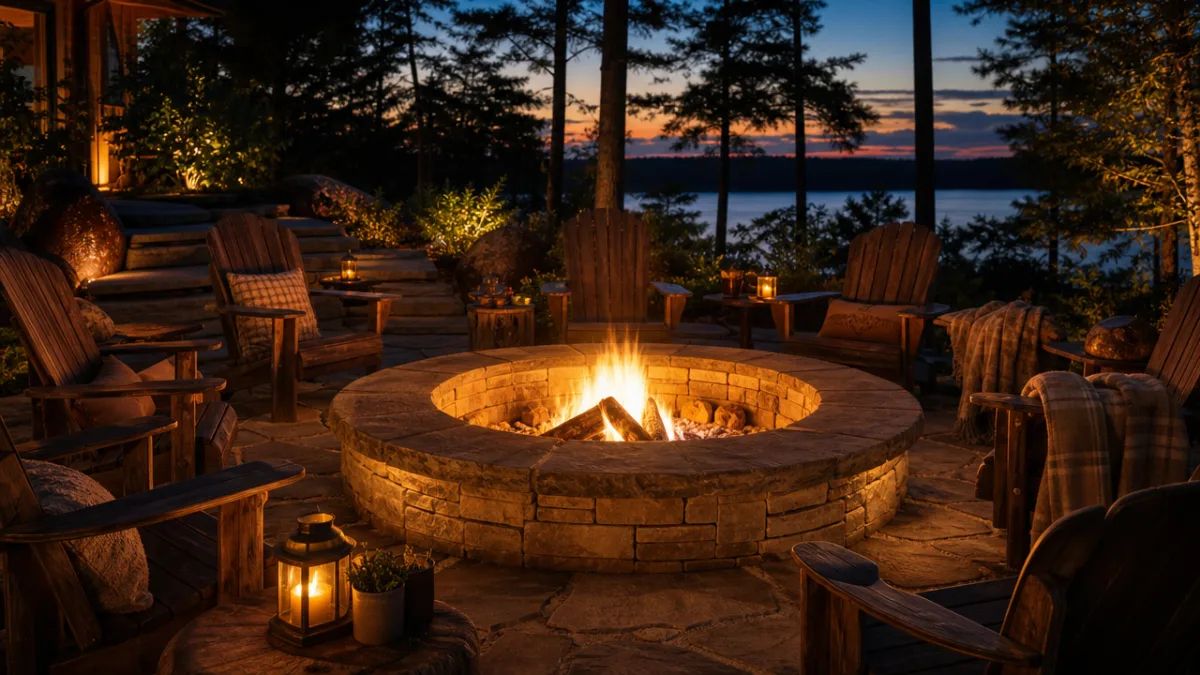
When it comes to in-ground fire pit styles, the options span a wide spectrum from rugged and natural to polished and architectural. One of the most beloved approaches is the classic stone-lined pit, where large fieldstones or cut flagstone are arranged in a circular pattern around a shallow excavation. This style works beautifully in garden settings, farmhouse landscapes, and woodland backyards where the goal is to feel connected to the natural environment. The irregular shapes of natural stone give each pit its own unique character, and the material weathers gracefully over time.
For those drawn to a more contemporary aesthetic, concrete and steel combinations have become a dominant trend in 2026. A clean rectangular pit framed by smooth poured concrete, surrounded by linear wooden decking or large-format porcelain pavers, creates an almost architectural statement in the backyard. These designs pair exceptionally well with modern homes that feature clean lines, flat roofs, and minimalist landscaping. Some homeowners are even integrating gas burners into these sleek forms, eliminating the need for wood entirely and allowing for instant ignition with a single switch or smart home command.
Sunken seating areas represent another spectacular evolution in in-ground fire pit design. Rather than simply digging a hole for the fire, these designs excavate a larger area that includes built-in bench seating at a lower level, with the fire pit centered in the middle. The effect is intimate and enveloping — like a private amphitheater in your own backyard. Popular materials for these sunken lounge areas include natural limestone, brick, decomposed granite, and even weathered wood. When lit at night, these spaces take on a magical, almost theatrical quality that makes every evening feel like a special occasion.
- Classic circular stone pit: Timeless, natural, and relatively easy to DIY with the right materials and preparation.
- Rectangular concrete pit: Modern and architectural, ideal for contemporary homes and minimalist outdoor spaces.
- Sunken lounge pit: An immersive experience that combines fire, seating, and social atmosphere in one cohesive design.
- Brick-lined pit with mortar: Durable and traditional, offering excellent heat retention and a classic cottage charm.
- Gas-powered geometric pit: Sleek, low-maintenance, and perfect for urban settings where wood smoke may be restricted.
- Farmhouse-style rock pit: Rugged, oversized, and built for large gatherings with a deeply rustic personality.
Planning and Preparation: What You Need to Know Before You Dig
Before you pick up a shovel, there are several critical planning steps that will determine whether your in-ground fire pit project goes smoothly or becomes a costly headache. The very first thing you should do is check your local municipal codes and HOA regulations regarding open fires and permanent outdoor structures. Many cities and counties have specific rules about how far a fire feature must be set back from structures, fences, trees, and property lines. Some areas require permits for any excavation or permanent installation, and a few municipalities restrict wood-burning fires entirely in favor of gas or propane alternatives.
Soil assessment is another often-overlooked but absolutely essential step. Not all soil types are equally suited to holding the walls of an in-ground pit without erosion or collapse. Clay-heavy soils can be problematic because they retain moisture and may crack with repeated heating and cooling cycles. Sandy or loose soils may require additional reinforcement such as a concrete or mortar liner to prevent the walls from caving inward over time. A basic soil test kit from a garden center can give you a general sense of what you are working with, and consulting with a local landscaper or contractor before breaking ground is always a worthwhile investment.
Drainage is arguably the most important technical consideration in the entire planning process. A poorly drained fire pit will fill with water after every rain, making it unusable for days at a time and accelerating the deterioration of any materials used in its construction. Most professional builders recommend excavating deeper than the fire pit’s intended depth and filling the bottom with several inches of gravel to promote drainage. In areas with particularly high water tables or heavy rainfall, you may need to install a perforated drain pipe that channels water away from the pit entirely. Getting this right from the start will save you considerable frustration down the road.
When mapping out the dimensions of your fire pit, consider how many people you typically entertain. A pit with a diameter of three to four feet is comfortable for intimate gatherings of four to six people, while larger gatherings may call for a five- to six-foot diameter or even an elongated oval shape. The depth of the pit also matters — most builders recommend a depth of between twelve and eighteen inches for wood-burning pits, which is deep enough to contain embers safely while still allowing adequate airflow for a healthy flame. Surrounding seating should be positioned no closer than three feet from the edge of the pit for safety and comfort.
Materials Guide: Choosing the Right Components for Longevity
The materials you choose for your in-ground fire pit will determine not only how it looks, but how long it lasts and how much maintenance it requires over the years. Natural stone is one of the most popular choices for lining the interior walls of a pit, and for good reason. Granite, sandstone, and slate are all highly heat-resistant and develop a beautiful patina with age. However, not all natural stones are created equal when it comes to fire exposure — certain types, particularly porous stones like limestone or river rocks, can trap moisture inside their structure and crack violently when heated rapidly. Always use stones specifically rated for fire pit use.
Fire brick, also known as refractory brick, is considered by many builders to be the gold standard for lining the interior of a wood-burning pit. These specially manufactured bricks are designed to withstand extreme temperatures without cracking or degrading, and they hold heat exceptionally well, which helps sustain your fire even as it burns down to coals. Fire brick is typically bonded with refractory mortar rather than standard construction mortar, which is equally important — standard mortar will crumble and fail quickly under sustained heat exposure. While fire brick costs more than standard building materials, the investment pays off enormously in durability.
For the surround and edging — the visible border that frames the pit at ground level — the material choices are more about aesthetics, though durability still matters. Poured concrete is extremely popular for modern designs because it can be shaped, colored, and textured to match virtually any design vision. Weathering steel, sometimes called Corten steel, has become a fashionable choice for contemporary landscapes, developing a rich orange-brown patina over time that looks stunning against green plantings. Natural flagstone, bluestone, and travertine remain perennial favorites for traditional and transitional outdoor styles, offering both beauty and excellent heat resistance at the surface level.
- Excavate the area to the desired depth and width, removing all organic material from the bottom.
- Add a four-to-six inch layer of crushed gravel at the base for drainage.
- Line the interior walls with fire brick or heat-rated stone, using refractory mortar to bond them.
- Build up the surround using your chosen edging material, ensuring it sits flush with or slightly above grade.
- Install a steel ring or grate at the base of the pit if using a wood-burning setup.
- Allow mortar and concrete components to cure fully before lighting the first fire.

Landscaping and Ambiance: Creating the Full Outdoor Experience
An in-ground fire pit reaches its full potential when it is thoughtfully integrated into a larger landscaping vision. The fire pit should feel like the natural focal point of an outdoor room, with every surrounding element — seating, planting, lighting, and hardscaping — working together to create a cohesive and inviting atmosphere. One of the most effective approaches is to define the space around the pit with a clearly bounded patio or gathering area, whether that is a circular gravel pad, a geometric stone terrace, or a wooden deck platform. This visual boundary signals to guests that they have arrived at the heart of the outdoor living space.
Seating choices dramatically influence the character of the space. For a relaxed, organic feel, consider wide wooden benches built directly into a low stone wall that encircles the fire pit area. For a more flexible and casual setup, a mix of Adirondack chairs, low loungers, and sturdy ottomans allows guests to rearrange themselves as the evening progresses. Built-in seating with cushion storage underneath is an increasingly popular option for those who entertain frequently, as it eliminates the need to drag furniture in and out of storage with the changing seasons. Whatever seating style you choose, weather-resistant materials like teak, powder-coated aluminum, and all-weather wicker are worth the investment.
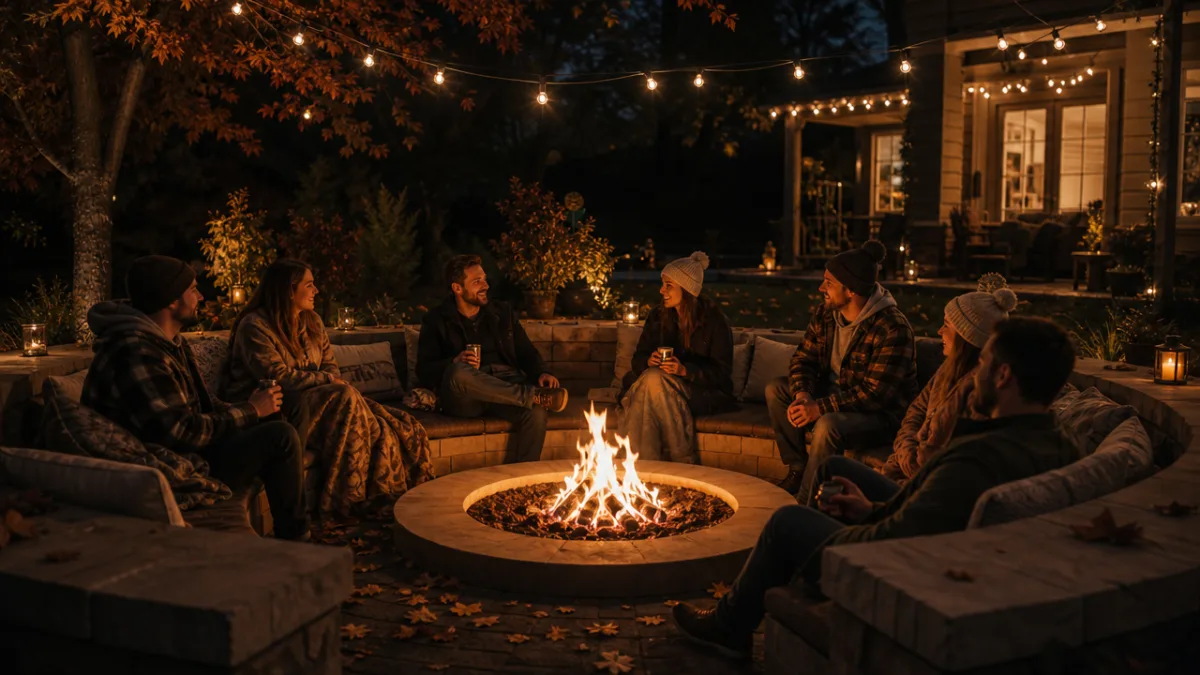
Lighting transforms the entire character of a fire pit space after dark, and layering multiple types of light creates a far more magical result than relying on the fire alone. String lights draped overhead provide a warm, festive glow that makes the space feel enclosed and special. Low-voltage path lights along walkways and steps improve safety while adding visual depth to the garden. Landscape spotlights aimed at nearby trees, planters, or architectural features create drama and dimension. The fire itself acts as a living, flickering centerpiece that ties all of these elements together into something that feels genuinely enchanting on a clear night.
Plant selection around a fire pit area deserves careful thought, both for aesthetic and safety reasons. Highly flammable plants like ornamental grasses, junipers, and certain rosemary varieties should be kept well away from the immediate fire zone. Instead, consider low-growing, moisture-retaining groundcovers like creeping thyme or sedum as close-in borders, with taller flowering perennials and native shrubs positioned further back to provide structure and color. Ornamental stone or decorative gravel mulch around the pit’s immediate perimeter is both practical and attractive, reducing maintenance while creating a clean, intentional look that highlights the pit as a design feature.
Safety, Maintenance, and Year-Round Enjoyment
Owning an in-ground fire pit comes with real responsibilities, and taking safety seriously from day one will ensure that your backyard oasis remains a place of joy rather than risk. Always keep a fire extinguisher or a bucket of sand within easy reach of the fire pit whenever it is in use. Never leave a burning fire unattended, even briefly, and make sure to fully extinguish the fire before going inside for the night — this means dousing embers thoroughly with water, not simply allowing them to burn out on their own. Establish clear rules for children around the pit, including a defined boundary they should not cross without adult supervision.
Regular maintenance is what separates a fire pit that ages gracefully from one that becomes a deteriorating eyesore after a few seasons. After each use, allow the pit to cool completely before removing ash and unburned wood debris. A buildup of ash can block airflow and accelerate corrosion of any metal components, so clearing it out regularly is important. Inspect the mortar joints and stone or brick lining at the start of each season, looking for cracks, shifting, or signs of water damage. Minor mortar repairs are straightforward and inexpensive if caught early, but ignored damage can compound quickly and eventually require a full rebuild of the interior lining.
One of the most common concerns homeowners have about in-ground fire pits is seasonal weather. In climates with freezing winters, water that infiltrates cracks in stone or mortar can expand as it freezes and cause significant structural damage. Applying a high-temperature stone sealer to exposed surfaces at the end of the warm season provides a meaningful degree of protection. Some homeowners invest in custom-fitted covers made from heavy-duty steel or weatherproof canvas that protect the pit from rain, snow, and debris during the off-season. These covers also prevent the pit from becoming an unintended hazard for pets or wildlife during the months when it is not in use.
With the right design and a little creativity, an in-ground fire pit can be enjoyed in nearly every season. In the shoulder months of spring and fall, the fire provides warmth that extends outdoor entertaining well beyond what the ambient temperature would otherwise allow. In mild winter climates, a roaring fire surrounded by blankets and warm drinks creates one of the most cozy and memorable backyard experiences imaginable. Even in summer, a modest fire fueled by aromatic wood varieties like cedar or cherry adds a sensory dimension to evening gatherings — the smell of woodsmoke, the sound of crackling logs, and the hypnotic dance of flames are pleasures that never really go out of style.








What do you think?
It is nice to know your opinion. Leave a comment.