










Extremely Useful And Creative DIY Furniture Projects That Will Discreetly Transform Your Decor
Why DIY Furniture Transforms More Than Just Your Space
There’s something genuinely special about relaxing in a room you actually built with your own hands. DIY furniture has exploded in popularity over the last decade, and honestly, it’s about a lot more than saving money. When you design and build something yourself, you end up with a totally different relationship to your home — one that no flat-pack purchase from a catalog can give you. The piece you made becomes a little bit of you: your taste, your creativity, the effort you put in.
The practical side of things is pretty compelling too. You get full control over dimensions, materials, finishes, and how the piece actually works. That bookshelf from the store might be six inches too wide for your hallway — but the one you built fits perfectly, because you measured it yourself. That kind of customization means your home stops looking like a showroom and starts looking like yours, all while keeping a lot more money in your pocket than retail would.
And maybe the best part nobody talks about enough: DIY furniture teaches you things. Patience, problem-solving, hands-on skills — it’s hard to find a hobby that builds all three the way this one does. Every project throws something new at you, whether it’s picking the right wood grain or figuring out a tricky joint. Even total beginners pick up real knowledge and confidence over time, until what once felt intimidating starts to feel genuinely fun. Every mistake along the way is just making you better at the next one.
Repurposing Old Furniture: Breathing New Life Into Forgotten Pieces
One of the most satisfying — and eco-friendly — approaches to DIY furniture is giving old pieces a second life instead of letting them end up in a landfill. An old wooden ladder can become a charming bathroom towel rack or a rustic corner bookshelf. Stack a few vintage suitcases, add some hairpin legs, and you’ve got a quirky side table with hidden storage inside. These transformations don’t take much money, but the visual payoff is huge — and they carry a story about creativity and sustainability at the same time.
Repurposing is also a fantastic starting point for beginners, because the hard structural work is already done for you. A thrift store dresser with solid bones but peeling veneer just needs some sanding, a fresh coat of paint, and new hardware to become something you’d actually be proud to show off. Wooden pallets are another great example — often free or nearly free, they can be cleaned up, sanded down, and turned into coffee tables, bed frames, garden furniture, or wall shelving. The raw, industrial look of pallet furniture has become genuinely trendy in modern interiors, so these projects are as on-trend as they are budget-friendly.
The real skill with repurposing is learning to look past what something looks like right now and imagine what it could be. Solid wood construction, interesting shapes, and working hardware are all worth saving. Strip off the dated paint, swap out worn fabric for something fresh, and replace cheap knobs with quality brass or ceramic ones. Those relatively small changes add up to something that looks completely transformed — the kind of thing guests assume you paid a lot for, when really you just invested some time, creativity, and a modest materials budget.

Space-Saving Built-In Solutions for Small Rooms
Small spaces are one of the trickiest design puzzles out there, but DIY built-ins offer solutions that are both beautiful and seriously functional. A custom window seat with storage underneath turns an awkward alcove into a cozy reading nook while hiding extra blankets, books, or seasonal stuff you don’t need out in the open. Built-in bookshelves flanking a fireplace or TV give a room an architectural weight that freestanding furniture just can’t match. These projects take more planning and precision than standalone pieces, but the results feel intentional, permanent, and genuinely professional.
Murphy beds are one of the most dramatic space-savers you can tackle if you’re feeling ambitious. A well-built DIY Murphy bed folds away into a cabinet that looks like attractive built-in millwork during the day, then turns the room into a proper bedroom at night. Modern Murphy bed hardware kits have made this much more approachable than it used to be — they supply the mechanical parts and leave all the aesthetic decisions to you. Surround the bed unit with shelving, a desk surface, or wardrobe sections, and you’re squeezing every inch of usable wall space.
Under-stair storage is another opportunity people consistently overlook. That triangular void under a staircase holds a surprising amount of usable space — enough for custom drawers, a compact home office nook, a mudroom bench with cubbies, or even a small library. Because every staircase is different, built-ins are really the only way to get a truly seamless fit here. The time you put into planning and building pays off every day in reclaimed floor space and a home that feels genuinely organized.
Affordable Materials That Look Expensive: Working With Wood, Pipe, and Concrete
One of the most eye-opening discoveries you’ll make in the DIY furniture world is that inexpensive materials, in the right hands, can look far more luxurious than they have any right to. Pine lumber is about as affordable as wood gets at any hardware store, but sand it properly, stain it in a deep walnut or ebony tone, and finish it with a few coats of matte polyurethane, and it develops a richness that gives more expensive hardwoods a real run for their money. The magic is almost entirely in the preparation and finishing, not the raw material — which means patience consistently beats budget.
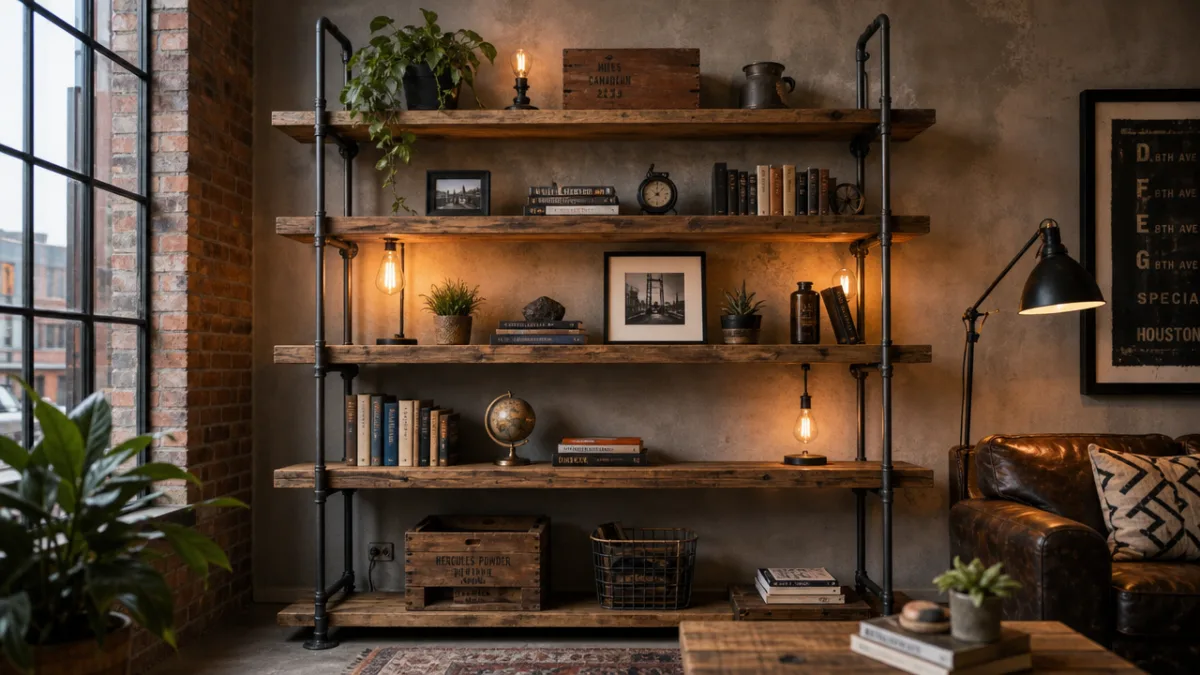
Industrial pipe fittings have become a go-to material in the DIY world for good reason. Black iron plumbing pipe paired with raw wood planks creates furniture that sits somewhere between rustic and industrial in the best possible way. Pipe legs for dining tables, pipe shelving systems, pipe clothing racks, pipe bedside frames — all of it is achievable without any welding or specialized tools. The pieces just screw together, making assembly much more straightforward than it looks. The end result has a contemporary edge that holds its own against things sold in actual design stores.
Concrete has also quietly become one of the more accessible materials for DIY furniture, especially for tabletops, countertops, and decorative accents. Lightweight casting mixes let you create smooth, polished surfaces that bring a cool, minimalist vibe to any room. Pair a concrete top with a wood or metal base and you’ve got a genuine centerpiece that people will absolutely ask about when they visit. It’s durable, heat-resistant, and endlessly customizable with color pigments and different surface treatments — which makes it one of the most versatile tools in the contemporary DIY toolkit.
Beginner-Friendly Projects That Deliver Impressive Results
Not every DIY furniture project requires a fully equipped workshop or years of woodworking experience. A lot of beginner projects need nothing more than a drill, a saw, sandpaper, and some paint — and still produce results that genuinely turn heads. A simple floating wall shelf made from a single plank, mounted with hidden brackets, delivers a clean, modern look that upgrades any wall in any room. A wooden crate side table built from a handful of boards gives you surface area and open storage in a design that looks deliberate and put-together.
These projects are widely recommended for first-time DIY furniture builders because they balance accessible skill requirements with high visual impact:
- Hairpin leg coffee table: Buy pre-made hairpin legs online and attach them to a sanded and finished wood slab or butcher block surface. The result is a mid-century modern piece that looks boutique but costs very little to pull off.
- Floating nightstands: Wall-mounted bedside tables made from simple wood boxes clear up floor clutter and give a bedroom that clean, contemporary, hotel-room feel without much technical effort at all.
- Rope and wood hanging shelves: Drill holes through wooden planks, thread thick rope through them, knot underneath each plank, and hang from ceiling hooks. It’s a bohemian, textured display shelf that takes maybe an afternoon to build.
- Peg rail with baskets: Mount a horizontal wooden dowel rail with evenly spaced pegs along a hallway or mudroom wall, then hang wicker baskets from them. Functional, farmhouse-y, and really easy to put together.
- Tufted storage ottoman: Build a simple plywood box, add foam padding and fabric, and learn some basic tufting. The finished piece looks like something from a furniture boutique and works as both seating and storage.
What makes these projects so impactful is how they build on each other. One handmade piece brings warmth and character into a room. Two or three start to tell a cohesive design story. Once your home has several DIY pieces in it, the space develops a personality that no amount of catalog shopping can replicate. It starts to feel genuinely yours rather than assembled from a showroom floor — and that shift is something every guest will notice the moment they walk in, even if they can’t quite put their finger on why.
Finishing Touches: Hardware, Paint, and Styling That Complete the Look
The gap between a DIY piece that looks homemade and one that looks professionally crafted almost always comes down to how it’s finished. Good surface prep — filling holes, working through progressively finer sandpaper grits, applying a quality primer — creates a smooth base that takes paint or stain evenly. Skipping or rushing through this step is the most common mistake beginners make, and it’s almost always what leads to disappointing results. Put the time in here, and the final product stops looking like something you built in the garage and starts looking like something you bought somewhere nice.
Hardware is something a lot of first-time builders underestimate, and it really shouldn’t be. Drawer pulls, cabinet knobs, leg caps, hinges — these are essentially the jewelry of a furniture piece, and swapping out generic cheap hardware for quality brass, matte black, or ceramic alternatives costs relatively little but makes a dramatic visual difference. It also helps to think about how the hardware coordinates with other metal elements in the room — light fixtures, faucets, curtain rods. When those finishes feel intentional and consistent, the whole space reads as more considered and pulled together. The good news is that online retailers now offer thousands of affordable hardware options that used to be pretty much exclusive to professional designers.
Finally, how you style and integrate a piece into its surroundings matters more than most people realize. A handmade bookshelf looks dramatically better when books are arranged by color, dotted with small plants, candles, or objects, and given enough breathing room that it doesn’t feel cluttered. A DIY coffee table comes alive when there’s a textured tray holding a few curated items on top rather than just a bare surface. Styling has its own learning curve, but the core idea is simple: every surface does better with a mix of varying heights, contrasting textures, and a little intentional restraint. Get the finishing and the styling right, and no one is going to guess that the piece they’re admiring was built by hand in a spare bedroom — and honestly, that’s the best compliment any DIY furniture project can get.








What do you think?
It is nice to know your opinion. Leave a comment.