










DIY Home Organization Ideas: Creative Clutter-Free Solutions for a Beautiful and Tidy Living Space
Why Home Organization Transforms More Than Just Your Space
The state of our living environment has a profound and often underestimated effect on our mental and emotional wellbeing. Research in environmental psychology consistently shows that cluttered spaces elevate cortisol levels, the body’s primary stress hormone, making it harder to relax, focus, or feel at ease in the very rooms meant to offer comfort and refuge. When you take the time to thoughtfully organize your home, you are not simply tidying up — you are actively investing in your own quality of life, daily mood, and long-term sense of calm and control.
Beyond the psychological benefits, a well-organized home is simply more functional. Think about how much time the average person loses each week searching for misplaced keys, lost chargers, or that one receipt they need for a return. Studies suggest that Americans spend an average of 2.5 days per year looking for lost items. A thoughtful organizational system eliminates this invisible tax on your time and replaces daily frustration with the quiet satisfaction of knowing exactly where everything lives. The ripple effects of that efficiency extend into every corner of your routine.
The good news is that creating an organized home does not require a massive budget, a professional interior designer, or a complete weekend overhaul. Many of the most effective organizational solutions are DIY projects that can be completed with affordable materials, basic tools, and a few hours of focused effort. The key is approaching your space strategically, room by room, and choosing systems that reflect the way you and your household actually live — not the way a showroom display might suggest you should.
Decluttering First: The Foundation of Any Successful Organization Plan
No organizational system, however clever or beautifully designed, can function effectively when it is filled with items you no longer need, use, or love. Decluttering is the essential first step that most people try to skip, and it is precisely why so many organization attempts fail within weeks of implementation. Before you buy a single bin, basket, or label maker, you must take honest stock of what you actually own and make deliberate decisions about what deserves a place in your home going forward.
The most effective approach to decluttering is to work category by category rather than room by room. Made famous by organizing consultant Marie Kondo, this method prevents you from simply shuffling items from one space to another without making real decisions. Start with clothing, then move to books, papers, kitchen items, and finally sentimental objects — saving the emotionally charged category for last when your decision-making instincts have been sharpened by practice. Gather every item in a category into one place so you can see the full scope of what you own before evaluating each piece.
As you sort through your belongings, create three clear streams for items leaving your home: donate, sell, and discard. Keep a donation box permanently accessible in a closet or garage so that future decluttering moments can happen spontaneously whenever you notice something that no longer serves you. Selling items through platforms like Facebook Marketplace, Poshmark, or local consignment shops can offset the cost of your new organizational supplies — effectively letting your clutter pay for your solutions. Once you have reduced your possessions to only what you genuinely use and value, the organizing work becomes dramatically simpler and more sustainable.

DIY Storage Solutions for the Kitchen and Pantry
The kitchen is consistently ranked as the most challenging room to keep organized, and with good reason. It serves as a workspace, dining area, social hub, and storage facility for an enormous variety of items in all shapes and sizes. The single most impactful thing you can do for kitchen organization is to take full advantage of vertical space. Most kitchens are equipped with cabinets that reach only partway to the ceiling, leaving valuable real estate unused. Install open floating shelves in that gap to store rarely used appliances, display attractive cookware, or house a small collection of cookbooks.
Inside your existing cabinets and drawers, a range of simple DIY inserts can multiply your usable space overnight. Tension rods installed vertically inside a cabinet create slots that keep baking sheets, cutting boards, and sheet pans upright and accessible rather than stacked in a toppling pile. Drawer dividers — easily made from thin pieces of wood or purchased inexpensively — transform chaotic utensil drawers into orderly grids where every tool has a designated home. For corner cabinets, a simple lazy Susan built from a turntable hardware kit and a plywood circle makes every item reachable without the usual frustrating excavation.
The pantry deserves its own dedicated organizational approach. Decanting dry goods like pasta, rice, flour, sugar, and cereal into clear uniform containers immediately makes a pantry look more intentional and also helps you see at a glance when supplies are running low. Label every container clearly with the contents and, where relevant, the expiration date. Group items by category on designated shelves — baking supplies together, canned goods together, snacks together — and use tiered shelf risers to bring items at the back forward into view. A well-organized pantry reduces food waste, saves money, and makes meal planning significantly easier.
- Use tension rods vertically in cabinets to store flat items like pans and cutting boards upright, saving significant horizontal shelf space and preventing dangerous stacking.
- Install a pegboard on an empty kitchen wall to hang pots, pans, utensils, and even small shelves, keeping counters clear while adding a functional design element.
- Repurpose magazine holders as vertical storage for aluminum foil boxes, plastic wrap, and parchment paper rolls inside a cabinet door or drawer.
- Add a pull-out drawer or small basket to the toe-kick space below base cabinets — this often-overlooked cavity is perfect for flat baking sheets or pet food bowls.
- Mount a small chalkboard or whiteboard inside a pantry door to track shopping needs, meal plans, or expiration dates without cluttering counter space with notes.
Bedroom and Closet Organization: Maximizing Every Square Inch
The bedroom should be a sanctuary — a place where the visual noise of daily life recedes and rest becomes possible. Achieving that atmosphere is largely a function of how well your storage systems manage the items that naturally accumulate in this room. Clothing, accessories, shoes, bags, books, chargers, and personal care products all compete for limited space, and without intentional systems in place, they invariably spread across every available surface. The first principle of bedroom organization is to ensure that every item regularly used in this room has a dedicated, accessible home so that putting things away requires no more effort than leaving them out.
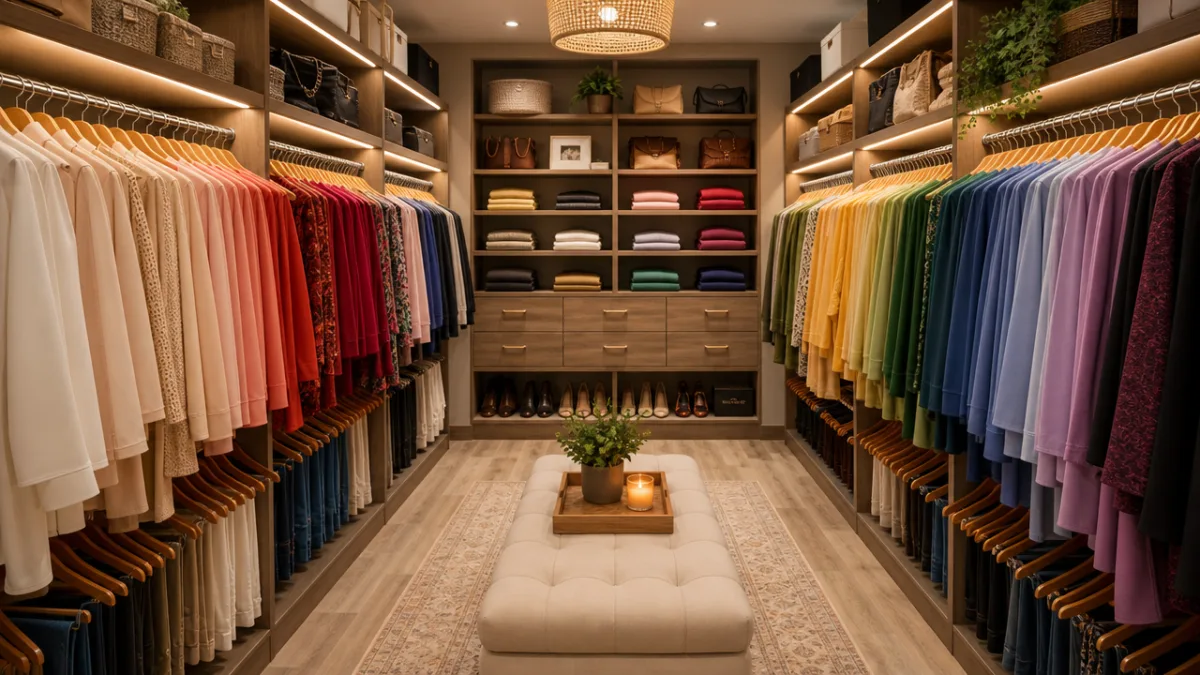
Closet organization is where DIY ingenuity can make the most dramatic difference, often at surprisingly low cost. Most builder-grade closets come with a single hanging rod and a shelf above it — a configuration that wastes the bottom half of the closet entirely. A simple and affordable fix is to add a second hanging rod below the first, effectively doubling your hanging capacity for shorter items like shirts, jackets, and folded pants. This modification costs under twenty dollars in hardware and takes less than an hour to install. Complement this with a floor-level shoe rack or clear shoe boxes to keep footwear visible and accessible rather than piled in a heap.
For items that do not hang, drawer organizers and shelf dividers are transformative. Folding clothes using the KonMari file-fold method — standing items vertically in drawers rather than stacking them horizontally — dramatically increases drawer capacity and ensures every item stays visible so nothing gets forgotten at the bottom of the pile. Hooks on the inside of closet doors provide space for belts, scarves, bags, or tomorrow’s outfit. Over-the-door shoe organizers can house far more than footwear — they work beautifully for accessories, small bags, hobby supplies, or even cleaning products stored in another room.
Living Room and Entryway: Taming High-Traffic Zones
The entryway is the first space you and your guests encounter when entering your home, and it is also the zone most vulnerable to becoming a dumping ground for shoes, bags, mail, keys, and coats. A functional entryway organizes itself when you give every recurring category of item a permanent home right at the door. Install a row of hooks at varying heights to accommodate coats, bags, and children’s backpacks. Place a shallow tray or decorative bowl on a console table or shelf specifically for keys, sunglasses, and small daily carry items so they are always exactly where you expect them.
A simple DIY mudroom bench with storage built beneath the seat serves double duty beautifully in entryways of any size. Even in a small apartment entryway, a narrow bench with a hinged lid can conceal a surprising volume of shoes, seasonal accessories, or sports equipment, while its surface provides a place to sit while putting on shoes. If building a bench from scratch feels ambitious, upcycling an old wooden chest or blanket box with a coat of fresh paint and some upholstery foam on the lid achieves the same result at a fraction of the effort.
In the living room, the challenge is managing the items associated with daily life — remote controls, charging cables, books, games, craft supplies, hobby materials — without allowing them to visually overwhelm the space. Stylish baskets placed on lower shelves or tucked under coffee tables provide catchall storage that looks intentional rather than messy. A coffee table with a drawer or lower shelf multiplies its utility significantly. For families with children, designating one attractive storage ottoman or cabinet in the living room as the official toy zone teaches organizational habits while keeping the broader space functional for all members of the household.
Bathroom Organization: Small Space, Big Impact
Bathrooms present a unique organizational challenge because they are typically among the smallest rooms in the home yet must accommodate a dense and diverse collection of personal care products, medications, cleaning supplies, and linens. The solution in small spaces is almost always the same: think vertically and take full advantage of every surface, including walls. A simple DIY ladder shelf leaning against the wall beside the tub or toilet adds three to four shelves of storage in a footprint smaller than a bath mat, and it can be built from basic lumber in an afternoon for under thirty dollars.
Under-sink cabinets in bathrooms are notoriously awkward to organize because of the plumbing that occupies their center. The solution is to use a combination of small tension rods, stackable bins, and pull-out drawers designed specifically for this configuration. Hang a tension rod across the interior of the cabinet and use it to hang spray bottles — freeing the cabinet floor for bins organized by category such as hair care, skin care, first aid, and cleaning supplies. Clear bins with labels ensure that every item is visible and retrievable without emptying the entire cabinet to find what you need.
The medicine cabinet and vanity drawer are often the most chaotic storage spots in a bathroom despite their small size. Drawer inserts — available in adjustable configurations or easily made from small boxes and containers — transform a jumbled drawer into a logical grid. Magnetic strips mounted inside cabinet doors can hold bobby pins, nail clippers, tweezers, and other small metal tools that otherwise vanish into the bottom of a drawer. For bathroom countertops, the guiding principle is ruthless minimalism: keep only what you use every single day within reach, and store everything else out of sight. A clear counter does more for the perceived cleanliness and calm of a bathroom than almost any other single change.
- Audit your bathroom products honestly and discard anything expired, nearly empty, or unused for more than three months — most bathrooms contain far more products than any household actually uses regularly.
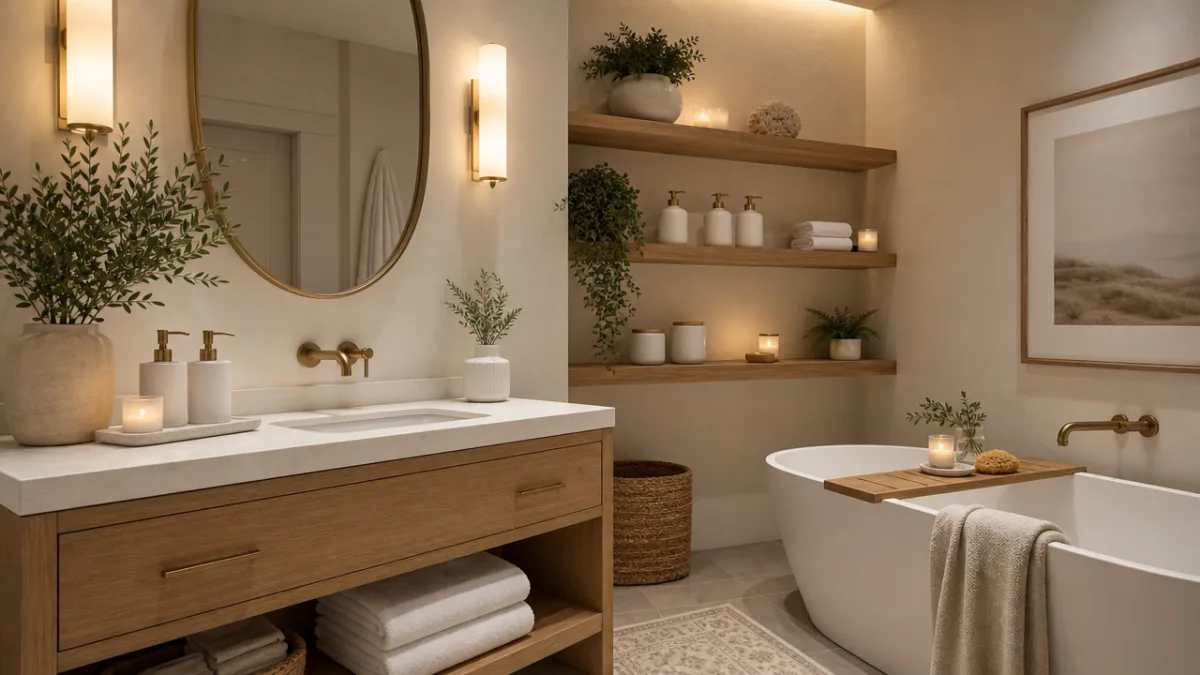
- Install floating shelves above the toilet to make use of the wall space that is almost never utilized, creating several tiers of storage for towels, candles, and decorative baskets containing supplies.
- Use a tiered makeup organizer on the counter or inside a drawer to categorize cosmetics by type, making your morning routine faster and more enjoyable while reducing daily counter chaos.
- Hang a small woven basket or fabric pocket organizer on the back of the bathroom door for hair tools, extra toiletries, or children’s bath toys that need to dry between uses.
- Decant liquid soaps, shampoos, and conditioners into uniform pump dispensers or glass bottles for a cohesive, spa-like aesthetic that makes even a small bathroom feel elevated and intentional.
Maintaining Your Organized Home: Systems That Last
Creating an organized home is genuinely satisfying work, but the greater challenge — and the true measure of any organizational system’s success — is maintaining it over time. The most beautifully designed system in the world will unravel within weeks if it is not matched to the realistic rhythms and habits of your household. This is why the best organizational solutions are not the most elaborate ones, but the ones that make the path of least resistance lead directly to order rather than away from it. If putting something away is easier than leaving it out, your systems will maintain themselves almost automatically.
Establish a brief daily reset habit that takes no more than ten to fifteen minutes and involves every member of the household. This is not a full cleaning session — it is simply the practice of returning items to their designated homes before the day ends, so that no single day’s accumulation has the chance to compound into a week’s worth of disorder. In homes with children, making this a shared and even playful routine from an early age builds organizational habits that persist into adulthood. Set a consistent time — after dinner, before bedtime, or first thing in the morning — and protect it as a non-negotiable part of the day’s rhythm.
Finally, revisit your organizational systems seasonally to ensure they are still serving your household’s current needs. Life changes — children grow, hobbies shift, work arrangements evolve — and your storage solutions must evolve alongside those changes or they will gradually fall out of alignment with reality. A seasonal audit of each room, lasting perhaps an hour per space, allows you to catch accumulation before it reaches crisis levels, refresh your donation box, and make small adjustments to systems that have begun to slip. The goal is never a perfect, static home, but a living environment that is responsive, functional, and genuinely supportive of the life you are actually living — not a future idealized version of it.








What do you think?
It is nice to know your opinion. Leave a comment.