










5 Creative Garden Border Ideas for Modern Landscaping
Introduction: Why Garden Borders Matter More Than You Think
Garden borders are far more than simple dividing lines between lawn and planting bed. They serve as the architectural framework of your entire outdoor space, defining the visual rhythm and structure that makes a garden feel intentional rather than accidental. When thoughtfully designed, a border transforms a flat, undifferentiated yard into a series of rooms, each with its own character and purpose, drawing the eye from one beautiful detail to the next.
Modern landscaping has moved decisively away from the rigid, geometric edges of previous decades. Today’s approach celebrates the interplay between hard and soft elements, between structure and naturalism, between the engineered and the organic. A well-executed garden border communicates design intelligence — it tells visitors that every inch of the outdoor space has been considered, that the relationship between lawn and planting, path and bed, has been curated with the same care you would bring to an interior room.
Whether you are starting from scratch with a blank-slate garden or refreshing an established landscape that has grown tired and shapeless, rethinking your borders is one of the highest-impact improvements you can make. The ideas gathered here span a range of styles, budgets, and skill levels, so there is something genuinely actionable for every gardener, from the weekend enthusiast to the dedicated horticulturalist with a serious design vision.
1. Naturalistic Metal Edging for a Clean Contemporary Look
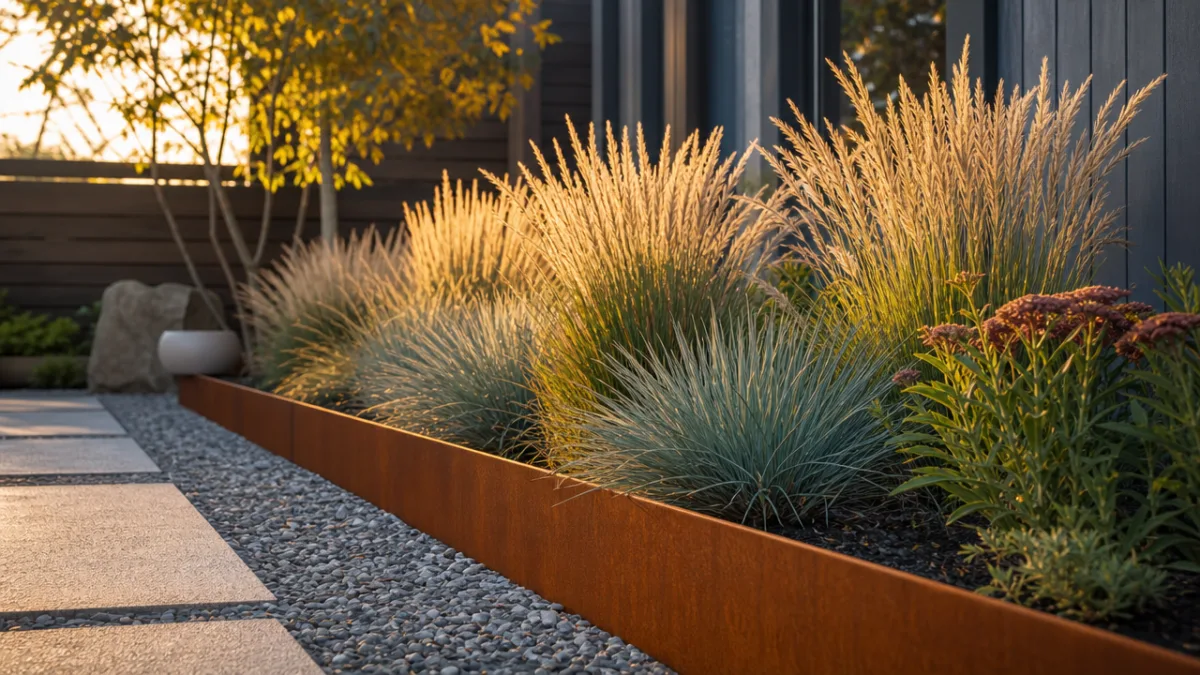
Cor-Ten steel and powder-coated aluminum edging have become the defining detail of modern garden design, and for excellent reasons that go well beyond pure aesthetics. These materials offer a blade-thin profile that creates a crisp, razor-sharp separation between lawn grass and planting beds without the visual bulk of brick or stone. The result is an edge that reads almost like a drawing line inscribed directly into the landscape, giving the whole garden a sense of graphic precision that photographs beautifully and holds up over years of use.
Cor-Ten steel, in particular, brings a warm, earthy presence to the garden through its characteristic rust patina. Rather than reading as industrial or harsh, this weathered orange-brown tone harmonizes naturally with soil, bark mulch, and the warm stems of ornamental grasses. Over the first season, the steel oxidizes to form a stable protective layer that actually prevents further corrosion, meaning that what begins as a raw, bright material matures into something that looks as though it has always belonged in the landscape. Paired with bold architectural planting — feather reed grass, kniphofia, and dark-leafed dahlias — it creates a composition of striking contemporary elegance.
Installation requires some precision but is well within the reach of a committed DIY gardener. The edging strips come in flexible lengths that can be bent gently by hand to follow curves, or left straight for geometric beds. Anchor stakes driven every eighteen to twenty-four inches keep the strip firmly in position through frost heave and seasonal ground movement. The key to a professional finish is taking the time to cut a clean spade-edge trench before insertion, ensuring the top of the metal sits just a few millimeters proud of the soil surface — enough to stop grass runners without becoming a trip hazard.
Best Plants to Pair with Metal Edging
- Feather reed grass (Calamagrostis x acutiflora) for vertical drama and movement
- Salvia nemorosa varieties for long-season blue-purple flower spikes
- Agapanthus for bold, architectural summer color
- Alliums for spherical, structural interest in spring and early summer
- Low-growing sedums and echeverias for a contrasting soft, sprawling habit
2. Reclaimed Brick and Stone for Timeless Character
There is a reason that brick and stone borders have been used in gardens for centuries — they possess a warmth, solidity, and sense of permanence that no synthetic material can fully replicate. In the context of contemporary landscaping, however, the trick is to use these traditional materials in ways that feel fresh and considered rather than predictable. Reclaimed bricks laid in a single course set at a slight angle — the classic “soldier” or “sailor” pattern — create an edge that is simultaneously timeless and graphically interesting, its repetitive geometry adding rhythm to the garden’s horizontal plane.
Natural stone offers even greater variety and visual richness. Flat sandstone, slate, or limestone pieces bedded into the soil with their faces upward create what designers call a “raised edge,” which has the practical advantage of keeping mulch within the bed while also providing a visual step that lifts the planting display slightly above eye level when you are seated on a patio or lawn. The irregular shapes and varied tones of natural stone mean no two sections of border look identical, giving the garden an authenticity and handcrafted quality that is increasingly prized in an age of mass-produced uniformity.
Sourcing reclaimed materials deserves real attention and some patience, but the effort pays dividends in character. Architectural salvage yards, demolition contractors, and even online marketplaces regularly yield old bricks, cobblestones, and dressed stone pieces at reasonable prices. Look for materials with evidence of their history — mortar stains, worn corners, the faded marks of previous use — because these imperfections are precisely what give reclaimed borders their soul. Before laying anything permanently, spend time arranging pieces dry to test different patterns and ensure you have sufficient material to complete the border without awkward gaps or mismatched sections at the end.
Tips for a Successful Brick or Stone Border
- Excavate a level trench at least four inches deep to provide a stable base for the edging material.
- Add a two-inch layer of compacted sharp sand to improve drainage and allow fine adjustment of individual pieces.
- Use a builder’s line stretched between stakes to keep the top edge consistent and visually level.
- Fill gaps between stones with fine horticultural grit to discourage weed establishment while allowing drainage.
- Seal reclaimed bricks with a breathable masonry sealant to reduce moisture absorption and frost damage.
3. Living Borders: Using Low-Growing Plants as the Edge Itself
The most naturalistic and ecologically generous approach to garden borders is to dispense with hard materials altogether and use densely planted low-growing species as the edging element itself. This technique, long practiced in traditional cottage and wildlife gardens, has been reinterpreted with genuine sophistication by contemporary designers who combine it with bold drifts of taller planting behind and crisp lawn panels in front. The result is a border that changes with the seasons, offering flower, fragrance, and habitat value alongside its structural role.
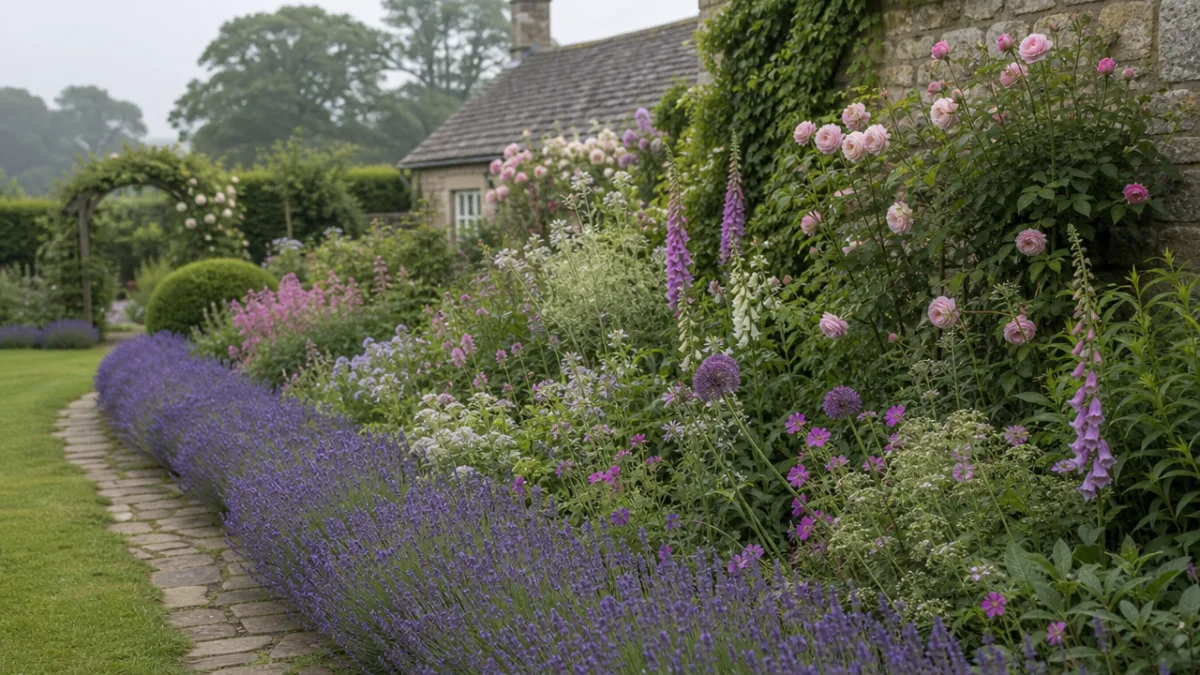
Box hedging — Buxus sempervirens — was the quintessential living border plant for generations, but the spread of box blight and box tree moth has led gardeners to explore other species with real enthusiasm. Ilex crenata, the Japanese holly, offers a near-identical small-leaved appearance and clips to the same tight, formal shapes without the disease vulnerability. For a softer, more fluid interpretation, lavender is extraordinarily effective: planted in a continuous ribbon and clipped lightly after flowering, it creates a silver-grey mound that smells extraordinary from late spring through summer and provides exceptional value to bees and other pollinators throughout the season.
Creeping or mat-forming perennials offer yet another interpretation of the living border concept, especially useful in less formal gardens where the transition between lawn and bed should feel gradual rather than abrupt. Ajuga reptans spreads enthusiastically along the border’s front edge, its dark bronze foliage creating rich, jewel-like ground cover punctuated by short blue flower spikes in late spring. Geranium macrorrhizum, with its semi-evergreen, aromatic foliage and magenta-pink flowers, serves similarly well and is practically drought-tolerant once established, making it ideal for the dry, root-competitive conditions that often prevail along border edges.
4. Gravel and Mulch Channels as Transitional Borders
One of the most ingenious modern approaches to garden bordering involves creating a distinct transitional zone rather than a single-line edge. By excavating a shallow channel between lawn and planting bed and filling it with contrasting gravel or decorative bark mulch, you establish a visual buffer that does three important jobs simultaneously: it defines the border cleanly, it suppresses grass runners without chemical intervention, and it creates a maintenance corridor from which you can trim the lawn edge and tend the planting bed without damaging either. The width of this channel — typically twelve to twenty-four inches — becomes a design decision in itself, with wider channels creating more emphatic separation and a more formal character.
The choice of aggregate material significantly influences the overall aesthetic. White or pale grey limestone chippings reflect light upward through the planting, making colors appear more vivid and the border generally brighter — an excellent choice for north-facing or partially shaded gardens where light is at a premium. Darker materials, such as slate chippings in charcoal-grey or blue-black tones, create a more dramatic, gallery-like setting that makes foliage textures and flower colors pop with intensity. Warm-toned pea gravel sits in the middle, offering a softer, more naturalistic appearance that suits gardens with an informal or Mediterranean character.
Maintaining a gravel or mulch channel is relatively straightforward once it is established, but a few precautions during installation will save considerable work later. Lay a permeable landscape membrane beneath the aggregate to suppress weed germination from the soil below, while still allowing rain to penetrate to plant roots. Edge the channel on both the lawn side and the bed side with the same fine metal edging described in Section 1 to keep aggregate contained and grass roots excluded. Top up the aggregate layer annually in spring, raking it level and freshening its appearance before the growing season begins. A four-to-five-inch depth is the minimum needed to genuinely suppress weeds and retain the visual impact of the border channel through the whole growing year.
5. Raised Log and Timber Borders for Woodland-Inspired Gardens
Timber borders bring warmth, texture, and a strong connection to the natural world that harder materials cannot quite replicate. In gardens with a woodland, naturalistic, or wildlife-focused theme, sawn log rounds set vertically into the ground — their cut faces uppermost — create a border that is simultaneously rustic and surprisingly graphic, the repeating circles of end grain forming a pattern that is almost decorative in its own right. This approach works especially well around raised beds, wildflower areas, and shaded woodland gardens where the material’s natural character reinforces the overall mood of the planting.
Sleeper-style treated timber offers a more refined version of the same principle. Oak or larch railway sleepers, set either flat in a single-course border or upright as a low retaining edge for a raised bed, create an edge of considerable visual weight and authority. They are particularly effective in contemporary gardens that employ strong horizontal lines, where the broad, flat face of a sleeper running along the front of a planting bed mirrors the horizontal band of a corten wall, a decking terrace, or a water feature. Over time, untreated oak weathers to a beautiful silver-grey that harmonizes perfectly with stone paving, galvanized metal, and the bleached stems of winter-interest grasses.
Sustainability and longevity deserve careful thought when choosing timber edging. Whenever possible, select FSC-certified timber from managed woodland sources, and avoid materials treated with creosote or other preservatives that can leach harmful compounds into the surrounding soil. Naturally durable species — oak, sweet chestnut, larch, and western red cedar — will perform reliably for ten to fifteen years in ground contact without any chemical treatment, provided they have good drainage beneath them and are not permanently waterlogged. If using logs from your own garden or from local tree surgery, ensure they are from non-diseased wood and allow them to dry slightly before installation to reduce the risk of introducing fungal pathogens to your beds.
Bringing It All Together: Choosing the Right Border Style for Your Garden
With five distinct approaches available, the question of which border style suits your garden best comes down to a honest assessment of three interrelated factors: the overall aesthetic character of your outdoor space, the practical demands of your maintenance routine, and the budget you can realistically commit not just to installation but to ongoing upkeep. A visually ambitious living border of clipped ilex, for instance, demands regular trimming to maintain its crisp appearance — a worthwhile investment of time if you enjoy that style of gardening, but a source of frustration if your schedule is unpredictable or your patience for precise horticultural work is limited.
Consider too the architecture of your house and the materials used in other hard landscaping elements — paths, terraces, walls, and steps. Garden borders should feel like a continuation of the same design conversation rather than an afterthought grafted onto an unrelated scheme. A house with a contemporary brick extension and powder-coated aluminum window frames will be naturally complemented by metal edging in a similar tone; a stone-built country cottage sits most comfortably with reclaimed stone or timber borders that acknowledge the same material language. This continuity between building and garden is what distinguishes a truly designed landscape from a collection of good individual ideas that somehow never quite cohere.
Finally, do not feel constrained to choose only one approach throughout the entire garden. The most interesting contemporary landscapes often combine two or three border treatments used consistently within specific zones — metal edging around the formal lawn, reclaimed brick framing the kitchen herb garden, living lavender borders along the main terrace. What matters is that transitions between zones are handled thoughtfully, with deliberate choices about where one language ends and another begins, so the variety reads as considered and curated rather than indecisive. Your garden borders are ultimately the grammar of your outdoor space: get them right, and every element within them will communicate more clearly and more beautifully.








What do you think?
It is nice to know your opinion. Leave a comment.