










Aroma Flower Candles: The Complete Guide to Fragrant Floral Illumination
The Art and History of Aroma Flower Candles
There’s something genuinely special about aroma flower candles that’s hard to put into words. They sit at this sweet spot between nature and craft, and somehow manage to do what very few home décor items ever really pull off — they make a space feel different the moment you light one. For centuries, people have been drawn to them, and it’s not hard to see why. The combination of soft candlelight and a beautiful floral scent creates an atmosphere that nothing else in your home quite replicates.
The story of scented candles goes back a long way — ancient Egyptians were already experimenting with beeswax and plant extracts to perfume sacred spaces during religious rituals. The Romans later picked up the craft and started working with tallow wicks that could carry botanical scents more effectively. But it was really during the Renaissance in Europe that floral scenting became something artisans took seriously, infusing rose petals, lavender buds, and jasmine blossoms directly into molten wax to create what we’d recognize today as the first true aroma flower candles.
Fast forward to now, and the craft has gone through a real revival. Today’s artisan candlemakers are blending centuries-old techniques with modern science — cold-press extraction, steam distillation, sophisticated fragrance layering — to capture even the most delicate floral notes. And many of them aren’t stopping at scent. They’re embedding real dried flower petals, herbs, and botanicals into the wax itself, so you end up with something that’s just as beautiful to look at as it is to smell. That combination of aromatherapy and visual art is a big part of why aroma flower candles have grown from a nice home accessory into something people genuinely consider part of their wellness routine.
Understanding Floral Fragrance Profiles and Their Benefits
If you’ve ever stood in front of a candle display feeling overwhelmed by all the options, you’re not alone. But once you understand a bit about how different floral fragrances actually work, choosing the right one gets a lot more intuitive. Every flower has its own chemical fingerprint, and when that translates into candle form, it interacts with your sense of smell in ways that go beyond just smelling nice. Take rose, for example — it contains compounds called geraniol and citronellol that produce that warm, velvety sweetness most people find genuinely calming and, well, a little romantic.
Lavender is probably the most popular floral candle scent for good reason. The active compounds in lavender essential oil — linalool and linalyl acetate — have been studied quite a bit, and the research is pretty compelling. They’ve been shown to lower cortisol, slow heart rate, and help people fall into deeper, more restful sleep. A lot of people swear by burning a lavender candle in their bedroom about half an hour before bed as part of a wind-down ritual, and honestly, the science backs that habit up. It’s one of those simple things that can make a real difference to how you sleep and how you feel the next day.
But rose and lavender are really just the beginning. Jasmine has this heady, intoxicating sweetness that’s been linked to improved mood and sharper mental alertness — without the jitters you’d get from caffeine. Ylang-ylang goes deep and exotic, working as both a stress reducer and a natural mood lifter. Chamomile offers a gentler, slightly apple-like warmth that’s great for soothing an overactive mind. And then there’s peony, magnolia, gardenia — each one brings something distinctly its own to the experience. The point is, the floral fragrance world is vast, and picking your candle thoughtfully is essentially curating the emotional atmosphere of your home.
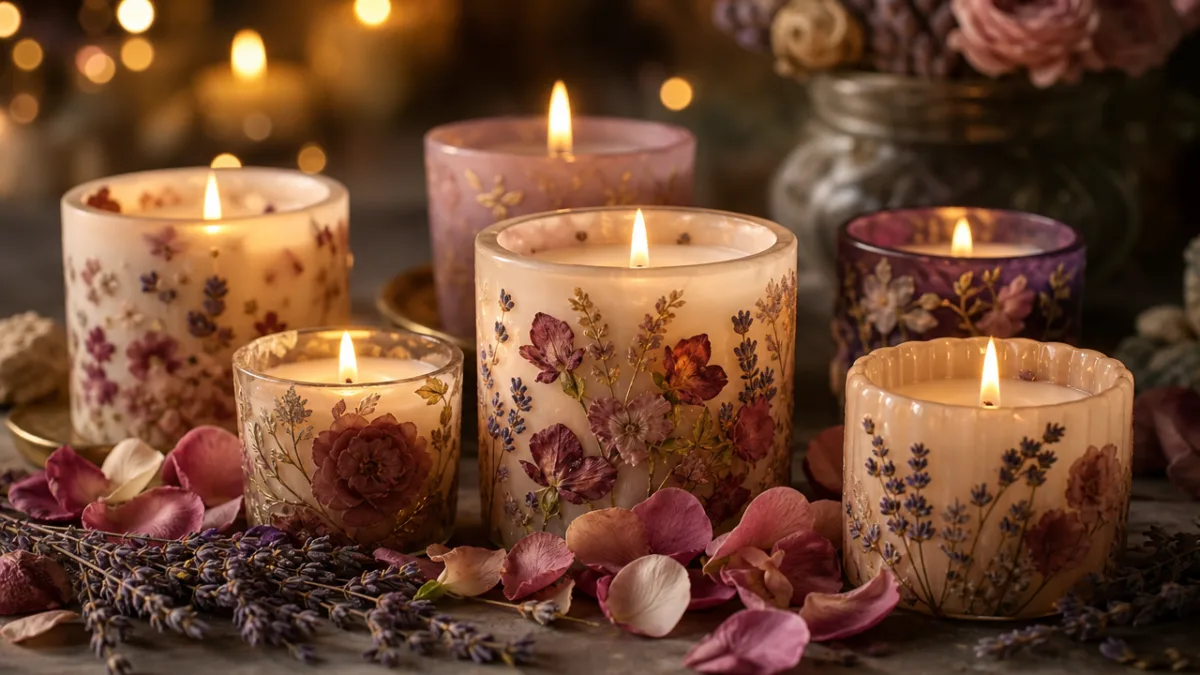
Choosing the Right Wax for Your Aroma Flower Candle
Wax might seem like a behind-the-scenes detail, but it genuinely shapes everything about how a candle performs — how the scent is released, how long the candle lasts, how it looks, and what kind of environmental impact it has. Soy wax has become a go-to for eco-conscious buyers and small-batch makers alike, mostly because it’s a renewable resource that burns cleaner and more slowly than a lot of alternatives. That slower burn is actually great for fragrance, since it gives the scent time to diffuse gradually and evenly rather than blasting out all at once.
Beeswax is about as traditional as it gets, and there’s a reason it’s been used for centuries — it’s genuinely excellent. It has a naturally sweet, honeyed undertone that pairs beautifully with floral fragrances, and when burned it releases negative ions that can actually help clean the air by neutralizing dust, pollen, and other airborne particles. That makes beeswax candles a particularly smart choice if you have allergies or tend to be sensitive to airborne irritants. The trade-off is price — pure beeswax costs more, and that’s a fair reflection of how much work goes into producing it.
Coconut wax is newer to the scene but has been making serious inroads with luxury candle brands, and it’s not hard to understand why. It burns incredibly cleanly, looks gorgeous in glass — that creamy white color is really striking — and it holds and releases fragrance oils exceptionally well. So if scent performance is your priority, coconut wax candles are worth seeking out. Paraffin, on the other hand, comes from petroleum, which makes it a harder sell environmentally, but it does produce a very strong hot throw (meaning the scent really fills a room while the candle’s burning), which is why it’s still widely used. A lot of premium candles these days actually use a blend of two or more waxes, which is a smart way to get the best of multiple worlds — great scent throw, a beautiful appearance, and a cleaner burn all at once.
The Craft of Making Aroma Flower Candles at Home
Making your own aroma flower candles is one of those hobbies that seems intimidating before you start and then turns out to be wonderfully approachable. The ability to choose your own fragrance blend, pick out your vessel, and press dried botanicals into the surface to create something totally your own — it’s genuinely satisfying in a way that buying candles just isn’t. The startup investment is pretty modest, and the learning curve is gentle enough that most beginners are turning out beautiful candles within their first or second try. It’s no surprise that home candlemaking has exploded on social media, with a whole community of makers sharing recipes, tips, and ideas.
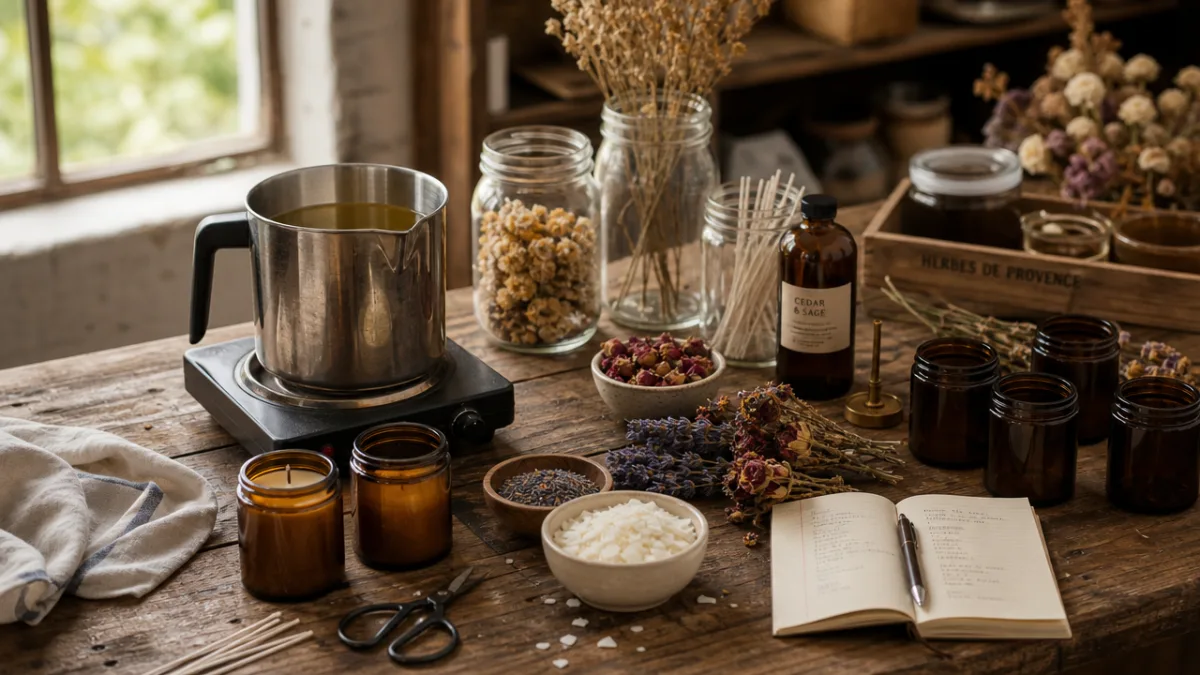
To get started, you’ll need to pull together a handful of basic supplies. Here’s what most experienced makers recommend having on hand before your first pour:
- Natural wax of your choice (soy, beeswax, coconut, or a blend) — approximately 500 grams per medium candle
- Pre-tabbed cotton or wood wicks sized appropriately for your chosen vessel diameter
- High-quality floral fragrance oils or pure essential oils at a concentration of 6 to 10 percent by weight
- Glass, ceramic, or metal vessels to contain your candle
- A dedicated double boiler or heat-safe pouring pitcher
- A digital kitchen thermometer accurate to within one degree
- Dried flower petals such as rose buds, lavender sprigs, chamomile blossoms, or cornflowers for decoration
- Wick centering tools or pencils to keep wicks perfectly aligned during the pour
- A kitchen scale for precise measurements of wax and fragrance
The actual process starts with melting your wax to the right temperature — this varies by wax type but generally lands somewhere between 60 and 85 degrees Celsius. Once it’s melted, you stir in your fragrance oils at the temperature that works best for your specific wax, making sure they bind properly. After stirring for a couple of minutes, you let the wax cool to its pour temperature, then carefully fill your vessels. Once the wax has partially set, you can arrange dried flower petals on the surface — this is where the magic happens visually, and it’s honestly one of the most enjoyable parts. Then the hardest part: leaving them completely undisturbed for 24 to 48 hours to cure before that first burn.
Styling and Displaying Aroma Flower Candles in Your Home
Here’s a perspective shift worth having: aroma flower candles aren’t just things you light and forget about. Even when they’re not burning, especially the varieties with visible botanicals embedded in the wax or scattered across the surface, they’re genuinely beautiful objects that deserve a thoughtful spot in your home. Interior designers have been catching on to this for a while now, grouping candles alongside other natural textures and organic elements to create little “wellness corners” — dedicated spaces for rest, reflection, and sensory pleasure that feel intentional rather than accidental.
When it comes to arranging them, the simplest trick is varying the heights and vessel types. A tall pillar, a medium tumbler, and a small tea light holder grouped together immediately looks more interesting than any single candle on its own. Lean into the botanical theme by adding fresh flowers that match your candle’s fragrance, a trailing eucalyptus sprig, or a simple linen cloth beneath the whole arrangement. The interplay between organic softness and the clean lines of glass or ceramic tends to be really pleasing to look at, and it takes almost no effort to pull together.
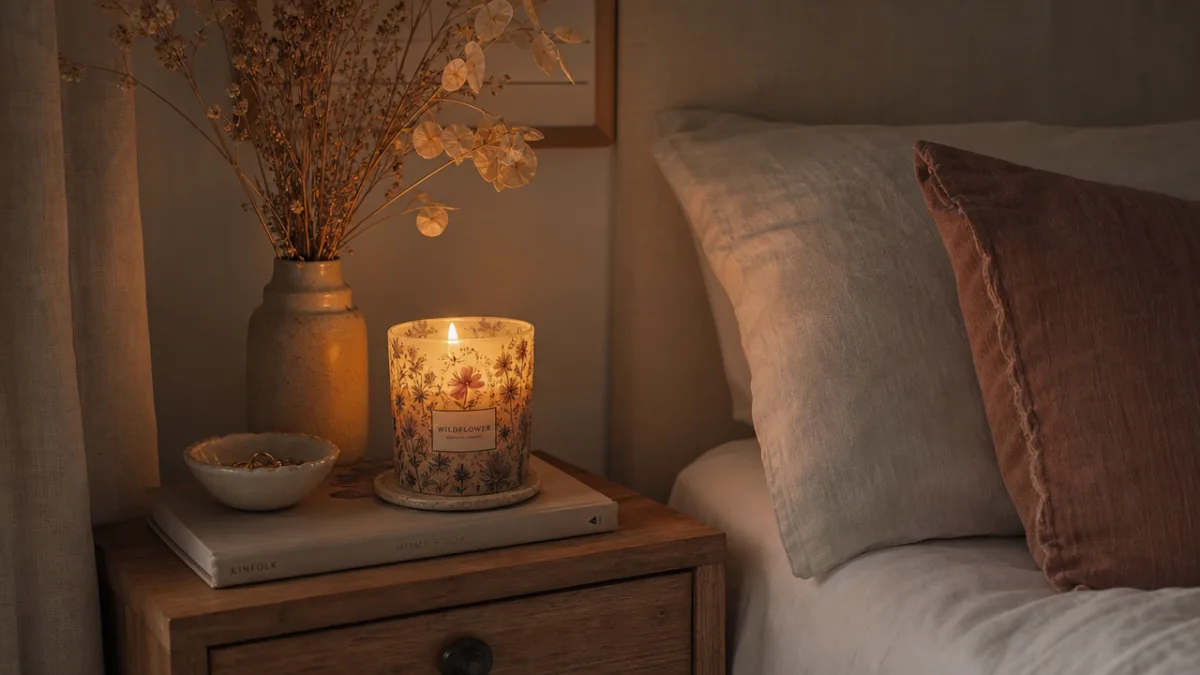
Different rooms also call for different approaches. In the living room, larger candles with confident, expansive floral scents like gardenia or magnolia fill the space beautifully. Bedrooms are better suited to softer, more intimate fragrances — lavender, chamomile, or a quiet rose that nudges you toward relaxation rather than alertness. A ylang-ylang or jasmine candle in the bathroom, paired with a small plant and some rolled towels, turns an everyday routine into something that actually feels restorative. Kitchens do well with lighter citrus-floral blends that feel fresh without competing too hard with whatever you’re cooking. Thinking about fragrance in terms of the mood and purpose of each room is honestly one of the most effective ways to get the most out of your candles.
Candle Safety, Care, and Maximizing Your Burn Experience
A little know-how goes a long way when it comes to getting the most out of your candles — and keeping things safe while you do it. The single most important habit to develop is trimming your wick to about 6 millimeters before every burn. It sounds like a small thing, but an untrimmed wick burns hotter and faster, which means more soot, a blackened vessel, and a candle that burns through its wax way faster than it should. Trimming takes about ten seconds and it genuinely makes a significant difference to both the experience and the lifespan of your candle.
The first burn matters more than most people realize. When you light an aroma flower candle for the first time, let it burn long enough for the entire top layer of wax to melt all the way to the edges — what’s called a full melt pool. Depending on the vessel’s diameter, this usually takes somewhere between two and four hours. If you blow it out before that happens, the wax develops a kind of memory for that shallow burn and will continue tunneling straight down the center every time after that, leaving a thick ring of wasted wax around the outside. Being patient on that first burn can literally more than double the total hours you get out of a single candle — it’s well worth it.
Beyond wick trimming and melt pools, some basic common-sense precautions make the whole experience safer and more enjoyable. Always burn candles on a stable, heat-resistant surface well away from curtains, paper, or anything else that could catch. Keep them out of drafts, which cause uneven burning and can send wax dripping where you don’t want it. Never leave a burning candle alone in a room, and always put it out before you go to sleep. A candle snuffer is much better than blowing it out, since blowing sends soot and wax particles into the air. A few additional guidelines worth keeping in mind:
- Always burn candles within sight and never leave them unattended near children or pets.
- Keep the wax pool free of wick trimmings, matches, and botanical debris that may have fallen in.
- Discontinue use when approximately 1 centimeter of wax remains in the vessel to avoid overheating the container.
- Store unused candles away from direct sunlight to prevent fading of color and degradation of fragrance oils.
- Allow a candle to cool completely and solidify before relighting or moving to prevent burns and wax spills.
And when your candle finally burns its last, don’t be too quick to toss the vessel. Once you’ve cleaned out any remaining wax — either with warm water or by popping it in the freezer until the wax contracts and lifts out — glass and ceramic candle containers are genuinely useful around the home. They make lovely small planters for succulents, handy storage for cotton pads or makeup brushes, or even just charming little drinking glasses. It’s a nice way to reduce waste, and it means that a beautifully designed candle vessel keeps bringing something to your space long after the last flicker has gone out.








What do you think?
It is nice to know your opinion. Leave a comment.