










20 DIY Witchy Garden Ideas: Create Your Own Magical Outdoor Sanctuary
The Magic of a Witchy Garden: An Introduction
There is something undeniably enchanting about stepping into a garden that feels deliberately mystical — a space where nature and intention intertwine. A witchy garden is not simply about aesthetics, although the visual appeal is undeniable. It is a living, breathing extension of your spiritual practice, a sanctuary where the boundaries between the everyday world and something deeper seem to blur at the edges. Whether you are deeply rooted in folk magic, Wicca, or simply drawn to the earthy, wild beauty of cottage-core mysticism, cultivating your own magical garden is one of the most rewarding projects you can undertake.
The concept of a witchy garden stretches back centuries, woven into the traditions of herbalists, cunning folk, hedge witches, and wise women who understood that the earth itself is a profound source of healing, protection, and power. These gardens were not random collections of plants but carefully curated spaces where every herb, stone, and symbol held meaning. Today, modern practitioners and garden enthusiasts alike are reclaiming this tradition, blending ancient plant lore with contemporary DIY creativity to produce outdoor spaces that feel genuinely sacred and otherworldly.
What makes a garden truly witchy is intention. You do not need an enormous yard, an unlimited budget, or years of gardening experience to create something magical. A small balcony, a modest backyard, or even a collection of windowsill pots can become a witchy garden with the right plants, decorations, and mindset. The twenty ideas gathered here span a wide range of styles, budgets, and skill levels, so that every aspiring garden witch can find inspiration to begin or expand their own outdoor sanctuary.
Choosing the Right Plants: Herbs, Flowers, and Magical Botanicals
The foundation of any witchy garden is its plant selection, and fortunately the world of magical botanicals is wonderfully diverse and accessible. Herbs like lavender, rosemary, mugwort, and wormwood have been associated with protection, dreams, and spiritual clarity for centuries. Lavender in particular is one of the most versatile magical plants you can grow — it attracts peace, promotes restful sleep, and serves as a powerful cleanser of energies. Rosemary, often called the witch’s herb of remembrance, is said to protect the home when planted near the entrance and can be used in dozens of spells and rituals.
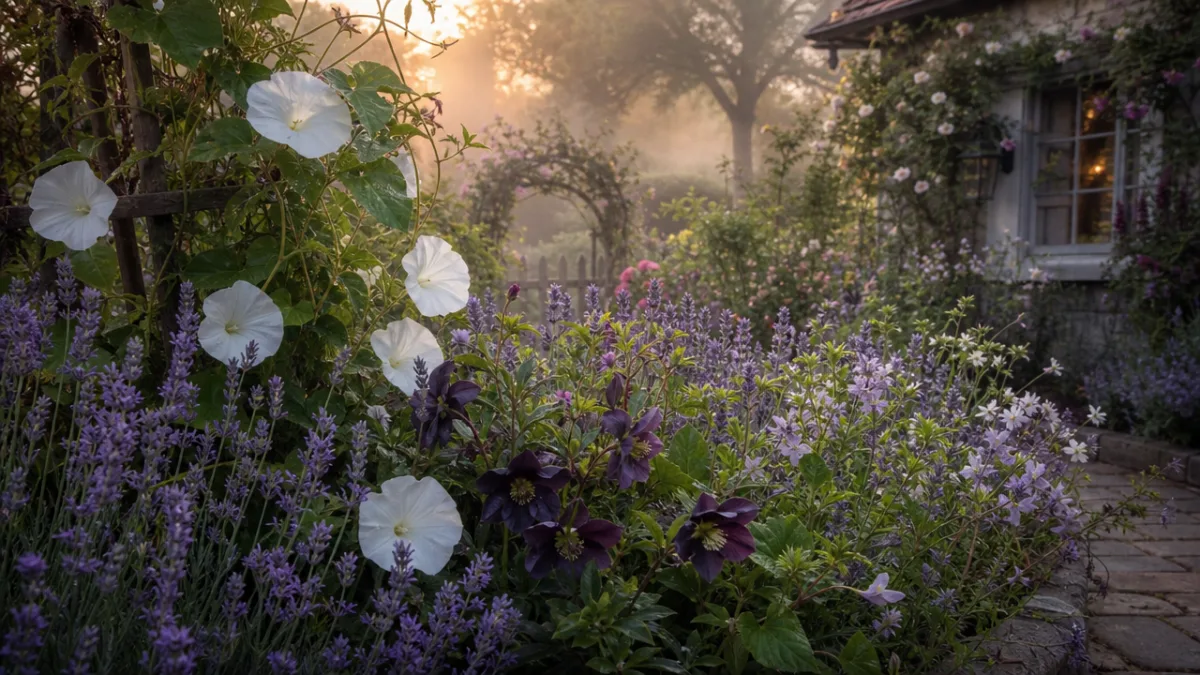
Beyond the classic protective herbs, consider incorporating plants associated with intuition and the moon, such as white moonflower vines, silver-leafed artemisia, and night-blooming jasmine. These plants lean into the lunar symbolism so central to many magical traditions, and they create an especially atmospheric garden that truly comes alive in the evening hours. Moonflower vines trained over a trellis or archway create a dramatic, witchy entrance to any garden space, their large white blooms unfurling after sunset and filling the air with a heady, ethereal fragrance.
Do not overlook the darker and more dramatically beautiful plants often associated with witchcraft and folklore. Hellebore, also known as the Christmas or Lenten rose, is a shadowy beauty that thrives in partial shade and has deep roots in magical tradition. Black-petaled tulips, deep burgundy dahlias, and dramatic black elder (Sambucus nigra) add gothic beauty to any garden. Foxglove, with its towering spires of bell-shaped blooms, has long been associated with fairy magic and the liminal spaces between worlds. Always research plants carefully, as several traditionally magical plants are toxic and require careful handling, especially if children or pets share your garden.
Some excellent plants to consider for your witchy garden include:
- Mugwort — enhances dreams and psychic ability, excellent for moon gardens
- Yarrow — used for divination and healing, attracts beneficial insects
- Sage — cleansing, protective, and deeply aromatic
- Vervain — associated with love magic and prophetic dreams in ancient Rome
- Mandrake — deeply rooted in European witch lore, dramatic and unusual
- St. John’s Wort — protective against negative energies and connected to midsummer magic
- Rue — one of the oldest protective herbs in European and Mediterranean tradition
DIY Garden Altars and Ritual Spaces Outdoors
Creating an outdoor altar or ritual space is one of the most meaningful DIY projects a garden witch can undertake, and it does not need to be expensive or elaborate to be powerful. The simplest outdoor altar might be nothing more than a flat stone or a weathered wooden stump, dressed with candles, a small statue, crystals, and seasonal offerings. The key is that the space feels intentional — set apart from the rest of the garden as a place of focus and ceremony. Many practitioners choose to orient their altar to face a particular cardinal direction, aligning it with the elemental associations of north, south, east, or west.
For a more ambitious DIY altar project, consider building a simple stone cairn or stacking flat fieldstones into a low platform that can hold offerings and magical tools. You can source flat stones inexpensively from landscape supply stores or even gather them from nature, keeping in mind that it is courteous to take only what you need and to leave something small in exchange. A DIY fairy door set at the base of an old tree, surrounded by tiny pebbles and crystals, creates an altar space with a distinctly whimsical character. Add a small bowl for water offerings and a hollow for incense, and you have a fully functional outdoor ritual space built entirely by hand.
Seasonal decoration is one of the most enjoyable aspects of maintaining an outdoor altar. The witch’s wheel of the year, which marks eight sabbats or seasonal celebrations, gives you a built-in reason to refresh your altar space throughout the year. At Samhain in late October, you might dress it with dried corn, pomegranates, and skull decorations. At Beltane in May, fresh flowers, ribbons, and a small cauldron filled with water and rose petals feel perfectly appropriate. Keeping your outdoor altar seasonally refreshed keeps the energy of the space alive and gives you a regular practice of tending and intention-setting in your garden.
Magical Pathways, Fairy Circles, and Garden Layouts
The physical structure and layout of your witchy garden can be as intentional and symbolic as the plants and decorations within it. One of the most visually striking and spiritually meaningful ways to organize a garden is to incorporate a circular or spiral layout, echoing the labyrinth designs found in sacred sites throughout the ancient world. A simple spiral garden bed, created by edging a spiraling path with stones or low-growing herbs, creates a natural focal point and a walking meditation route. Moving slowly inward along the spiral while focusing on a question or intention is a simple but genuinely powerful magical practice.
Fairy circles — rings of mushrooms, stones, or low-growing plants — are another beautiful structural element that instantly creates a witchy atmosphere. You can create a deliberate fairy circle in your lawn or garden by arranging stones or planting a ring of thyme, clover, or creeping chamomile. Inside the circle, place a small statue, a crystal cluster, or a bird bath to create a focal point. Many garden witches leave small offerings inside their fairy circles: drops of honey, tiny coins, or flowers from the garden, maintaining the old tradition of cultivating a good relationship with the spirits of place.
Pathways through a witchy garden deserve just as much attention as the beds themselves. Stepping stones carved or painted with runes, pentacles, moons, or spirals transform an ordinary garden path into a magical journey. You can make your own stepping stones using concrete casting kits available at most craft stores — press shells, crystals, or decorative tiles into the surface before it sets to create truly unique and personal garden art. Line the path on either side with lanterns, solar lights shaped like moons and stars, or glass bottles filled with fairy lights to create an atmosphere that is genuinely enchanting after dark.
Consider these layout ideas for structuring your witchy garden space:
- A four-quadrant elemental garden, with each section dedicated to earth, air, fire, and water through plant and decoration choices
- A moon garden designed entirely in white, silver, and pale purple for maximum impact by moonlight
- A spiral herb bed that doubles as a walking meditation space
- A cottage-style wildflower garden with deliberate wild corners for pollinators and the fae
- A sunken circle surrounded by tall grasses and hedges for a private ritual space

DIY Witchy Garden Decorations: Crafts and Handmade Touches
Beyond plants and layout, the handmade decorations you add to your witchy garden are where your personal creativity and magical aesthetic can truly shine. Wind chimes made from found objects — old keys, sea glass, small crystals, pieces of driftwood — produce a hauntingly beautiful sound that many practitioners associate with clearing stagnant energy and inviting positive spirits. Making your own wind chimes is simple: gather your materials, drill small holes, thread them onto twine or thin wire, and hang them from a hook or branch where they will catch the breeze. The act of making them with intention makes them more magically significant than anything you could purchase.
Witch bottles and spirit jars are another wonderful DIY decoration that carries genuine protective magical tradition behind it. Historically, witch bottles were buried near the entrance of a home to repel ill will, but in the modern garden they translate beautifully into decorative and intentional objects. Fill small glass bottles with layers of herbs, salt, crystals, and symbolic objects, seal them with wax, and hang them from trees or garden hooks. Cobalt blue glass bottles are particularly striking in the garden — they catch the light beautifully and carry a strong association with protective magic in the folk tradition of the American South and the British Isles alike.
Dream catchers and woven herb bundles hung from tree branches or pergola beams add texture, movement, and fragrance to an outdoor space. You can make simple woven wreaths from grapevines or willow branches gathered from your own garden or sourced from a craft store, and dress them with dried herbs, feathers, crystals, and ribbons in colors that correspond to your magical intentions. Green and brown ribbons speak to earth magic and growth; silver and white speak to lunar energy and intuition; deep purple and midnight blue evoke psychic awareness and the mysteries of the unseen world. Changing the wreaths seasonally keeps your garden decorations fresh and your magic aligned with the turning of the year.
Crystals, Cauldrons, and Elemental Accents in the Garden
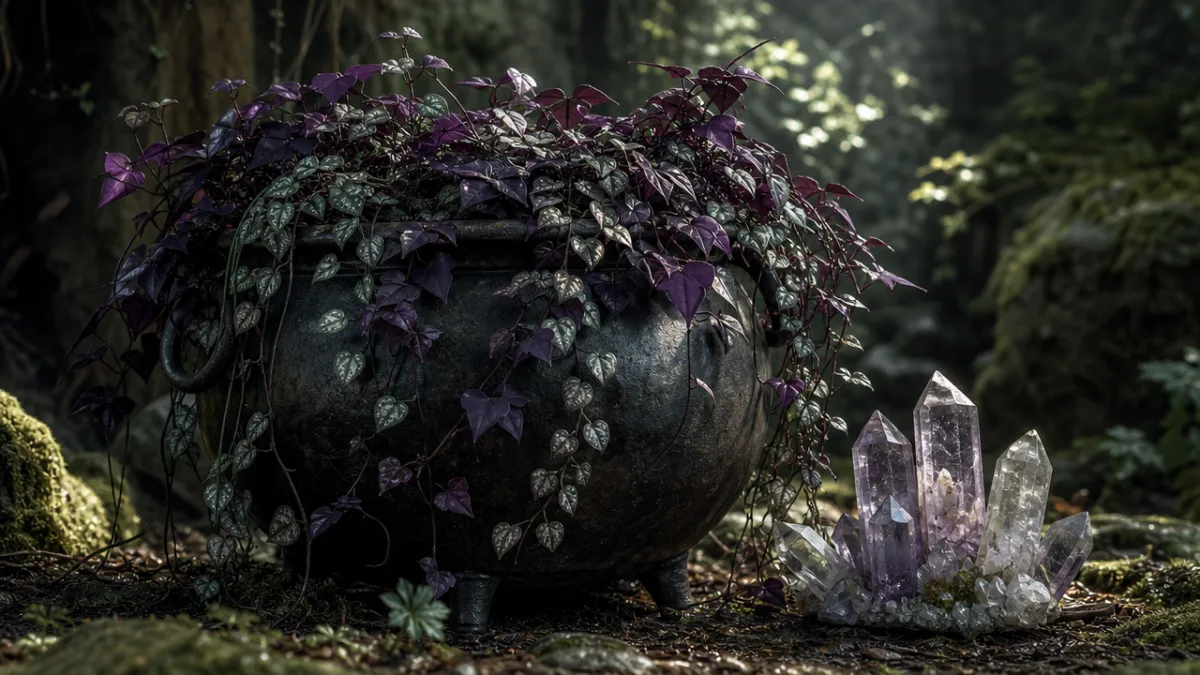
Incorporating crystals into your garden is a practice with both aesthetic and energetic dimensions. Large amethyst clusters placed at the base of plants are said to support growth and protect against pests; clear quartz points buried in the soil of new plantings are believed to amplify the life force energy of seedlings. Whether you subscribe to crystal energy theories or simply love the visual impact of gemstones nestled among greenery, there is no denying that crystals make a witchy garden look spectacular. Large polished rose quartz or obsidian spheres make particularly dramatic garden ornaments and can be found at reasonable prices from crystal suppliers.
Cauldrons are perhaps the most iconic symbol of the garden witch’s craft, and they are surprisingly practical as garden elements. A large cast iron cauldron can serve as a striking planter — imagine it filled to overflowing with dark-leafed coleus, trailing silver dichondra, and deep purple petunias for a display that is both dramatic and genuinely magical in appearance. Smaller cauldrons make wonderful birdbaths, fire bowls for outdoor ritual use, or water features when fitted with a small recirculating pump. The visual weight and ancient symbolism of cast iron cauldrons grounds any garden space with a sense of deep magical history.
Do not forget the elemental accents that complete a witchy garden’s atmosphere. Representing all four classical elements in your garden space creates a sense of balance and completeness that many practitioners find spiritually satisfying. Earth is represented by the soil itself and by stones, crystals, and clay pots. Air is captured in wind chimes, fluttering ribbons, and the movement of tall grasses. Fire finds its place in a small outdoor fire bowl, a ring of red and orange flowers, or even a cluster of solar-powered flame-effect lights for a fire-safe alternative. Water flows in birdbaths, small ponds, or even a simple bowl of rainwater set on your altar stone, refreshed with each rainfall as a living reminder of the cycle of sky and earth.
Maintaining Your Magical Garden: Rituals, Routines, and Seasonal Care
A witchy garden, like any garden, requires ongoing tending — but for the magical practitioner, this tending becomes a form of spiritual practice in itself. Morning walks through the garden to check on plants, clear debris, and assess what needs attention are a form of active meditation that many garden witches find as centering and renewing as any formal ritual. Talking to your plants, singing to them, or simply sitting quietly among them and paying attention to what you notice develops a relationship with your garden that goes beyond the practical. You will begin to notice which plants seem to thrive with more attention, which corners of the garden feel heavy or stagnant, and which spots feel most alive with positive energy.
Seasonal care in a witchy garden is guided not just by practical horticultural needs but by the magical calendar as well. The spring equinox is an ideal time for planting new seeds and setting intentions for the growing year. Midsummer, when the sun is at its peak, is traditionally associated with the magical potency of herbs — many folk herbalists believe that herbs harvested at dawn on midsummer’s day carry the highest concentration of healing and magical energy. The autumn equinox is a time for harvest, for drying and preserving herbs, and for preparing the garden for its winter rest. At Samhain, the last harvest is gathered, offerings are made, and the garden is ceremonially put to bed with gratitude for the abundance of the year.
Practical garden magic includes simple rituals that can be incorporated into everyday maintenance. Watering your garden with water that has been set in moonlight overnight is a beautiful and easy practice that many find deepens their connection to both their garden and their lunar practice. Creating a small journal or garden book to track plantings, observations, and magical workings gives you a record of your garden’s development over the years and becomes a form of the traditional witch’s grimoire or book of shadows. Over time, this record becomes genuinely magical — a document of your growing relationship with your land, your practice, and the turning of the seasons.
Some simple rituals to maintain the magic of your garden throughout the year:
- New moon plantings for intentions you want to grow slowly and steadily over the lunar cycle
- Full moon harvesting of herbs for maximum potency, followed by offerings of water or honey to the earth
- Morning dew collection from broad plant leaves to use as ritual water
- Seasonal smudging of the garden perimeter with protective herbs like rosemary and sage
- Leaving small food offerings at the edges of the garden for wildlife and the spirits of place
- Planting seeds with spoken intentions, pressing them into the earth with deliberate words or prayers
Building a witchy garden is ultimately a practice of patience, attentiveness, and love — for the earth, for your craft, and for the living world that surrounds you. Every seed you plant with intention, every stone you place with care, every herb you tend through the seasons adds another layer to a space that becomes, over time, genuinely and unmistakably magical. Your garden will reflect your practice back to you, growing and deepening as you do, becoming a sanctuary that is entirely and beautifully your own.








What do you think?
It is nice to know your opinion. Leave a comment.