










Water Violet: The Bach Flower Remedy for the Independent Soul
Introduction to Water Violet and Its Origins
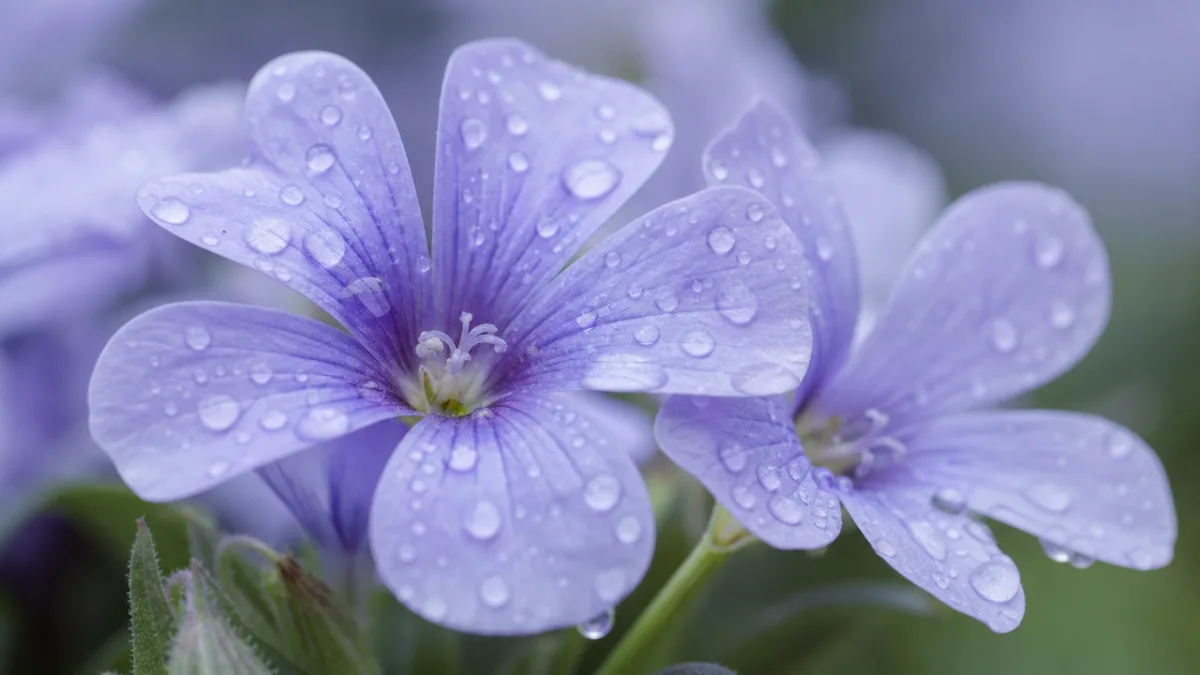
Water Violet — or Hottonia palustris, if you want to get botanical about it — is one of the 38 original Bach Flower Remedies that Dr. Edward Bach developed back in the 1930s. The plant itself is a delicate aquatic wildflower, its pale lilac or white blooms hovering gently above the water’s surface. And the remedy made from it is associated with a very particular kind of person: someone quietly self-contained, deeply capable, and intensely private. Dr. Bach believed that our emotional and psychological struggles could be eased through the vibrational essences of specific flowers, and Water Violet is one of his most quietly profound discoveries.
Dr. Bach sorted his 38 remedies into seven broad emotional groups, and Water Violet sits within the group he linked to loneliness. That might seem odd at first — Water Violet personalities aren’t usually the ones visibly struggling or reaching out for help. They’re the people who have, often without quite realizing it, built such a high wall of self-sufficiency around themselves that genuine connection has a hard time getting over it. They don’t feel lonely in the way most of us think of the word, but that independence can quietly isolate them in ways that chip away at their relationships and their overall sense of wellbeing.
What’s striking is how well the plant mirrors the personality it’s meant to treat. Hottonia palustris grows in still, clear waters across Europe and Western Asia — roots anchored below the surface, flowers rising above it, elegant and untouched by whatever’s happening around them. Just as the plant drifts serenely apart from the noise of its surroundings, the Water Violet personality tends to keep a certain emotional distance from the ordinary bustle of human interaction. To really understand this flower, you have to appreciate what it means to inhabit a graceful, self-chosen solitude.
The Water Violet Personality Type
People who resonate with Water Violet tend to be unusually self-reliant — calm, composed, and genuinely capable. They’re the type who quietly sort out their own problems without making a fuss, and in social situations they can come across as a little reserved, though never unkind. There’s a natural dignity about them that others often admire from a respectful distance without quite knowing how to get closer. They seem to handle everything with ease while revealing very little about what’s actually going on inside.
This kind of personality is frequently misread. Because Water Violet types don’t impose themselves on others, don’t seek the spotlight, and rarely offer up emotional information unprompted, they can come across as cold, or even condescending, or simply not that interested in deeper connection. But that’s usually not the full story. Many Water Violet people are actually quite thoughtful and sensitive — they’ve just learned somewhere along the way, often early in life, that keeping a little distance feels safer. Their reserve isn’t typically born of arrogance. It’s more that they genuinely value inner peace and find emotional entanglement uncomfortable.
Some patterns you’ll often see in Water Violet personalities: a strong inner compass, a tendency to go quiet and pull back when things get stressful, a clear preference for their own company over large social gatherings, and a quiet confidence that can read as aloofness to people who don’t know them well. They often have refined tastes, a love of beauty and calm, and a natural wisdom that others will sometimes seek out — though the Water Violet type tends to offer a few well-chosen words and then step back, not one to get swept up in other people’s dramas. They’re perceptive, often ahead of the curve, and their real challenge is learning to let warmth and genuine closeness flow a little more freely.
The Emotional Imbalance Water Violet Addresses
In Bach Flower therapy, every remedy speaks to both a negative state — the imbalance that’s calling for attention — and a positive quality waiting to emerge on the other side. For Water Violet, the imbalance is one of excessive withdrawal, emotional unavailability, and a kind of proud self-containment that functions well on the surface but quietly cuts the person off from the real nourishment of human community. Someone in a Water Violet imbalance might feel vaguely disconnected, maybe carrying an unspoken longing for closeness even while unconsciously keeping it at arm’s length.
The thing about the out-of-balance Water Violet state is that it can be genuinely hard to name. It rarely looks like dramatic suffering. It’s more of a slow creep — a growing sense of isolation, a feeling that no one really knows you, that genuine intimacy is somehow just out of reach. Some people describe it as an invisible barrier between themselves and the rest of the world, something they didn’t consciously build but can’t figure out how to dismantle. Relationships feel pleasant but surface-level, work is successful but somehow hollow, and there’s a quiet pride in managing everything alone that masks a deeper hunger to actually belong somewhere.
It’s also worth noticing how the Water Violet imbalance affects the people around these individuals. Because they project such unruffled self-sufficiency, others often hesitate to offer help, assume they’re not needed, or feel a little gently rebuffed by all that composure. And so the cycle reinforces itself: the Water Violet person withdraws, others back off, and the gap between them quietly widens. The remedy isn’t about changing who someone fundamentally is — it’s about softening the rigidity of that boundary just enough to let warmth start moving in both directions again.
How Water Violet Remedy Is Prepared and Used
Like all Bach Flower Remedies, Water Violet is made using one of two methods Dr. Bach developed: the sun method or the boiling method. Water Violet uses the sun method, which is exactly what it sounds like — freshly picked flower heads are floated on pure spring water in a glass bowl and left in direct sunlight for a few hours. The flowers are then removed, and the water, now considered to carry the plant’s vibrational imprint, is mixed with brandy as a preservative to create the mother tincture. That’s then further diluted to produce the stock bottles you’ll find commercially.
The standard way to use Water Violet — or any Bach Remedy — is to add two drops of the stock remedy to a glass of water and sip it throughout the day, or to add two drops to a personal treatment bottle of spring water and take four drops from that at least four times daily. Many practitioners suggest taking remedies first thing in the morning and last thing at night, when the body and mind tend to be most receptive. You can also apply the remedy topically to pulse points or add it to a bath, though most people stick to taking it orally.
Water Violet is often combined with other Bach Remedies to build a more complete picture of someone’s emotional state. A practitioner might blend it with Mimulus for someone whose withdrawal also comes with shyness or specific fears, or with Agrimony for someone who hides inner turmoil behind a calm face. That flexibility and person-centered focus is really the heart of the Bach system — the aim is always to match the remedies to who someone is right now, emotionally speaking, rather than slotting them into a fixed type. It’s also worth knowing that Water Violet is one of the five remedies in the well-known Rescue Remedy blend.
The Positive Transformation and Higher Potential of Water Violet
One of the things that makes Dr. Bach’s philosophy so compelling is the idea that every negative emotional state has a positive quality waiting just behind it. For Water Violet, that positive transformation is one of the most beautiful in the whole system. When someone with a Water Violet pattern moves toward balance, their natural gifts — wisdom, composure, self-possession, quiet calm — don’t go anywhere. They just get freed up to flow outward in service of others. The balanced Water Violet person becomes a genuinely wise presence in the lives of people around them, offering insight not from a place of detached superiority but from somewhere warm and grounded.
They still love their solitude. They still need personal space. But they’re no longer trapped by it. They can move gracefully between quiet, restorative alone time and genuinely open-hearted engagement with others. Their natural dignity stays intact, but it stops creating distance — it becomes something more like a sanctuary that others feel privileged to step into. People around them start to feel truly seen rather than peripherally acknowledged, relationships deepen, and the Water Violet person gets to experience the kind of real, mutual connection that their armor had been keeping just out of reach.
Dr. Bach chose the word wisdom to describe the positive state of Water Violet, and that feels right. The Water Violet type already has considerable inner knowing — what the remedy helps to do is make sure that wisdom becomes something living and shared, rather than quietly hoarded. There’s something genuinely touching about this journey toward openness. It’s not a collapse of self; it’s more of an expansion of it. The boundaries stay — they just become healthy and intentional rather than rigid and fearful. And the person gets to finally inhabit the fullness of who they are, in real relationship with the world around them.
Water Violet in Practice: Recognizing and Working with This Remedy
Recognizing the Water Violet state in yourself or someone else takes a little sensitivity, because it doesn’t make a lot of noise. Look for patterns of quiet withdrawal — a habit of handling everything internally without asking for support, a composed exterior that seems barely touched by whatever life is throwing at it. You might also notice a subtle pride in independence, a preference for observing rather than joining in, or a persistent feeling of being somehow different from the people around you — more capable maybe, or more attuned, but also more alone. Water Violet individuals rarely complain. They just step back and sort things out in their own way, in their own time.
Working with Water Violet as a remedy tends to go hand in hand with some gentle self-inquiry. Journaling can be really useful here — writing about times when you chose to pull back instead of reaching out, or moments when you felt the quiet sting of not being truly known by anyone. Practices that nudge you toward connection — group activities, sharing something vulnerable with a trusted friend, letting yourself receive help graciously even when you could handle it alone — all support what the remedy is doing. It can also be worth paying attention to the physical side of emotional withdrawal: where does that invisible barrier live in your body? What happens when it softens, even just a little?
A lot of people are genuinely surprised by how much relief comes from simply recognizing the Water Violet pattern in themselves. There’s often a deep part of the Water Violet person that has wanted for a long time to be known, helped, and embraced — they just haven’t known how to let it happen. The remedy works like a gentle key: it doesn’t force anything open, it just creates the inner conditions in which openness becomes possible. Practitioners of Bach Flower therapy often describe working with Water Violet clients as something of a privilege. The shifts are subtle, but watching someone step out of their quiet, beautiful isolation and into the warmth of real human connection is genuinely moving to witness.

The Broader Relevance of Water Violet in Modern Life
In an age of constant digital sharing, performative vulnerability, and cultural pressure to broadcast every feeling publicly, the Water Violet archetype occupies a quietly countercultural position. There are a lot of people out there who are deeply, genuinely private — people who find the relentless demand for emotional openness exhausting and completely foreign to who they are. For those people, Water Violet offers something valuable: not a diagnosis, but a recognition. Your way of being is valid. You’re not broken. But it might be worth asking yourself where self-sufficiency has quietly tipped into isolation, and whether one small act of reaching out might bring something unexpectedly rich.
The remedy also speaks to patterns we can see playing out at a larger scale. A lot of professional environments actively reward Water Violet qualities — composure, self-reliance, quiet competence — while inadvertently punishing the vulnerability that genuine connection actually requires. The result is that whole organizational cultures can take on Water Violet characteristics: high-functioning, apparently self-sufficient, and quietly starved of the authentic human warmth that makes work feel meaningful. Thinking about Water Violet as an energy or a pattern, rather than just an individual trait, opens up interesting questions about how we build communities, teams, and relationships that genuinely honor both independence and togetherness.
At the end of the day, Water Violet reminds us that the deepest kind of strength isn’t the kind that walls us off from everything — it’s the kind that lets us remain fully ourselves while staying genuinely open to others. The Hottonia palustris flower, rising above the water with that quiet, luminous beauty, isn’t trying to be separate from the world. It’s simply expressing its own nature as fully as it can, and in doing so, offering something rare and lovely to anyone who slows down long enough to notice it. That might be the deepest teaching Water Violet has to offer: be entirely yourself, but let yourself be seen.








What do you think?
It is nice to know your opinion. Leave a comment.