










How to Grow Veronica Flowers (Speedwell): A Complete Care & Planting Guide
Introduction to Veronica (Speedwell): A Gardener’s Beloved Perennial
If you’re looking for a perennial that earns its keep season after season, Veronica — most people know it as Speedwell — is one you’ll want to get acquainted with. Those tall, slender spikes of tiny flowers in deep violet, bright blue, soft pink, and clean white bring a kind of elegant, upright energy to a garden that’s surprisingly hard to find elsewhere. It’s a huge genus, too, with hundreds of species under the Plantaginaceae umbrella, which means there’s almost certainly a Veronica out there that’s perfect for whatever space you’re working with.
Part of what makes Veronica so popular is how unfussy it is once it’s settled in. It doesn’t demand perfect conditions, it pulls in pollinators like crazy, and it comes back reliably every year with minimal fussing on your part. Whether you’ve been gardening for decades or you’re just starting to dip into perennials, Speedwell is one of those plants that tends to build confidence rather than test your patience.
The name “Speedwell” has a sweet history behind it. In old European folk tradition, people would tuck sprigs of the plant into the clothing of travelers or departing loved ones as a kind of good-luck send-off — a way of wishing someone well on their journey. That backstory gives the plant a bit of charm beyond its looks, and it’s been a garden staple across Europe and North America for centuries. Modern breeders have kept things interesting too, rolling out new cultivars with deeper colors and longer bloom times that earlier gardeners could only have dreamed of.
Understanding Veronica Varieties: Choosing the Right Speedwell for Your Garden
Before you buy anything, it’s worth spending a little time getting to know just how varied this genus really is. Different species can look and behave quite differently from one another — height, bloom time, preferred conditions, spreading versus clumping habit — so picking the right one for your situation genuinely matters. Veronica spicata, the spiked Speedwell, is probably the most widely grown. It forms tidy clumps around 12 to 24 inches tall and puts up those dense, elongated flower spikes that bees and butterflies absolutely cannot resist all summer long.
If you want something with a bit more drama and height, Veronica longifolia is worth a look. It can push up to 48 inches tall and blooms in lavender-blue from midsummer into early fall. On the opposite end of the scale, Veronica prostrata stays low to the ground, spreading into a mat covered in vivid blue flowers in late spring — ideal as a ground cover, or for tumbling over the edge of a raised bed or retaining wall. It’s a nice solution when you need something low-growing that can handle a bit of dry, sunny exposure.
Among modern cultivars, a few names come up again and again for good reason. ‘Red Fox’ is a fun one — rosy-red flower spikes that stand out in any border. ‘Icicle’ goes the opposite direction with clean white blooms that pair well with just about everything. And ‘Goodness Grows’ has developed a real following in American gardens because of its exceptionally long bloom season, often running from late spring all the way into fall. When you’re making your choice, think about where the plant will actually sit in your border and whether you need something that spreads or something that stays in a neat clump.
Planting Veronica: Timing, Location, and Soil Preparation
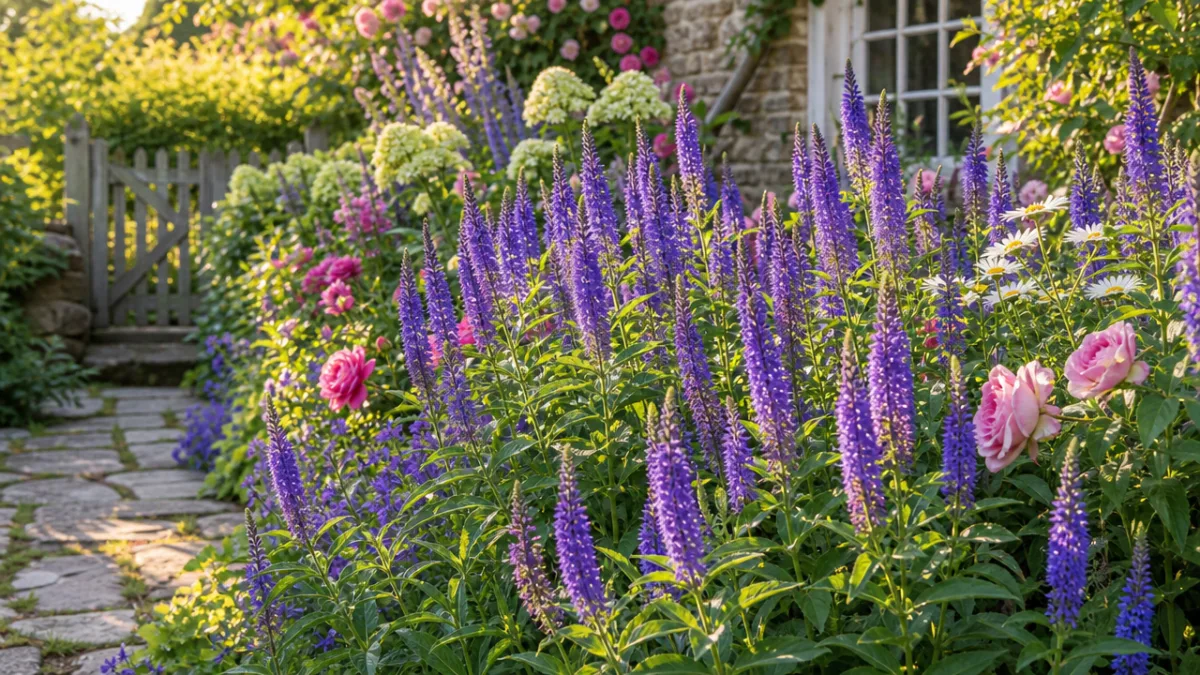
Getting Veronica off to a good start really comes down to two things: the right spot and decent soil preparation. Sun is non-negotiable — your plants need at least six hours of direct sunlight daily to bloom well. You can get away with a bit of shade in some cases, but shaded plants tend to get leggy, flop over, produce fewer flowers, and become more prone to fungal problems like powdery mildew. Give them the sunniest spot you can, and they’ll reward you for it.
Soil preparation is one of those steps that’s easy to rush past but really does make a difference. Veronica wants well-draining soil with a pH somewhere between 6.0 and 7.0 — slightly acidic to neutral. The most common way gardeners run into trouble with Speedwell is planting it in heavy clay that holds water and stays soggy after rain. Wet roots are the fastest route to crown rot and dead plants. Before you plant, loosen the soil to about 12 inches deep and work in plenty of compost or well-rotted organic matter to open things up. If your garden naturally has heavy, poorly draining soil, a raised bed can solve the problem neatly.
Timing your planting depends on your climate and what you’re starting with. In most temperate regions, spring planting after the last frost date gives transplants the whole growing season to put down good roots before winter hits. Fall planting works too in zones 5 through 9, as long as your plants have roughly six weeks to get established before hard freezes move in. If you’re planting in groups — which gives a much more satisfying visual effect — space plants 18 to 24 inches apart. That spacing keeps air moving through the planting and gives mature clumps room to spread without crowding each other out.
Watering, Fertilizing, and Ongoing Maintenance
Once Veronica has been in the ground for a full season, it becomes genuinely drought-tolerant. But during that first year, consistent watering is important — the roots need that reliable moisture to develop properly and anchor the plant for years to come. Water deeply right after planting, then check in regularly and water again whenever the top two inches of soil feel dry. Aim for about an inch of water per week through the growing season, from rainfall or supplemental irrigation. And try to water in the morning rather than the evening so the foliage has time to dry out during the day, which goes a long way toward preventing fungal disease.
Feeding Veronica is refreshingly simple. These plants don’t have a big appetite, which is great news if you’d rather spend your time gardening than mixing fertilizers. One application of a balanced, slow-release granular fertilizer in early spring as new growth appears is really all they need for the season. Go easy on high-nitrogen products specifically — too much nitrogen encourages a flush of lush, floppy leaves at the expense of the flower spikes, which is precisely what you don’t want. A light layer of compost worked in around the base each spring adds some gentle, sustained nutrition and keeps the soil in good shape.
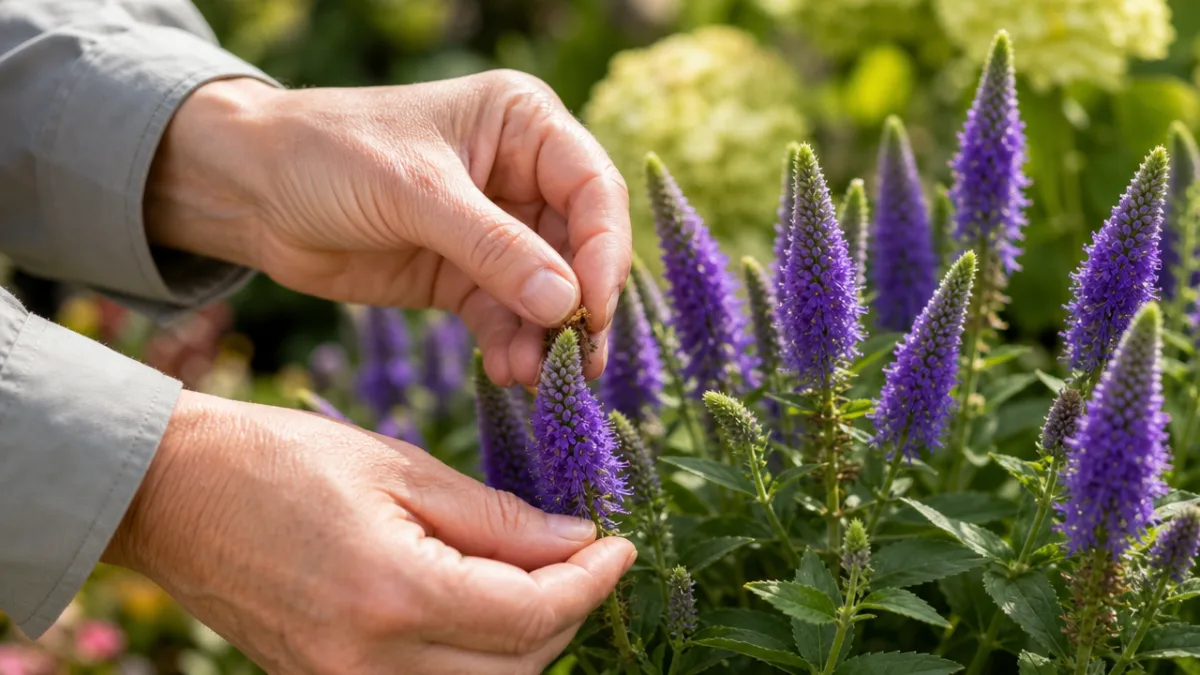
Deadheading is probably the single most satisfying thing you can do for your Veronica plants, and it’s simple work. As each flower spike finishes and starts to look tired, cut it back to the next lateral bud or leaf node with clean, sharp pruners. That one action prompts the plant to push out new flowering stems, stretching the display by weeks beyond what you’d get from an unpruned plant. It honestly surprises a lot of gardeners just how long a well-tended Veronica can keep going — in many cases from early summer all the way through early fall.
- Water deeply once per week during dry spells, targeting the root zone rather than the foliage.
- Apply a balanced slow-release fertilizer once in early spring to support robust growth.
- Deadhead spent spikes promptly to encourage continuous rebloom throughout the season.
- Divide established clumps every three to four years in spring or fall to maintain vigor.
- Cut plants back to within a few inches of the ground in late autumn after the first hard frost.
Pest and Disease Management: Keeping Your Speedwell Healthy
One of the things gardeners love most about Veronica is that it doesn’t attract a lot of trouble. Deer and rabbits tend to leave it alone — apparently the foliage has a slightly bitter taste they find unappealing — which is a real asset if you garden anywhere near wildlife. That natural deterrent, combined with how much beneficial insects love the flowers, actually makes Speedwell a kind of anchor plant in pollinator-friendly garden designs. It pulls in the good guys without pulling in the problem animals.
That said, powdery mildew is the one thing to watch for, especially during hot, humid stretches when air circulation is poor. You’ll recognize it as a white, powdery coating on the leaves and stems. It’s rarely fatal, but it does make the plant look rough, and it can spread. The best approach is prevention: space plants properly, avoid wetting the foliage when you water, and choose a spot where air moves freely. If mildew shows up anyway, remove the affected growth and consider an organic fungicide like neem oil or potassium bicarbonate to get it under control.
Aphids occasionally move in on the soft new growth and flower spikes, usually in late spring or early summer. A heavy infestation can distort the emerging leaves and knock back flowering, but the good news is that aphid populations usually get handled naturally by ladybirds, lacewings, and parasitic wasps — all of which are likely already present in any reasonably healthy garden. Before you reach for a spray, try a strong blast of water from the hose directed at the affected stems. It’s often enough to dislodge the colony without harming any of the beneficial insects that will keep future outbreaks in check.
Propagation and Division: Expanding Your Speedwell Collection
One of the genuinely great things about growing Veronica is how easy it is to make more of it. Division is the most straightforward method, and it does double duty — it gives you new plants while also refreshing the parent clump. After three or four years, established plants tend to show reduced vigor or develop a bare, woody center, and that’s your cue to lift and divide. What looks like a maintenance chore actually yields a surprising number of healthy new divisions ready to go elsewhere in the garden.
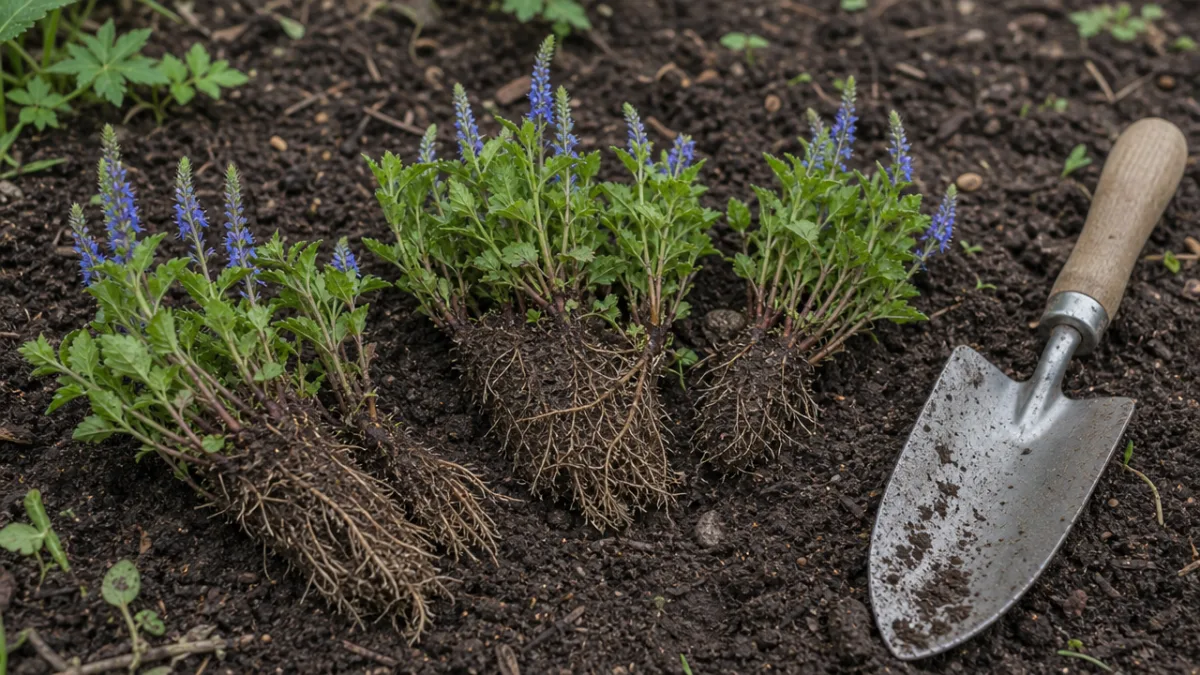
To divide, time it for early spring when you can just see new growth emerging, or do it in early fall once temperatures have cooled down. Use a sharp garden fork or spade to lift the whole clump, working from the outer edges inward to protect as many roots as possible. Once it’s out of the ground, push two garden forks in back-to-back at the center of the mass and lever the clump apart into sections — each piece should have a good set of roots and several shoots. Get the divisions back in the ground right away at the same depth they were growing before, water well, and keep the soil consistently moist for a few weeks while they settle in.
Growing Veronica from seed is also very doable, and it’s a nice option if you want to try a species form or get a lot of plants at low cost. Start seeds indoors six to eight weeks before your last expected frost. Scatter them on the surface of a moist, fine seed-starting mix and don’t cover them — Veronica seeds need light to germinate. Keep the temperature between 65 and 70 degrees Fahrenheit and maintain consistent moisture without letting things get soggy. Germination usually happens within two to three weeks, and once the seedlings are big enough to handle and frost risk has passed, they can go outside after a proper hardening-off period.
- Select a healthy, established clump that is three to four years old and showing signs of reduced vigor at the center.
- Lift the entire clump carefully with a garden fork, working from the outer edges inward.
- Use two forks or a sharp spade to divide the clump into sections, each with healthy roots and shoots.
- Replant divisions at the correct depth in well-prepared soil and water immediately and thoroughly.
- Mulch around newly planted divisions to retain soil moisture and suppress competing weeds.
Landscape Uses and Design Ideas: Incorporating Veronica Into Your Garden
Those vertical flower spikes are what make Veronica such a useful design tool in a mixed border. So many popular perennials grow in rounded mounds or spread horizontally, and Speedwell cuts right through all of that with its upright form. In a cottage garden setting, it plays beautifully alongside roses, Salvia, Achillea, Echinacea, and ornamental grasses — the kind of layered, billowy combinations where everything seems to flow naturally together. Planting the taller varieties in odd-numbered drifts of three, five, or seven plants gives a border that satisfying sense of rhythm and movement without looking too rigid or formal.
Veronica also fits naturally into wildlife and naturalistic garden designs, where its nectar-rich flowers draw in bees, butterflies, and even hummingbirds all summer. Combine it with other pollinator magnets like Monarda, Agastache, Nepeta, and Penstemon and you get a planting that’s as ecologically useful as it is lovely to look at. The lower-growing, spreading types — Veronica prostrata and Veronica peduncularis ‘Georgia Blue’ in particular — are excellent for covering dry, sunny banks or threading between paving stones in a relaxed, informal path.
If your garden is on the smaller side, or you’re working with containers and patio space, don’t count Veronica out. Compact cultivars like ‘Waterperry Blue’ and the Veronica spicata ‘Nana’ series do very well in large pots as long as the growing medium drains freely and the container gets good sun. They’ll need more frequent watering and feeding than plants in the ground, but the payoff is a long, generous bloom that livens up a balcony or doorstep all summer. With that much flexibility, it’s easy to see why Veronica has held its place as one of the go-to perennials for so many different types of gardeners.








What do you think?
It is nice to know your opinion. Leave a comment.