










How to Grow Honesty: A Complete Guide to Cultivating Lunaria annua in Your Garden
Introduction to Honesty: A Garden Classic Worth Growing
Honesty, known botanically as Lunaria annua, is one of the most enchanting and rewarding plants a gardener can choose to cultivate. Despite its common name suggesting something abstract, this biennial flowering plant earns its whimsical title through the translucent, silvery seed pods it produces — pods so sheer and luminous that they seem to reveal everything held within them, much like the virtue they are named for. Gardeners across the world have treasured Honesty for centuries, and its enduring popularity is a testament to just how much beauty it brings to both the living garden and the dried flower arrangement.
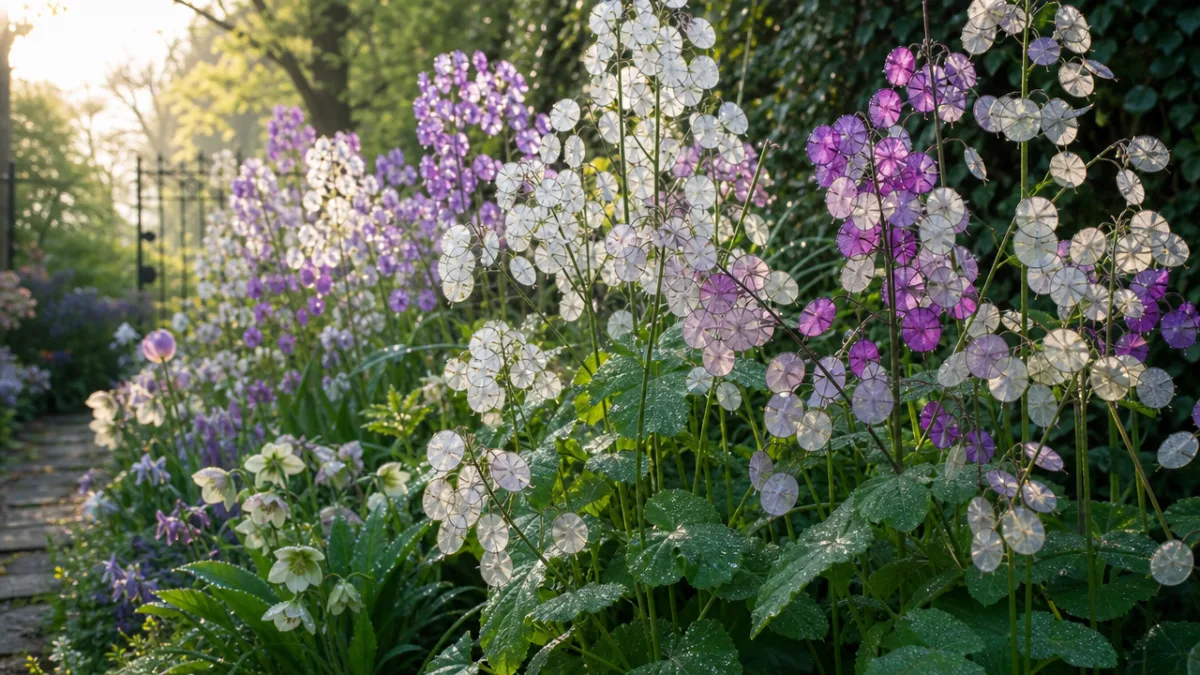
Native to southeastern Europe and western Asia, Honesty has naturalized across much of the temperate world and thrives in a surprisingly wide range of conditions. It produces clusters of vivid purple or white flowers in spring, followed by flat, round seed pods that gradually dry to a papery, iridescent finish. These seed pods, sometimes called “silver dollars” or “moonwort,” are what truly set Honesty apart from other cottage garden plants. They shimmer in the slightest breeze and catch the light in a way that few other plants can replicate, making them a perennial favorite among flower arrangers and dried craft enthusiasts alike.
Whether you are an experienced gardener looking to add something new to your borders or a complete beginner hoping to start with something forgiving and rewarding, Honesty is an excellent choice. It is hardy, self-seeding, drought-tolerant once established, and largely pest-resistant. This guide will walk you through everything you need to know about growing Honesty successfully, from choosing the right seeds and preparing your soil, to harvesting those iconic translucent pods and using them in creative ways around your home.
Choosing the Right Variety and Seeds for Your Garden
Before you begin planting, it is worth taking a little time to explore the varieties of Honesty available to modern gardeners. The most commonly grown species is Lunaria annua, which despite its name is technically a biennial rather than an annual — it completes its life cycle over two years rather than one. In the first year, it produces a rosette of heart-shaped, toothed leaves, and in the second year it shoots up flowering stems, blooms prolifically, sets seed, and then dies. There is also Lunaria rediviva, the perennial Honesty, which returns year after year and has a more delicate flower and slightly narrower seed pod, though it is less commonly available.
Within Lunaria annua, gardeners can choose from several cultivars offering different flower colors and foliage effects. The classic form produces rich purple flowers, but named varieties such as ‘Alba’ offer pure white blooms that look especially striking in moonlit gardens or against dark foliage backgrounds. ‘Variegata’ is a particularly sought-after cultivar featuring leaves dramatically splashed with creamy white, which adds interest to the plant even before it flowers. ‘Abreviolata’ produces uniquely colored salmon-pink flowers, a rarer find that will make your garden stand out from the crowd.
When purchasing seeds, look for reputable suppliers who offer fresh stock, as Honesty seeds do lose viability over time. Seeds can be bought online, at garden centers, or sometimes collected from friends and neighbors who already grow the plant — since Honesty self-seeds so freely, established gardeners often have plenty to share. Check that the seeds feel plump and firm rather than shriveled, and if buying online, read reviews to ensure the supplier provides true-to-type seeds rather than mislabeled stock. Starting with quality seeds from the outset makes the entire growing process much smoother and more satisfying.
Soil Preparation and the Ideal Growing Conditions
One of the great virtues of Honesty is its adaptability, but like all plants it performs best when given conditions that suit its natural preferences. Honesty thrives in well-drained soil that has been enriched with organic matter such as garden compost or well-rotted manure. It prefers a slightly alkaline to neutral pH, roughly between 6.0 and 7.5, and will struggle in very acidic or waterlogged conditions. If your soil is heavy clay, consider improving drainage by working in grit or coarse sand before planting, as sitting in wet soil over winter can cause the roots to rot.
In terms of light, Honesty is wonderfully flexible. It grows well in full sun and performs admirably in partial shade, making it one of the more versatile options for those tricky spots in the garden that receive only a few hours of direct sunlight each day. In fact, many experienced gardeners find that plants grown in dappled shade beneath deciduous trees produce some of the most vigorous and floriferous results, benefiting from the cool root run and the shelter provided by the tree canopy. This shade tolerance also makes Honesty a superb choice for woodland-style planting schemes.
To prepare your planting area, begin by clearing away any weeds and debris, then fork over the soil to a depth of around 30 centimeters to loosen it and improve aeration. Incorporate a generous amount of compost or well-rotted organic material, working it evenly through the top layer of soil. If your soil is particularly poor or sandy, a slow-release general-purpose fertilizer worked in at this stage will help provide nutrients through the growing season. Avoid over-fertilizing with high-nitrogen products, as this can encourage lush leafy growth at the expense of flowers and seed pods.
Sowing Seeds: Timing, Methods, and Spacing
Timing is one of the most important factors in successfully growing Honesty, and understanding the plant’s biennial nature is essential for planning when to sow. Seeds are best sown in late spring to early summer, typically between May and July in the Northern Hemisphere. Sowing during this period allows the plant to establish a good root system and healthy foliage before the winter, so that when the following spring arrives it has the energy and resources to produce an impressive flower display. Sowing too late in the season can result in weak plants that struggle through winter, while sowing too early can cause problems if the seedlings are exposed to late frosts.
Seeds can be sown directly into the ground where they are to grow, which is often the easiest approach with Honesty. Simply scatter the seeds thinly over your prepared soil, press them gently into the surface, and water well. Alternatively, seeds can be sown into modules or small pots and transplanted once large enough to handle, which gives you more control over germination conditions and allows you to grow on seedlings under cover if the weather turns difficult. Germination typically occurs within two to three weeks at temperatures between 15 and 20 degrees Celsius, and the small seedlings are easy to identify once they appear.
Spacing is something many beginners underestimate with Honesty, as the plants can grow surprisingly large — often reaching 90 centimeters or more in height when in full flower. Thin or transplant seedlings to a final spacing of around 30 centimeters apart, which allows good air circulation between the plants and prevents the kind of damp, crowded conditions that can encourage fungal diseases. If you are planting in groups, a triangular spacing pattern creates a naturalistic look that suits this cottage garden plant beautifully. Do not be tempted to crowd them, even though the small seedlings look modest and unassuming at first.
- Sow directly outdoors: Between May and July, directly into prepared beds at a depth of around 6mm.
- Sow in modules: Fill small cells with seed compost, sow two seeds per cell, and thin to one seedling after germination.
- Transplant with care: Move seedlings to their final position when they have two or three true leaves, taking care not to disturb the taproot.
- Water after sowing: Keep the soil consistently moist until germination occurs, then water regularly during dry spells.
- Label your sowings: Different varieties can look identical as seedlings, so labeling helps you track which cultivar is which.
Caring for Your Honesty Plants Through the Seasons
Once your Honesty plants are established, they require relatively little attention, which is one of the reasons they are so popular with busy gardeners. Through the first autumn and winter, the plants will grow slowly as a ground-hugging rosette of leaves, and your main task during this period is to keep the area around them weeded so that competing plants do not crowd them out. In very exposed gardens, young plants may benefit from a light covering of straw or horticultural fleece during particularly cold snaps, though Honesty is generally quite hardy and can tolerate frost without much trouble once it has formed a good root system.
As spring arrives and temperatures begin to rise, Honesty plants will surge into growth with remarkable speed. Flowering stems appear and elongate quickly, and the first buds will show color within a matter of weeks. At this stage, if you have not already done so, it is worth applying a balanced liquid fertilizer every two weeks to support the energy-intensive process of flowering and seed production. Keep the soil moist during dry spells, as plants that are allowed to dry out excessively during flowering may produce fewer seed pods and will not achieve the lush appearance that makes Honesty so spectacular in a spring border.
Staking can be helpful for tall plants grown in exposed positions or particularly fertile soils, where the flowering stems can become top-heavy and prone to flopping. Use bamboo canes and soft garden twine to provide support, tying the stems loosely so as not to constrict growth. Deadheading is not recommended if you want to harvest seed pods, since the whole point of allowing the flowers to go to seed is to produce those beautiful translucent discs. However, if you want to prevent excessive self-seeding around your garden, you can deadhead spent flowers before the seed pods fully develop and ripen.
Harvesting and Using the Beautiful Silver Seed Pods
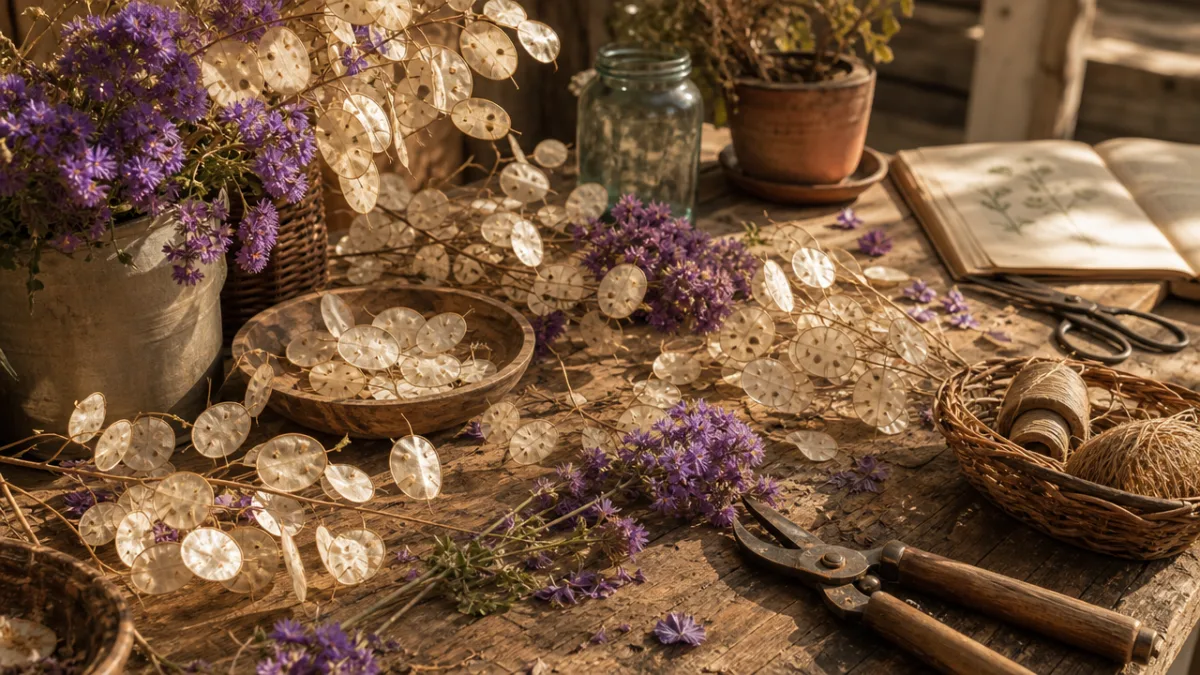
The harvest of Honesty seed pods is one of the most satisfying moments in the gardening calendar, and timing it correctly makes all the difference to the final appearance of your dried pods. The outer cases of the seed pods start out green and gradually turn papery and beige as they mature. For the most spectacular results, wait until the pods have fully dried on the plant — usually by mid to late summer — before cutting the stems. At this stage, the outer skins of the pod will feel crisp and dry to the touch, and the central membrane, which is the luminous silver disc you are aiming for, will be clearly visible through the papery covering.
To reveal the beautiful silvery inner membrane, gently rub the outer skins away between your fingers and thumb, working carefully from the edges inward. This process, sometimes called “shucking” or “husking,” is enormously satisfying and meditative, and the results are immediately rewarding as the iridescent, moon-like discs are revealed. Some gardeners prefer to harvest the stems before they are fully dry and hang them upside down in a warm, airy space to dry, which can help preserve the natural arrangement of pods along the stem. Either method works well, and the final product will last for years when kept in a dry environment away from direct sunlight.
The uses for dried Honesty seed pods are wonderfully varied and creative. They look stunning in dried flower arrangements alongside grasses, seedheads, and dried botanicals such as pampas grass, thistles, and poppy heads. They can be incorporated into autumn and winter wreaths, displayed in tall vases as a standalone feature, or scattered as decorative elements in craft projects and table settings. Some crafters use them in jewelry making, pressed flower artwork, and even candle embedding. Their natural shimmer means they rarely need any additional decoration, though some people enjoy painting or gilding them for festive arrangements.
- Cut stems when pods are fully dry and beige-colored, leaving a good length of stem for arrangements.
- Bundle stems loosely and hang upside down in a warm, dry, well-ventilated space for two to three weeks if additional drying is needed.
- Gently rub away the outer papery skin to reveal the inner silver membrane, working from the edge of each pod inward.
- Shake out or carefully remove the seeds if you wish to save them for sowing next year, storing them in a cool dry place.
- Arrange in vases, wreaths, or craft projects, keeping finished pieces away from moisture to preserve their appearance long-term.

Encouraging Self-Seeding and Naturalizing Honesty in Your Garden
One of the greatest pleasures of growing Honesty is its willingness to self-seed and naturalize, creating the impression of a garden that has evolved organically over many years. Once established, a colony of Honesty will perpetuate itself indefinitely with virtually no intervention from the gardener — seeds drop, germinate, and the cycle begins again without any sowing required on your part. This naturalistic quality makes Honesty ideal for cottage gardens, wildlife gardens, and any planting scheme where a relaxed, abundant aesthetic is desired. The trick is in managing this self-seeding tendency so that it enhances rather than overwhelms your garden.
To encourage natural spread, simply allow some of your plants to set seed and shed it where they stand. The seeds are relatively large and do not travel far on their own, so new plants will typically appear close to the parent. If you want to introduce Honesty to new areas of the garden, collect some of the seeds as they ripen and scatter them in your chosen location, pressing them gently into the soil. In shaded areas or beneath trees where other plants struggle, Honesty will often thrive and fill the space beautifully, bringing welcome color and interest to difficult corners that might otherwise remain bare or weedy.
Managing a naturalizing colony of Honesty requires a light touch rather than heavy intervention. Each spring, you will have far more seedlings than you need, and thinning them out to your preferred density is a straightforward task that gives you plenty of young plants to pot up and share with fellow gardening enthusiasts. Since different colored varieties can cross-pollinate freely, self-seeded plants may not always match the parent exactly — purple-flowered plants can produce occasional white-flowered offspring and vice versa, which adds a lovely element of surprise to the garden. Embrace this unpredictability as part of Honesty’s charm rather than trying to control it too tightly.
Common Problems and How to Solve Them
Honesty is a robust and largely trouble-free plant, but like all garden plants it can occasionally encounter difficulties that require attention. One of the most common issues is downy mildew, a fungal disease that causes yellowing of leaves and a white or grey powdery coating on the undersides of foliage. This is most likely to occur in crowded plantings with poor air circulation, or during particularly wet and humid seasons. The best prevention is to ensure adequate spacing between plants and to avoid overhead watering, which keeps foliage damp and creates ideal conditions for fungal growth. Affected leaves should be removed promptly and disposed of in the bin rather than the compost heap.
Slugs and snails can be problematic for young Honesty seedlings, particularly in wet conditions during autumn and spring. They rarely cause serious damage to established plants, but can devastate newly germinated seedlings before they have a chance to develop. Protect vulnerable young plants using organic slug pellets containing ferric phosphate, copper tape around pot rims, or nighttime patrols with a torch and bucket of salty water. Encouraging natural predators such as hedgehogs, frogs, and ground beetles into your garden is a longer-term strategy that helps keep slug populations in check without any chemical intervention at all.
Club root is a soil-borne disease that can affect Honesty, as it does all members of the Brassicaceae family to which Lunaria belongs. It causes distorted, swollen roots and stunted, wilting growth, and unfortunately there is no cure once a plant is infected. The best approach is prevention: avoid moving infected soil around the garden, maintain a good soil pH above 7.0 which discourages the pathogen, and practice rotation by not growing Honesty or other brassicas in the same spot year after year. If you suspect club root, remove and destroy affected plants immediately and consider a long break from growing susceptible species in that area of your garden.
White blister, another fungal issue, manifests as raised white or cream-colored blisters on the leaf surface and can cause significant disfigurement to foliage. While rarely fatal to the plant, it does detract from the visual appeal and can weaken overall growth. As with downy mildew, improving air circulation and avoiding overly damp conditions will help prevent outbreaks. Some gardeners find that growing Honesty in a slightly more open, sunny position makes plants naturally more resistant to both of these moisture-related fungal issues. Overall, however, Honesty remains one of the more resilient cottage garden plants available, and with basic care most gardeners will experience very few problems over a growing season.








What do you think?
It is nice to know your opinion. Leave a comment.