










Bleeding Heart Vine (Clerodendrum thomsoniae): A Complete Growing Guide
Introduction to the Bleeding Heart Vine
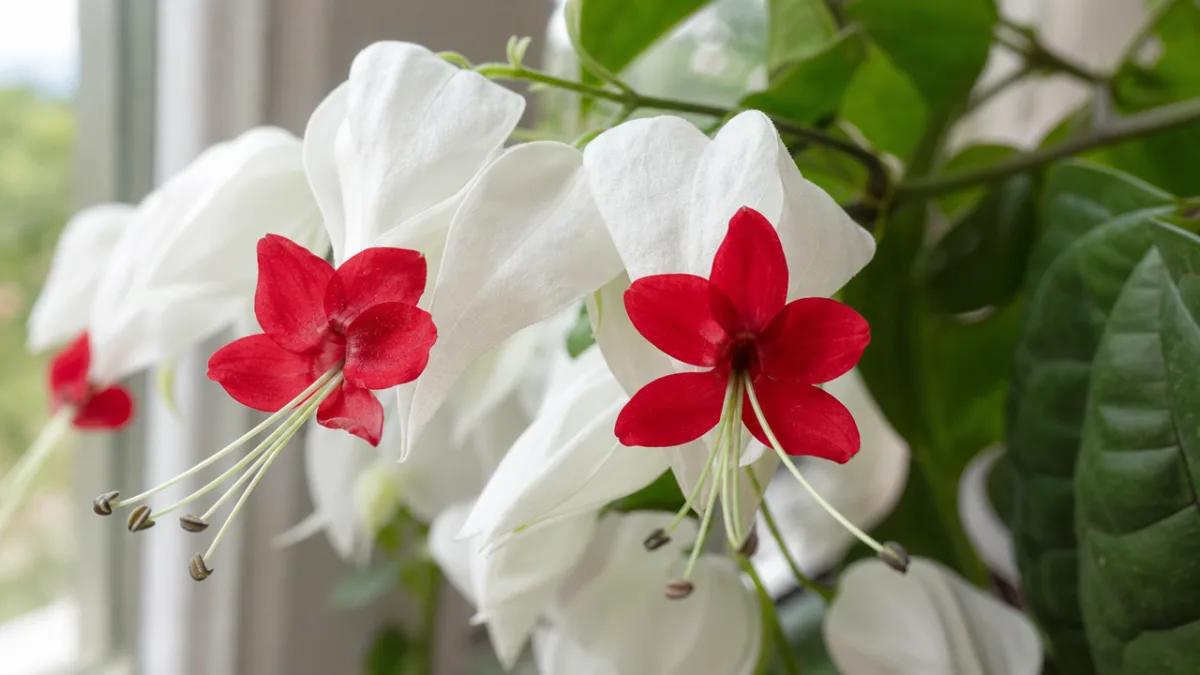
If you’re looking for a flowering plant that genuinely stops people in their tracks, the Bleeding Heart Vine — Clerodendrum thomsoniae — is pretty hard to beat. Originally from the tropical forests of West Africa, this climber has built up a devoted following around the world, and it’s easy to see why. Its flowers are unlike almost anything else: pure white, balloon-like calyces with vivid crimson petals bursting from their centers, dangling among deep green leaves like something out of a botanical illustration. The name fits perfectly — they really do look like tiny bleeding hearts.
The plant was named after Reverend William Cooper Thomson, a nineteenth-century Scottish missionary who spent time in West Africa, and it arrived in Western gardens during the Victorian era — a time when collectors couldn’t get enough of exotic tropical specimens. When botanical explorers first came across it in the wild, they were immediately struck by those extraordinary blooms, and it wasn’t long before it was turning heads in heated glasshouses and conservatories across Britain and Europe.
These days, Clerodendrum thomsoniae is grown just about everywhere — outdoors in tropical and subtropical climates, and as a container plant in cooler parts of the world. It’s become a real favorite among urban gardeners because it adapts so well to pot culture. Whether you train it up a trellis, let it spill out of a hanging basket, or grow it on a bright windowsill, it puts on an impressive show over a surprisingly long blooming season.
Understanding the Plant’s Characteristics and Growth Habit
In the wild, Clerodendrum thomsoniae can climb to four meters or more, winding its soft, slender stems around whatever support it can find. Bring it indoors or into a container, though, and it behaves itself quite nicely — most potted plants settle in at somewhere between one and two meters. Botanically speaking, it sits somewhere between a woody shrub and a climbing vine: the base gets woodier as the plant ages, while the newer growth stays soft and flexible.
The leaves are worth appreciating in their own right. They’re large and oval, with deeply impressed veins that give them a quilted, almost textured look, and they come in a rich, dark shade of green that makes a perfect backdrop for the flowers. Arranged in opposite pairs along the stems, they catch and reflect light beautifully — so even when the plant isn’t blooming, it still looks lush and tropical.
The flowers themselves appear in clusters at the stem tips and from the leaf joints. Each individual flower is a little piece of theatre on its own: a papery white five-lobed calyx (which handily stays on the plant after the petals drop, extending the display), with five brilliant red petals pushing out from the center and long, arching red stamens reaching beyond them. The whole effect is dramatic, exotic, and genuinely unlike most other flowers you’ll come across.
Ideal Growing Conditions and Environmental Requirements
Getting the growing conditions right is honestly the biggest factor in whether this plant thrives or struggles. It comes from tropical West Africa, so warmth, humidity, and good light are non-negotiable. Indoors, your best bet is a bright spot near a window that gets several hours of indirect light each day, or gentle morning sun filtered through a sheer curtain. Direct afternoon sun can scorch the leaves, and too little light leads to leggy growth and disappointing flowering. In the Northern Hemisphere, a south- or east-facing window tends to work well.
Temperature matters a lot, too. This plant is happiest somewhere between 18°C and 28°C (65°F to 82°F), and it really doesn’t like the cold — anything below 10°C (50°F) can cause serious damage or even kill it. In temperate climates, that means bringing it inside before autumn temperatures start to dip, and keeping it well away from cold windowpanes, air conditioning vents, and drafty spots during winter. Consistent warmth is key.
One thing many growers don’t think about until problems appear is humidity. In its native habitat, this vine grows in moist tropical air, and dry indoor conditions — especially in winter with the central heating on — can cause leaf tip browning, bud drop, and a general loss of vigor. Luckily, there are some simple ways to boost the humidity around it:
- Set the pot on a wide tray filled with pebbles and water, making sure the base of the pot sits above the waterline so roots don’t get wet
- Mist the leaves with room-temperature water in the morning, giving them time to dry before evening
- Cluster it together with other humidity-loving plants to create a more favorable microclimate
- Run a cool-mist humidifier nearby during the drier months
- Move it to a naturally humid spot like a well-lit kitchen or bathroom
Watering, Feeding, and Seasonal Care
Watering is one of those things that takes a bit of feel to get right with this plant, because what it needs shifts quite a bit across the seasons. During spring and summer, when it’s actively growing and flowering, you want to keep the soil consistently moist — but not soggy. Let the top inch or two dry out a little between waterings, then water thoroughly until it drains freely from the bottom. One thing to be firm about: don’t let it sit in standing water. Root rot is one of the most common ways people lose this plant, and it’s easy to avoid by emptying the saucer after watering.
Come autumn and winter, once the main flowering flush winds down, the plant benefits from a deliberate rest. Cut back on watering significantly and let the soil dry out more between applications. It’s not unusual for the plant to drop some leaves at this stage — that’s completely normal, not a sign that anything is wrong. This cooler, drier rest period actually mimics the seasonal rhythms of its native climate, and it’s often the trigger the plant needs to put on another strong show of flowers when warmer weather rolls back around in spring.
For feeding, a balanced liquid fertilizer with a reasonably high potassium content — something like a tomato or flowering plant formula — applied every two weeks from late spring through summer works well. You want a fertilizer that emphasizes phosphorus and potassium over nitrogen, because too much nitrogen tends to push leafy growth at the expense of flowers. Stop feeding altogether during the winter rest, then ease back into it in early spring once you see new growth starting to appear.
Propagation and Repotting Techniques
One of the genuinely satisfying things about this plant is how easily it can be propagated — great news if you want to build up a collection or share plants with friends. Stem tip cuttings taken during the growing season, ideally in late spring or early summer, are the most reliable method. Look for healthy, non-flowering stem tips around eight to twelve centimeters long, each with at least two pairs of leaves. Strip the lower leaves to expose a clean length of stem, and if you want to give things a head start, dip the cut end into rooting hormone powder or gel before planting.
Pop the cuttings into a free-draining propagating mix — equal parts perlite and peat-free compost works well — and cover with a clear plastic bag or a propagating case to keep humidity high while they root. Bottom heat makes a real difference here; a propagating mat set to around 22°C to 25°C significantly improves success rates. With those conditions in place, you can usually expect roots within four to six weeks, after which you can slowly acclimatize the young plants to normal room conditions and pot them up individually.
Repotting is straightforward but worth doing properly. Young plants do well being moved up one pot size each spring — don’t be tempted to jump to a much larger container, as that can lead to waterlogged soil and root issues. Once a plant has reached a size you’re happy with, you can maintain it in the same pot by top-dressing with fresh compost each spring and carefully removing and replacing some of the older root ball. Whatever size pot you’re using, go for a well-draining, peat-free mix enriched with perlite or coarse grit — the roots need that balance of moisture retention and air.
Common Problems, Pests, and Troubleshooting
Like any plant, the Bleeding Heart Vine has its challenges, but knowing what to look for makes it much easier to sort problems out before they get serious. Bud drop is probably the most frustrating one — you watch the plant set buds, and then they fall before they ever open. Almost always this comes down to environmental stress: a sudden temperature change, a cold draft, air that’s too dry, inconsistent watering, or moving the plant while it’s in bud. The fix is to keep conditions as stable as possible and resist the urge to relocate a budding plant.
Pests are the other main concern. Spider mites are particularly troublesome, especially in winter when indoor air tends to be warm and dry — exactly the conditions they love. You’ll know you have them if you spot fine webbing under the leaves, a stippled or bronzed look to the foliage, or a general loss of vitality. Other common culprits to watch out for include:
- Whitefly — Tiny white-winged insects that congregate on leaf undersides and cause yellowing and weakening over time
- Mealybugs — Soft insects coated in a white waxy fuzz, usually found clustered in the joints where leaves meet stems
- Scale insects — Brown, shell-like pests that fix themselves to stems and leaves and quietly drain the plant’s sap
- Aphids — Small soft insects that target new growth and cause distortion with their feeding
Tackle any infestation as soon as you spot it, before numbers build up. For mild cases, wiping the affected areas with a damp cloth or a cotton swab dipped in diluted neem oil or insecticidal soap often does the job. More stubborn infestations may need several rounds of treatment with a contact or systemic insecticide. Keeping humidity up is one of the best ways to prevent spider mites specifically, since they don’t do well in moist air. Getting into the habit of checking the undersides of leaves regularly means you’re much more likely to catch things early, when they’re easiest to deal with.
Pruning, Training, and Seasonal Display Ideas
Pruning makes a real difference with this plant — not just for keeping it tidy, but for getting the best flowering performance. The ideal time is late winter or very early spring, just as the plant starts coming out of its winter rest but before new growth gets going in earnest. You can cut stems back by a third to a half, removing anything weak, damaged, or crossing, which opens up the structure and lets in more light and air. This kind of hard pruning encourages strong new growth from the base, and it’s that fresh new growth that carries the season’s flowers — so it’s well worth doing.
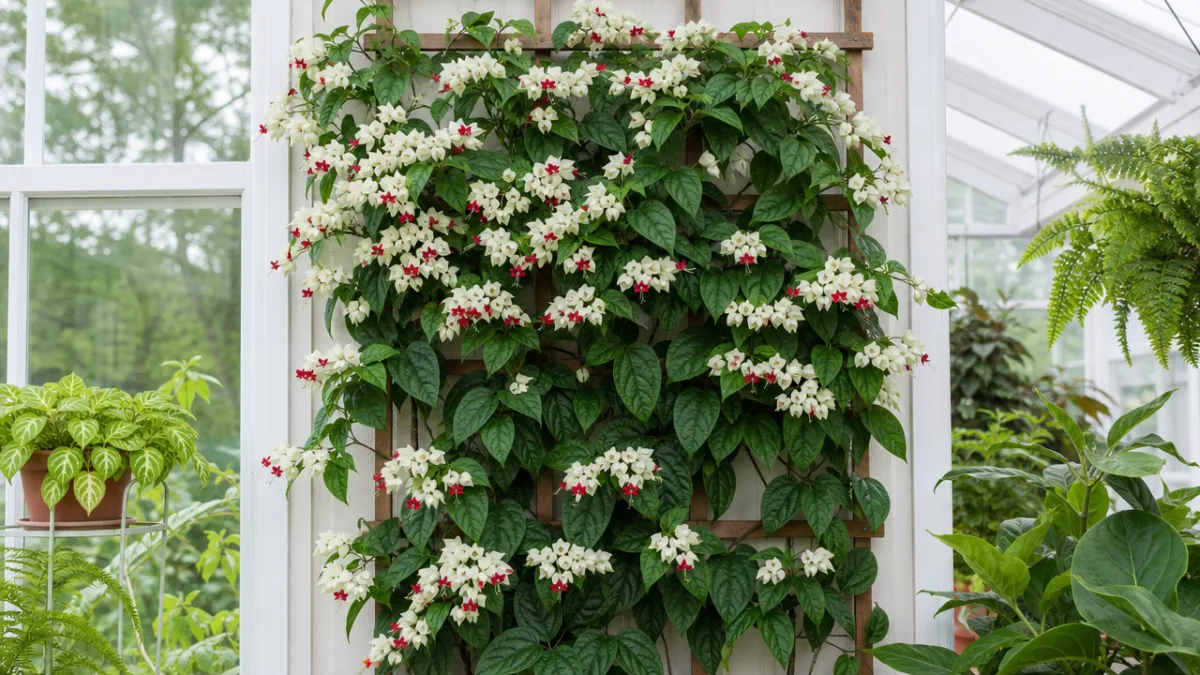
Training the vine to grow attractively is easier than you might think. In a container, a simple wire or bamboo hoop pushed into the pot gives the twining stems something to wrap around and looks neat and elegant. A small trellis or fan-shaped support creates a more structured, upright display. In a conservatory or sunroom, you can really let it shine — train it along wires stretched across a wall, or up along the underside of a glazed roof, and by midsummer you’ll have a canopy of flowers overhead that’s genuinely spectacular. Given enough space and a good support structure, a mature plant in full bloom is one of those sights that’s hard to forget.
There are also some more creative ways to show it off. Let it trail from a hanging basket and you get a cascading waterfall of flowers that looks stunning at eye level or just above. In warm climates where it can stay outdoors year-round, it’s a brilliant choice for growing over a pergola, arbor, or garden arch, where it creates a lush, tropical atmosphere throughout the season. However you choose to display it, this vine has a way of rewarding the attention you give it — with generous blooms, a long season, and an exotic elegance that’s genuinely hard to replicate with anything else.








What do you think?
It is nice to know your opinion. Leave a comment.