










Straw Crafts: A Complete Guide to Creative Projects Using Drinking Straws
The Wonderful World of Straw Crafts
Straw crafts have become one of those surprisingly satisfying hobbies that just about anyone can pick up and enjoy. Whether you’re working with paper straws, plastic ones, or even natural wheat straws, it’s kind of amazing how much you can do with something so simple. Decorative pieces, functional art, playful toys — the possibilities really do add up fast. And the best part? Most people already have straws sitting in a drawer somewhere, just waiting to become something cool.
The history of straw as a craft material goes back much further than most people expect. Long before plastic straws existed, artisans across Eastern Europe and Asia were using natural rye and wheat straws to make intricate geometric ornaments, festive decorations, and even jewelry. These traditions are still alive today in countries like Poland, Lithuania, and Ukraine, which says a lot about how enduring and expressive this material can be. The modern craft revival has brought all of that heritage into homes, classrooms, and studios in a whole new way.
There’s also something genuinely timely about straw crafting right now. As the world moves away from single-use plastics, paper straws have taken over — and crafters have been quick to put them to good use. They’re colorful, lightweight, and biodegradable, which makes them a natural fit for anyone who wants their hobby to feel a little more intentional. And for the plastic straws you already have? Turning them into something beautiful is a much better outcome than the recycling bin.
Essential Materials and Tools for Straw Crafting
Before jumping into projects, it helps to understand how different types of straws actually behave. Paper straws come in a huge range of colors and patterns, and they’re great for anything where looks matter most. They cut, fold, and glue easily, though they do have a weakness — moisture. Leave them somewhere humid for too long and they’ll soften and lose their shape. A quick coat of clear sealant spray goes a long way toward fixing that problem.
Plastic straws, especially the wider bubble tea variety, are a different story. They’re sturdier and hold up well in three-dimensional builds — geometric sculptures, engineering-style projects, anything that needs to handle a bit of tension or weight. Flexible straws with those accordion-style bends are particularly fun to work with, since they let you create jointed figures and woven patterns that you simply can’t pull off with a rigid straw. Having a mix of types on hand before you start is really the way to go.
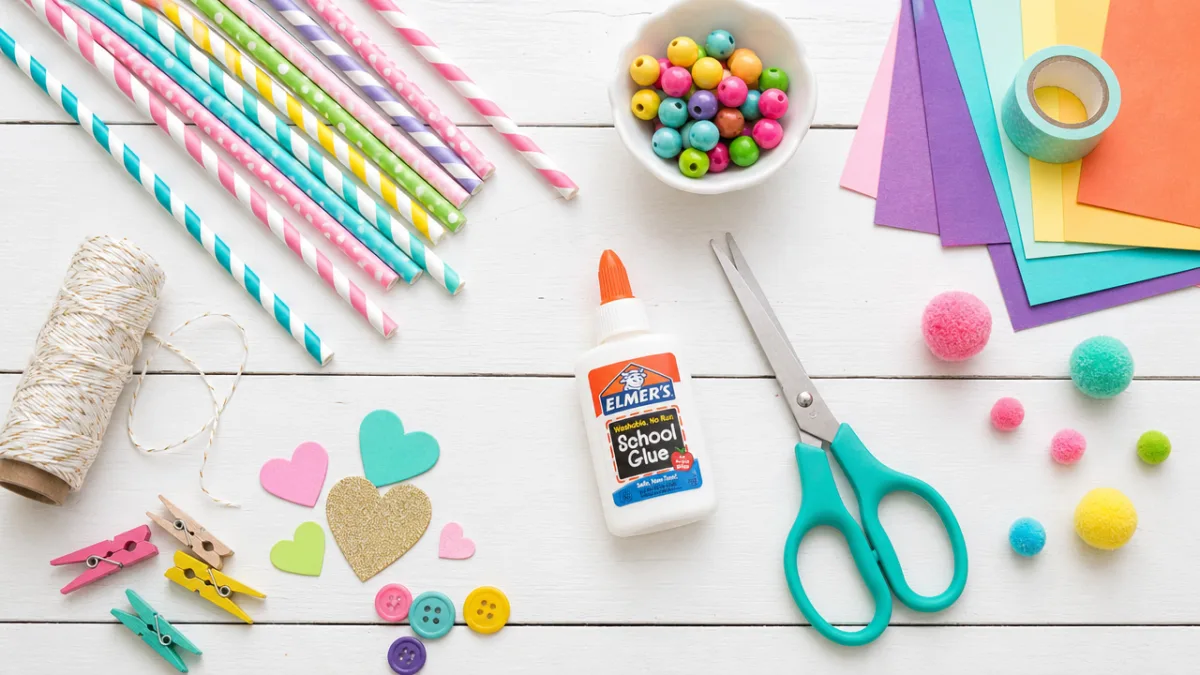
As for tools, you don’t need much to get started, but a few things genuinely make the process easier. Sharp scissors or a craft knife keep your cuts clean. A hot glue gun is the fastest and strongest bonding option for structural builds, while PVA craft glue works well when you want more time to position things carefully. Pipe cleaners, beads, ribbon, and twine all pair nicely with straws. Round things out with a cutting mat, a ruler, and some paints and brushes if you plan to add color to plain or natural straws.
- Paper straws in assorted colors and patterns for decorative projects
- Plastic and bubble tea straws for structural and engineering builds
- Flexible straws with accordion bends for articulated designs
- Hot glue gun and glue sticks for strong, fast bonding
- Sharp craft scissors and a cutting mat for precision work
- Beads, twine, and ribbon for embellishment and weaving
- Clear sealant spray to protect and preserve finished projects
Beginner Straw Craft Projects for Kids and Families
One of the nicest things about straw crafting is how well it works as a family activity. Straw-blown art is a perfect example — you just thin down some paint with water, drop it onto paper, and blow through a straw to send it branching across the page in wild, organic patterns. Kids absolutely love the unpredictable results, and it’s a sneaky great way to get them thinking about how colors mix and interact without it feeling like a lesson at all.
Straw bracelets and necklaces are another easy win for younger crafters. Threading short straw segments onto elastic cord or yarn, mixing in beads and buttons along the way, produces wearable jewelry that kids are genuinely proud of because they made every choice themselves. It also builds fine motor skills and gets them thinking about patterns and sequences — especially if you encourage them to plan their design before they start threading. Parents can nudge them toward ideas like symmetry or color gradients without it feeling like homework.
Pinwheels made from straws and paper are a classic for a reason. Cut a paper square into a pinwheel shape, fold the corners in, fasten the center to the end of a straw with a brad, and you’ve got a spinning toy that took maybe ten minutes to make. They’re also a natural springboard for talking about wind and air pressure with curious kids, which makes them a favorite for classroom projects too. There’s real joy in something so simple that actually works.
- Straw-blown paint art: dilute paint with water and blow through a straw to create branching designs
- Beaded straw bracelets: alternate cut straw segments with beads on elastic cord
- Paper pinwheels: attach a folded paper square to a straw with a brad for a spinning toy
- Straw rockets: wrap paper around a pencil, seal one end, and launch by blowing through a straw
- Straw weaving: thread yarn over and under rows of straws to create woven fabric swatches
Intermediate Projects: Geometric Sculptures and Decorative Pieces
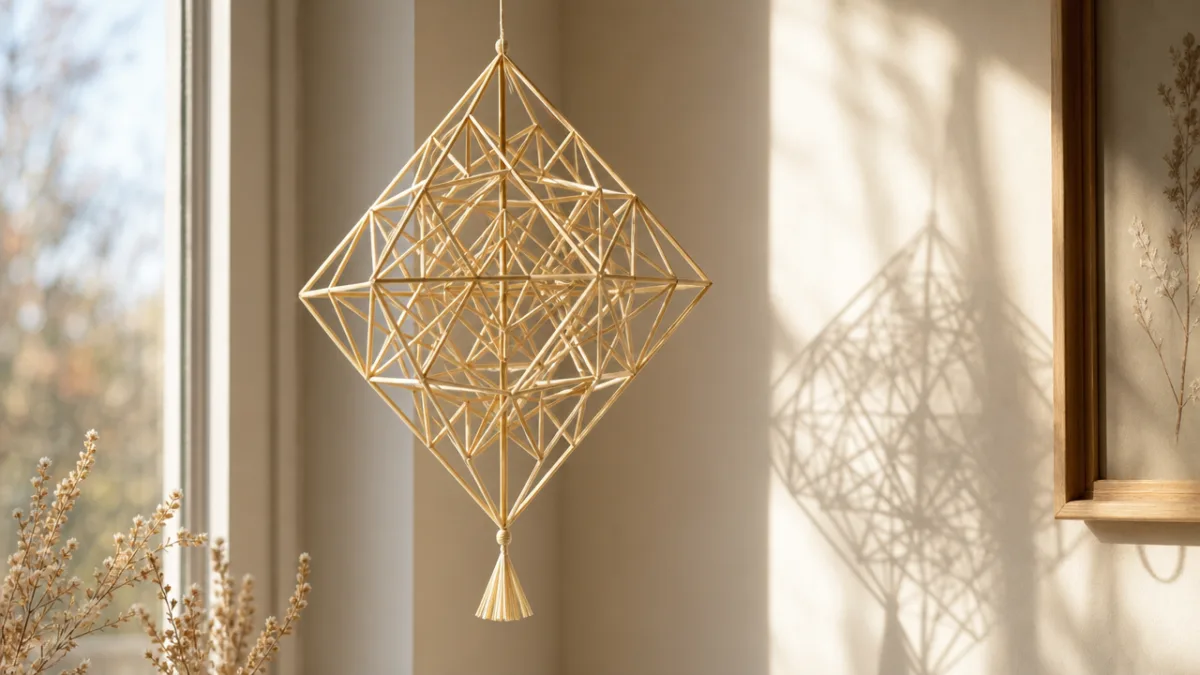
Once you’re comfortable with the basics, geometric straw sculpture opens up a whole other level of possibility. By connecting straws with small bits of pipe cleaner or wire threaded through their hollow centers, you can build cubes, octahedrons, dodecahedrons, and even geodesic domes. Hang them near a window and the light passes through the open framework and throws fascinating shadow patterns around the room — they’re genuinely beautiful objects.
Straw chandeliers and hanging ornaments have carved out a real niche in home styling and event decoration. The basic idea is to suspend cut straws vertically from a central ring, varying the lengths and colors to create an ombre or gradient effect. The end result looks far more elaborate and expensive than it actually is, which is part of the appeal. They’re especially popular for weddings and parties, where that handmade quality adds a warmth that no store-bought decoration can quite match.
Paper straw wreaths are a great project if you want something seasonal you can actually hang on your door. Cut your straws to uniform lengths, arrange them in a circle on a foam or cardboard base, and add whatever embellishments suit the season — flowers, ribbon, berries, pinecones. The cut ends create this satisfying honeycomb-like texture that’s really eye-catching up close. With so many straw colors available, you can tailor the palette to any holiday or just to whatever’s already on your walls.
Advanced Straw Crafting: Traditional Techniques and Fine Art Applications
If you want to take straw crafting as far as it can go, the traditional Eastern European art of straw marquetry — also called straw inlay or straw appliqué — is a genuine craft discipline that can take years to master. The technique involves splitting natural wheat or rye straws open, flattening them out, and arranging them in precise geometric patterns to create luminous mosaic-like surfaces on boxes, frames, and furniture. When light hits the flattened straw at different angles, it produces this shimmering, almost iridescent effect that’s really unlike anything else. It’s one of those things you have to see in person to fully appreciate.
Traditional Polish pajaki — the word means “spiders” — are elaborate straw mobiles that were historically hung from the rafters of rural homes at Christmas and Easter as symbols of prosperity and good fortune. They combine wheat straw with tissue paper, crepe paper flowers, yarn, and sometimes feathers, all arranged in symmetrical layered tiers that can spread several feet wide. Making an authentic pajaki takes real patience, but even a simplified modern version is visually spectacular, and there’s something meaningful about connecting to a folk art tradition that’s still actively practiced today.
Contemporary artists and designers have also started bringing straws into serious fine art and installation work, exploring what the material can do when it’s repeated, woven, or bundled at scale. Large installations using thousands of straws can create immersive environments that play with light, perception, and the viewer’s sense of space in genuinely thought-provoking ways. It’s a good reminder that the line between “kids’ craft” and “serious artistic medium” has always been a bit arbitrary — the straw is just a material, and what you do with it is entirely up to you.
Sustainable Straw Crafting and Environmental Considerations
The question of which straws to use in craft projects has become a real consideration as more people think carefully about their environmental footprint. Natural straws made from wheat, rye, bamboo, or grass are the most ecologically sound option — they’re fully biodegradable and are often agricultural byproducts that would have been discarded anyway. There’s also something tangibly satisfying about working with a natural material. The warm, organic aesthetic it produces tends to feel more grounded than plastic or even paper alternatives.
For crafters who already have plastic straws at home, putting them into a craft project before they head to the bin is a genuinely good use of them. A well-made plastic straw construction, especially one that’s been sealed or coated, can last for years — which means you’re getting far more value out of that material than a single drink would ever provide. Some schools and environmental groups even organize straw collection programs, which can supply ambitious crafters with large quantities of cleaned, recycled straws without any additional production impact.
One of the most rewarding aspects of teaching straw crafts to kids is watching them internalize the idea of circular economy without anyone having to explain the concept directly. When a child turns a pile of used straws into a beautiful piece of art or a working toy, they feel firsthand that the end of one thing can be the beginning of something else entirely. That lesson, absorbed through the pleasure of making, tends to stick in a way that a lecture simply wouldn’t. At its best, straw crafting isn’t just a fun hobby — it’s a small, hands-on way of rethinking our relationship with everyday objects.

Tips for Displaying and Preserving Your Straw Creations
Once you’ve put real time and care into a straw project, it’s worth thinking about how to protect it. Paper straw pieces are especially vulnerable to humidity — they can soften, warp, or discolor if they’re somewhere moisture levels fluctuate, like near a kitchen or bathroom. The simplest fix is just choosing a better spot to display them. For more lasting protection, a light, even coat of clear acrylic sealant spray — applied outside or somewhere well-ventilated — makes a noticeable difference in how well paper straw work holds up over time.
Three-dimensional sculptures do really well displayed under glass domes or inside shadow boxes. Both options keep out dust and protect against accidental bumps, and they also frame the piece in a way that signals it deserves to be looked at closely. One thing to watch with hot glue joints is heat — they can weaken if the piece sits in direct sunlight or near a radiator. Giving the connections a periodic check and reinforcing any that are starting to loosen will keep even complex geometric builds in good shape for a long time.
It’s also worth getting into the habit of photographing your projects — before, during, and after. A good photo preserves the memory of something you might eventually give away or that gradually wears down over time, and over months and years those photos become a real portfolio of how your skills and style have grown. Natural light, a clean background, and a close-up that captures the texture of the straw work are all you need to get images worth sharing or saving. Your straw craft journey, documented along the way, becomes something genuinely worth looking back on.








What do you think?
It is nice to know your opinion. Leave a comment.