










15 Easy DIY Storage and Organization Ideas for Every Home
Why DIY Storage Solutions Are Worth Your Time and Effort
There is something deeply satisfying about solving a clutter problem with your own two hands. DIY storage solutions are not just a budget-friendly alternative to store-bought organizers — they are a chance to create something that fits your exact space, your exact needs, and your exact style. Whether you are dealing with a tiny apartment kitchen or a sprawling suburban garage, a custom-built solution will almost always outperform anything mass-produced because it was designed with one specific purpose and one specific space in mind.
The rise of home organization culture has inspired millions of people to take a closer look at the spaces they live in. Cluttered countertops, overflowing closets, and chaotic junk drawers are not just aesthetic problems — they create real daily stress. Studies in environmental psychology consistently show that disorganized environments elevate cortisol levels and reduce a person’s ability to focus. When you tackle these spaces with DIY solutions, you are not just tidying up; you are actively investing in your mental wellbeing and the overall quality of your daily life.
Perhaps the most underrated benefit of DIY storage projects is how approachable they truly are. Many people assume that building or crafting storage solutions requires advanced carpentry skills or a workshop full of expensive tools. In reality, the vast majority of effective home organization projects require nothing more than basic hardware, adhesive hooks, a drill, and a little creativity. The fifteen ideas explored in this article range from five-minute fixes to weekend projects, but all of them are achievable for the average homeowner or renter willing to put in a bit of effort.
Kitchen Organization: Taming the Most Chaotic Room in the House
The kitchen is, statistically, the room that most people most desperately want to organize. It is a working space that accumulates tools, food items, appliances, and miscellaneous clutter at an alarming rate. One of the most effective and easiest DIY upgrades you can make is installing a tension rod under the sink to hang spray bottles. This simple trick, which costs under five dollars and takes about sixty seconds, immediately frees up a significant amount of cabinet floor space and makes your cleaning supplies far easier to access.
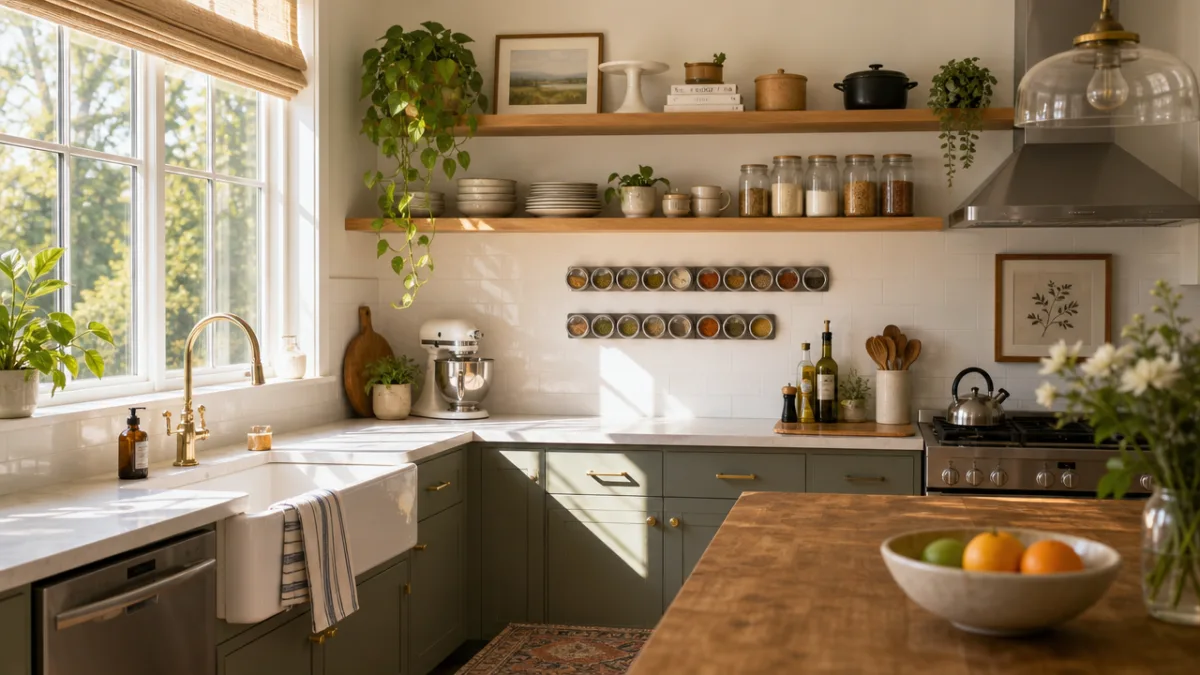
Magnetic spice racks are another game-changing kitchen project that anyone can complete in an afternoon. By mounting a magnetic strip to the inside of a cabinet door or on a bare wall section near the stove, you can attach small metal tins filled with your most-used spices. This approach keeps spices visible, accessible, and off the counter entirely. You can purchase pre-made magnetic spice systems or create your own using a basic magnetic knife strip from a kitchen supply store paired with small tin containers from a craft shop.
Drawer dividers are among the most overlooked yet most impactful kitchen organization tools available. Rather than purchasing pre-sized plastic inserts that may not fit your drawers, consider cutting thin pieces of plywood or foam board to create a fully custom grid system. Label each compartment for specific items — measuring spoons, peelers, small spatulas — and you will find that the time you spend hunting through a messy drawer drops to virtually zero. For renters who cannot modify cabinets permanently, tension-rod drawer dividers achieve the same effect without any permanent installation.
- Tension rod under-sink organizers for spray bottles and cleaning supplies
- Magnetic spice strips mounted inside cabinet doors or on walls near the stove
- Custom plywood or foam board drawer dividers sized to your exact drawers
- Pegboards mounted inside pantry doors for hanging measuring cups and tools
- Lazy Susan turntables on deep shelves to eliminate unreachable back corners
Bedroom Closet Solutions: Maximizing Every Square Inch
A well-organized closet can genuinely transform your mornings. When every item has a designated place and is easy to see at a glance, getting dressed becomes a calm and efficient process rather than a frantic excavation through piles of clothing. The single most impactful closet upgrade most people can make is adding a second hanging rod below their existing one. In most standard closets, there is a significant dead zone of empty air beneath hanging shirts and jackets. Adding a secondary rod — which costs about ten dollars in hardware and takes under twenty minutes — effectively doubles your hanging capacity.
Over-the-door organizers deserve far more credit than they typically receive in home organization discussions. The back of a closet door is essentially free real estate that the vast majority of homeowners leave completely unused. A simple over-the-door shoe organizer, for instance, can hold not just shoes but also accessories, small folded items, belts, scarves, and even cleaning supplies if repurposed in a utility closet. These organizers require no drilling and no permanent modification, making them ideal for renters and for those who prefer to maintain maximum flexibility in how they use a space.
Shelf dividers are a simple but remarkably effective tool for keeping folded items organized on open closet shelves. Without dividers, stacks of folded sweaters or jeans tend to topple into neighboring stacks, creating a cascading chaos that discourages people from maintaining order over time. You can purchase acrylic shelf dividers that simply clip onto existing shelves, or cut your own from thin plywood and paint them to match your closet’s interior. Either way, the investment of a few dollars and a few minutes will save you the daily frustration of collapsed clothing piles.
Underbed Storage: Unlocking Hidden Bedroom Space
The space beneath your bed is one of the most underutilized storage areas in the average home. Flat rolling bins are the classic solution, but a more creative and often more effective approach is to build simple DIY platform bed risers with built-in storage ledges. If you are comfortable with basic woodworking, a weekend project using common dimensional lumber can create risers that lift your bed frame by six to eight inches while providing sturdy, accessible storage on all sides.
For those who prefer a no-build solution, vacuum storage bags placed in low-profile bins beneath the bed are an excellent option for seasonal items like heavy winter comforters, extra pillows, and out-of-season clothing. These bags compress bulky items to a fraction of their original size, allowing you to store items that would otherwise require significant closet or cabinet space. Labeling each bag clearly before storing it will save you from having to open multiple bags during seasonal transitions to locate exactly what you need.
Bathroom Storage: Small Spaces, Big Organization Challenges
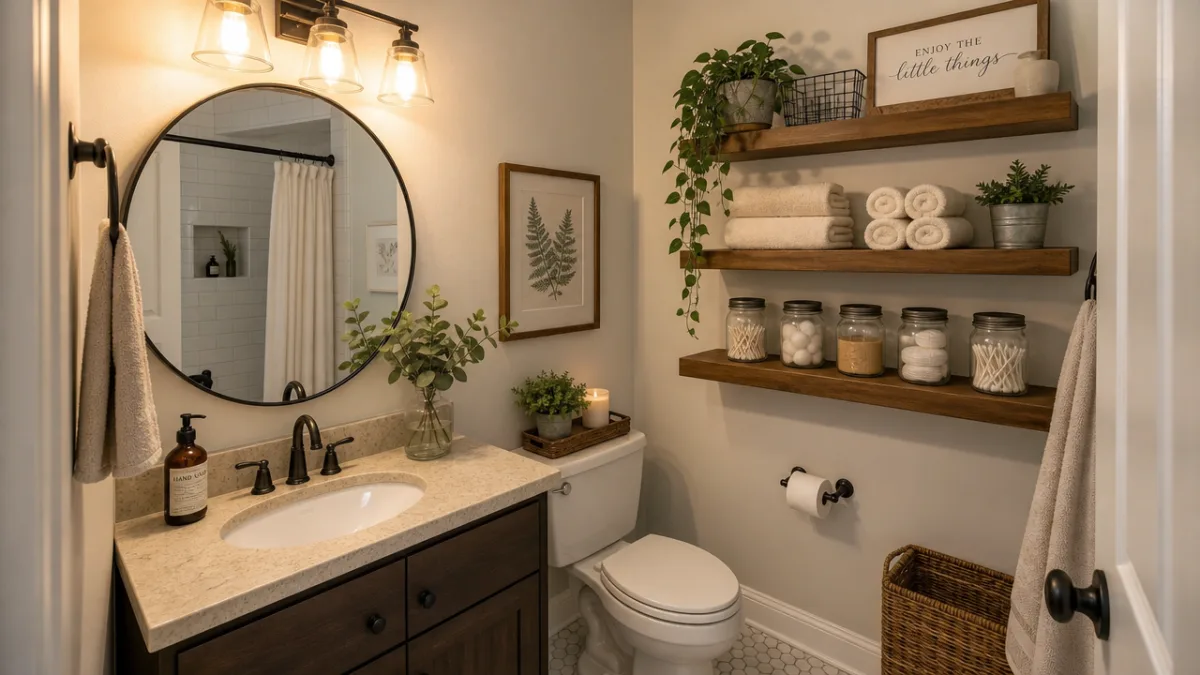
Bathrooms present a unique organizational challenge because they typically combine a high volume of items — toiletries, medicines, cleaning products, towels, and personal care tools — with a very limited amount of storage space. One of the most popular and effective DIY solutions for small bathrooms is the installation of floating shelves above the toilet. This area, sometimes called the “toilet zone,” is almost always left completely empty due to convention rather than necessity. Two or three small floating shelves in this space can hold decorative storage baskets, rolled towels, candles, and everyday toiletry items with no loss of function and a significant gain in storage capacity.
Mason jar organizers mounted directly to the bathroom wall or the interior of a cabinet door are a charming and highly practical solution for corralling small items that tend to scatter across countertops. Cotton balls, cotton swabs, bobby pins, hair ties, and similar small toiletry items are ideal candidates for this type of storage. You can mount mason jars using pipe clamps screwed into a small piece of wood, creating a rustic farmhouse-style organizer, or opt for a more modern look by using metal bracket clips designed specifically for jar mounting.
The inside of bathroom cabinet doors represents another overlooked storage opportunity. Adhesive hooks, small magnetic strips, and stick-on pocket organizers can all be applied to cabinet door interiors without any drilling or permanent modification. A small magnetic strip on the inside of a medicine cabinet door, for instance, can hold nail clippers, tweezers, and small scissors — items that are chronically difficult to find when stored loosely in a drawer. This micro-organization strategy, applied consistently across all your cabinet doors, can free up a surprising amount of drawer and shelf space for other purposes.
Garage and Utility Storage: Heavy-Duty Solutions for Hardworking Spaces
The garage is often the room where organization ambitions go to die. It accumulates sporting equipment, seasonal decorations, gardening tools, automotive supplies, and random household overflow in a seemingly endless cycle. A pegboard wall system is one of the single most transformative upgrades you can make to a garage space. By mounting a full sheet or multiple sheets of pegboard to a garage wall and outfitting them with a variety of hooks, bins, and brackets, you create an infinitely reconfigurable tool and equipment storage system that keeps everything visible and within arm’s reach.
Ceiling-mounted storage platforms are a brilliant solution for items that are bulky but only needed seasonally, such as camping gear, holiday decorations, or spare lumber. Using a kit of ceiling-mounted brackets and some plywood, you can create a sturdy overhead platform that stores items completely out of the way of daily garage activity. This approach makes use of vertical space that is otherwise completely wasted and can dramatically open up the floor area of even a heavily used garage. Many kits are rated for several hundred pounds, making them suitable for truly heavy storage needs.
Bicycle storage is a specific garage challenge that rewards creative thinking. Hanging bikes vertically from wall-mounted hooks is a space-efficient approach that most cyclists are familiar with, but a more sophisticated DIY option involves building a simple wall-mounted pulley system that allows you to hoist a bicycle to ceiling height with minimal effort. This approach is particularly valuable in garages where floor space is limited and a wall-mounted bike would obstruct pathways or vehicle doors. The pulley hardware is inexpensive, the build is straightforward, and the space savings are considerable.
Living Room and Entryway: Organizing the Spaces Guests See First
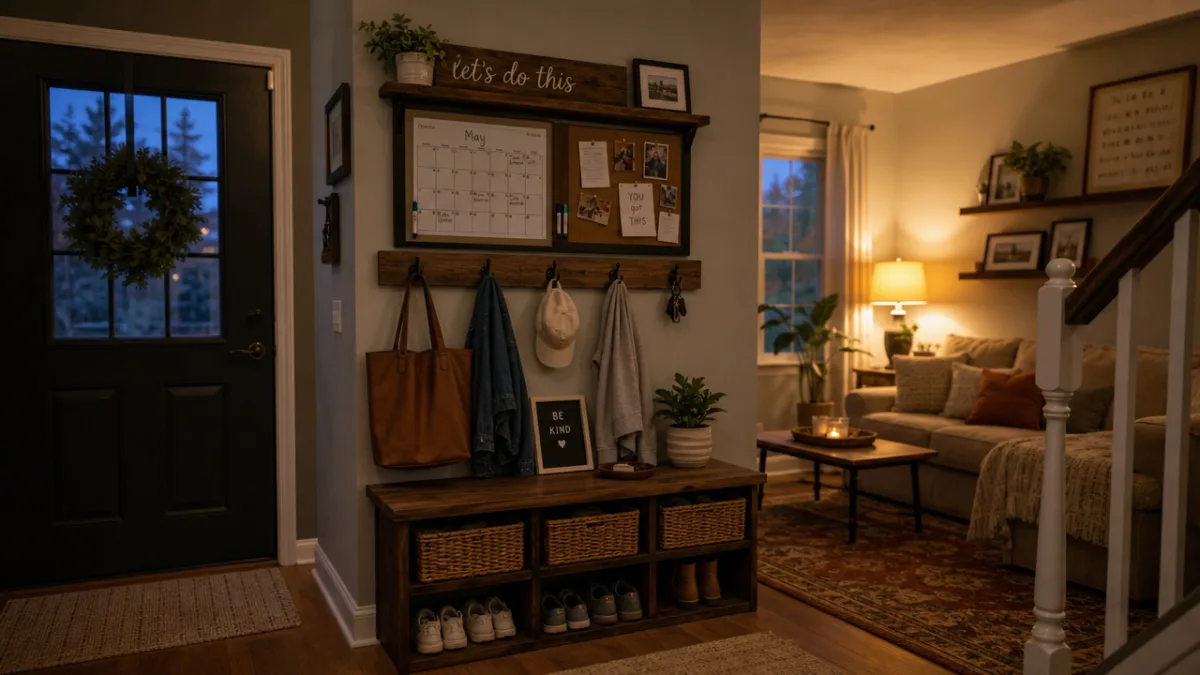
The living room and entryway are the first spaces visitors encounter and the areas where daily life deposits its accumulation of bags, mail, keys, shoes, and miscellaneous belongings most aggressively. A DIY entryway command center — essentially a combination of hooks, a small shelf, a mail organizer, and a key holder — can be assembled from a single piece of wood and a handful of hardware in a single afternoon. Mounted near your front door, this type of station creates a natural landing zone for everything that typically ends up scattered across furniture surfaces and creates that chaotic “just walked in” look.
Built-in window seat storage is one of the most elegantly functional DIY projects a homeowner can undertake in a living space. If your living room has a bay window or a suitable alcove, building a simple bench with a hinged lid creates a piece of furniture that serves simultaneously as seating, as a visual focal point, and as a substantial hidden storage compartment. The interior of a window seat bench can hold throw blankets, board games, extra pillows, photo albums, and other items that add to living room clutter when stored elsewhere. The project requires basic carpentry skills but is well within the capability of a determined DIY beginner following a good set of plans.
Floating entertainment center shelving built from simple wooden boards and industrial pipe fittings has become a popular DIY project for good reason. Standard media console furniture typically provides limited and inflexible storage, while a custom floating shelving arrangement allows you to configure your space precisely around your television, gaming equipment, and media collection. The open design of pipe-and-board shelving also visually lightens the space compared to bulky enclosed furniture, making it a particularly smart choice for smaller living rooms where every visual square foot matters.
Creative Repurposing: Storage Solutions from Unexpected Materials
Some of the most ingenious storage solutions come not from a hardware store shelf but from looking at ordinary household objects with fresh eyes. Old wooden crates, for instance, can be stacked and fastened together to create bookshelf units, mounted on walls as individual display shelves, or fitted with casters to create rolling toy storage for a child’s room. The weathered texture and warm wood tones of vintage crates add character to any room while providing genuinely functional storage in a form that costs a fraction of comparable retail furniture.
Tension rods have already been mentioned in the context of kitchen organization, but their versatility extends across virtually every room in the home. Installed vertically in a deep cabinet, they create dividers that keep baking sheets, cutting boards, and trays standing upright rather than stacked. Installed horizontally across a shower alcove, they support small hanging baskets for shampoos and soaps. Positioned across a low cabinet in a children’s room, they keep stuffed animals or rolled-up artwork organized and visible. A single package of tension rods from a discount store can solve multiple organizational challenges throughout your home for just a few dollars.
Finally, consider the organizational potential of items specifically intended for one purpose when applied creatively to another. A wine rack mounted on a bathroom wall becomes a stylish towel storage solution. A mail organizer attached to the inside of a kitchen cabinet door becomes a perfect holder for pot lids. A hanging shoe organizer affixed to the back of a pantry door becomes an ideal storage system for packets, small snacks, and spice jars. The key mindset shift that unlocks the full potential of DIY organization is learning to see storage solutions in terms of their physical function — holding items of a specific size and weight in an accessible arrangement — rather than their intended commercial purpose.
- Assess each room for unused vertical space, door backs, and ceiling zones before buying any new furniture or storage products.
- Start with the space that causes you the most daily stress, as the motivational payoff will keep your organizational momentum going.
- Measure carefully before building or buying anything — a solution that does not fit your exact space is worse than no solution at all.
- Label everything clearly and consistently, as even a perfectly organized system fails when you cannot quickly identify where items belong.
- Involve all household members in the process, since a system that only the person who built it understands will not stay organized for long.
- Revisit and refine your storage solutions seasonally, as your needs change throughout the year and the best systems evolve with the household they serve.
The most important principle underlying all fifteen of these ideas is that good organization is not a one-time event but an ongoing process of observation and adjustment. The home you live in today will look different in a year, and the storage solutions that serve you well now may need modification as your household grows, changes, or simply accumulates different types of belongings. Approaching DIY storage as a living, evolving practice rather than a project you complete and then walk away from is what separates homes that feel genuinely organized from homes that simply look organized for a few weeks after a burst of weekend enthusiasm. With the right mindset and a handful of these practical ideas as your starting point, you are well equipped to build a home environment that supports your daily life rather than working against it.








What do you think?
It is nice to know your opinion. Leave a comment.