










31 Stunning Heuchera Varieties for Your Garden
Introduction to Heuchera: The Coral Bell Revolution
Heuchera, commonly known as coral bells or alumroot, has undergone a quiet revolution in the world of ornamental gardening over the past few decades. Once considered a modest woodland perennial with modest green foliage, modern breeding programs have transformed this North American native into one of the most dazzling and versatile plants available to home gardeners. Today, the genus boasts hundreds of cultivars in virtually every color imaginable, from deep burgundy and chocolate brown to lime green, silvery pewter, caramel, and even ruffled multicolored varieties that seem almost too spectacular to be real.
Native to the rocky woodlands and mountain slopes of North America, heucheras are remarkably adaptable plants that thrive in USDA hardiness zones 4 through 9 depending on the variety. They form attractive mounding rosettes of lobed, often heart-shaped leaves that remain evergreen or semi-evergreen in many climates, providing year-round interest in the garden. In late spring and early summer, they send up tall, airy wands of tiny bell-shaped flowers in shades of white, pink, red, and coral, attracting hummingbirds and beneficial insects with their abundant nectar.
One of the most compelling reasons to grow heucheras is their ability to thrive in challenging conditions that many other ornamental plants find inhospitable. They tolerate partial to full shade with grace, making them invaluable for brightening up those difficult dark corners beneath trees or along north-facing foundations. Their relatively compact size, typically ranging from 8 to 18 inches in height, makes them ideal for containers, border edging, rock gardens, and massed plantings alike. Whether you are a seasoned horticulturist or a weekend gardener just discovering perennials, heucheras offer an unmatched combination of beauty, resilience, and versatility.
Purple and Burgundy Heuchera Varieties
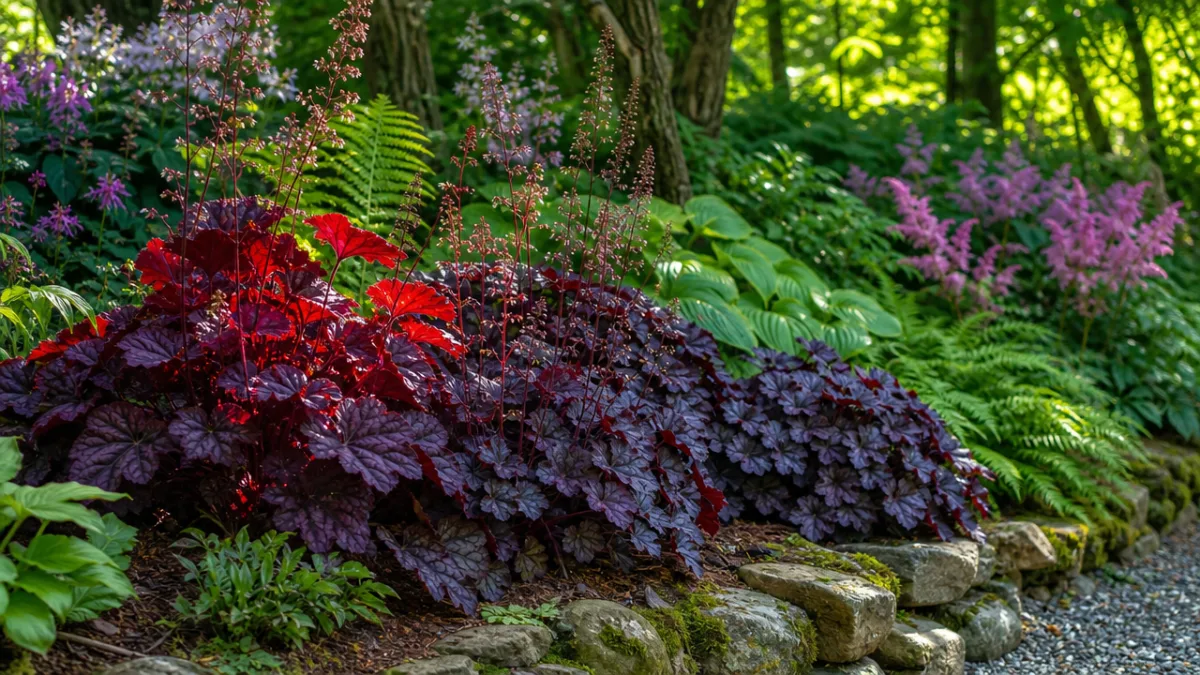
The deep purple and burgundy heucheras are perhaps the most dramatically striking members of the entire genus, and they have earned their place as anchor plants in countless mixed borders and container designs. These dark-leaved varieties create a rich, almost velvety contrast when paired with silver-leaved plants, bright yellow-green foliage, or pastel-flowered perennials. The depth of color in these cultivars is genuinely extraordinary, ranging from near-black to wine red to plum, and the leaves often carry a metallic sheen that catches the light in unexpected and beautiful ways.
Among the most popular purple heucheras is Heuchera ‘Palace Purple’, which won the Perennial Plant of the Year award in 1991 and effectively launched the modern heuchera craze. This groundbreaking cultivar features large, ivy-shaped leaves in a deep reddish-purple with a glossy surface and creamy white flowers that provide a delicate contrast. Another exceptional choice is ‘Obsidian’, which lives up to its dramatic name with nearly black leaves that retain their deep color even in warm temperatures. The leaves have a subtle iridescence and a slightly ruffled margin that adds textural interest.
For gardeners seeking even more variation within the purple palette, ‘Blackout’ offers extremely dark near-black foliage with a matte surface that creates a sophisticated, moody effect in mixed plantings. ‘Dark Secret’ brings a slightly more burgundy tone with silver overlay markings that create a burnished, antique quality. ‘Stormy Seas’ earns its evocative name with ruffled, heavily veined leaves in a swirling mix of deep purple, pewter, and reddish-brown that genuinely resembles a tempestuous ocean viewed from above. These varieties are particularly effective when planted in groups of three or five to create bold drifts of color.
Lime Green and Gold Heuchera Varieties
At the opposite end of the heuchera color spectrum from the dark purples and burgundies sit the luminous lime green and golden yellow varieties, which bring an entirely different kind of drama to the garden. These bright-foliaged cultivars act as natural lightbulbs in shaded areas, reflecting and amplifying whatever light reaches them and creating a sense of warmth and vibrancy even on overcast days. Garden designers frequently use them as living highlights to make dark corners feel larger and more inviting, and they pair magnificently with blue hostas, dark-leaved companions, and white-flowered plants.
Heuchera ‘Lime Rickey’ is one of the most widely grown and beloved chartreuse varieties, featuring ruffled, deeply lobed leaves in a clear, bright lime green that positively glows in shade. Its white flowers on tall, graceful stalks add a frothy quality in early summer, and the foliage holds its color remarkably well throughout the growing season without fading to yellow. ‘Citronelle’ takes a slightly more golden approach, with large, smooth leaves in a warm amber-yellow that intensifies in cooler temperatures, making it particularly stunning in autumn and early spring when many other plants are dull and dormant.
‘Key Lime Pie’ offers a slightly softer, more chartreuse tone with distinctly ruffled and scalloped leaf margins that add wonderful texture to any planting. ‘Marmalade’, despite its orange-suggesting name, actually produces leaves that shift through a remarkable range of colors including amber, gold, and warm rust depending on the season and light conditions, making it one of the most chameleonic and fascinating heucheras available. For maximum impact in a shaded border, try combining ‘Lime Rickey’ with the deep burgundy ‘Obsidian’ and a silver-leafed variety for a tricolor combination that provides interest from spring through autumn.
Silver and Pewter Heuchera Varieties
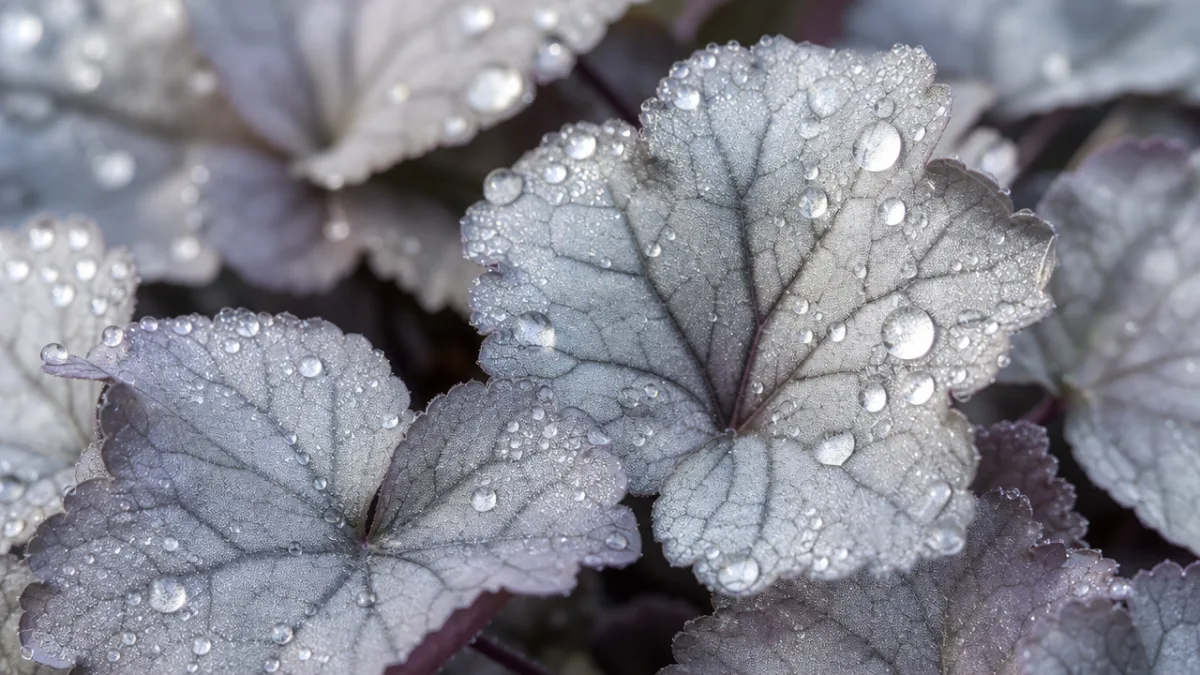
The silver and pewter heucheras occupy a uniquely elegant niche in the world of ornamental foliage plants. These cultivars feature leaves overlaid with a metallic silver coating that gives them an almost painted or frosted appearance, as though an artist has applied a wash of platinum over the underlying leaf color. This distinctive characteristic comes from the way the upper leaf surface reflects light differently from the cells beneath, creating an optical effect that changes dramatically depending on the angle and intensity of illumination. In bright indirect light, they appear almost luminescent; in deep shade, they offer a subtle, sophisticated gleam.
Heuchera ‘Silver Scrolls’ is widely considered one of the finest silver-leafed heucheras ever developed, combining pewter silver overlays with deep purple undertones and dramatically ruffled leaf margins. The contrast between the silver surface and the dark veins creates an intricate pattern that resembles hammered metalwork, making each individual leaf a work of art in its own right. ‘Pewter Moon’ produces rounder, smoother leaves with a predominantly silver surface and burgundy undersides, and it is one of the more heat-tolerant silver varieties, making it a good choice for gardens in warmer climates.
The ‘Dolce Silver Gumdrop’ series brings silvery foliage together with a compact, tidy mounding habit that makes it exceptionally useful for container work and small-space gardens. ‘Can Can’ earns its playful name with extraordinarily ruffled and frilled silver leaves that create a festive, exuberant texture unlike almost any other perennial. ‘Frosted Violet’ offers a particularly refined combination of silver overlay and deep violet base color that creates an almost iridescent purple-silver effect that is simply breathtaking when several plants are massed together under a high woodland canopy. These silver varieties are also notably slug-resistant compared to many other shade perennials.
Caramel, Amber, and Warm-Toned Varieties
One of the most exciting developments in heuchera breeding over the past two decades has been the emergence of warm-toned varieties in caramel, amber, peach, cinnamon, and orange hues that have no real precedent in the broader world of shade-loving perennials. These cultivars have opened up entirely new design possibilities, allowing gardeners to create warm, sunset-inspired color palettes in areas that once only supported cool greens, purples, and silvers. The warm-toned heucheras are particularly valuable in autumn garden design, where they harmonize beautifully with the changing colors of deciduous trees and shrubs.
Heuchera ‘Caramel’ is the defining cultivar of this warm color category, producing large, rounded leaves in a beautiful burnt-orange caramel tone that deepens to copper in cool weather and brightens to amber-gold in summer warmth. It is one of the larger-leaved heucheras, giving it an impressive presence in the garden, and it produces attractive pinkish-white flowers on tall stems. ‘Georgia Peach’ lives up to its delectable name with peachy-salmon leaves that have a slight silver overlay, creating a shimmering, warm tone that is utterly unique among shade perennials and provides outstanding color in the transition seasons.
The ‘Dolce Creme Brulee’ cultivar offers a slightly more golden caramel tone with heavily ruffled leaves and a compact habit perfect for container planting. ‘Copper King’ leans further into the metallic copper spectrum with large, bold leaves in a warm bronzy-copper that creates a striking focal point in any planting scheme. ‘Amber Waves’ was a Plant of the Year award winner that combines ruffled amber-gold foliage with good vigor and adaptability, making it an excellent choice for gardeners who are new to heucheras and want a forgiving, beautiful variety to start with. The warm-toned heucheras generally perform best when given some protection from intense afternoon sun, which can bleach their warm colors.
Growing and Caring for Heucheras Successfully
Despite their exotic appearance, heucheras are fundamentally tough, adaptable plants that require relatively little specialized care once they are established in appropriate conditions. Understanding their basic cultural needs is the key to keeping them looking their best year after year and avoiding the common problems that can cause these otherwise robust plants to decline. The most critical factor in heuchera success is soil drainage, as these plants are highly susceptible to crown rot in waterlogged conditions. They prefer a well-drained soil rich in organic matter with a slightly acidic to neutral pH, and they benefit enormously from a generous application of compost worked into the planting hole.
Heucheras perform best in partial shade to filtered sunlight, particularly in warmer climates where intense afternoon sun can scorch the foliage and cause the dramatic leaf colors to fade or bleach. In cooler northern gardens, many varieties will tolerate and even thrive in full sun, producing the most vibrant foliage colors when they receive morning sun and afternoon shade. Watering should be consistent but not excessive, aiming to keep the soil evenly moist without allowing it to become saturated. During dry spells, a layer of organic mulch applied around the plants helps retain moisture and moderates soil temperature, though the mulch should be kept away from the crown of the plant to prevent rot.
One of the peculiarities of heucheras that surprises many gardeners is their tendency to heave out of the soil over time, particularly after winter freeze-thaw cycles, exposing the woody crown. This is normal behavior, but exposed crowns are vulnerable to drying out and should be gently pushed back into the soil or covered with additional compost in early spring. Dividing heucheras every three to four years refreshes the plants, prevents the center from dying out, and provides new divisions for expanding plantings or sharing with fellow garden enthusiasts. Here are the essential care steps to keep in mind:
- Plant heucheras with the crown at or just above soil level to prevent rot and ensure good establishment.
- Apply a balanced slow-release fertilizer in early spring as new growth emerges, avoiding excessive nitrogen which promotes lush but weak growth.
- Remove any tattered or dead leaves in early spring before new growth begins to keep plants looking tidy and to reduce disease pressure.
- Divide clumps every three to four years in spring or early autumn, replanting the vigorous outer sections and discarding the woody center.
- Check plants after winter and firm back any heaved crowns into the soil, adding a light top-dressing of compost if needed.
- Watch for vine weevil damage, particularly in containers, and treat with biological nematode controls if grubs are found in the soil.
Container growing is an excellent option for heucheras and allows gardeners with limited space or challenging soil conditions to enjoy these spectacular plants on patios, balconies, and terraces. Use a high-quality potting mix with excellent drainage, choose a container with generous drainage holes, and be prepared to water more frequently than you would for in-ground plants. Heucheras in containers are particularly susceptible to winter cold damage because the roots are exposed to freezing temperatures from all sides, so insulating the pot with bubble wrap or moving it to a sheltered location during hard frosts is advisable in colder zones.
Design Ideas and Companion Planting with Heucheras
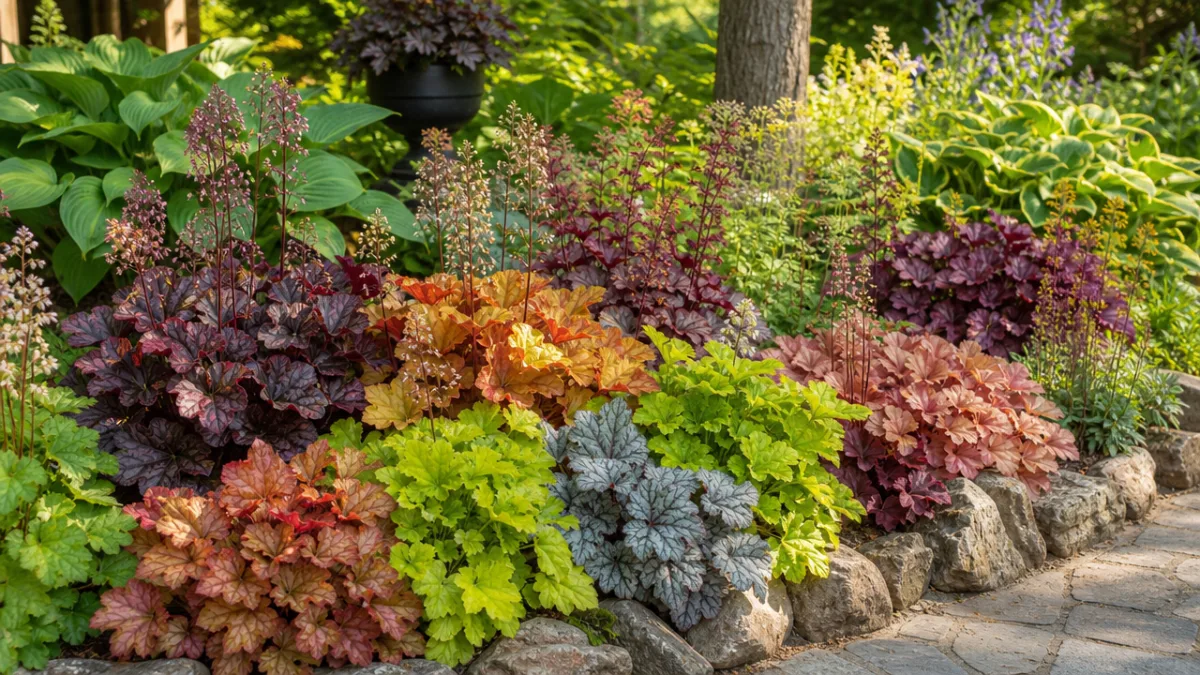
The extraordinary range of foliage colors available in modern heuchera cultivars makes them among the most versatile and creatively inspiring plants in the contemporary garden designer’s palette. Unlike many flowering perennials whose visual impact is limited to a few weeks of bloom time, heucheras deliver season-long color through their foliage alone, providing a stable framework of color and texture around which seasonal flowering plants can come and go. This quality makes them invaluable as structural plants in mixed borders, where they can anchor a design and provide continuity while other plants cycle through their seasons of interest.
For a classic woodland-inspired planting that looks both natural and sophisticated, combine heucheras with hostas, astilbes, ferns, and epimediums in a layered arrangement beneath deciduous trees. The varying leaf textures and colors of these companions create a tapestry effect that evolves beautifully through the seasons. A dark-leaved heuchera such as ‘Obsidian’ planted alongside a gold-variegated hosta and a white-flowered astilbe creates a high-contrast combination that is visually stunning from spring through autumn. Adding a Japanese painted fern with its silver-marked fronds brings yet another layer of texture and color to this kind of shade planting.
In contemporary mixed borders with a more designed aesthetic, heucheras work beautifully when used in bold sweeps or drifts of a single variety, creating rivers of color that flow through the planting. This approach is particularly effective with silver-leaved varieties, which can serve as a visual thread connecting different sections of a border. For container gardening, the “thriller, filler, spiller” design formula works wonderfully with heucheras as the central thriller element, surrounded by cascading plants like creeping Jenny in golden yellow or sweet potato vine in bronze. The following varieties represent an excellent starter collection for a heuchera enthusiast:
- Heuchera ‘Obsidian’ — near-black foliage, excellent heat tolerance, landmark dark variety
- Heuchera ‘Lime Rickey’ — bright chartreuse ruffled leaves, white flowers, outstanding shade performer
- Heuchera ‘Silver Scrolls’ — pewter silver with purple undertones, intricate veining, award-winning
- Heuchera ‘Caramel’ — warm amber-orange foliage, large leaves, unique warm tone
- Heuchera ‘Georgia Peach’ — peachy-salmon with silver overlay, superb transition-season color
- Heuchera ‘Palace Purple’ — historic award winner, reliable and widely adaptable
- Heuchera ‘Can Can’ — extraordinary ruffled silver foliage, festive and dramatic texture
Heucheras also play a significant ecological role in garden design beyond their obvious ornamental qualities. Their flowers, though small individually, are produced in large numbers and are rich in nectar that attracts hummingbirds, bees, and butterflies throughout the summer months. By including a range of heuchera varieties in your garden, you are simultaneously creating habitat and food sources for important pollinators while beautifying your outdoor space. The evergreen foliage also provides winter shelter for beneficial insects, making heucheras genuinely valuable components of a wildlife-friendly garden ecosystem. With such a breathtaking range of varieties available today, there has never been a better time to explore the full potential of these extraordinary perennials and discover which ones will thrive and inspire in your own unique garden setting.








What do you think?
It is nice to know your opinion. Leave a comment.