










30 Types of Popular Melocactus: A Complete Pictorial Guide
Introduction to Melocactus: The Ancient Cactus with a Crown
Melocactus, commonly known as the “Turk’s cap cactus” or “melon cactus,” is one of the most distinctive and historically significant genera in the Cactaceae family. Unlike most cacti, Melocactus produces a fascinating structure called a cephalium — a woolly, bristly crown that sits atop the plant’s body and from which flowers and fruit emerge. This unique adaptation has captivated botanists, collectors, and plant enthusiasts for centuries, making Melocactus one of the most recognizable and coveted genera in the succulent world.
The genus Melocactus comprises approximately 30 to 40 recognized species, though taxonomic revisions continue to refine these numbers. Native to the Caribbean islands, Central America, South America, and parts of tropical Africa, these cacti thrive in hot, arid, and often coastal environments. They have been cultivated since the era of European exploration, with early sailors and botanists marveling at their unusual form. Today, they are prized in botanical gardens and private collections across the globe for their ornamental beauty and biological uniqueness.
Understanding the diversity within Melocactus is essential for any serious cactus enthusiast. The genus includes species that range dramatically in size, spine color, cephalium characteristics, and geographic distribution. Some species are compact and globe-shaped, while others grow tall and columnar. The cephalia themselves vary from small and modest to tall, brilliantly colored crowns of deep red or orange. This guide explores 30 of the most popular and visually striking Melocactus species, providing a comprehensive pictorial reference for identification and appreciation.
The Cephalium: Nature’s Most Extraordinary Cactus Feature
The cephalium is arguably the single most extraordinary feature in the entire cactus family. This modified growing apex develops only after the plant has reached reproductive maturity, which can take anywhere from five to twenty years depending on the species and growing conditions. Once the cephalium begins forming, the vegetative growth of the main body effectively ceases, and all of the plant’s reproductive energy is channeled into this remarkable woolly crown. It serves as the platform for flowering and fruit production for the remainder of the plant’s life.
Structurally, the cephalium consists of densely packed bristles and wool, technically modified spines and areoles, that protect the delicate flower-producing tissue within. The coloration of a cephalium is one of the primary identification tools for distinguishing Melocactus species. Some species, such as Melocactus matanzanus, develop brilliant orange-red cephalia, while others like Melocactus peruvianus display more muted pinkish-brown tones. The height of the cephalium also varies considerably, with some species developing tall, cylindrical cephalia that can ultimately rival the height of the main cactus body.
From an ecological standpoint, the cephalium plays a critical role in seed dispersal. The small, brightly colored fruits that emerge from within the cephalium are often eaten by birds and lizards, which then disperse the seeds across the landscape. This relationship between Melocactus and local wildlife is a finely tuned evolutionary partnership. The vivid color of the fruits signals nutritional value to potential dispersers, while the woolly cephalium provides physical protection for the developing seeds. This elegant biological system helps explain why Melocactus has persisted and diversified across such a wide geographic range.

North and Central American Melocactus Species
Caribbean Island Natives
The Caribbean islands host some of the most visually stunning and widely cultivated Melocactus species in the world. Melocactus intortus, native to the Puerto Rico and the Virgin Islands, is one of the tallest species in the genus, capable of reaching over 50 centimeters in height with a correspondingly impressive cephalium. Its ribs are pronounced and its spines are stout and curved, giving it a fierce yet elegant appearance. This species is considered vulnerable in the wild due to habitat destruction and over-collection, making conservation efforts increasingly important.
Melocactus matanzanus, endemic to a small region of Cuba near Matanzas province, is perhaps the most popular Melocactus species among collectors worldwide. It remains compact and globe-shaped even at maturity, rarely exceeding 10 centimeters in diameter, making it ideal for container cultivation. Its cephalium is a vivid orange-red, among the most brilliantly colored in the genus, and it flowers reliably even when kept as a houseplant. This accessibility combined with its striking appearance has made it a staple of cactus collections from Europe to Japan.
Other notable Caribbean species include Melocactus guitartii, also from Cuba, which develops a particularly elongated cephalium relative to its body size, and Melocactus lemairei from Hispaniola and surrounding islands. The Lesser Antilles are also home to several endemic species with restricted distributions, including populations that have adapted to specific microhabitats on individual islands. These island endemics represent fascinating examples of adaptive radiation and are of particular interest to evolutionary biologists studying isolation-driven speciation.
Mexican and Central American Representatives
Mexico and Central America host a smaller but significant contingent of Melocactus species, adapted to the hotter and drier conditions of their respective habitats. Melocactus ruestii, found in parts of Honduras and Costa Rica, is a robust species with particularly strong spines and a compact form well-suited to rocky coastal slopes. These populations often grow in exposed locations where few other plants can survive, demonstrating the remarkable stress tolerance that characterizes the genus. Their adaptation to nutrient-poor soils and intense sun makes them particularly resilient in cultivation.
The diversity even within limited geographic ranges is remarkable. Different populations of closely related species can show significant variation in spine coloration, body shape, and cephalium development. Some taxonomists recognize these population-level differences as distinct subspecies or varieties, while others prefer a broader species concept. This ongoing taxonomic debate adds an element of scientific intrigue to the hobby of collecting Melocactus, as new field research continues to refine our understanding of relationships within the group.
South American Melocactus Species
Brazilian Giants and Coastal Specialists
Brazil is the epicenter of Melocactus diversity, hosting more species than any other single country. The Brazilian states of Bahia, Minas Gerais, and Pernambuco in particular are hotspots of Melocactus endemism, with numerous species confined to specific rocky outcrops or inselbergs known locally as “campos rupestres.” Melocactus bahiensis, as its name suggests, is a Bahian endemic known for its large, flattened body and impressive cephalium. It grows in dense colonies on granite outcrops, often in association with other specialized succulents and bromeliads, creating micro-ecosystems of remarkable biological richness.
Melocactus zehntneri is another Brazilian species of note, widely distributed across the semi-arid northeastern interior known as the Caatinga biome. This biome is one of the world’s most threatened ecosystems, and Melocactus zehntneri has adapted to its extreme conditions of seasonal drought and intense heat. Its body is typically elongated compared to many Caribbean relatives, and its spines are notably robust. In cultivation, it requires excellent drainage and a dry winter rest to thrive, rewarding growers with a striking, architecturally impressive plant that produces cheerful pink flowers from its cephalium.
Melocactus conoideus is one of the most endangered Melocactus species in the world, known from only a handful of localities in Bahia state. Its highly restricted range makes it extremely vulnerable to any disturbance, and it is listed on the IUCN Red List as critically endangered. Conservation programs in Brazil are working to protect its remaining populations through habitat preservation and ex-situ cultivation. Botanical gardens across Brazil maintain living collections of this species as insurance against extinction. Its cultivation outside Brazil remains limited but is of growing interest among conservation-minded collectors.
Andean and Pacific Coast Species
Moving west toward the Andes and the Pacific coast of South America, Melocactus species adapt to cooler temperatures and different seasonal patterns. Melocactus peruvianus, distributed along Peru’s coastal desert, represents a fascinating adaptation to the Atacama and Sechura desert systems. These are among the driest habitats on Earth, yet Melocactus peruvianus manages to persist in locations where moisture comes primarily from coastal fog rather than rainfall. Its body tends to be more elongated and its spines longer and more spread out compared to Caribbean relatives, likely adaptations to its extremely arid environment.
Melocactus bellavistensis from Ecuador and northern Peru grows at higher elevations than most of its relatives, tolerating nighttime temperatures that would damage many other species. Its cephalium tends to be narrower and taller relative to its body diameter, and its overall appearance is more slender than the typical globose Melocactus form. Collectors in temperate climates find this species somewhat more forgiving than tropical species when it comes to temperature fluctuations, though it still requires excellent drainage and plenty of warmth during the growing season to develop properly and eventually form its distinctive cephalium.

Cultivation Guide for Melocactus Enthusiasts
Soil, Drainage, and Container Requirements
Successful Melocactus cultivation begins with understanding the plant’s fundamental requirement for fast-draining, mineral-rich soil. In their native habitats, most Melocactus species grow in shallow, rocky soils with minimal organic content. A suitable cultivation mix should replicate these conditions as closely as possible. A blend of coarse pumice, perlite, and a small proportion of quality cactus compost in a ratio of roughly 2:1:1 provides excellent drainage while offering just enough nutrition to support healthy growth. Avoid mixes with high peat content, as these retain excessive moisture and can lead to root rot.
Container selection is equally important. Terracotta pots are often preferred by experienced growers because their porous walls allow excess moisture to evaporate more readily than plastic containers. The pot should be only slightly larger than the cactus body, as an oversized pot retains more moisture than the plant can use and increases the risk of root rot. A shallow, wide pot suits the relatively shallow root system of most Melocactus species. Ensure that drainage holes are large and unobstructed, as waterlogged soil is one of the most common causes of failure when growing these plants.
Repotting should be done carefully and infrequently, ideally in spring when the plant is entering its active growing season. Handle the plant using folded newspaper or thick gloves to protect both your hands and the plant’s spines and cephalium. Inspect the roots during repotting for any signs of rot or pest damage. Fresh cuts on damaged roots should be dusted with powdered sulfur or allowed to callous for a day before the plant is returned to its pot. After repotting, wait at least a week before watering to allow any damaged roots to heal before being exposed to moisture.
Watering, Light, and Temperature Management
Watering Melocactus correctly is perhaps the most critical skill for growers to develop. During the active growing season from spring through early autumn, water thoroughly when the soil has become completely dry, then allow it to dry out again before the next watering. The frequency will vary depending on pot size, soil composition, temperature, and light levels, but typically ranges from once every one to three weeks. In hot, sunny conditions the plant can handle more frequent watering, while in cooler or cloudier conditions much less water is needed. Always water at the base of the plant and avoid wetting the cephalium, as trapped moisture there can cause rot.
Light requirements for Melocactus are among the highest of any cactus genus. In their native habitats, these plants are exposed to intense tropical sunlight for many hours each day. In cultivation, a south-facing windowsill, a greenhouse, or an outdoor position in full sun during warm months provides the best conditions. Insufficient light leads to etiolation, pale coloration, weakened spines, and failure to develop a healthy cephalium. In climates where summer sunlight is strong enough, moving Melocactus outdoors from late spring to early autumn provides a tremendous boost to their health, growth rate, and flowering.
Temperature is a significant limiting factor for Melocactus, more so than for many other cactus genera. Most species originate from tropical environments and are sensitive to cold. Nighttime temperatures below 10 degrees Celsius should be avoided, and many species prefer a minimum of 15 degrees Celsius year-round. A brief cold snap can cause damage to the cephalium or the body, and prolonged cold will likely kill the plant. In temperate climates, Melocactus must be kept indoors or in a heated greenhouse throughout autumn and winter. A dry winter rest, reducing watering to once a month or even less, helps the plant survive lower temperatures and prepares it for vigorous spring growth.
Conservation Status and the Importance of Responsible Collection
Threats Facing Wild Melocactus Populations
Many Melocactus species face serious threats in their natural habitats, and the conservation status of the genus as a whole is a matter of genuine concern among botanists and ecologists. Habitat destruction driven by agricultural expansion, urban development, quarrying, and tourism infrastructure represents the most pervasive threat. Many species are confined to specific rock outcrops or coastal vegetation types that are being progressively cleared or degraded. Once a population is extirpated from a location, natural recolonization is extremely slow given the long time Melocactus requires to reach reproductive maturity.
Illegal collection for the horticultural trade has historically been a significant pressure on wild populations. Although the international trade in Melocactus is regulated under CITES Appendix II, which requires documentation of sustainable harvest, enforcement in remote areas can be difficult. Wild-collected plants, recognizable by their irregular root systems and stress damage, still occasionally enter the market. Responsible collectors and retailers can help combat this problem by purchasing only plants with documentation confirming they have been legally propagated from seed or through cultivation. Supporting nurseries that specialize in seed-grown Melocactus contributes directly to reducing pressure on wild populations.
Climate change poses an emerging and potentially severe threat to Melocactus populations, particularly those adapted to coastal and island habitats. Rising sea levels threaten low-lying coastal populations, while changing precipitation patterns may disrupt the delicate water balance that sustains plants in marginal habitats. Some island populations are already showing signs of stress from intensified hurricane activity and prolonged droughts. Research into the climate vulnerability of specific populations is ongoing, but the general consensus among conservation biologists is that proactive habitat protection measures are urgently needed to safeguard the most vulnerable Melocactus species.
How Collectors Can Contribute to Conservation
The cactus collecting community has a powerful and positive role to play in Melocactus conservation. Ex-situ conservation, the maintenance of living plant collections outside their natural habitat, serves as an important safety net for species that face extinction in the wild. Collectors who grow healthy, mature Melocactus and engage in seed exchange programs through reputable cactus societies contribute directly to maintaining genetic diversity within cultivated populations. Several botanical gardens maintain formal conservation collections of threatened Melocactus species and welcome collaboration with private growers who hold exceptional specimens.
Supporting habitat conservation organizations that work in Melocactus-rich regions is another impactful avenue for collector involvement. Organizations working in the Brazilian Caatinga and Cerrado, the Caribbean islands, and the Andean coastal deserts are protecting the very landscapes where these extraordinary plants evolved. Financial contributions, advocacy, and raising awareness within the collector community all make a tangible difference. The cactus hobby has a long tradition of passion-driven conservation, and Melocactus, with its remarkable appearance and fascinating biology, is an ideal ambassador for the broader importance of succulent plant conservation.
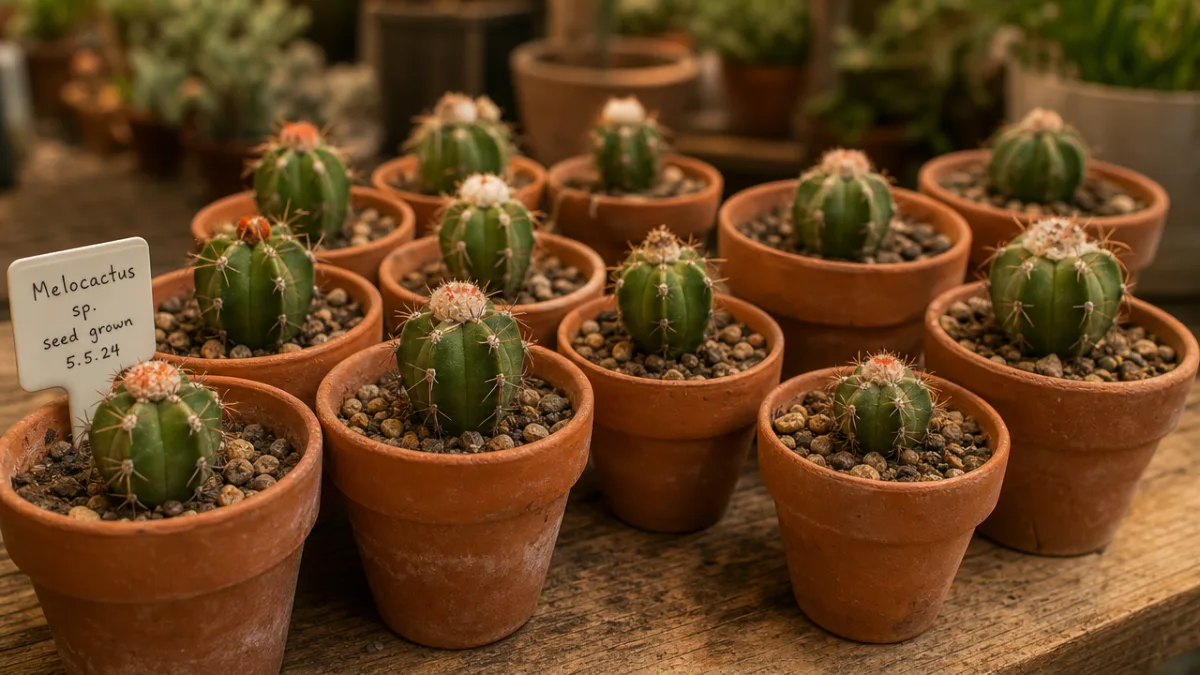
Finally, choosing seed-grown plants whenever possible, learning to propagate Melocactus from seed at home, and sharing plants with fellow enthusiasts rather than sourcing new specimens from the wild all reflect the values of a responsible and forward-thinking collector. Growing Melocactus from seed is a deeply rewarding long-term project. Watching a tiny seedling gradually develop over years into a mature, cephalium-bearing specimen connects the grower intimately with the plant’s remarkable biology and life cycle. It is an experience that deepens appreciation for the natural world and underscores the importance of protecting the wild places where these ancient, crown-bearing cacti continue to grow and thrive.








What do you think?
It is nice to know your opinion. Leave a comment.