










25 Fun DIY Glowing Aquarium Ideas for Kids This Summer
Why Glowing Aquariums Are the Perfect Summer Project for Kids
Summer is prime time for creativity, and honestly, it’s hard to think of a project that grabs a kid’s attention quite like building a glowing aquarium. There’s something genuinely magical about creating your own little underwater world that lights up — and the best part is that kids of pretty much any age can jump in and make something they’re proud of. Whether you’ve got a seven-year-old or a teenager, the whole experience of designing, putting it together, and watching it glow teaches patience, sparks creativity, and gives kids a real appreciation for what’s actually living beneath the ocean’s surface.
And unlike a lot of summer crafts that get made once and forgotten in a closet, a glowing aquarium actually sticks around and keeps doing its thing. That soft, dreamy glow makes for a beautiful nightlight in a kid’s bedroom — it’s both something they built themselves and something genuinely pretty to look at. Don’t be surprised if you find yourself stopping in the doorway just to stare at the soft blues and greens playing across the walls. Parents get just as enchanted as the kids, honestly.
There’s real educational value here too, beyond just looking cool. Kids pick up a surprising amount along the way — marine ecosystems, how bioluminescence works, basic color science, and even a little about how LED lighting works. They’re building fine motor skills while fussing with tiny decorations and flexing their spatial reasoning while planning the layout. And the whole thing doesn’t have to break the bank — most of these projects run anywhere from a few dollars to around thirty, so they’re doable for just about any family this summer.
Essential Materials and Tools You Will Need
Before you land on a specific project, it’s worth getting familiar with the supplies that show up again and again across pretty much every glowing aquarium build. The starting point is always a clear container of some kind — a repurposed glass fish tank, a big mason jar, a clear plastic storage bin, or even an old glass vase all work great. The size and clarity of whatever you choose will shape how ambitious your design can get, so it’s worth a few minutes of thought before you go buying anything new.
Lighting is really the soul of these projects, and the good news is that LED options have made it easier and cheaper than ever. Submersible LED lights, waterproof fairy light strings, color-changing LED strips, and little battery-powered puck lights are all solid choices depending on what look you’re going for. UV blacklight LEDs are a particular favorite for getting that wild neon glow effect — under blacklight, fluorescent paints, certain fabrics, and specially treated decorations absolutely pop with color in a dark room. A lot of craft stores and online shops sell starter kits with a few different light types bundled together for under fifteen dollars, which is a great way to experiment.
For the decorations inside the tank, you really can go in a lot of directions. People use aquarium gravel, colored sand, artificial coral and seaweed, smooth river rocks, shells, plastic or foam fish cutouts, glow-in-the-dark paint, neon pom-poms, translucent gemstones, fluorescent pipe cleaners — the list goes on. A good dollar store run will usually cover most of what you need, and then you can pick up a few specialty pieces from a craft or pet supply store. Having a nice variety of textures, heights, and colors ready to go before you start gives kids the room to experiment and really make it their own.
- Clear glass or plastic container (tank, jar, vase, or bin)
- Submersible LED lights or waterproof fairy light strands
- UV blacklight LEDs for neon glow effects
- Aquarium gravel, colored sand, or decorative pebbles
- Artificial coral, seaweed, and sea creature figures
- Glow-in-the-dark and fluorescent acrylic paints
- Neon pipe cleaners, pom-poms, and foam sheets
- Waterproof adhesive or aquarium-safe silicone
- Batteries or a USB power source for lights

Five Beginner-Friendly Glowing Aquarium Ideas
If this is your kid’s first time trying something like this, keeping it simple is really the way to go. The Mason Jar Glow Tank is about as easy as it gets — layer some colored sand or aquarium gravel at the bottom of a wide-mouth mason jar, add a few small plastic fish and a tiny artificial plant, then tuck a small battery-operated LED tea light under the gravel before you start building up. When the room goes dark and that light flickers on, even the most basic version of this looks genuinely magical, and kids feel incredibly proud of what they’ve put together.
The Plastic Bin Ocean Diorama is a step up in scale but still totally manageable for younger kids. Flip a clear under-bed storage bin on its side to use as your “tank,” have the kids paint a simple ocean scene on blue cardstock for the back panel, then glue artificial coral and rocks to the floor with aquarium-safe silicone. Drape LED fairy lights along the top edge inside, and fill the space loosely with crumpled blue cellophane to mimic the movement of water. The result is a surprisingly impressive display that can stretch across a whole dresser top and really shows off a child’s creative eye.
For kids who love to paint, the Glow Paint Rock Aquarium is an especially satisfying one. Gather some smooth, flat river rocks and let kids go to town with fluorescent and glow-in-the-dark acrylic paints in ocean-inspired patterns — fish scales, coral textures, starfish shapes, swirling waves, whatever they like. Arrange the finished rocks inside a clear glass tank, run a UV blacklight strip along the back wall, and when you kill the regular lights the whole scene just ignites in vivid color. It takes a bit longer because of drying time, but the results are honestly jaw-dropping.
Ten Intermediate Glowing Aquarium Projects to Try
Once kids have a handle on the basics, they usually want to try something more challenging — and intermediate projects are packed with fun new techniques to dig into. The Bioluminescent Deep Sea Tank is a big hit because it’s rooted in something real. Paint the outside of a glass tank in dark blue or black acrylic (leaving the front panel clear) to recreate the atmosphere of the deep ocean, which makes everything glowing inside look like it’s suspended in midnight water. Tissue paper jellyfish on thread, glowing anglerfish cutouts, and foam sea urchins that look luminescent give this one a feeling that’s both imaginative and surprisingly scientific.
The Color-Changing LED Coral Reef is a great intermediate project for introducing kids to multi-color LED technology. With a remote-controlled color-changing LED strip, kids can shift the whole mood of the tank from warm sunset oranges to cool deep-sea blues with a button press. They can build coral structures out of air-dry clay and paint them in bright fluorescent colors — and because the light spectrum keeps changing, every piece looks totally different depending on which color is on. This one also opens up really interesting conversations about how real coral reefs use color to communicate, hide, and hunt.
The Underwater Cave Diorama is perfect for kids with a dramatic streak. Using cardboard tubes, crumpled aluminum foil, and paper-mache, kids build a rocky cave inside a large clear bin. LED fairy lights get threaded through the cave openings and draped along the ceiling to mimic phosphorescent cave organisms. Throw in a few tiny plastic divers, a miniature treasure chest, and some glow-painted gemstones near the entrance and suddenly there’s a whole story happening inside the tank — one that kids will keep coming back to re-examine for weeks.
- Bioluminescent Deep Sea Tank with tissue paper jellyfish
- Color-Changing LED Coral Reef with air-dry clay corals
- Underwater Cave Diorama with paper-mache rock formations
- Neon Tide Pool Display in a wide glass salad bowl
- Glowing Kelp Forest using iridescent ribbon strands
- Fluorescent Fish Mobile suspended inside a large jar
- UV Treasure Chest Aquarium with glow-painted coins
- Layered Sand Gradient Tank with embedded LED pebbles
- Mermaid Kingdom Tank with glitter, shells, and castle
- Arctic Ice Cave Aquarium using clear blue acrylic pieces
What makes intermediate projects so satisfying is that they come with little design problems to solve along the way — how do you keep a structure from toppling over? How do you hide that power cord? How do you mix paint colors to get exactly the shade you pictured? Working through those small challenges builds real problem-solving confidence, and that feeling when you crack a tricky one is seriously motivating. At this stage parents can shift into more of a collaborator role — available to help when asked, but letting kids take the wheel on the creative decisions.
Ten Advanced Glowing Aquarium Builds for Older Kids and Teens
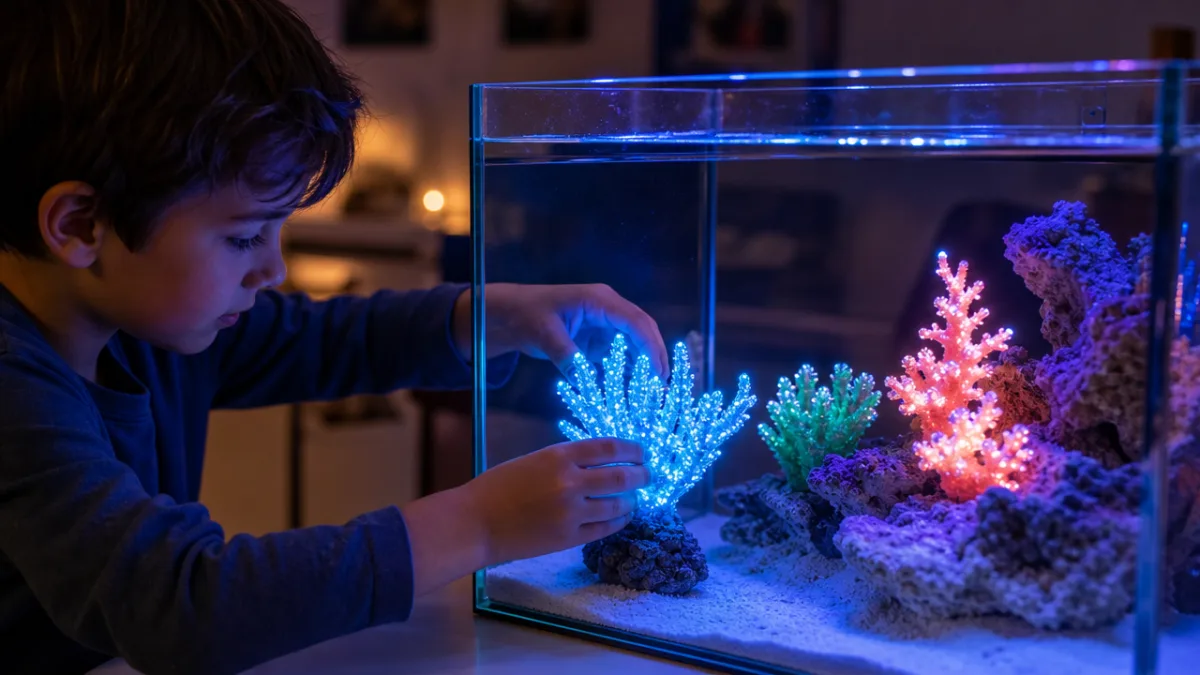
Older kids and teens are ready to go big, and this is where the real showstoppers come in. The Programmable RGB Aquarium Lightscape introduces teens to the world of microcontrollers and basic coding — using an Arduino or similar beginner-friendly board to program custom lighting sequences that simulate sunrise and sunset cycles, flickering storm effects, or slowly drifting color gradients. Pair that technical achievement with a tank full of hand-sculpted polymer clay sea creatures and you’ve got something that’s genuinely gallery-worthy, plus a project that builds real STEM skills along the way.
The Resin Art Ocean Panel has become hugely popular among teenage creators lately, and it’s easy to see why. By pouring layers of clear epoxy resin into a flat-bottomed glass frame, teens can embed shells, sand, dried coral, and tiny LED lights directly into the material to create a permanent, luminous ocean scene that’s as much fine art as it is aquarium. Adding UV-reactive pigments to the resin layers makes the whole panel transform dramatically under blacklight, revealing depth and hidden patterns that are completely invisible under regular light. This one does need adult supervision because of the epoxy, but what comes out the other end is genuinely professional-looking, and teens are rightfully proud of it.
For teens who are into design and interior aesthetics, the Large Format Glowing Aquarium Wall Art project turns a standard picture frame into a stunning illuminated display. The frame gets a shallow shadowbox insert, a custom ocean background, and layers of three-dimensional decorative elements at different depths. LED strip lighting around the inside perimeter bathes the whole scene in color, and UV-reactive paint on select elements adds an almost surreal glow. When it’s hanging on a bedroom wall in a dark room, people genuinely think it’s a store-bought light installation — the reaction when you tell them a kid made it is pretty priceless.
Safety Tips, Display Ideas, and Making the Most of Your Creation
Safety comes first whenever kids are working with electrical components, water, and chemical-based craft supplies like resin or certain adhesives. Stick with LED lights rather than incandescent bulbs anywhere near water — LEDs barely generate heat and are much less likely to overheat. If you’re using submersible lights, check that they’re rated specifically for water contact rather than just labeled “waterproof,” since those ratings actually mean different things. Make sure all battery compartments are fully sealed before anything gets near water or damp sand, and keep a close eye on younger kids during assembly and the first time you test everything out.
Once the aquarium is finished, there’s still plenty of fun to be had with how you display it. Setting it on a dark-colored surface or shelf lets the glow bounce and reflect beautifully, which really amplifies the whole effect. Some families dedicate a dark corner of a room to their glowing aquarium and turn it into a proper “deep sea viewing station,” complete with a little bench or reading nook for quiet evenings spent admiring the work. Others line up a collection of smaller projects as a shelf gallery, each one showing off a different ocean habitat or lighting technique the kid has picked up over the summer.
These projects also make incredibly thoughtful gifts and strong entries for school or community events. A beautifully made glowing aquarium packaged in a decorative box with a handwritten card explaining the design choices and techniques shows a level of care and skill that people really notice. Science fairs and art shows tend to love these kinds of interdisciplinary projects, and they often earn special recognition for showing both artistic creativity and a grasp of basic scientific concepts. It’s also worth encouraging kids to photograph their building process and jot down a few notes — it gives them something to look back on and starts building a maker portfolio they can keep adding to for years.
- Always use LED lights rated for water contact near any damp materials
- Seal all battery compartments before assembly near water or sand
- Supervise children under ten with any adhesive or resin-based materials
- Display on dark surfaces to maximize the glow contrast effect
- Document the building process with photos to create a maker portfolio
- Consider gifting completed projects or entering them in school fairs
- Refresh and update displays seasonally to keep the project feeling fresh
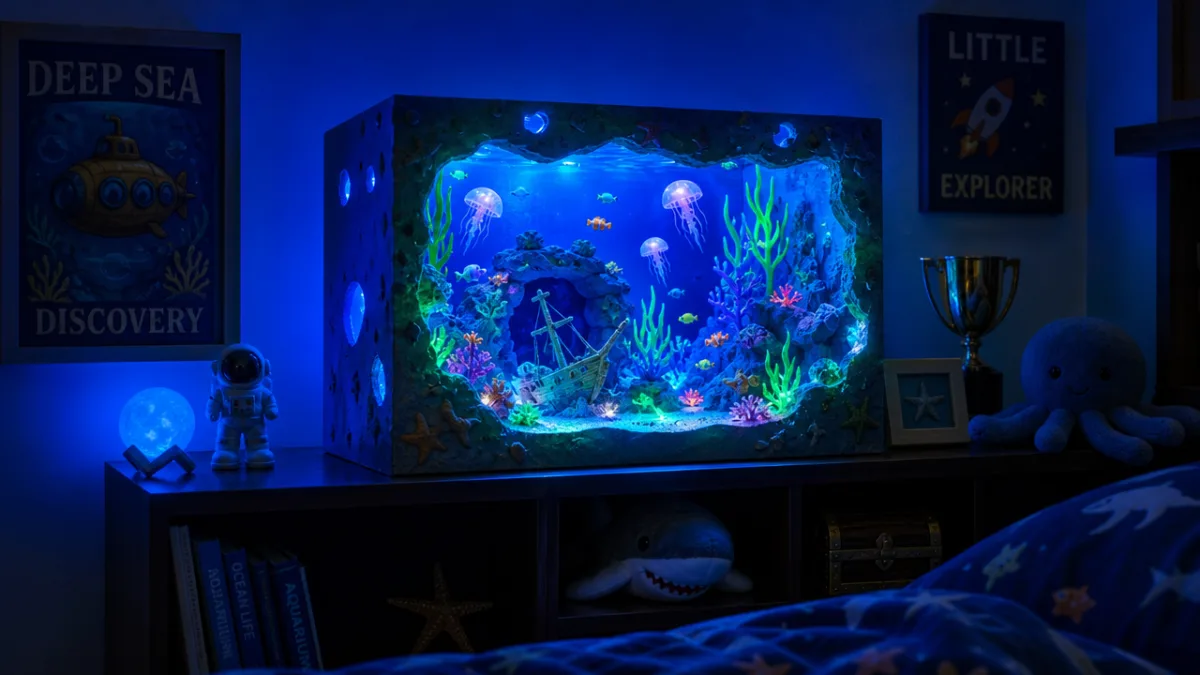
At the end of the day, DIY glowing aquariums might just be one of the best summer projects out there for kids and families. They sit right at that sweet spot where science and art naturally meet, where making the thing is just as fun as having it when it’s done, and where a kid’s personality genuinely shines through in the final result. Whether your child knocks out a simple mason jar glow tank in an afternoon or spends three weeks building an elaborate programmable reef display, what they carry forward — the confidence, the skills, the sense of wonder — is going to last a lot longer than the summer. So round up your supplies, turn down the lights, and let the deep sea come alive right there in your own home.








What do you think?
It is nice to know your opinion. Leave a comment.